.png)
.png)

Daniel Saks
Chief Executive Officer


Account-based marketing has been the dominant enterprise B2B strategy for a decade. The problem is that ABM at most companies is a marketing program that runs parallel to sales outreach rather than a coordinated motion. Marketing targets one list. Sales works another. The accounts overlap partially. Neither team knows what the other has done on shared accounts. The prospect receives disconnected touches from the same company.
Account-based sales development fixes this by making the SDR team the execution engine for the account-based strategy. Marketing provides air cover. SDRs provide direct outreach. Both work from the same scored account list, the same buying committee map, and the same set of signals. According to Forrester research on account-based strategies, companies that coordinate SDR and marketing activity on shared named accounts achieve 40% higher engagement rates and 28% higher win rates. According to Gartner research on strategic account programs, the coordination between sales development and marketing is the single largest gap in most enterprise ABM implementations.
The account list must be shared and data-driven. Pull from the scored TAM: A-tier accounts with active buying signals become the ABSD target list. Both marketing and sales leadership agree on the list before either team starts execution. According to McKinsey research on B2B sales, ABSD programs that use data-driven account selection outperform rep-nominated programs by 35% on pipeline generation per account.
The named account list should be reviewed quarterly using the process described in the named account strategy guide. Accounts that show zero engagement after two cycles should be replaced.
For each named account, identify all stakeholders who influence the purchase. Marketing targets the full committee with brand and content. SDRs target the primary decision-makers with direct outreach. The buying committee map ensures that ads reach the CTO while the SDR calls the VP of Sales, and both touches reference the same value proposition. AI-qualified contact scoring identifies the committee members that title filters miss.
Two to three weeks before SDR outreach begins on a named account, marketing activates: LinkedIn ads targeting the buying committee, personalized content (case study, benchmark report) shared via email or InMail to senior contacts, and event invitations if applicable. The goal is name recognition. When the SDR calls, the prospect should have seen the company name at least twice. According to Harvard Business Review research on enterprise buying, prospects who have prior brand exposure are 2-3x more likely to engage with a cold outreach.
SDRs run multi-channel outreach against the same accounts: phone, email, and LinkedIn. The messaging references the same themes as the marketing content. If marketing sent a benchmark report on outbound conversion rates, the SDR email references those benchmarks and offers a conversation about the prospect's specific numbers. The outreach feels like a continuation of the marketing touch rather than a disconnected cold email.
The success metric is account progression: how many named accounts moved from no engagement to engaged (replied, connected, attended event) and from engaged to meeting booked? Both marketing touches and SDR touches contribute to this progression. Attributing the meeting to either marketing or sales misses the point. The coordinated motion produced the outcome. For how to build this measurement framework, see the sales and marketing alignment guide.
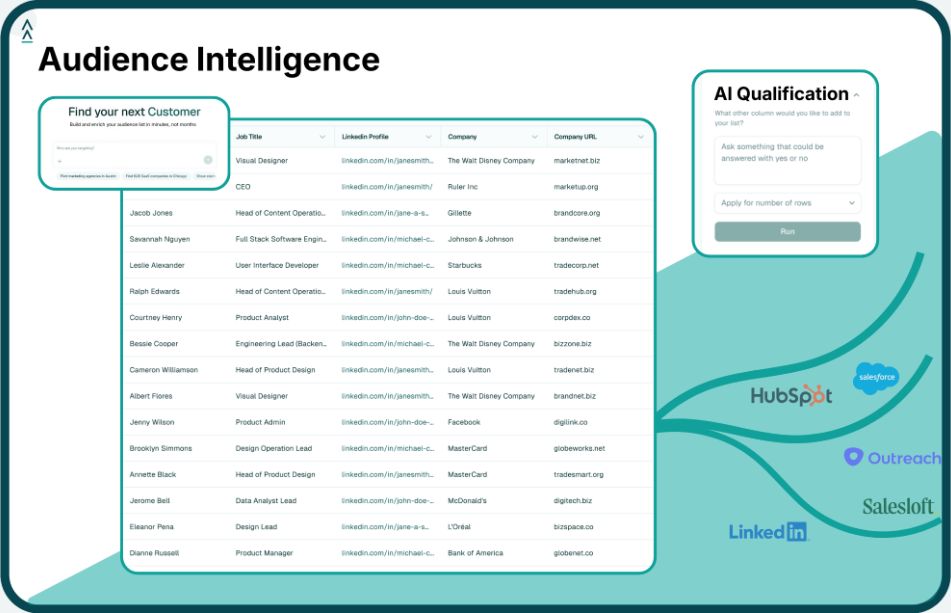
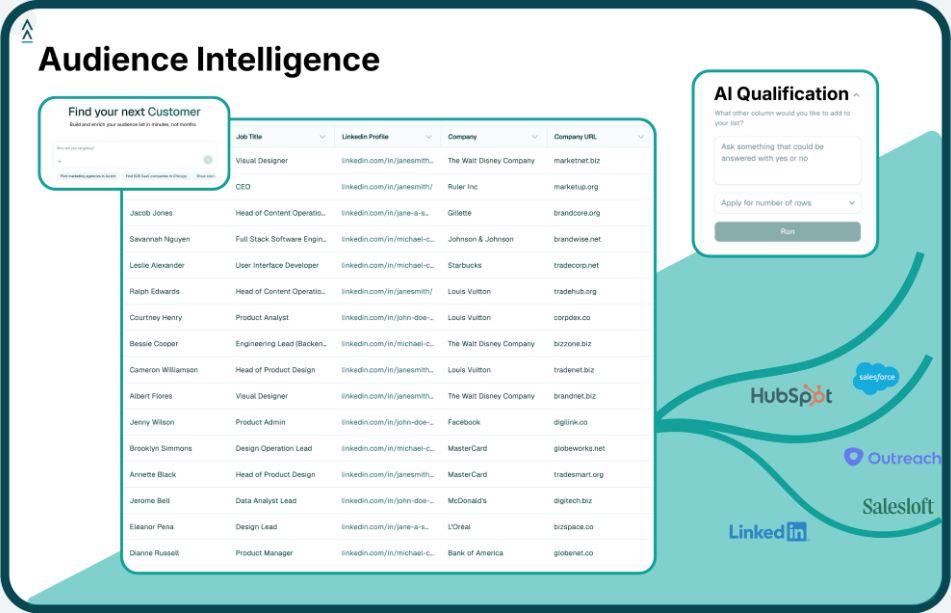
Landbase provides the data infrastructure for ABSD: scored named account lists with AI-qualified buying committee contacts, exported as clean CSVs. Marketing uses the same account and contact data to target LinkedIn ads and personalized content. SDRs use the same data for direct outreach. Both teams work from a single export with contacts classified by committee role, ensuring coordination without additional operational overhead. According to Salesforce research on account-based programs, the most common failure point in ABSD is data inconsistency between the marketing and sales targeting lists. A single data source eliminates this problem. See the ABM guide for mid-market teams for a related approach at smaller scale.
50 to 200 accounts, depending on team capacity. Each account receives coordinated multi-channel attention, which limits how many accounts the team can support simultaneously. The quality of effort per account matters more than the number of accounts. At 50+ SDRs, the ABSD list can be larger because each rep owns a subset of the named accounts.
Sales owns the outcome (meetings and pipeline). Marketing owns the air cover (ads, content, events). RevOps owns the data and reporting. The program sponsor should be the CRO or VP of Sales who can hold both teams accountable to the shared account list. According to BCG research on enterprise go-to-market, ABSD programs fail most often when ownership is unclear or when one team runs the program without the other's buy-in.
Track account-level engagement before the SDR outreach begins. For accounts where marketing ran air cover, measure: ad impressions delivered to buying committee members, content engagement (opens, clicks), and event attendance. Then compare the SDR's meeting booking rate on accounts with marketing air cover versus accounts without. The delta is marketing's contribution. Most programs see 30-50% higher booking rates on accounts with coordinated air cover.
Yes, at a smaller scale. The minimum marketing investment is targeted LinkedIn ads against the buying committee and one piece of personalized content (a benchmark report, a relevant case study, or a tailored one-pager). At $2K-$5K per month in LinkedIn ad spend targeting 50-100 named accounts, the cost is manageable for most enterprise teams. The ROI comes from the lift in SDR booking rates on those accounts.
Tool and strategies modern teams need to help their companies grow.