.png)
.png)

Daniel Saks
Chief Executive Officer


The most expensive dysfunction in B2B is the war between sales and marketing. Marketing says they sent 2,000 leads last quarter. Sales says only 200 were worth a call. Marketing says sales did not follow up fast enough. Sales says the leads were garbage. Both sides have data that supports their position. Both sides have valid data. The issue is that they are measuring different things.
According to research on sales and marketing alignment, aligned organizations achieve 208% higher marketing revenue. The companies that figure out alignment do not just perform incrementally better. They perform dramatically better across every revenue metric.
More meetings and better communication help, but the real fix is shared metrics. When both teams look at the same numbers, the blame game becomes impossible because the numbers tell a single, unambiguous story.
This is the most important alignment metric. It measures leads that marketing generated, sales reviewed, and sales agreed are worth pursuing. Both teams must agree on the definition of "accepted" before this metric works.
If marketing generates 500 MQLs but sales only accepts 50 as pipeline, the disconnect is visible and actionable. Either marketing needs to adjust targeting or sales needs to adjust expectations. The metric forces the conversation.
What percentage of marketing-generated leads become qualified opportunities? Industry average is 13%. For more on why leads die in the CRM between these two stages, see our full analysis. Top-performing aligned teams hit 20-25%. This metric is shared because marketing controls lead quality and sales controls follow-up speed and effectiveness. Both sides influence the number.
Average time from lead creation to first sales touch. Companies responding within 5 minutes are 21x more likely to qualify the lead. This metric is primarily sales-owned but marketing influences it through routing rules and data quality. If leads arrive with incomplete data and mis-route, marketing shares responsibility for slow response times.
How fast do opportunities move through the funnel? Velocity = (number of opportunities x average deal value x win rate) / sales cycle length. See our RevOps KPI dashboard guide for benchmarks. Both teams influence this: marketing through lead quality and nurture, sales through deal execution. When velocity slows, the shared metric helps identify which variable changed.
Which marketing content are prospects consuming at each deal stage? This metric tells marketing what content actually helps deals progress (not just what gets downloads) and tells sales which content to share with active opportunities. If marketing creates content nobody in the pipeline reads, that is visible. If sales never shares content with prospects, that is also visible.
Do marketing-sourced deals close at the same rate as outbound deals? If marketing leads close at 15% and outbound closes at 25%, that is a quality signal. If the reverse is true, marketing is generating higher-quality leads than outbound prospecting. Either way, the data replaces opinions about lead quality with facts.
What does it cost to acquire a customer through marketing (inbound, content, paid) vs sales (outbound, events, referrals)? When both teams see the full cost picture, resource allocation decisions become data-driven.
What percentage of closed revenue had marketing touchpoints in the buying journey? This is different from "marketing-sourced" because it includes deals that originated from outbound but were influenced by marketing content, ads, or events along the way. This metric gives marketing credit for the full scope of their impact and encourages sales to leverage marketing assets in deals.
Before you can share metrics, both teams need to look at the same data. This means one CRM with consistent data quality, with consistent data quality across marketing and sales systems.
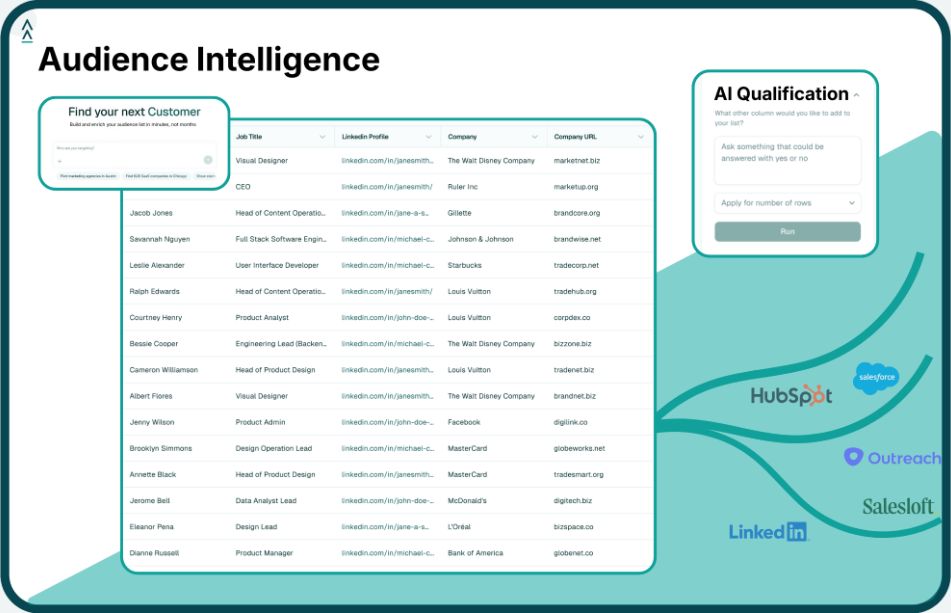
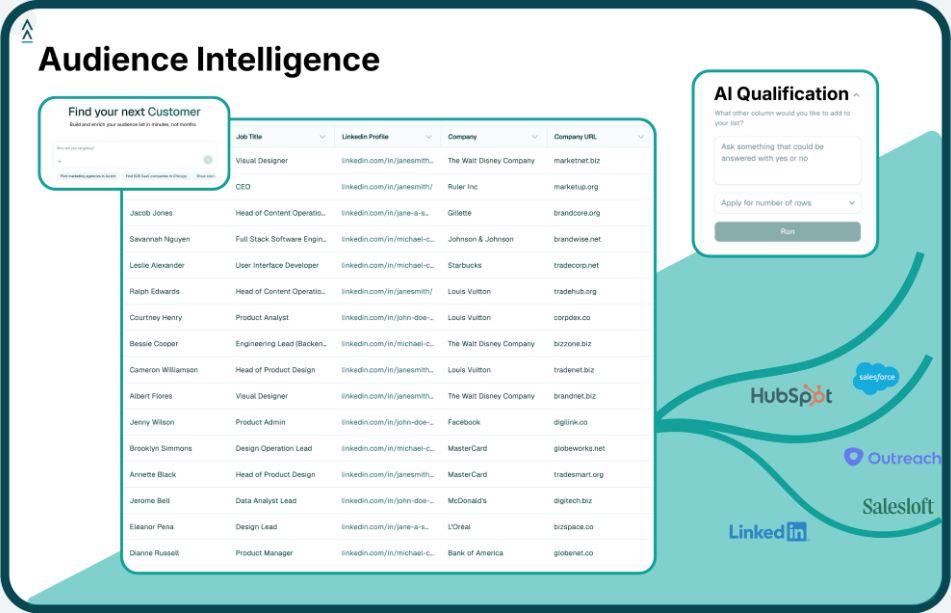
Start by enriching your CRM data so every record has complete firmographic, technographic, and signal information. Landbase delivers this enrichment automatically so both teams work from the same complete dataset. When the data is the same, the metrics calculated from that data are the same.
Get sales and marketing leadership in a room and agree on definitions: What is an MQL? What is an SQL? What does "accepted" mean? What follow-up SLA is expected? Document these definitions and make them visible to both teams.
One dashboard, accessible to both teams, updated automatically. Put all 8 metrics on it. Review it weekly in a 30-minute joint meeting. No separate dashboards, no separate reports, no separate versions of truth.
If marketing is compensated on MQLs and sales is compensated on closed revenue, they will always optimize for different things. Add a shared component: a percentage of marketing's bonus tied to pipeline accepted by sales, and a percentage of sales' bonus tied to marketing-sourced deal progression.
Expect behavior changes within 30 days of implementing shared metrics and joint reviews. Pipeline impact within 60-90 days. Revenue impact within one to two quarters. The metrics create accountability immediately; the revenue follows as the behaviors change.
Use data to settle it. Pull the last 100 closed-won deals and reverse-engineer what those leads looked like at the MQL stage. That profile becomes your MQL definition. It is hard to argue with closed revenue data.
Yes. RevOps is the neutral party between sales and marketing. They own the data, the definitions, and the reporting. Neither sales nor marketing should be able to change the dashboard without RevOps approval, which prevents both teams from gaming the metrics.
At scale (50+ reps, $20M+ ARR), you may need specialists in each function reporting to a RevOps leader. Below that, a single RevOps hire who owns the full funnel is more effective than specialists who optimize their silo and create handoff problems at the boundaries.
Tool and strategies modern teams need to help their companies grow.