.png)
.png)

Daniel Saks
Chief Executive Officer


Buying signals are observable indicators that a company is entering an active purchasing cycle. The five categories that consistently predict B2B pipeline are hiring activity for the buyer persona, funding events in the last 90-180 days, technology stack changes, leadership changes in the buyer role, and engagement recency on owned channels.
According to research on B2B buying signals, stacked signals (two or more indicators on the same account) convert at 5-10x the rate of cold outreach. Among B2B marketers using intent data, 93% report increased conversion rates and 91% use intent scoring to prioritize accounts. Single signals are weak. Stacked signals are predictive.
Quick answer: The buying signals that matter most in B2B are hiring (the buyer persona is being added or replaced), funding (capital is deployable for new tools), technology change (the stack is being rebuilt), leadership change (a new executive is auditing tools), and engagement recency (active research on your category). Stack two or more for 5-10x conversion lift.
When your buyer persona changes companies, the new company is in market. New VPs of Sales rebuild the sales tech stack. New CROs reset the GTM strategy. New CTOs evaluate dev tooling. The 90 days after a key hire is the highest-converting window in B2B.
Personnel signals also work in reverse. When a champion leaves, your deal at that account is at risk. Modern sales teams use exit signals to trigger save plays before deals stall.
According to research compiled by ZoomInfo, personnel changes are one of the most reliable indicators of buying intent because they directly correlate with budget allocation decisions.
New funding rounds correlate with hiring and tooling investment. A Series B company that just raised $30M is going to hire sales reps, buy tooling, and build out their GTM stack in the next 6 months.
The signal works at every funding stage, but the conversion rates differ. Series A companies are price-sensitive and slow to commit. Series B-C companies have budget and urgency. Public companies are sticky once they buy. Knowing which funding stage matches your sales motion is more important than just tracking funding.
Technographic signals tell you which companies just installed (or removed) a competing or adjacent product. A company that just adopted Salesforce is in market for sales engagement tools. A company that removed Outreach is shopping for a replacement.
Technology signals are observable from the outside if you have the right data sources. Web crawls, job postings, and integration directories all leak technographic information you can use.
Not all website visits are equal. A visitor reading a pricing page three times in a week is in market. A visitor downloading a whitepaper once might be a researcher with no buying authority.
The signals that matter are ones that indicate active evaluation: pricing page visits, demo requests, multiple buying committee members on the same account researching at the same time. These are first-party signals you already have if you are running marketing automation correctly.
When a competitor announces layoffs, raises prices, or shuts down a product line, their customers are in market. These are often the highest-converting signals because the buyer already understands the category.
Most teams ignore competitive signals because they are hard to track manually. AI agents make them easy to monitor at scale.
Bombora and similar third-party intent providers track billions of content interactions. The data is real, but the noise-to-signal ratio is high. A company "showing intent" for "sales automation" might be one researcher reading one blog post once. Or it might be 10 stakeholders evaluating vendors. The data does not distinguish.
This is why predictive intent platforms stack third-party signals with first-party data and account context to filter out the noise. Raw third-party intent on its own is not enough.
If your only signal is that a company was mentioned in a news article, that is barely a signal. News mentions correlate weakly with buying intent unless they are paired with other data.
One page view tells you almost nothing. Three page views in a session, on high-intent pages, tells you a lot more.
A single signal might predict a 1% lift in conversion. Two stacked signals might predict 5%. Three stacked signals might predict 15%. The relationship is non-linear because each signal independently confirms the buying hypothesis.
Here is how a well-stacked signal looks for a sales tech vendor:
A target account hitting all four signals is in market. Conversion rates for outreach to that account will be 10-20x cold outreach. The trick is detecting all four signals and acting fast.
According to Harvard Business Review research, prospects contacted within 5 minutes of an inbound action are 21x more likely to convert than those contacted after 30 minutes. The same speed dynamic applies to outbound triggered by signal detection. The team that acts first wins.
Different products are bought after different signals. A sales engagement tool cares about VP Sales hires. A security tool cares about new security hires after a breach. A finance tool cares about new CFO hires and funding rounds. Pick the signals that map to your buyer's actual decision triggers.
Personnel data from LinkedIn or a B2B database. Funding data from Crunchbase or PitchBook. Technographic data from web crawls or vendor APIs. First-party engagement from your marketing automation. Each signal needs a reliable data source.
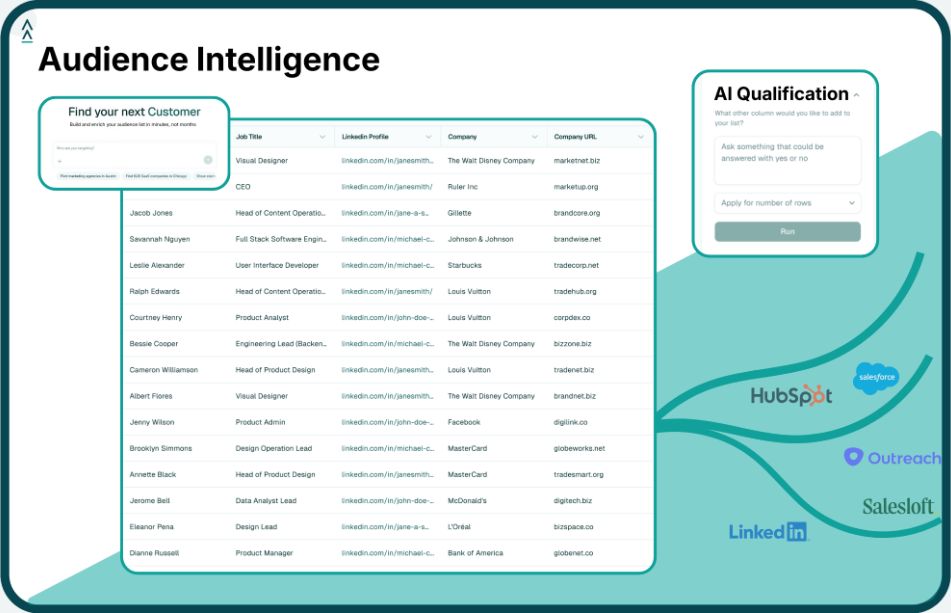
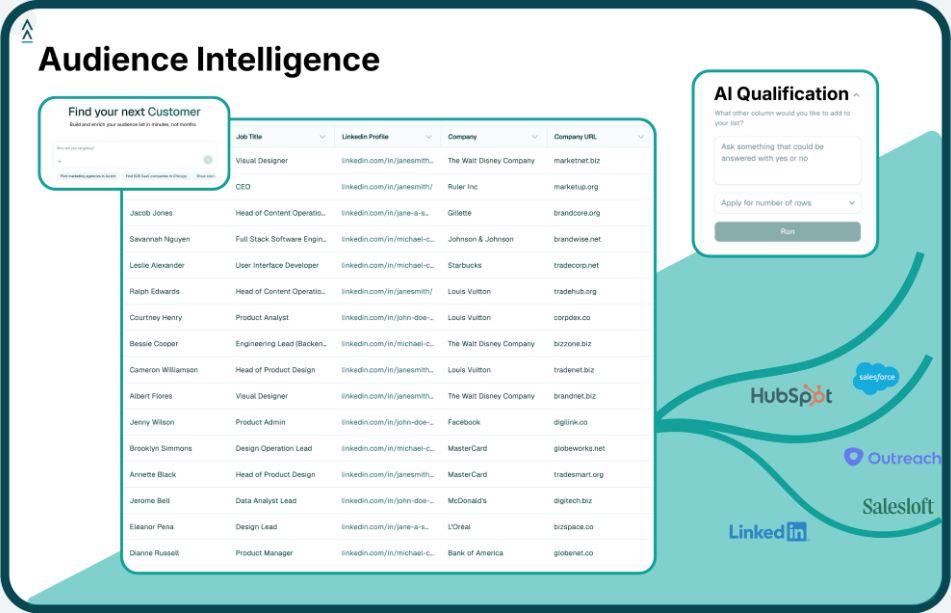
Build a system that joins signals across data sources and surfaces accounts hitting multiple signals at once. This is where modern AI-powered targeting platforms shine. Manual signal stacking does not scale beyond a few hundred accounts.
When an account hits your signal threshold, the action should be automatic. Add to a sequence. Notify the AE. Pull contacts and start outreach. Do not let stacked signals sit in a dashboard waiting for someone to look at them.
Most B2B teams have the wrong stack for signal-driven GTM. They have a CRM, a sales engagement tool, and maybe an intent platform. The intent platform delivers signals as alerts that nobody acts on.
The right stack has three layers:
Teams running this stack convert at multiples of teams running traditional outbound. The data is consistent across vendor research and customer interviews.
Most signals decay within 30-90 days. Personnel and funding signals stay relevant for the first 90 days after the event. Tech adoption signals stay relevant longer (6+ months). Engagement signals decay fast (7-14 days). Speed of action matters most for engagement signals.
Buy data, build stack. Intent data providers have access to data sources you cannot reproduce alone. But the value is in how you combine and act on that data. Build your stacking logic in-house and use vendors for the underlying data.
Intent data is one type of buying signal, usually focused on content consumption patterns. Buying signals is a broader category that includes personnel changes, funding, technology adoption, engagement, and competitive moves. The signal stack approach uses intent data as one input among many.
3-5 is the sweet spot. Fewer than 3 and you miss too many converting accounts. More than 5 and you miss too many real buyers because the criteria are too strict. Tune the number to your sales motion.
Tool and strategies modern teams need to help their companies grow.