.png)
.png)

Daniel Saks
Chief Executive Officer


Enterprise deals do not close through a single relationship. They close through a network of stakeholders who each need to believe the purchase is worth their organization's time and budget. According to Gartner research on B2B buying behavior, the average enterprise purchase now involves six to ten decision-makers. According to McKinsey research on B2B sales, deals where the selling team has engaged three or more stakeholders close at 2-3x the rate of single-threaded deals.
The challenge is identification. Most enterprise reps know they should be multi-threading. They lack the data to do it. Database tools return contacts by title, which surfaces the obvious stakeholders and misses the less visible ones. The VP of Finance who controls budget approval. The Director of IT Security who can veto on compliance grounds. The operations manager who will be the day-to-day user. These contacts are in the database, but they are not findable through a title filter for the buyer persona. According to Harvard Business Review research on complex selling, the ability to identify and engage all relevant stakeholders is the single strongest predictor of enterprise deal success.
Controls the budget and makes the final financial decision. Typically a C-suite executive or VP. Evaluates the purchase through ROI, payback period, and strategic alignment. This is the person who can say yes when everyone else has already agreed. The economic buyer may not attend early meetings but will surface at the approval stage.
Assesses whether the product works within the existing technology environment. Evaluates integration requirements, security posture, scalability, and maintenance burden. Often a Director of Engineering, VP of IT, or Solutions Architect. Their concerns are different from the economic buyer's: feasibility rather than ROI.
The person or team who will use the product daily. Their adoption determines whether the product delivers the value the economic buyer approved. End user buy-in is critical because a purchase that the team resists using becomes shelfware. The champion is often the person who initiated the evaluation.
Reviews contractual terms, data handling practices, security certifications, and regulatory compliance. In regulated industries (financial services, healthcare, government), this stakeholder can delay or block a deal for months. Identifying them early prevents late-stage surprises.
Someone with organizational credibility who can accelerate or slow the decision. They may not have formal purchasing authority, but their opinion carries weight. A respected senior engineer who advises the CTO. A department head who successfully implemented a similar product at a previous company. These contacts are invisible to title-based filters and identifiable through profile evidence and organizational analysis.
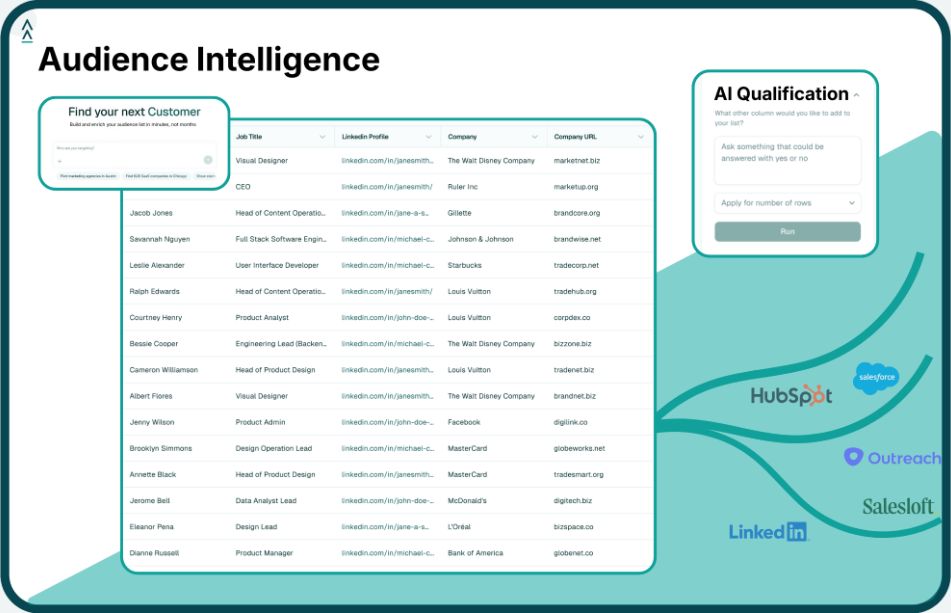
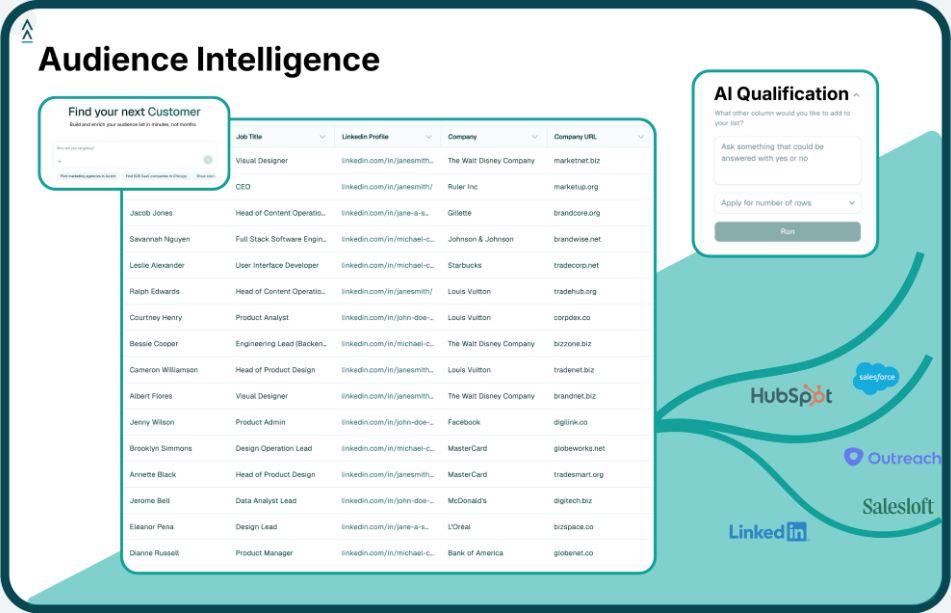
The most effective approach maps the buying committee before outreach begins. When Landbase builds a target account list, every account includes AI-qualified contacts classified by buyer role: economic buyer, technical evaluator, end user, and supporting stakeholders. The rep inherits the map when they receive the account. This is fundamentally different from asking reps to discover the committee through cold outreach, which requires multiple calls before the full picture emerges.
Title filters find the CIO and the VP of Sales. AI-powered qualification finds the Director of Digital Transformation whose LinkedIn headline mentions the specific technology category your product addresses. It finds the Senior Manager who listed your competitor in their skills section. It finds the finance leader whose profile text references the budget category your product falls under. According to Salesforce research on high-performing sales teams, the ability to identify non-obvious stakeholders is a key differentiator between top-performing and average-performing enterprise reps.
Each contact should be tagged with their committee role and scored by influence level. The economic buyer and the technical evaluator are Tier 1 contacts who should receive personalized, high-touch outreach. The internal influencer is a Tier 2 contact who should receive relevant content that supports the champion's internal case. End users may be Tier 2 or Tier 3 depending on their influence in the decision process. See enterprise contact scoring for a detailed rubric.
Every account also has contacts who appear relevant by title but have no path to the purchasing decision. The retired CTO still listed on LinkedIn. The branch-level IT manager in a different country. The HR business partner whose role has nothing to do with technology purchasing. Exclusion rules remove these contacts before the list reaches the rep. At enterprise scale with thousands of accounts, exclusion rules have a measurable impact on SDR productivity because every removed contact is a wasted dial prevented.
Landbase builds buying committee maps at the list level. For every target account, the exported CSV includes AI-qualified contacts classified by committee role, scored by decision-making authority, and filtered through exclusion rules. The rep receives a complete stakeholder map when they open the account record. Each outreach cycle's call outcome data feeds back into the contact scoring model, refining which roles and profiles predict conversion for the next campaign. For more on how this connects to multi-threading strategy, see the full guide.
For enterprise accounts (1,000+ employees), five to eight contacts across at least three committee roles. For mid-market accounts (200-1,000 employees), three to five contacts. The goal is coverage across roles, not maximum volume. One well-identified economic buyer is more valuable than five contacts in the same department.
Before. The first call is more productive when the rep already knows who else is involved in the decision. The rep can ask the champion about specific people by name rather than asking generically 'who else is involved.' This positions the rep as prepared and informed, which builds credibility. According to Forrester research on sales operations, pre-call preparation quality is directly correlated with meeting-to-opportunity conversion rates.
LinkedIn Sales Navigator helps identify contacts manually, one account at a time. At enterprise scale with hundreds of named accounts, manual LinkedIn research takes hours per account. AI-powered qualification does the same work across all accounts simultaneously and applies scoring and classification that manual research cannot replicate consistently.
At minimum, when a deal enters the pipeline and again when it reaches the proposal stage. People change roles, leave companies, and gain or lose organizational influence. A buying committee map built three months ago may have one or two contacts who have moved. Continuous signal monitoring catches these changes. For accounts in active deals, refreshing the committee map monthly ensures the selling team is engaging the current stakeholders.
Tool and strategies modern teams need to help their companies grow.