.png)
.png)

Daniel Saks
Chief Executive Officer


The SDR books the meeting. The AE takes the call. Somewhere between those two events, context disappears. The AE opens the CRM record and finds a company name, a contact name, and a title. No industry data. No technology stack. No information about who else at the company is involved in the decision. No record of why the SDR reached out in the first place.
According to Salesforce research on sales performance, high-performing sales teams are 1.5x more likely to rate their lead handoff process as excellent. The handoff is where upstream data quality either compounds into deal velocity or collapses into wasted AE time. According to Forrester research on B2B revenue operations, the SDR-to-AE handoff is one of the highest-friction points in the enterprise sales funnel, with conversion rates dropping 20-40% when handoff data is incomplete.
The AE should know the company before the call: industry, employee count, revenue range, technology stack, funding stage, and growth trajectory. If this data existed on the original account list, it should already be in the CRM record. If it does not, the AE is Googling the company five minutes before the call. According to Harvard Business Review research on sales effectiveness, AEs who enter calls with complete account context convert at measurably higher rates because the conversation starts at a more advanced stage.
Who else at the company is involved in the decision? The SDR spoke to one person. The deal requires three to seven. If the original account list included AI-qualified contacts classified by buyer role, the AE inherits a map of the buying committee at handoff. If the list only contained one contact, the AE starts multi-threading from scratch.
What triggered the outreach? A recent funding round, a key hire, a technology migration, a competitive evaluation? This context shapes the AE's opening. According to Gartner research on B2B buying behavior, prospects who are contacted based on a relevant buying signal are significantly more receptive than those receiving generic outreach. The signal should travel with the opportunity.
How many touches did it take to book the meeting? Which channel worked (phone, email, LinkedIn)? What did the prospect say on the call? What objections came up? This context prevents the AE from repeating the same pitch and allows them to build on what the SDR already established.
The handoff problem is usually diagnosed as a process problem: SDRs need better notes, better templates, better training on what to capture. Those help. But the structural fix is upstream, in the quality of the account list the SDR received in the first place.
When the SDR works from a list of scored accounts with AI-qualified contacts, the enrichment data is already in the CRM record before the first dial. The industry, technology stack, company size, growth signals, and buying committee members all exist as fields on the account and contact records. When the SDR creates an opportunity, that data transfers automatically. The AE inherits a complete record because the data was captured at the list level, not at the SDR level.
According to McKinsey research on B2B sales productivity, the highest-performing enterprise sales teams invest in data enrichment at the point of account entry rather than relying on individual reps to research each account manually. This shift moves data quality from a per-rep variable to a system-level guarantee.
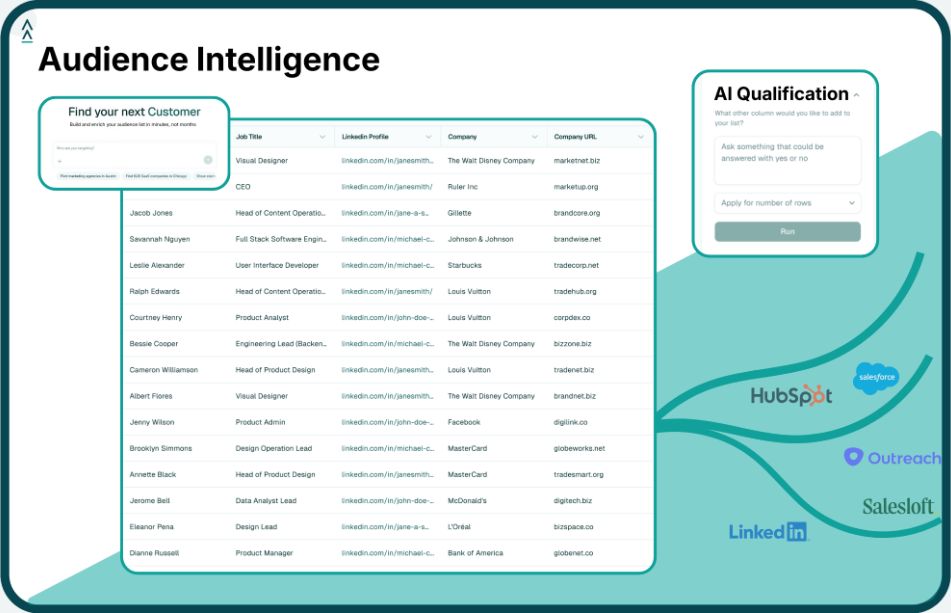
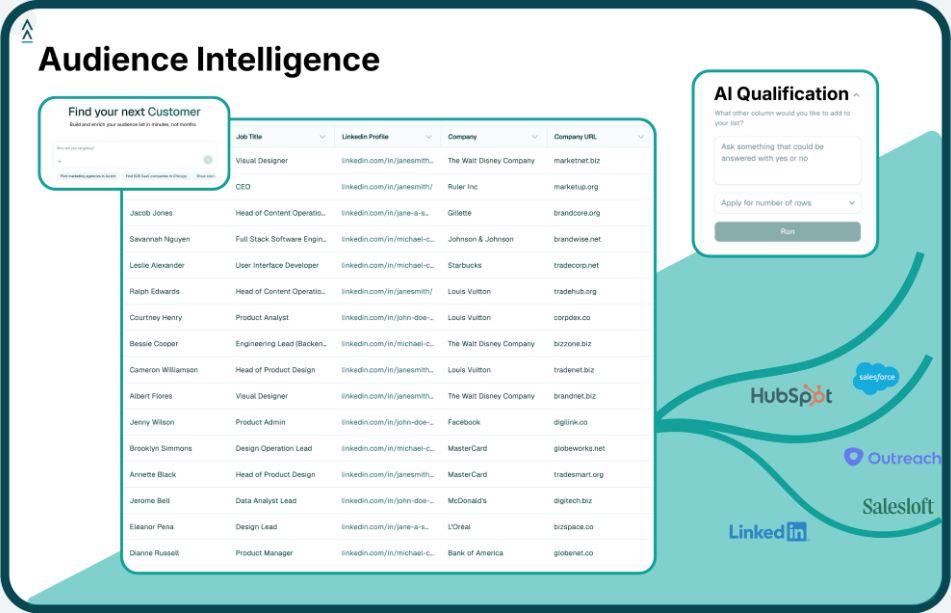
Landbase delivers this upstream enrichment. Every account in the exported CSV arrives with firmographic, technographic, and signal data attached. Every contact is scored by decision-making authority and classified by buyer role. When the SDR creates the opportunity, the AE inherits a complete handoff because the data was built into the list from the start.
Every opportunity created by an SDR should include a minimum set of fields: industry, company size, technology stack, primary contact title and role, signal that triggered outreach, and at least one additional buying committee member. If the CRM enforces these fields at opportunity creation, the variance between SDRs drops significantly.
Track the completeness of handoff data as a metric. What percentage of opportunities have all required fields populated? What is the conversion rate for complete handoffs versus incomplete ones? This data makes the case for upstream enrichment because it directly connects list quality to pipeline conversion. For a full set of metrics to track, see the RevOps KPI dashboard guide.
AE feedback on handoff quality should flow back to the list-building process. If AEs consistently report that a specific type of account or contact does not convert, that signal should adjust the scoring model for the next campaign cycle. The handoff is a feedback mechanism, not a one-way transfer.
Missing buying committee data. The SDR books a meeting with one contact. The AE takes the call and discovers that three other people need to approve the purchase. If those contacts were identified and classified at the list level, the AE could have engaged them before the first call. By the time the AE discovers them after the meeting, the deal timeline has already extended.
Both. The data platform should deliver enriched, scored accounts with classified contacts so the baseline data is complete. SDRs should add call notes, objections, and engagement context that only a human conversation can capture. The platform handles the structured data. The SDR handles the unstructured context.
Track the percentage of SDR-created opportunities that progress to the next sales stage (typically a discovery call or demo completed by the AE). Industry benchmarks vary, but enterprise teams should target 60-70% progression from SDR-qualified opportunity to AE-accepted opportunity. Below 50% indicates a handoff quality problem.
Yes. When the CRM record contains complete account data, buying committee contacts, and signal context before the AE's first call, the conversation starts at a more advanced stage. The AE spends less time on basic discovery and more time on qualification and solution alignment. Enterprise teams that have implemented upstream enrichment report measurably shorter sales cycles and higher progression rates from first AE call to proposal.
Tool and strategies modern teams need to help their companies grow.