.png)
.png)

Daniel Saks
Chief Executive Officer


Every RevOps team has a dashboard. Most of them track the wrong things.
The issue is too much data with too little signal. According to research on RevOps metrics, companies with a RevOps function report 36% higher revenue growth and up to 28% more profitability than those without. But that advantage only materializes when RevOps teams measure what matters and ignore the rest.
This guide covers the 12 KPIs that predict revenue health in B2B SaaS, with 2026 benchmarks for each one.
Pipeline velocity measures how fast revenue moves through your funnel. The formula is: (number of opportunities x average deal value x win rate) / sales cycle length.
This is the single most comprehensive RevOps metric because it combines four variables into one number. When velocity increases, revenue follows. When it decreases, something in the funnel is broken.
Track velocity monthly and segment by source (inbound vs outbound), segment (SMB vs enterprise), and rep.
Pipeline coverage measures whether you have enough pipeline to hit quota. The formula is: total pipeline value / quota target.
According to pipeline coverage research, the commonly referenced benchmark is 3-5x. But the right ratio depends on your win rate. SMB teams with 60% win rates need 1.7-2x coverage. Enterprise teams with 15% win rates need 5-6x coverage.
The 3x rule from the 1990s is outdated. Calculate your actual required coverage based on historical win rates.
Win rate measures the percentage of qualified opportunities that close. According to 2026 win rate benchmarks, the average B2B sales team wins roughly 21% of all deals, rising to 29% for qualified opportunities only.
By deal size: under $50K closes at 25-35%, $50K-$250K closes at 18-28%, over $250K closes at 12-22%.
Segment your win rate by source, deal size, and rep. The average hides the variance that matters.
Sales cycle measures days from opportunity creation to close. Benchmarks: 30-60 days for SMB, 90-180 days for enterprise SaaS.
Track cycle length by segment and watch for trends. An increasing cycle length often indicates a data quality problem: reps are spending more time researching and qualifying because the data entering the pipeline is incomplete.
CAC measures the total cost to acquire a new customer. Include all sales and marketing spend, tooling costs, and headcount.
For B2B SaaS, healthy CAC payback is 12-18 months. If payback exceeds 24 months, your acquisition model needs work.
LTV measures the total revenue a customer generates over their lifetime. For subscription businesses: LTV = average annual revenue per customer x gross margin / annual churn rate.
The LTV:CAC ratio should be at least 3:1. Below 3:1, you are spending too much to acquire customers relative to what they pay you. Above 5:1, you may be under-investing in growth.
NRR measures whether existing customers are growing or shrinking. It includes upsells, cross-sells, and churn.
An NRR above 110% is solid. Above 125% is exceptional. Below 100% means you are losing revenue from existing customers faster than you are expanding them.
Forecast accuracy measures how close your predicted revenue is to actual closed revenue. Target: within 10% of actual.
Poor forecast accuracy is almost always a data problem. When 30-40% of pipeline lacks verified buying signals, the forecast over-predicts because it treats unqualified opportunities as real.
This measures what percentage of leads become qualified opportunities. Average: 13% MQL-to-SQL, with strong programs hitting 20%+.
Low conversion rates usually indicate poor data quality at the top of the funnel. Leads enter with incomplete data, get misrouted, and fall through the cracks.
What percentage of reps hit quota. According to Fullcast research on RevOps metrics, organizations with greater than 90% quota attainment see about 34% of sales time spent actively selling versus 23% at lower-performing organizations.
If attainment is below 60%, the problem is usually the data, tools, or processes supporting the reps, not the reps themselves.
This is the KPI most RevOps teams skip. It measures CRM data completeness, accuracy, freshness, and deduplication rate across critical fields.
According to CRM data hygiene research, 76% of CRM entries are less than half complete. If your data quality score is low, every other metric on this list is unreliable because it is calculated from bad inputs.
Target: 90%+ completeness on critical fields, under 5% duplicate rate, under 5% bounce rate on emails.
Time to revenue measures the elapsed time from first touch to first dollar of revenue. This spans marketing, sales, and onboarding.
This metric reveals bottlenecks across the entire revenue lifecycle. If sales cycles are short but time to revenue is long, the bottleneck is in onboarding or implementation.
The dashboard should have three layers:
Layer 1: Executive view with 4 numbers. Pipeline coverage, win rate, forecast accuracy, and NRR. This is what the CRO checks every Monday morning.
Layer 2: Operational view with all 12 KPIs. This is what RevOps reviews weekly to spot trends and diagnose problems.
Layer 3: Drill-down view segmented by rep, segment, source, and time period. This is where RevOps investigates when a metric moves.
The dashboard only works if the underlying data is reliable. If your CRM data quality score (KPI #11) is below 80%, invest in data enrichment before investing in dashboard tooling. A beautiful dashboard built on dirty data produces numbers that look precise but mislead.
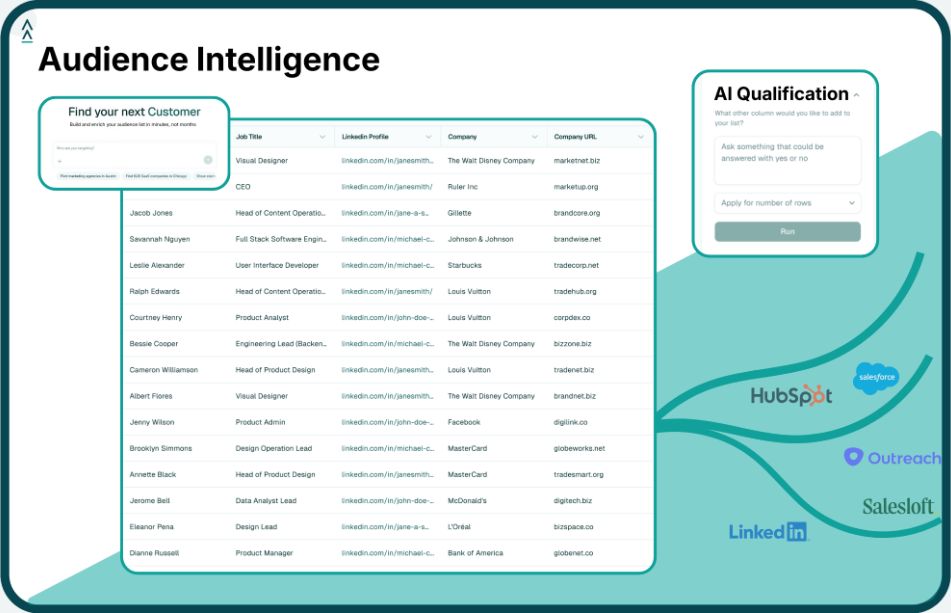
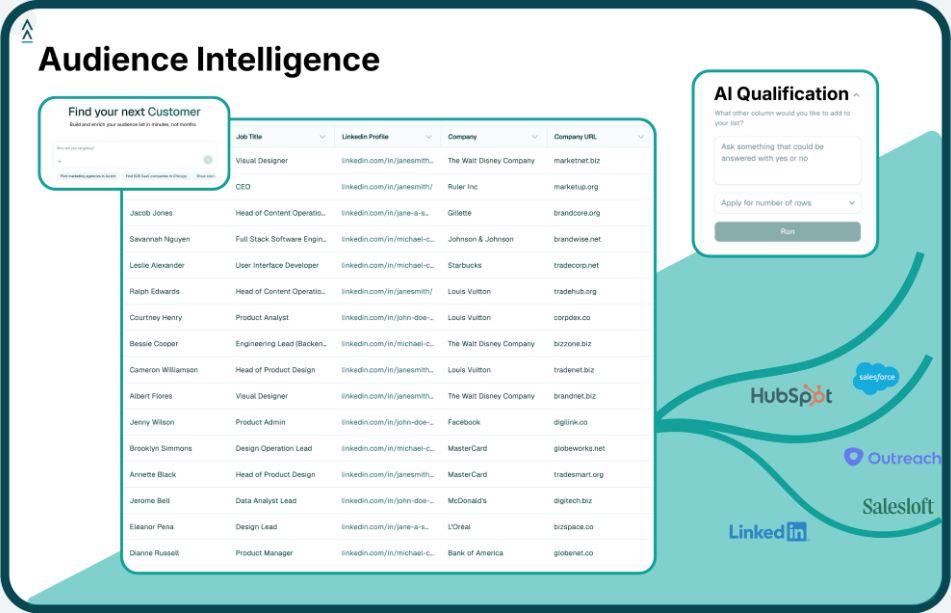
Landbase delivers accounts enriched with 1,500+ data fields that you can export to your CRM. When the underlying data is complete and current, every KPI on your dashboard becomes trustworthy.
8-12 core KPIs. More than that and the dashboard becomes a data dump that nobody acts on. Focus on the metrics that directly predict revenue outcomes and cut everything else.
Pipeline velocity, because it combines four variables (opportunities, deal value, win rate, cycle length) into one number. When velocity increases, revenue follows. When it decreases, something is broken.
Weekly for the operational view. Daily for pipeline coverage during end-of-quarter. Monthly for trend analysis. Quarterly for benchmark comparison.
Because every other metric depends on it. If 76% of your CRM entries are incomplete, your win rate calculation includes deals that were misqualified, your pipeline coverage includes accounts that should not be there, and your forecast reflects guesses instead of data. Data quality is the foundation metric.
Tool and strategies modern teams need to help their companies grow.