.png)
.png)

Daniel Saks
Chief Executive Officer


Every B2B database starts decaying the moment the data is captured. People change jobs. Companies restructure. Email addresses go stale. Phone numbers disconnect. According to research on CRM data hygiene, B2B contact data decays at 20-30% per year. According to Gartner research on data quality, the average cost of a bad contact record is $100 when you account for rep time wasted on research, failed outreach attempts, and damaged domain reputation from bounced emails.
At a 10-person SDR team, 20% decay means a manageable number of bad contacts per list. At 100 SDRs working thousands of contacts per campaign cycle, 20% decay means thousands of wasted dials, hundreds of bounced emails, and measurable damage to email deliverability. According to Harvard Business Review research on sales efficiency, enterprise sales teams lose an estimated 15-25% of potential selling time to data quality issues, with contact accuracy being the largest single contributor.
The contact still works at the target company but has moved to a different role. The VP of Sales is now the Chief Revenue Officer. The Director of Operations is now the VP of Strategy. The title in your database no longer matches their current position, which means your outreach references the wrong role and your contact scoring may have classified them incorrectly. According to Forrester research on B2B data quality, role changes account for approximately 40% of contact decay in enterprise databases.
The contact has left the target company entirely. They may have joined a competitor, moved to a different industry, or retired. Your database still shows them at the original company. The SDR calls, asks for them by name, and learns they left six months ago. The call is wasted, but the rep also missed an opportunity to reach their replacement, who might be the actual buyer now. According to McKinsey research on B2B sales productivity, company changes are the most costly form of contact decay because they represent a complete miss on the account.
The contact's email address has changed (company rebrand, domain migration, or standardization change) or their phone number has been reassigned. Emails bounce. Calls reach a generic voicemail or a different person. At scale, bounced emails damage sender reputation and domain health, which affects deliverability for every future campaign. According to Salesforce research on email deliverability, bounce rates above 2% trigger spam filters that reduce inbox placement rates across the entire domain.
Most enterprise teams approach verification as a post-list activity. The list is built, distributed to reps, and then individual contacts are verified as reps encounter problems. This approach catches decay after the damage has been done: the rep has already spent time preparing, the email has already bounced, the call has already been wasted.
The structural fix is to verify at the point of list creation. When Landbase builds a target account list, the contact qualification process includes verification signals as part of the scoring rubric. Profile recency, current employment indicators, and email validity are evaluated before the contact enters the exported CSV. Contacts that show strong decay signals (profile not updated in 12+ months, employment end date detected, email domain no longer resolving) are flagged or excluded automatically.
According to Bain research on B2B sales efficiency, shifting verification upstream from rep-level to list-level reduces wasted outreach attempts by 30-40% and recovers measurable selling time per rep per week.
Establish the criteria that flag a contact as potentially stale. Common thresholds: profile last updated more than 12 months ago, no activity signals in 6+ months, email domain changed, phone number reassigned. Each threshold should map to an action: flag for review, demote to lower tier, or exclude from the export.
Contact verification should be a dimension in the contact scoring rubric, weighted alongside title match, seniority, and role evidence. A contact with a strong title match but a stale profile should score lower than a contact with a moderate title match and a recently updated profile. Recency is a signal of accuracy.
Track bounce rates, invalid email rates, and wrong-person rates per campaign cycle. These metrics are direct measures of contact data quality. If bounce rates exceed 2% on a given list, the verification thresholds need tightening for the next cycle. For related email metrics, see the guide on domain reputation and email warmup.
Named accounts and A-tier accounts should have their contact data refreshed before every major outreach cycle. The buying committee at a strategic account may have changed since the last campaign. A quarterly contact refresh on the top 20% of accounts catches the role changes and departures that matter most for pipeline.
A full reverification is impractical for databases with tens of thousands of contacts. Instead, verify at the point of use: every time a list is built for a campaign, the contacts on that list go through the verification process. For accounts not in active campaigns, a quarterly spot-check of a random sample (5-10% of the database) provides a data quality pulse. Running a CRM data audit periodically keeps the overall database healthy.
Email verification tools are useful for catching invalid addresses before sending. They solve one dimension of the decay problem (email validity) but do not address role changes, company changes, or purchasing authority shifts. A complete solution combines email verification with AI-powered contact qualification that evaluates the full profile for current relevance. Verification tools are a complement to contact scoring, not a replacement.
At 50 SDRs working 100 contacts per week each, a 20% decay rate means 1,000 stale contacts per week. At an estimated $100 per bad contact (rep time, failed outreach, deliverability damage), that is $100,000 per week in wasted effort. Reducing the stale contact rate from 20% to 5% through upstream verification recovers $75,000 per week in productive selling capacity. The verification investment pays for itself within the first campaign cycle.
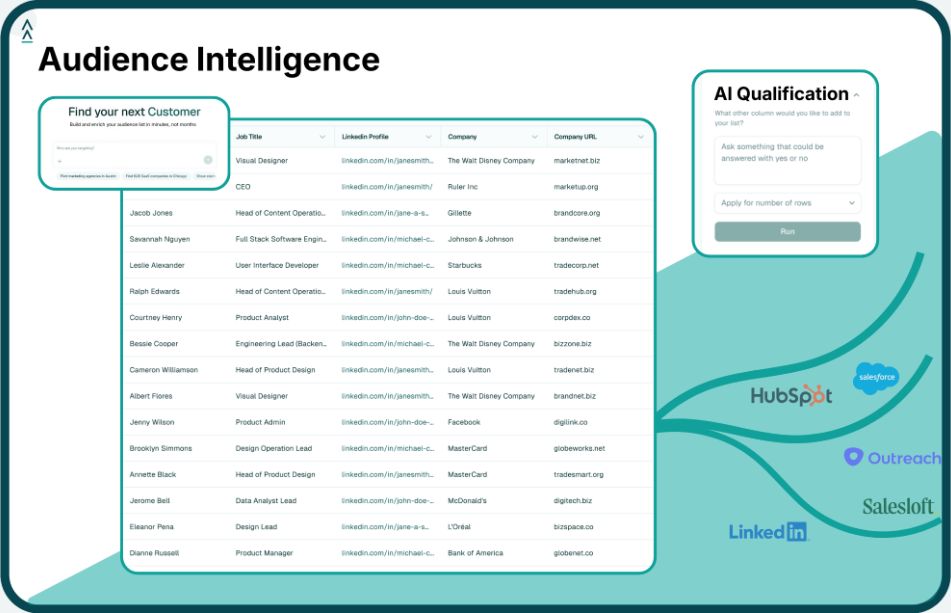
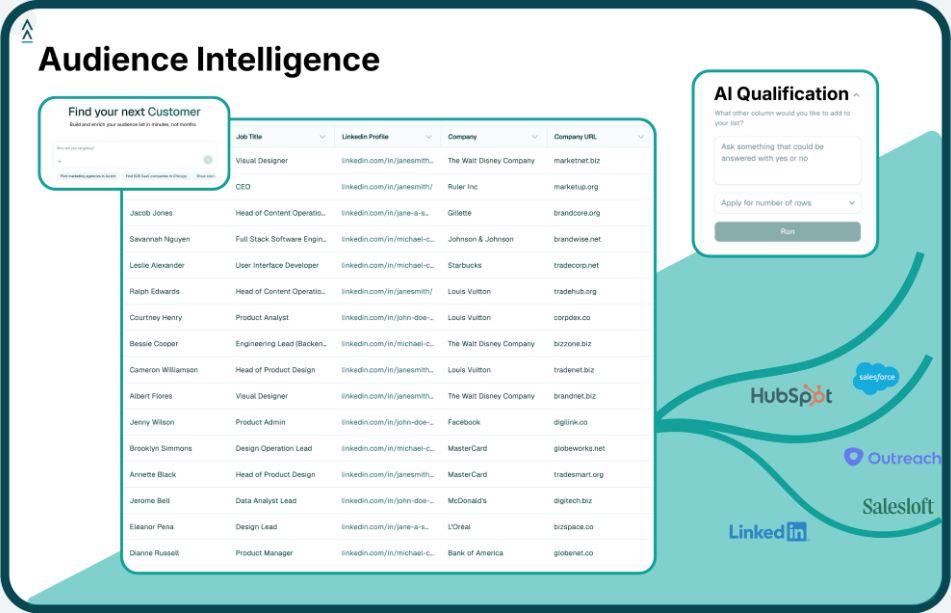
Landbase integrates verification into the contact scoring process. Profile recency, employment status signals, and email validity are evaluated as part of the multi-dimensional scoring rubric. Contacts that show decay indicators are flagged, demoted, or excluded before the CSV is exported. The output is a list where every contact has passed both qualification (right person at the right company) and verification (current, reachable, and accurate).
Tool and strategies modern teams need to help their companies grow.