.png)
.png)

Daniel Saks
Chief Executive Officer


Every outbound team hits the same wall. At 10 SDRs, the motion works. A sales leader picks the accounts, pulls contacts from a database, and distributes them in a spreadsheet. At 25 reps, it gets slower. At 50, the process breaks. The list quality degrades, territories overlap, and leadership spends more time on operations than coaching.
According to BCG research on B2B go-to-market, companies with structured revenue operations grow 36% faster than those without. The difference at scale is whether list operations are a manual burden carried by leadership or a system that runs independently. The teams that figure this out before they hire rep 50 scale smoothly. The ones that don't spend the next year debugging a process that should have been automated six months earlier.
According to Gartner research on B2B sales operations, the average enterprise buying decision now involves six to ten stakeholders. At 50+ SDRs, the volume of accounts, contacts, and territory assignments required to keep every rep productive creates an operational challenge that manual processes cannot solve.
A single RevOps person or sales manager can handle list building at this stage. They pull accounts from a database, do some manual filtering, assign them across reps in a spreadsheet, and move on. The process is slow, but the volume is low enough that it works. Most teams at this stage do not realize they are building habits that will not scale.
The warning signs appear here but get ignored: reps occasionally overlap on the same accounts, lists take a few days to build instead of a few hours, and the quality varies by who builds the list that week.
This is where manual processes start to fail visibly. List building that took two days now takes two weeks because the volume has doubled but the operations headcount has not. Territory assignment becomes contentious because there is no system to ensure balance. According to Forrester research on sales operations, companies with dedicated operations functions see 28% higher quota attainment than those without.
Leadership starts spending 30-40% of their time on list operations. That time comes directly from coaching, pipeline review, and conversion optimization. The cost is invisible because it shows up as slower ramp times and lower conversion rates rather than a line item on a budget.
At this scale, manual list operations are no longer viable. The team needs hundreds of new qualified accounts per week, distributed across territories with segment balance and tier coverage. Multiple verticals or product lines each require their own ICP criteria and contact qualification approach.
This is where enterprise outbound teams invest in centralized list intelligence. According to Harvard Business Review research on sales effectiveness, the most productive enterprise sales organizations invest in upstream data quality rather than downstream tool optimization. The ROI on improving the list that feeds the outbound stack is higher than the ROI on any individual tool in the stack.
At 10 reps, a manager can look at an account and estimate fit based on experience. At 50 reps, fit needs to be quantified. Every account in the addressable market should be scored against a propensity model that evaluates company scale, technology adoption, growth trajectory, and industry-specific signals. The output is a tiered account list where A-tier accounts receive immediate outreach and C-tier accounts go through additional verification.
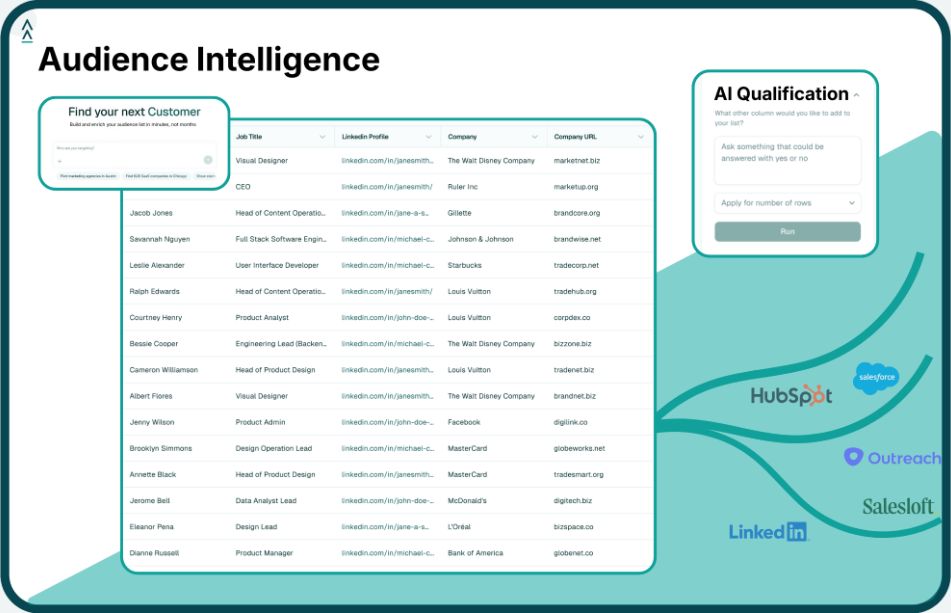
Database tools return every person at a company. At scale, reps cannot afford to manually verify each contact before dialing. AI-powered contact qualification scores every contact by title, seniority, role evidence, and decision-making authority. Exclusion rules automatically remove contacts that waste rep time: retired executives still in the database, branch-level administrators, and roles with no path to a purchasing decision. Enterprise engagements consistently show 2x or more qualified contacts per account compared to title-based database filters.
Distributing accounts across 50+ reps with balance across segments, geographies, and tiers is a combinatorial problem that spreadsheets cannot solve reliably. Automated territory assignment ensures every rep gets a balanced book of business, all contacts at a given company go to the same rep, and the distribution is deduped against the CRM pipeline. The output is a clean CSV per territory, ready to import.
At 50+ SDRs, the probability of two reps working the same account increases with every campaign cycle. According to McKinsey research on sales productivity, account overlap is one of the most common sources of wasted selling time in large outbound organizations. Every list export should be checked against the CRM before reaching a rep.
The system that builds campaign five should be sharper than the one that built campaign one. Call outcomes from the dialer, deal data from the CRM, and disposition patterns from the sequencing tool all contain signal about which account profiles and contact types convert. When that data feeds back into the scoring model, the targeting improves with every cycle. When it does not, the team is rebuilding lists from scratch every time. According to Salesforce research on sales performance, high-performing sales teams are 2.3x more likely to use data-driven decision making in their prospecting process.
Before building anything, quantify the operational burden. How many hours per week does leadership spend on list operations? What is the average time from campaign decision to first dial? How many accounts in the current pipeline have no verified decision-maker contact? These numbers make the case for investment.
Build a scored view of the total addressable market. Every account should be tiered by propensity to buy, and the scoring criteria should reflect what actually predicts deals in your specific market. This scored TAM becomes the denominator for penetration tracking and the source of truth for territory planning. Landbase builds these scored TAMs using AI-powered qualification across 1,500+ data points per account, exported as CSV for CRM import.
Move from title-based database pulls to AI-qualified contact lists. Every contact should be scored by decision-making authority and classified by buyer role. Exclusion rules should remove contacts that waste dials before the list reaches a rep.
Replace the spreadsheet distribution process with automated assignment that balances accounts by segment, geography, and tier. The output should be one CSV per rep, deduped against the CRM pipeline.
Build the pipeline for call outcomes and deal data to flow back into the scoring model. This does not require complex infrastructure. It requires a structured disposition capture process and a periodic recalibration of the scoring criteria based on what converted.
Before you hit 50 SDRs. The teams that scale smoothly build the infrastructure at 25 to 30 reps and let it absorb growth. The teams that wait until 50 reps spend six months in operational chaos before the system catches up. The cost of building early is a fraction of the cost of building during a scaling crisis.
ZoomInfo provides data access. It does not score accounts, qualify contacts by decision-making authority, assign territories, or close the feedback loop. A better spreadsheet is still a spreadsheet. The step function in outbound productivity happens when list operations move from a manual process owned by leadership to an automated pipeline that runs independently.
Track four metrics: time from campaign decision to first dial (should decrease), leadership hours spent on list operations per week (should approach zero), contact verification rate before dialing (should be unnecessary because contacts arrive pre-qualified), and conversion rate by list source (Landbase-sourced lists should outperform manually built lists). For a full set of metrics, see the RevOps KPI dashboard.
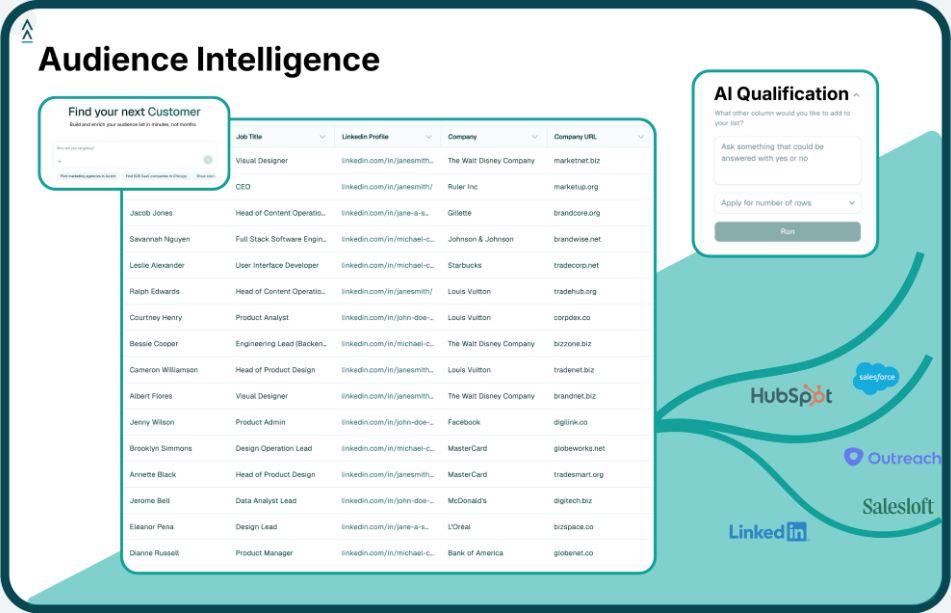
Scored account lists with AI-qualified contacts, exported as clean CSVs. Every account scored against a propensity model, every contact qualified by decision-making authority with exclusion rules applied, and every list territory-assigned and deduped against your CRM. The output is one CSV per rep territory, ready to import into your CRM and outbound tools.
Tool and strategies modern teams need to help their companies grow.