.png)
.png)

Daniel Saks
Chief Executive Officer


The International Energy Agency projects that data centre electricity consumption will more than double to around 945 TWh by 2030, up from about 415 TWh in 2024, with AI-optimized data centres as the largest driver. In the United States, the IEA expects data centres to account for nearly half of electricity demand growth through 2030.
That demand is landing on grids with long interconnection queues, aging assets, and volatile wholesale prices. A group of AI-native startups now sells software to utilities, power traders, asset owners, and large energy buyers, and several are among the AI startups adding headcount fastest this year. For B2B teams, hiring paired with new rounds is one of the clearer recent funding signals in vertical software.
This list ranks AI startups serving energy and utilities by 12-month headcount growth measured in Landbase data, then verifies each company's funding and operating evidence against public sources.
The starting pool was venture-backed companies whose primary product applies AI to grid operations, utility work, energy trading and forecasting, interconnection, or power for data centers. General AI cloud and data center operators were excluded.
Every company on the list had to meet four criteria:
Headcount growth is calculated from professional-profile data and can differ from company-reported figures, particularly for small teams, where a handful of hires produces a large percentage change. Funding, capacity, and customer figures below come from company announcements and press coverage rather than headcount data. Funding alone does not establish growth, so it is treated as one of several company buying signals.
CEO: John Reuter
Latest round: More than $4 million seed, May 2025
12-month headcount growth: +400%
Category: AI energy management for enterprises
Clear Current sells an AI platform that acts as a virtual energy manager for companies with many sites. It reads utility bills, meter data, tariff schedules, and supplier contracts, then checks charges against the applicable rate to flag overpayments.
When it announced its seed round in May 2025, Clear Current said its platform was in a pilot with AB InBev. The company was co-founded by Montauk Climate, and its CEO previously helped take Bloom Energy from pre-revenue to IPO.
Rho Ignition led the oversubscribed seed round, with participation from Coreline Ventures and Avesta Fund.
Clear Current targets the energy budget inside large enterprises, a buyer that often lacks a dedicated energy team but faces rising tariffs and demand charges.
CEO: Wannie Park
Latest round: $6 million seed, March 2026
12-month headcount growth: +250%
Category: AI energy orchestration for data centers
PADO AI makes software that coordinates power, compute, and cooling inside data centers. Its platform shifts workloads, adjusts cooling, and manages on-site energy resources so operators can run more compute within an existing power allocation.
PADO spun out of LG NOVA, LG Electronics' innovation center, in 2025. In coverage of its March 2026 seed round, the company said it is focused on mid-market colocation data centers and aims to raise compute output per megawatt without new power capacity.
NovaWave Capital, an LG NOVA-supported fund, led the $6 million seed round. The company said the funding will support product delivery and global expansion.
PADO represents a category that treats power as the binding constraint on AI capacity and sells software rather than new generation to relieve it.
CEO: Alex Hawkinson
Latest round: $51 million Series A, July 2025
12-month headcount growth: +108%
Category: Physical AI for utility and energy field operations
BrightAI combines sensors, edge computing, and AI models on its Stateful platform to monitor physical infrastructure such as power grid assets, water pipelines, and oil and gas equipment. The goal is to replace periodic inspections with continuous monitoring and predictive maintenance.
BrightAI reports more than 250,000 critical assets monitored and more than 70,000 frontline workers guided across more than 50,000 operational locations. Named customers on its website include Osmose Utilities Services, Kodiak Gas Services, and Diamondback Energy.
Khosla Ventures and Inspired Capital co-led the $51 million Series A. Coverage put total funding at about $78 million, including earlier backing from Upfront Ventures.
BrightAI addresses labor shortages and aging assets in utility networks, a problem that grows as load from electrification and data centers rises.
CEO: Henri Taskinen
Latest round: €11 million Series A, February 2026
12-month headcount growth: +106%
Category: AI battery storage trading and optimization
Capalo AI operates a virtual power plant that trades and optimizes battery storage and renewable assets across European electricity markets.
In its Series A announcement, Capalo said its contracted battery capacity passed one gigawatt in 2025, more than five times its earlier level in under a year. The company also reported roughly fivefold revenue growth and said its team doubled.
Heartcore Capital led the €11 million Series A. Tesi, Finland's state-owned investment company, participated, and existing investors VentureFriends, PROfounders, Inventure, and Innovestor reinvested.
As battery fleets scale, revenue depends on trading quality, which makes optimization software a core part of the storage business model.
CEO: Tom Nudell
Latest round: $5 million seed, July 2026
12-month headcount growth: +100%
Category: AI grid planning and interconnection studies
Piq Energy builds an agentic grid planning platform. Its AI agents run interconnection and grid studies, including load flow, production cost, and electromagnetic transient analysis, in parallel and alongside the engineering tools developers already use.
Piq reported managing more than 1,000 transmission grid models and completing more than 10,000 engineering workflows. The company cites more than 2,300 GW of generation and storage waiting in U.S. interconnection queues.
Active Impact Investments led the oversubscribed $5 million seed round, with participation from Cisco Foundation and several energy-focused funds.
Interconnection is one of the largest bottlenecks for new generation and large loads, and grid studies are a repeatable engineering task suited to automation.
CEO: Seyed Madaeni
Latest round: $54 million Series B, June 2026
12-month headcount growth: +100%
Category: Energy intelligence for large power buyers and data centers
Verse sells Aria, a platform that reads market prices, weather, contracts, and telemetry to manage energy portfolios for large buyers. Its Dispatch Intelligence product helps data centers connect sooner.
In September 2026, Verse said power under management on Aria reached 30 GW, triple the 10 GW it reported at the start of the year. The company describes its customers as Fortune 500 energy consumers and expects to onboard more than 100 data center sites over 12 months.
Bessemer Venture Partners led the $54 million Series B, with participation from GV, NVIDIA, and Norrsken VC. Earlier coverage reported a $20.5 million Series A led by GV.
Verse sits between hyperscale energy demand and grid constraints, the same intersection where utilities and developers are competing for capacity.
CEO: Tom Scaramellino
Latest round: $10 million seed, September 2025
12-month headcount growth: +91%
Category: AI grid compliance and reliability
GridStrong makes AI-native software that automates compliance and reliability work for owners of generation, transmission, and large-load assets. It covers the asset lifecycle from interconnection requests to post-commercial operations, replacing spreadsheets and consultant-heavy processes.
GridStrong was founded in February 2025. Seven months later, it said more than half of the 25 largest renewable asset owners in North America were customers, naming Southern Company, Ørsted, AES, Engie, NextEra Energy, and Invenergy.
Congruent Ventures led the $10 million seed round, with participation from Energize Capital and strategic investments from Engie Renewables North America and other utilities.
Reliability standards are tightening as inverter-based resources and large loads join the grid, which increases compliance work for every asset owner.
CEO: David Budde
Latest round: €24 million Series A, May 2025
12-month headcount growth: +90%
Category: AI electricity procurement and energy management for businesses
trawa is a Berlin-based electricity provider and software company. It bundles renewable power supply sourced through PPAs with AI-driven procurement, energy management software, and flexibility services such as battery storage for mid-sized industrial and commercial companies.
trawa raised its Series A one year after its seed round, which Balderton led in May 2024. The company said customers can save up to 30% a year on electricity costs, a company-reported figure. It has not disclosed customer counts or revenue.
Headline led the €24 million Series A, with Norrsken VC and Magnetic joining existing investors Balderton, Speedinvest, and AENU.
trawa sells to European mid-market manufacturers for whom high power prices have become a structural cost, combining supply and software in one contract.
CEO: Tim Barat
Latest round: $55 million Series B, November 2025
12-month headcount growth: +83%
Category: Grid monitoring and hazard detection
Gridware makes Gridscope, a pole-mounted system that measures mechanical, electrical, and environmental signals on distribution lines. Utilities use the data to detect hazards such as broken equipment, vegetation contact, and faults before they cause outages or wildfires.
Gridware said its devices are deployed on tens of thousands of poles and that its utility partners serve about 40% of U.S. electricity customers. Duquesne Light deployed 1,700 additional Gridscope devices after a pilot.
Tiger Global and Generation Investment Management led the $55 million Series B. Existing investors Sequoia Capital, Convective Capital, Fifty Years, True Ventures, Lowercarbon, and Y Combinator participated.
Wildfire liability and outage costs are pushing utilities toward continuous line monitoring, and Gridware is among the most widely deployed startups in that category.
CEO: Steffen Schülzchen
Latest round: €43 million growth round, March 2026
12-month headcount growth: +81%
Category: AI battery storage trading
Entrix is a Munich-based software and trading company that markets battery storage systems across wholesale and ancillary service markets. It combines AI-based optimization with a live trading desk and 24/7 operations for storage owners.
With its March 2026 round, Entrix reported 3 GW (8.5 GWh) of battery storage under contract, with 2 GW scheduled to go online in 2026 and more than 70 systems operating. It operates in Germany, Poland, Italy, Spain, and Portugal.
Junction Growth Investors, Korys, and BNP Paribas's Solar Impulse Venture Fund led the €43 million round. Allianz, AENU, Enpal, Abacon, and Arvantis Group are also investors.
Entrix shows how quickly battery optimization has moved from pilot to multi-gigawatt contracts in Europe's largest power markets.
Several patterns repeat.
First, data center power is pulling software demand forward. PADO AI and Verse sell directly to data center and large-load buyers, while Piq Energy and GridStrong automate the interconnection and compliance steps those projects must clear.
Second, battery trading is now a software category of its own. Capalo AI and Entrix both report capacity under contract in gigawatts, and both earn revenue by optimizing assets they do not own.
Third, the buyer list is broad. Utilities buy monitoring from Gridware and BrightAI, renewable asset owners buy compliance software from GridStrong, and manufacturers buy procurement and energy management from Clear Current and trawa.
For GTM teams, these companies are hiring quickly while adding utility and enterprise customers. That combination is more useful when paired with hiring, leadership, technology, and data enrichment signals than when funding is viewed on its own. Related rankings cover the AI construction startups hiring fastest and the AI mobility startups hiring fastest. Teams researching the wider category can also compare this list with Landbase's earlier rankings of fast-growing renewable energy tech companies and fast-growing clean energy tech companies.
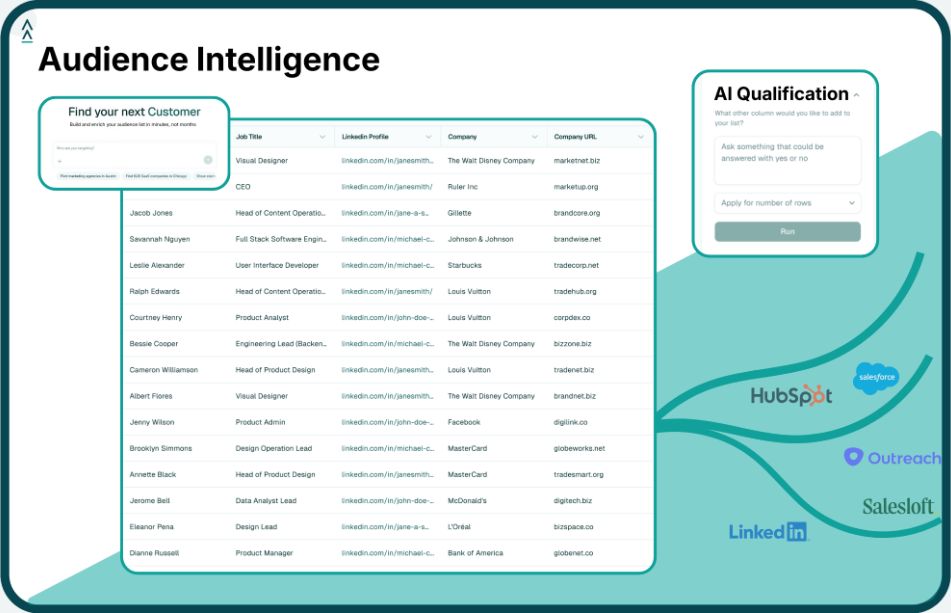
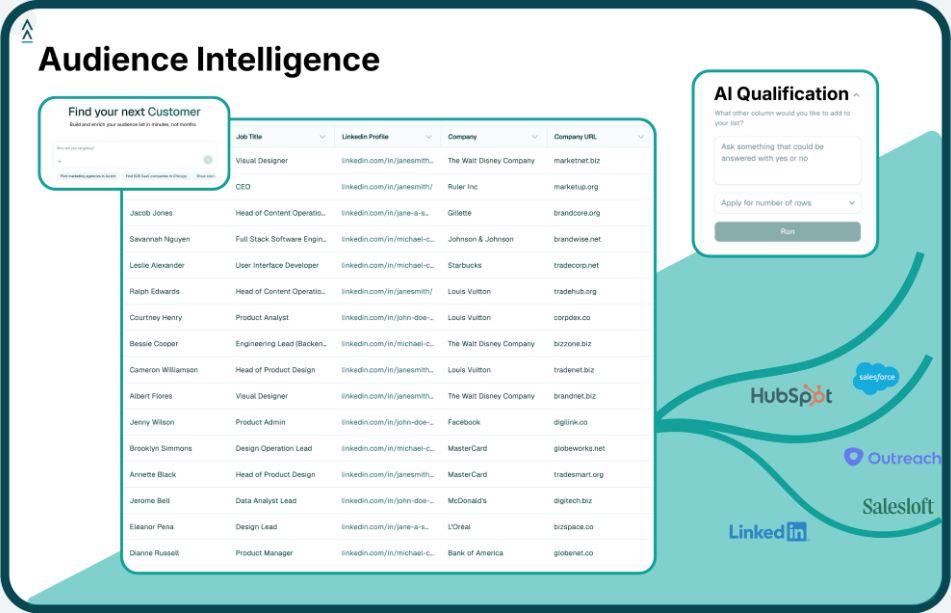
The ranking in this article was built with Landbase. A natural-language search identified venture-backed AI companies serving energy, utilities, and the power grid, an enrichment step added founding year and 12-month headcount change, and the results were filtered and sorted into a structured dataset.
Landbase's web and CLI interfaces access the same account, datasets, and saved work.
For more complex requirements, the Advanced Dataset Creator supports filters, calculations, and custom output fields.
Landbase's data infrastructure includes more than 800 million contacts and more than 40 million companies across more than 1,500 fields, with enrichment from more than 20 providers.
An energy AI workflow could, for example, identify grid and energy software companies that raised a seed or Series A round in the past year, grew headcount by more than 75%, sell to utilities or independent power producers, and recently hired a head of sales or partnerships in North America or Europe.
The Landbase CLI setup supports these workflows from a standard terminal and from AI coding environments including Claude Code and Codex.
An AI energy startup builds software or services that use AI to operate, plan, trade, or manage energy systems. The category includes grid monitoring and planning, utility operations, battery trading and optimization, interconnection and compliance automation, and energy management for data centers and large buyers.
Clear Current recorded the highest 12-month headcount growth in Landbase data among the companies that met this list's criteria, at 400%. PADO AI followed at 250%, then BrightAI and Capalo AI at just over 100%.
Electricity demand from data centers, electrification, and manufacturing is rising faster than grids can add capacity. Utilities and developers face long interconnection queues, stricter reliability rules, and aging assets, while battery fleets need constant trading decisions. Each of these problems involves large volumes of data and repeatable engineering work suited to AI.
Not on its own. Several companies on this list have small teams, so a few hires produce a large percentage change, and headcount data can differ from company figures. This list therefore pairs headcount growth with disclosed funding, capacity, and customer evidence wherever it is available.
Teams can start with a category definition and then filter by headcount growth, funding stage, recent rounds, target buyer, geography, and hiring activity. Landbase can combine these criteria into reusable datasets and return company and contact information through web and CLI workflows.
Tool and strategies modern teams need to help their companies grow.