.png)
.png)

Daniel Saks
Chief Executive Officer


JLL's 2025 Global Real Estate Technology Survey found that 88% of real estate investors, owners, and landlords have started piloting AI, compared with fewer than 5% of companies in July 2023. Crunchbase data shows real estate-related startups raised about $10.5 billion in 2025, up roughly 17% from 2024.
A growing share of that capital is going to AI-native companies that sell into property management, brokerage, leasing, and real estate investment. For B2B teams, these companies sit inside the broader group of AI startups adding headcount fastest this year.
This list ranks AI startups serving real estate by 12-month headcount growth measured in Landbase data, then verifies each company's funding and operating evidence against public sources.
The starting pool was venture-backed companies whose primary product applies AI to real estate investing, brokerage, leasing, property management, or commercial real estate operations. Construction technology was excluded and is covered separately.
Every company on the list had to meet four criteria:
Headcount growth is calculated from professional-profile data and can differ from company-reported figures, particularly for companies with contractors, acquired staff, or distributed teams. Funding, valuation, and customer figures below come from company announcements and press coverage rather than headcount data. Funding alone does not establish growth, so it is treated as one of several company buying signals.
CEO: Mohamed Mohamed
Latest round: $5 million pre-seed, February 2026
12-month headcount growth: +700%
Category: AI real estate investing
Smart Bricks is building AI agents for real estate investing. Its platform draws on more than 1 million public and proprietary data feeds to assess supply, pricing, liquidity, regulation, and risk.
The system ranks properties by expected risk-adjusted return using more than 1,000 variables, then uses additional agents for valuation, underwriting, due diligence, negotiation, and financing.
Smart Bricks is the earliest-stage company on this list. It has not disclosed customer or transaction figures, so headcount is the main operating signal.
The company raised a $5 million pre-seed round to expand its underwriting and execution workflows and widen coverage across global real estate markets.
Andreessen Horowitz led the round through its a16z Speedrun program. Techstars, 500 Global, Cornerstone VC, and South Loop Ventures also participated, along with angels from OpenAI, Anthropic, DeepMind, Airbnb, and Blackstone.
Smart Bricks targets investment decisions rather than property operations, applying agent workflows to sourcing and underwriting.
CEO: Ilya Drozdov
Latest round: $170 million Series B ($95 million equity, $75 million debt), July 2026
12-month headcount growth: +291%
Category: AI-enabled residential lettings
Dwelly is building an AI operating system for residential lettings in the United Kingdom. Instead of selling software to agencies, it acquires independent lettings agencies and moves them onto its own platform.
Dwelly said it manages more than 15,000 properties and has a rent roll of about £350 million. Sifted reported that the company had acquired 17 agencies by July 2026.
The company raised $170 million in its Series B, bringing its two 2026 rounds to more than $260 million in under a year.
EQT Growth led the equity portion of the Series B, with General Catalyst, s16vc, Begin Capital, and DVC participating. Trinity Capital provided the $75 million debt facility. The round followed a $93 million raise in February 2026 that combined equity and debt.
Dwelly is one of the clearest examples of the AI roll-up model in real estate, buying service businesses and improving their margins with software.
CEO: Cristian Pastrana
Latest round: €2 million (about $2.2 million), May 2026
12-month headcount growth: +218%
Category: AI sales and demand planning for developers
eVoost AI provides an AI platform that helps residential developers gauge buyer demand and sell units before construction is complete.
eVoost said it has more than $3.5 billion in real estate assets under commercial agreements across Europe, the UAE, and the United States.
Wamda reported that the company closed a €2 million round to fund product development, team growth, and expansion in Europe, the UAE, and the U.S.
First Drop VC led the round. A Hub71-linked vehicle backed by Mubadala Investment Company also participated, along with strategic and angel investors. eVoost previously raised an undisclosed seed round from Qora71 in 2025.
eVoost sells to developers, a segment that many proptech companies overlook.
CEO: Sammy Greenwall
Latest round: $16.5 million Series A, July 2026
12-month headcount growth: +133%
Category: AI for commercial real estate brokerage
Henry AI automates document work for commercial real estate brokers, including offering memorandums, underwriting, pitch decks, and buyer lists.
Henry said teams from all of the largest commercial real estate brokerages use its platform, across more than 150 firms. The company reported producing more than 20,000 client-ready deliverables representing more than $150 billion in underlying deal value.
According to the Series A announcement, work that previously took about 15 hours per deliverable now takes about 30 minutes of human review.
FirstMark Capital led the Series A, with strategic participation from Thomson Reuters Ventures and follow-on investment from Y Combinator, Susa Ventures, and others. Henry raised $4.3 million in seed funding in February 2025.
Henry shows how AI is entering the brokerage back office, where analyst time spent on documents is a direct cost.
CEO: Francesco Decamilli
Latest round: $12 million Series A, July 2026
12-month headcount growth: +118%
Category: AI agents for property operators
Uniti provides AI agents that handle leasing, maintenance, collections, reviews, and renewals across voice, email, SMS, and chat. The platform integrates with 15 property management systems and serves self-storage, manufactured housing, multifamily, senior living, and flexible workspace operators.
Uniti named Regus, StorQuest, RHP Properties, and Storage King USA as customers. The company reported that 94% of its pilots converted to long-term contracts and that it achieved 306% net revenue retention.
Commercial Observer reported that Uniti added clients alongside its $12 million Series A.
Pathlight led the Series A, with MetaProp and existing investors Prudence, Flex Capital, and Alate participating. Uniti raised a $4 million seed round in March 2025, for total funding of about $16 million.
Uniti sells across several asset classes rather than a single one, which widens its market beyond multifamily-only leasing tools.
CEO: Divya Aathresh
Latest round: $5 million seed, September 2025
12-month headcount growth: +113%
Category: AI operating system for residential brokerages
MaxHome.AI is an AI-native operating system for residential real estate brokerages. It automates document management, transaction coordination, and back-office work.
The company said its platform is used by affiliates of Berkshire Hathaway HomeServices and Coldwell Banker, as well as independent brokerages such as The Keyes Company.
Fintech Global reported that MaxHome.AI raised $5 million to expand automation and product development.
Fika Ventures led the seed round, with BBG Ventures, 1Sharpe Ventures, and Four Acres Capital participating. It followed a $2 million pre-seed led by BBG Ventures in December 2024, bringing total funding to $7 million.
Residential brokerages face pressure on commissions and transaction volume. MaxHome.AI targets the transaction coordination work that brokerages often staff manually.
Co-founder: Sam Dundas
Latest round: $3.75 million seed (including $1.5 million announced in 2024), mid-2026
12-month headcount growth: +93%
Category: AI guest messaging and revenue tools for rentals
Besty AI provides AI guest messaging, upselling, and operations automation for short-term rental managers. It integrates with property management systems including Guesty, OwnerRez, Hostaway, and Hospitable.
Besty reported more than 300 customers and more than 30,000 properties across 25 countries in mid-2026. In August 2024, the company had reported about 250 paying customers and more than 15,000 properties.
Hotel Technology News reported that Besty grew from eight to 22 employees over the prior year.
Armory Square Ventures led the expanded seed round, with Ridge Ventures, Bungalow, and Grand Ventures participating.
Besty sits on top of existing rental software rather than replacing it, which allows it to sell to operators without a system migration.
CEO: Stephen Carroll
Latest round: $32 million Series C, June 2026
12-month headcount growth: +60%
Category: AI leasing decisioning
Findigs provides an AI-driven leasing decisioning platform that helps rental housing operators evaluate applicants and manage risk.
Findigs reports more than 500,000 units on its network. Founded in 2018, it is the oldest company on this list.
Frontier Venture Capital reported that Findigs raised $32 million in Series C funding, bringing total funding to $80 million.
RPM Ventures led the Series C, with existing investors Nyca Partners, Frontier Venture Capital, and Western Technology Investment participating. Findigs raised a $27 million Series B led by Nyca Partners in 2024.
Findigs connects AI decisioning to financial products such as revenue guarantees, giving operators a measurable outcome rather than a workflow tool alone.
Co-founders: Leia de Guzman and Stephanie Grayson
Latest round: $18 million Series A, January 2026
12-month headcount growth: +52%
Category: AI for commercial real estate asset management
Cambio uses agentic AI to process building data, evaluate asset performance, and recommend retrofits, capital plans, and compliance actions for commercial real estate owners.
Cambio said it was deployed in more than 35 countries during its stealth period, covering more than 2 billion square feet of assets. Named customers include Oxford Properties, Nuveen, Principal, BGO, and Beacon Capital Partners.
Crunchbase News reported that Cambio raised its Series A at a $100 million valuation.
Maverick Ventures led the Series A, with Y Combinator, Adverb Ventures, and Peterson Ventures participating. Total funding is about $22 million.
Cambio sells to institutional owners with large portfolios, where capital planning and compliance decisions carry high dollar values.
CEO: Raz Zohar
Latest round: C$2 million pre-seed, announced October 2024
12-month headcount growth: +50%
Category: AI assistant for real estate agents
Mave is a Toronto-based AI assistant for residential real estate agents and brokers. It produces marketing content, emails, and presentations, and agents can text it market questions such as price per square foot in a given postal code.
Mave said more than 6,000 agents at over 90 Greater Toronto Area brokerages expressed interest while it was in stealth. It selected 1,000 agents and brokers for its initial beta.
BetaKit reported that Mave raised C$2 million in pre-seed funding.
Relay Ventures and N49P led the pre-seed, with Alate Partners, Clarim Ventures, and Gambit Partners participating. No later round has been publicly announced.
Mave sells directly to individual agents and brokerages, the largest and most fragmented buyer group in residential real estate.
Several patterns repeat.
First, real estate AI is splitting by workflow. Smart Bricks and Cambio focus on investment and asset management decisions, Henry, MaxHome.AI, and Mave on brokerage and agent workflows, and Uniti, Besty, and Findigs on leasing and property operations.
Second, some companies are buying the service business rather than selling to it. Dwelly acquires lettings agencies and runs them on its own software. That model competes for property management fees rather than software budgets.
Third, growth is spread across regions. Dwelly is in London, Smart Bricks in Dubai, and eVoost in Abu Dhabi and Spain, while the U.S. companies concentrate on commercial brokerage, multifamily, and short-term rentals.
For GTM teams, these companies are hiring quickly and adding operator and brokerage customers. That combination is more useful when paired with hiring, leadership, technology, and data enrichment signals than when funding is viewed on its own. Teams researching adjacent categories can compare this list with Landbase's ranking of AI construction startups hiring fastest and its earlier lists of fast-growing proptech companies and fast-growing real estate tech companies.
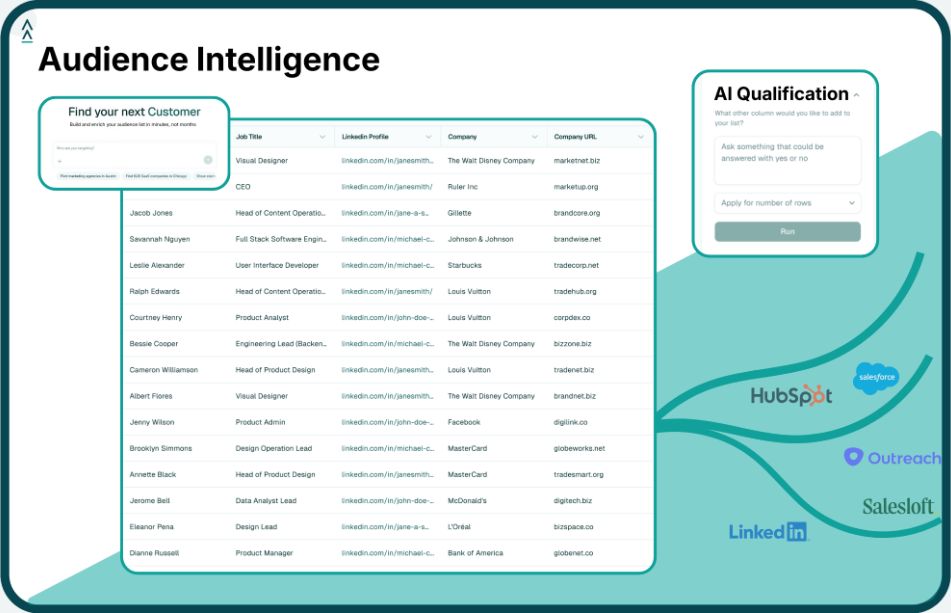
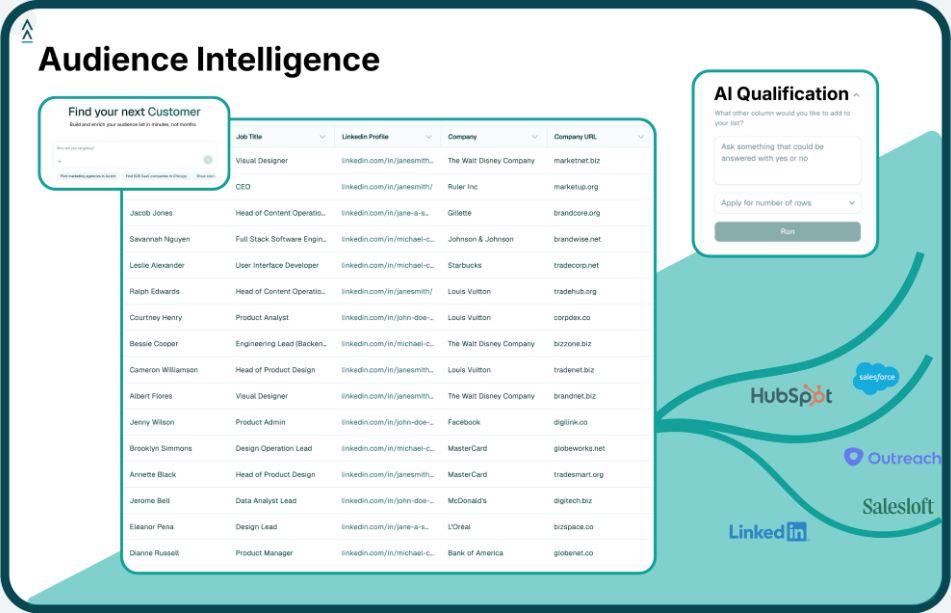
The ranking in this article was built with Landbase. A natural-language search identified venture-backed AI startups serving real estate and property management, an enrichment step added founding year and 12-month headcount change, and the results were filtered and sorted into a structured dataset.
Landbase's web and CLI interfaces access the same account, datasets, and saved work.
For more complex requirements, the Advanced Dataset Creator supports filters, calculations, and custom output fields.
Landbase's data infrastructure includes more than 800 million contacts and more than 40 million companies across more than 1,500 fields, with enrichment from more than 20 providers.
A real estate AI workflow could, for example, identify proptech companies that raised a Series A or later in the past year, grew headcount by more than 50%, sell to multifamily or self-storage operators, and recently hired a head of sales or customer success in North America.
The Landbase CLI setup supports these workflows from a standard terminal and from AI coding environments including Claude Code and Codex.
An AI real estate startup builds products that use AI to perform or support real estate work, such as investment analysis, brokerage documents, leasing, property management, tenant screening, or commercial asset management. This list excludes construction technology, which is ranked separately.
Smart Bricks recorded the highest 12-month headcount growth in Landbase data among the companies that met this list's criteria, at 700%. Dwelly followed at nearly 300%, and eVoost AI at more than 200%.
Leasing, maintenance, guest messaging, and collections involve high volumes of repetitive communication across many units. Operators are using AI agents to handle that volume without adding staff at the same rate.
Not on its own. Headcount data can differ from company figures, and acquisition-led companies such as Dwelly add staff through purchases rather than hiring. This list therefore pairs headcount growth with disclosed funding, customer, and valuation evidence wherever it is available.
Teams can start with a category definition and then filter by headcount growth, funding stage, recent rounds, target asset class, geography, and hiring activity. Landbase can combine these criteria into reusable datasets and return company and contact information through web and CLI workflows.
Tool and strategies modern teams need to help their companies grow.