.png)
.png)

Daniel Saks
Chief Executive Officer


The average B2B win rate sits at 21%, and sales cycles have stretched 32% longer since 2021. Yet according to 6sense research, the vendor ranked first at the end of the selection phase wins about 80% of the time, meaning the deal is won or lost before your rep even picks up the phone.
Growth Operations teams need signal tracking tools to identify which accounts are ready to buy RIGHT NOW, not next quarter. In today's competitive landscape, relying on static databases or manual research simply isn't enough. The best signal tracking platforms combine real-time intelligence with actionable workflows that empower technical GTM teams to act quickly.
We analyzed 10 leading platforms based on signal breadth, AI capabilities, real-time delivery, integration depth, and proven conversion results from real customers. Our top pick is Landbase CLI because its GTM System uses autonomous multi-agent AI to continuously qualify accounts across 1,500+ signal types, reducing manual research by ~80%.
Best For: Technical GTM teams and AI agents needing autonomous qualification across 1,500+ signal types
Pricing: Contact Landbase for a tailored GTM package aligned to your team's goals.
Key Features:
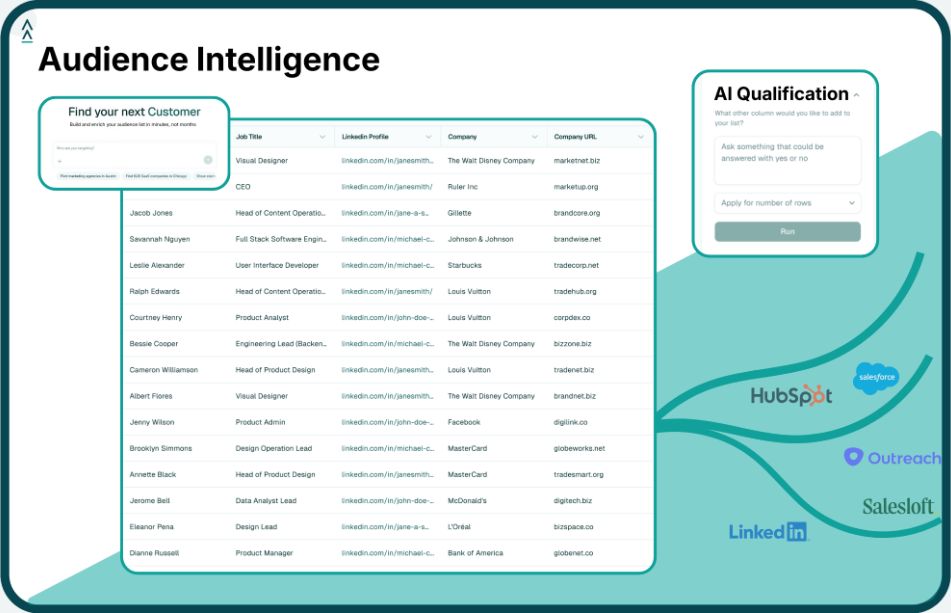
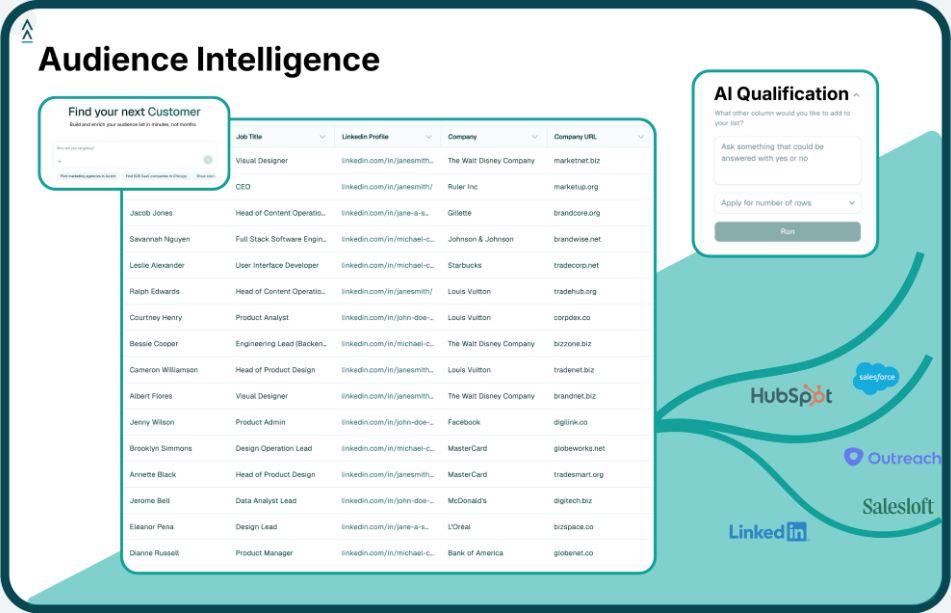
Landbase is the only platform with an autonomous multi-agent system that executes the full GTM workflow, targeting, qualification, enrichment, and prioritization, through AI agents. This approach reduces manual research by ~80% and enables campaigns in minutes vs weeks.
The platform's signal coverage is broad and purpose-built for modern GTM teams, tracking business events across funding, hiring, leadership changes, earnings calls, and competitive intelligence. Landbase's 1,500+ signal types provide a complete picture of buying signals for technical teams using CLI-driven workflows.
"With Landbase, we found high-fit B2B prospects at scale, eliminated heavy research overhead, and enabled tailored 'why this, why now' outreach that often converts at 40%+." – Stefanos Chatzimarkou, Senior Manager Business Development, Oyster HR
Select customers report 4-7x higher conversion and the platform has been trained on 40M+ B2B campaigns for domain-specific intelligence.
Best For: Large organizations running sophisticated ABM programs with dedicated sales operations teams
Price: ~$60,000+/year (mid-market), significantly higher for enterprise
Key Features:
6sense offers a large proprietary B2B intent dataset with 13 years of historical data and 1 trillion daily signals processed. The platform is recognized in analyst research and provides transparent buying stage classification (Awareness, Consideration, Decision) with explainable per-customer models.
Best For: Mid-market teams needing full-spectrum business event signals without enterprise pricing
Price: From $85/month with flexible account-based pricing
Key Features:
Salesmotion tracks concrete business events beyond just web intent, capturing real organizational changes that signal buying readiness. The platform's full-spectrum coverage includes signals like podcast mentions and earnings call language analysis.
Best For: Organizations where best deals come from people who've used your product before
Price: From $2,750/month ($33K/year) for Core, with higher tiers at $5,750/month and $10,000/month
Key Features:
UserGems specializes in champion-based selling motions, systematizing the pattern where your best deals come from people who've used your product before. The platform provides contact-level signals, enabling more precise targeting.
Best For: Teams wanting pure topic-level intent data to layer into existing stack
Price: ~$25,000+/year, custom based on data volume and topics tracked
Key Features:
Bombora is a foundational B2B intent data provider, with many platforms licensing Bombora data under the hood. The consent-based co-op model supports data quality and ethical sourcing while providing a large B2B intent co-op with 5,000+ B2B sites.
Best For: Large sales teams needing both "who" (contact data) and "when" (intent signals) in unified platform
Price: ~$15,000+/year starting, $25K-$40K for enterprise with intent features
Key Features:
ZoomInfo offers a comprehensive B2B contact database combined with intent signals in a single platform. With 35,000+ customers and $1.25 billion annual revenue, it's an enterprise-grade option with established data quality and scale.
Best For: Developer-first and PLG companies where prospects engage through communities before sales
Price: From $2,500/month billed annually for Essential; Advanced and Enterprise are custom priced
Key Features:
Common Room connects community, product, and social signals into a unified revenue-tied view. Built specifically for developer-first and PLG companies, it addresses the reality that prospects often engage through communities before any sales interaction.
Best For: Startups and small teams (2-5 people) wanting AI-qualified multi-source signals
Price: €79/month (Starter), €99/mo (7 rules), €250/mo (25 rules), €500/mo (75 rules)
Key Features:
Clearcue focuses on AI-qualified signals rather than raw data dumps, surfacing intent with context that's ready to use. At €79/month, it's an accessible multi-source platform for smaller teams.
Best For: Teams prioritizing first-party website intent over third-party research signals
Price: Contact sales (enterprise pricing model)
Key Features:
Warmly focuses on first-party website intent, with the philosophy that "if someone is on your website right now, that's a stronger buying signal than any third-party data." The platform delivers person-level identification with sub-30-second engagement capability.
Best For: Budget-conscious SMBs wanting prospecting, enrichment, and outreach in one tool
Price: Free tier available, $49/mo (Basic), $79/mo (Professional), $119/mo (Organization)
Key Features:
Apollo.io offers an all-in-one solution, combining prospecting, enrichment, and outreach in a single accessible platform. With a limited free tier and pricing starting at $49/month when billed annually, it's accessible to teams with limited budgets.
When evaluating signal tracking tools for Growth Ops teams, Landbase CLI stands out as the superior option for technical GTM teams and AI agents needing flexible, autonomous access to B2B intelligence. While other platforms offer value in specific areas, Landbase's comprehensive GTM System addresses the diverse needs of modern revenue organizations working in the agentic era.
Landbase CLI enables Growth Ops teams to search, enrich, match, manage, and export B2B audience data directly from the terminal, making it ideal for AI agents and technical GTM teams. Teams can use the CLI quickstart to begin quickly. The platform's unique capabilities include natural-language search that lets users describe their ideal audience in plain English, and advanced dataset creation that supports custom logic, filters, and computed GTM signals.
What truly differentiates Landbase is its autonomous multi-agent system that continuously qualifies accounts across buying signals, reducing manual research by ~80%. This approach enables campaigns in minutes versus weeks and drives 4-7x higher conversion compared to traditional approaches.
For Growth Ops teams working with AI agents, Landbase CLI is designed specifically for usage within Claude Code, Codex, and other LLM environments, making it a foundational tool for the future of AI-native GTM. The terminal-native interface and structured outputs enable seamless integration with scripts, dashboards, CRMs, and Workflows. Teams can review CLI setup guidance and CLI use cases to connect terminal workflows with Landbase data and execution paths.
Ready to transform your signal tracking capabilities? Schedule a demo to see how autonomous GTM intelligence can accelerate your revenue operations.
Signal tracking in Growth Ops involves monitoring and analyzing various indicators of buying intent or organizational change that suggest a prospect is ready to engage with your solution. These signals can include web intent data, business events (funding, hiring, leadership changes), community engagement, product usage patterns, and first-party website activity. Effective signal tracking enables Growth Ops teams to prioritize accounts showing active buying signals rather than relying on static firmographic criteria alone.
Landbase CLI differentiates itself through its terminal-native interface and autonomous multi-agent system. Compared with traditional sales intelligence tools that emphasize database access and UI-driven filtering, Landbase CLI enables technical GTM teams to work with GTM data directly from their terminal using natural language and the CLI quickstart. The platform's autonomous agents continuously qualify accounts across 1,500+ signal types rather than just providing alerts, reducing manual research by ~80% and enabling AI agents to reason over structured B2B data effectively.
Yes, Landbase CLI can serve as the command-line interface to ingest, manage, and analyze buying signals from providers like Bombora. The platform's advanced dataset creator supports custom logic and filters that can incorporate Bombora's topic-level intent signals alongside other business event data. This enables Growth Ops teams to build comprehensive audience segments that combine web research intent with concrete organizational changes like funding announcements or hiring surges, creating more accurate buying readiness indicators.
Using AI agents for GTM data workflows provides several key benefits: 3-5x higher conversion rates compared to passive signal tools, ~80% reduction in manual research time, and the ability to continuously qualify accounts rather than relying on static snapshots. AI agents can also execute the full GTM workflow, targeting, qualification, enrichment, and prioritization autonomously, enabling campaigns in minutes versus weeks and freeing human team members to focus on high-value strategic activities.
Growth Ops teams can leverage signal tracking to improve sales and marketing outcomes by creating more precise audience segments for targeted campaigns, enabling sales teams with real-time buying signals for more effective prospecting, and automating lead scoring based on actual buying behavior rather than firmographic assumptions. By combining diverse signal types, including web intent, business events, community engagement, and first-party website activity, teams can identify accounts showing genuine buying readiness and deliver more contextual, timely outreach that resonates with prospects' current situations and needs.
Tool and strategies modern teams need to help their companies grow.