March 3, 2026

RevOps vs SalesOps: The Strategic Guide to Modern Revenue Operations

Understand the strategic differences between RevOps and SalesOps, when to evolve from one to the other, and how each function drives revenue growth. Learn key metrics, team structures, and technology requirements for modern revenue operations.
  • Button with overlapping square icons and text 'Copy link'.
Table of Contents

Major Takeaways

What's the fundamental difference between SalesOps and RevOps?
SalesOps focuses exclusively on optimizing the sales department's efficiency and processes, while RevOps takes a holistic, cross-functional approach that aligns sales, marketing, and customer success teams under a unified revenue strategy. The key difference is organizational scope, not superiority.
When should a company transition from SalesOps to RevOps?
Companies typically start with SalesOps at $10-25M ARR when sales processes need optimization, then evolve to RevOps at $50-100M+ ARR when cross-functional misalignment creates revenue leakage. The transition should be driven by organizational maturity and specific challenges, not industry trends.
What measurable impacts can RevOps deliver?
Companies implementing RevOps report improvements in pipeline efficiency and forecast accuracy, with some organizations seeing up to 30% reduction in deal slippage and significant time savings in quarterly business reviews. RevOps also provides unified revenue lifecycle metrics like CAC, LTV, and NRR for better strategic decision-making.

Most revenue leaders think of SalesOps and RevOps as competing approaches, but the reality is more nuanced. The key difference isn't about which is better—it's about organizational maturity and strategic scope. SalesOps focuses exclusively on optimizing the sales team's efficiency and performance, while RevOps takes a holistic, cross-functional approach that aligns sales, marketing, and customer success teams under a unified revenue strategy. With Gartner predicting that 75% of highest-growth companies will adopt a RevOps model by 2026, understanding when to evolve from one to the other has become a critical strategic decision.

This creates measurable impact—companies implementing RevOps see improvements in pipeline efficiency and forecast accuracy. If you're navigating the transition from SalesOps to RevOps, or trying to determine which approach fits your current stage, it's essential to understand the specific responsibilities, metrics, and technology requirements of each function—and how they can work together to drive revenue growth.

Key Takeaways

  • SalesOps optimizes the sales department specifically, while RevOps aligns sales, marketing, and customer success under unified revenue strategy
  • Companies typically start with SalesOps at $10-25M ARR, then evolve to RevOps at $50-100M+ ARR when cross-functional misalignment creates revenue leakage
  • SalesOps tracks sales-specific KPIs (quota attainment, win rates), while RevOps monitors full revenue lifecycle metrics (CAC, LTV, NRR, churn)
  • RevOps implementations show measurable impact, with some companies reporting up to 30% reduction in deal slippage and significant time savings in quarterly business reviews, with some companies like WEKA reporting 80% reduction
  • The right operational model depends on your company's maturity stage, not industry trends

Understanding the Fundamentals: What is Sales Operations?

Sales Operations (SalesOps) is the tactical engine that keeps your sales team running efficiently. It focuses exclusively on optimizing sales processes, tools, and performance within the sales department. Think of SalesOps as the pit crew for your sales race car—ensuring everything runs smoothly so your sales reps can focus on selling.

SalesOps emerged as sales organizations grew more complex and required dedicated support for processes, technology, and analytics. The function typically reports to the VP of Sales or Chief Sales Officer and works primarily within the sales department's boundaries.

Key Responsibilities of a SalesOps Team

SalesOps teams handle a range of tactical responsibilities that directly impact sales efficiency:

  • CRM management and optimization – Configuring and maintaining the sales team's CRM system
  • Sales process design and documentation – Creating standardized workflows and best practices
  • Territory planning and quota allocation – Designing fair and strategic territory assignments
  • Sales forecasting and reporting – Providing accurate pipeline and performance data
  • Sales technology stack management – Overseeing tools like dialers, email platforms, and enablement software
  • Compensation planning and administration – Designing and managing sales incentive programs
  • Performance analytics and insights – Tracking individual and team performance metrics

The scope is deliberately narrow, focusing on making the sales team as efficient and effective as possible within their existing processes.

Tools and Technologies for Sales Operations

SalesOps teams primarily manage sales-specific tools that support the sales process:

  • CRM systems (Salesforce, HubSpot, Pipedrive) – The central hub for sales data and activity
  • Sales engagement platforms (Outreach, Salesloft) – Automating outreach and follow-up sequences
  • Dialers and calling tools – Increasing connection rates and call efficiency
  • Sales enablement platforms – Providing reps with content and training resources
  • Forecasting and analytics tools – Improving prediction accuracy and pipeline visibility
  • CPQ (Configure, Price, Quote) tools – Streamlining the quoting process

SalesOps owns the configuration and optimization of these tools specifically for sales use cases, ensuring they support the sales process without unnecessary complexity.

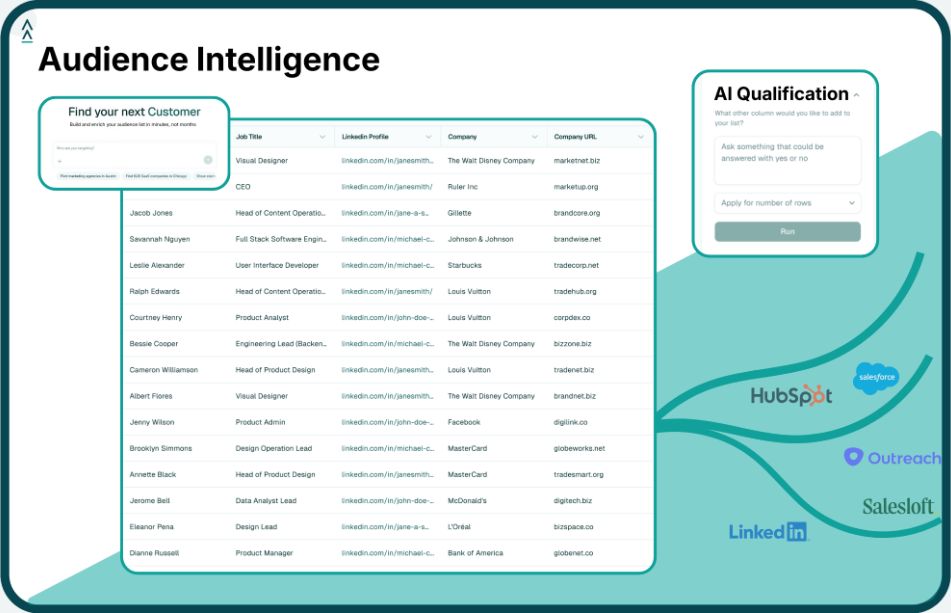
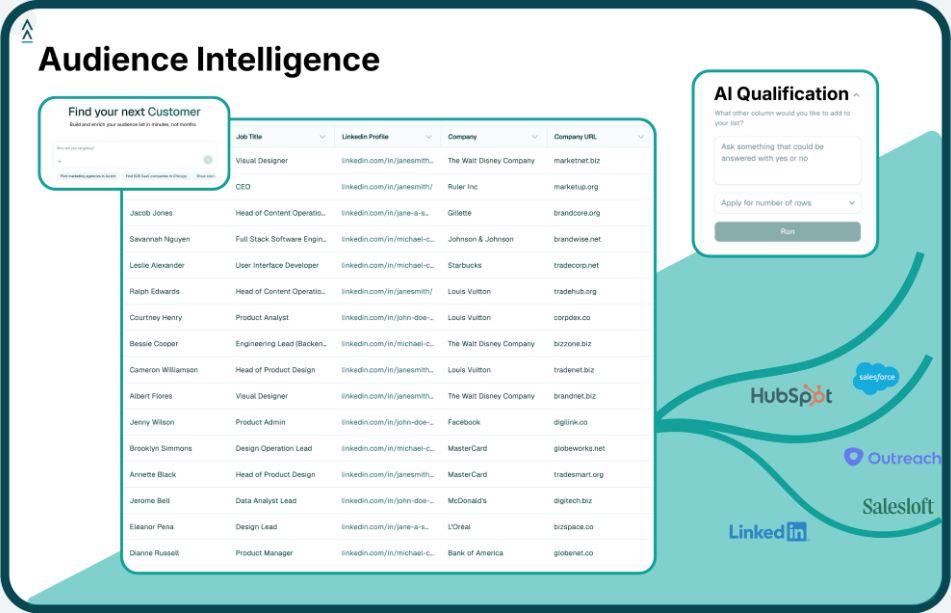
Landbase Application: The Landbase Platform can support SalesOps by providing qualified contact lists derived from GTM-2 Omni's advanced filtering for sales prospecting. SalesOps teams can use natural-language targeting to quickly build prospect lists that align with their ICP and territory assignments.

Redefining Revenue Generation: What is Revenue Operations (RevOps)?

Revenue Operations (RevOps) takes a broader, more strategic approach by aligning sales, marketing, and customer success under a unified revenue strategy. Rather than optimizing individual departments, RevOps focuses on the entire customer journey and revenue lifecycle. This function typically reports to the CEO or Chief Revenue Officer and serves as the central nervous system for all revenue-generating activities.

RevOps emerged as companies recognized that optimizing individual departments in isolation created inefficiencies and revenue leakage across the customer journey. The function breaks down silos between customer-facing teams and creates a unified approach to revenue generation.

The Holistic View: Marketing, Sales, and Service Alignment

RevOps fundamentally changes how organizations approach revenue by:

  • Creating unified data standards across all customer-facing functions
  • Aligning processes and workflows to ensure seamless handoffs between teams
  • Establishing shared metrics and goals that drive collaborative behavior
  • Optimizing the entire customer journey from first touch to renewal and expansion
  • Breaking down data silos that prevent a complete view of the customer
  • Coordinating technology investments across the revenue stack

This holistic approach recognizes that modern buying journeys are non-linear and involve multiple touchpoints across marketing, sales, and customer success. RevOps ensures these interactions are coordinated and consistent.

The Rise of RevOps and Its Strategic Importance

The adoption of RevOps has accelerated dramatically as companies face increasing complexity in their go-to-market motions.

The strategic importance of RevOps becomes clear when organizations hit certain maturity thresholds:

  • Cross-functional misalignment creates revenue leakage
  • Data silos prevent accurate forecasting and customer insights
  • Multiple product lines require coordinated GTM strategies
  • Complex buying committees need orchestrated engagement across teams

Companies implementing RevOps report significant improvements in key metrics, including 20+ hours saved weekly through automation and improved revenue growth.

Landbase Application: The GTM-2 Omni model plays a crucial role in RevOps by optimizing go-to-market strategies and ensuring data-driven revenue growth across marketing, sales, and customer success. Its ability to interpret natural-language queries and generate AI-qualified audiences supports the unified approach that RevOps requires.

Key Differentiators: Scope, Focus, and Strategic Impact

The differences between SalesOps and RevOps go beyond organizational structure—they reflect fundamentally different approaches to revenue generation and operational efficiency.

Sales Operations: The Tactical Engine

SalesOps operates with a tactical focus on departmental efficiency:

  • Scope: Limited to the sales department and its direct processes
  • Metrics: Sales-specific KPIs like quota attainment, win rates, and sales cycle length
  • Strategic Impact: Improves sales team productivity and efficiency
  • Customer Journey Coverage: Primarily impacts the active sales process
  • Technology Focus: Sales-specific tools and configurations
  • Reporting Structure: Typically reports to VP of Sales or CSO

SalesOps excels at making the sales machine run more efficiently, but it doesn't address cross-functional challenges or revenue leakage between departments.

Revenue Operations: The Strategic Architect

RevOps takes a strategic, enterprise-wide approach:

  • Scope: Encompasses sales, marketing, customer success, and sometimes finance
  • Metrics: Full revenue lifecycle metrics like CAC, LTV, NRR, and churn rate
  • Strategic Impact: Drives organizational revenue health and growth
  • Customer Journey Coverage: Influences the entire customer lifecycle from first touch to expansion
  • Technology Focus: Integrated tech stack with bidirectional data flow
  • Reporting Structure: Typically reports to CEO or CRO

RevOps addresses the systemic challenges that emerge as organizations grow more complex, ensuring that all customer-facing functions work together toward shared revenue goals.

The choice between these approaches isn't about which is better—it's about which is appropriate for your organization's current stage and challenges. As one expert notes, "Revenue operations seeks to unify the, often at odds, functions of marketing ops and sales ops to optimize lead creation and conversion processes."

The Interplay: How SalesOps and RevOps Collaborate for Optimal Performance

Rather than viewing SalesOps and RevOps as competing approaches, successful organizations recognize that they can work together to create a more effective revenue machine. In many cases, SalesOps becomes a specialized function within the broader RevOps structure.

Harmonizing Data and Processes

The collaboration between SalesOps and RevOps creates powerful synergies:

  • SalesOps provides tactical expertise in sales process optimization and tool configuration
  • RevOps provides strategic direction and ensures cross-functional alignment
  • Shared data standards enable both functions to work from the same truth
  • Unified metrics ensure both teams are working toward the same goals
  • Coordinated technology investments prevent redundant tools and integration challenges

This collaboration is particularly important during the transition from SalesOps to RevOps, where the existing SalesOps team's institutional knowledge becomes invaluable for the broader RevOps implementation.

Building a Seamless Go-to-Market Machine

When SalesOps and RevOps work together effectively, they create a seamless go-to-market machine that:

  • Eliminates revenue leakage between departments
  • Provides consistent customer experiences across all touchpoints
  • Enables data-driven decision making at both tactical and strategic levels
  • Accelerates revenue growth through coordinated efforts
  • Reduces operational friction through standardized processes

The key to successful collaboration is clear role definition and shared accountability for revenue outcomes. SalesOps focuses on making the sales engine run efficiently, while RevOps ensures that engine is pointed in the right direction and working in harmony with other customer-facing functions.

Landbase Application: The Landbase Platform facilitates collaboration by providing AI-qualified audiences that both SalesOps and RevOps teams can leverage for unified outreach and strategy. The platform's natural-language targeting ensures that both teams are working from the same qualified prospect lists, reducing misalignment and improving efficiency.

Building High-Performing Teams: Roles and Responsibilities in Each Function

The team structures and skill sets required for SalesOps and RevOps reflect their different scopes and responsibilities.

Typical Sales Operations Roles

SalesOps teams typically include specialists focused on sales-specific functions:

  • Sales Operations Manager – Oversees day-to-day sales operations and process optimization
  • Sales Analyst – Focuses on performance tracking, forecasting, and insights
  • CRM Administrator – Manages CRM configuration and user support
  • Sales Technology Specialist – Manages sales-specific tools and integrations
  • Compensation Analyst – Designs and administers sales incentive programs
  • Sales Process Consultant – Documents and optimizes sales workflows

These roles require deep expertise in sales processes and tools, with a focus on tactical execution and departmental efficiency.

Key Positions in a RevOps Department

RevOps teams require broader expertise spanning multiple functions:

  • RevOps Director/VP – Provides strategic leadership and cross-functional coordination
  • Revenue Analyst – Tracks full revenue lifecycle metrics and provides insights
  • Data Architect – Designs and maintains unified data models across functions
  • Revenue Technology Manager – Oversees the integrated revenue tech stack
  • Process Optimization Specialist – Designs cross-functional workflows and handoffs
  • Revenue Operations Analyst – Supports tactical execution across all revenue functions

RevOps professionals often come from diverse backgrounds, with a State of Revenue Operations report finding that 19.5% have SalesOps experience, making it the most common career path into RevOps.

The team size also differs significantly—while SalesOps teams scale with sales headcount, RevOps teams are typically more efficient. Research from Outreach.io suggests that at $50M ARR, a RevOps team of 4-5 professionals can support a sales team of 43-58.

Technology Stacks: Tools Powering SalesOps and RevOps Efficiency

The technology requirements for SalesOps and RevOps reflect their different scopes and responsibilities.

Essential Sales Operations Tools

SalesOps teams primarily manage tools that support the sales process:

  • CRM systems – Central hub for sales data and activity tracking
  • Sales engagement platforms – Automate outreach and follow-up sequences
  • Dialers and calling tools – Increase connection rates and call efficiency
  • Sales enablement platforms – Provide content and training resources
  • Forecasting and analytics tools – Improve prediction accuracy
  • CPQ tools – Streamline quoting and pricing processes

The focus is on tools that directly impact sales rep productivity and efficiency, with integration requirements primarily focused on the sales workflow.

Integrated Tech for Revenue Operations

RevOps teams oversee a broader, integrated technology stack:

  • Unified CRM platform – Serves as the central system of record for all customer data
  • Marketing automation platforms – Coordinate marketing campaigns and lead nurturing
  • Customer success platforms – Track customer health and drive retention
  • Revenue intelligence platforms – Provide cross-functional insights and forecasting
  • Data integration and governance tools – Ensure data quality and consistency
  • Business intelligence platforms – Enable cross-functional reporting and analysis

The key difference is that RevOps technology must support bidirectional data flow between systems and provide a unified view of the customer across all touchpoints. This requires more sophisticated integration capabilities and data governance frameworks.

Landbase Application: The Landbase Platform acts as a cutting-edge GTM automation tool, enhancing both SalesOps' list building and RevOps' broader strategic initiatives. Its ability to generate AI-qualified audiences from natural-language queries provides a unified foundation for both tactical and strategic revenue operations.

Measuring Success: Key Metrics and KPIs for Both Operations

The metrics and KPIs used by SalesOps and RevOps reflect their different scopes and strategic purposes.

Sales Operations: Productivity and Efficiency Metrics

SalesOps teams track metrics that measure sales department efficiency:

  • Quota attainment – Percentage of sales reps meeting their targets
  • Win rates – Percentage of opportunities that convert to closed deals
  • Sales cycle length – Average time to close deals
  • Pipeline velocity – Speed at which opportunities move through the pipeline
  • Individual rep performance – Productivity and effectiveness metrics for sales reps
  • Forecast accuracy – How closely predictions match actual results
  • Territory performance – Effectiveness of territory assignments and coverage

These metrics focus on optimizing the sales machine and improving departmental performance.

RevOps: Holistic Revenue Health Indicators

RevOps teams monitor broader revenue lifecycle metrics:

  • Customer Acquisition Cost (CAC) – Total cost to acquire new customers
  • Customer Lifetime Value (LTV) – Total revenue expected from a customer over their lifetime
  • Net Revenue Retention (NRR) – Revenue retained and expanded from existing customers
  • Churn rate – Percentage of customers lost over a given period
  • Annual Recurring Revenue (ARR) – Predictable annual revenue from subscriptions
  • GTM Efficiency Ratio – Revenue generated per dollar spent on go-to-market
  • Lead-to-customer conversion rate – Effectiveness of the entire funnel

These metrics provide a comprehensive view of organizational revenue health and growth sustainability.

The metrics divergence reflects the fundamental difference in purpose: SalesOps measures departmental efficiency, while RevOps measures organizational revenue health.

Landbase Application: The VibeGTM interface provides real-time performance metrics and insights from AI-qualified audiences, aiding both SalesOps and RevOps in measuring success and optimizing campaigns. Teams can track the performance of their AI-qualified lists and refine their targeting based on actual results.

The Future Outlook: Evolving Roles in an AI-Driven Go-to-Market World

The roles of SalesOps and RevOps are evolving rapidly as AI and automation transform go-to-market operations. Both functions are expanding their scope and impact as AI capabilities mature.

Impact of AI on Sales Operations

AI is transforming SalesOps from a tactical support function to a strategic growth driver:

  • Predictive lead scoring – AI algorithms identify the most promising prospects
  • Automated data entry and enrichment – Reducing manual work and improving data quality
  • Intelligent workflow automation – Streamlining repetitive tasks and processes
  • Predictive forecasting – Improving accuracy through machine learning models
  • Personalized content recommendations – Delivering the right content at the right time

SalesOps teams are increasingly spending time on non-sales functions, with research showing that 68% of SalesOps time is now spent on non-sales activities, up from 39% in 2019. This natural evolution toward broader responsibilities is creating a bridge to RevOps.

How AI Elevates Revenue Operations

AI is enabling RevOps teams to orchestrate more sophisticated, data-driven revenue strategies:

  • Unified customer intelligence – AI synthesizes data from multiple sources to create complete customer profiles
  • Predictive revenue modeling – Machine learning models forecast revenue outcomes with greater accuracy
  • Automated cross-functional workflows – AI coordinates activities across marketing, sales, and customer success
  • Real-time optimization – AI continuously adjusts strategies based on performance data
  • Intelligent resource allocation – AI optimizes investment across channels and functions

The emergence of agentic AI models like GTM-2 Omni is particularly transformative, as they can interpret natural-language business objectives and execute complex revenue operations tasks automatically.

Landbase Application: GTM-2 Omni, as the first agentic AI model for GTM automation, directly empowers the future evolution of both SalesOps and RevOps by providing intelligent audience discovery and qualification. The model's ability to understand business context from plain-English descriptions and generate AI-qualified audiences represents a significant step toward autonomous revenue operations.

Frequently Asked Questions

Is RevOps just a rebranding of SalesOps, or is it fundamentally different?

RevOps is fundamentally different from SalesOps in scope and strategic impact. While SalesOps focuses exclusively on optimizing the sales department, RevOps takes a holistic approach that aligns sales, marketing, and customer success under a unified revenue strategy. The difference isn't just in name—it's in organizational structure, metrics, technology requirements, and strategic purpose. RevOps addresses cross-functional challenges and revenue leakage that SalesOps alone cannot solve.

Which function should a growing startup prioritize first: SalesOps or RevOps?

Most companies should start with SalesOps and evolve to RevOps as they mature. SalesOps typically becomes necessary at $10-25M ARR when sales processes need optimization, while RevOps becomes essential at $50-100M+ ARR when cross-functional misalignment creates revenue leakage. Implementing full RevOps prematurely can create unnecessary complexity for smaller organizations. The transition should be driven by specific organizational challenges and maturity, not by following industry trends.

What are the most common challenges faced by Sales Operations teams?

Common SalesOps challenges include data quality and CRM hygiene issues, lack of clear sales process documentation, and difficulty in accurate forecasting. Teams also struggle with technology tool sprawl without proper integration and increasing demands to support non-sales functions as organizations grow more complex. Research shows that 68% of SalesOps time is now spent on non-sales activities, creating pressure to evolve toward broader revenue operations responsibilities.

How does a company typically transition from a SalesOps-focused approach to a RevOps model?

The transition typically involves establishing executive sponsorship and a clear business case, creating unified data standards across functions, and defining shared metrics and goals. Companies must implement an integrated technology stack with bidirectional data flow and evolve the existing SalesOps team into a specialized function within the broader RevOps structure. The existing SalesOps team's institutional knowledge becomes invaluable during this transition, helping to bridge tactical execution with strategic cross-functional coordination.

Build a GTM-ready audience

  • Button with overlapping square icons and text 'Copy link'.

Turn this list into a GTM-ready audience

Match this list to your ICP, prioritize accounts, and identify who to contact using live growth signals.

Stop managing tools. 
Start driving results.

See Agentic GTM in action.
Get started
Our blog

Lastest blog posts

Tool and strategies modern teams need to help their companies grow.

Discover RevOps roles, responsibilities, and team structures that drive revenue growth. Learn how AI-powered tools accelerate RevOps effectiveness and align sales, marketing, and customer success teams.

Daniel Saks
Chief Executive Officer

GTM Ops transforms go-to-market strategy into predictable revenue by aligning people, processes, data, and technology across sales, marketing, and customer success. Learn how companies achieve 23% faster revenue growth with mature GTM operations frameworks.

Daniel Saks
Chief Executive Officer

Understanding SalesOps, MarketingOps, and RevOps is critical for modern B2B growth. Learn how these three distinct but interconnected operations functions drive efficiency, alignment, and predictable revenue.

Daniel Saks
Chief Executive Officer

How GTM teams turn this list into pipeline

See how GTM teams use fastest-growing lists to define TAM, prioritize accounts, and launch campaigns.