.png)
.png)

Daniel Saks
Chief Executive Officer


.png)

RevOps managers at growing B2B startups often hit a wall after a Series A funding round. The Total Addressable Market (TAM) that looked great in a pitch deck suddenly isn’t so actionable in real life. Static TAM lists and basic database filters start to break down, especially as you uncover niche segments and new signals in your market. And unlike larger enterprises, SDR-led SMB teams usually don’t have a dedicated analyst on hand to continuously refine the TAM. So how can a lean RevOps team build a defensible, dynamic TAM without hiring an analyst or paying a consultancy? This blog post explores that challenge and how modern AI-powered approaches (like Landbase’s Agentic Search) help RevOps teams move from static lists to signal-backed, living audiences.
After a Series A, go-to-market teams often realize the TAM they initially defined is too static and broad to be actionable. Early on, your TAM might have been an inflated number used to impress investors. But when it comes to execution, that “big number” doesn’t tell your SDRs and AEs which accounts to actually pursue next quarter. The reality is that traditional TAM calculations often miss the mark in practice. They might be based on outdated industry lists or assumptions that “everyone is a customer,” leading to wildly overstated markets that don’t hold up to scrutiny. In fact, treating TAM as a fixed list of companies is a critical mistake. As one GTM lead noted, many companies treat TAM as a static figure rather than an actionable strategy – the best teams instead define a focused Prioritized Account Market with specific ICP filters and buying signals layered in. In other words, you need to translate that big TAM number into a realistic target list of accounts that are both a fit and likely to engage.
Data decay and market shifts compound the problem. B2B data is notoriously dynamic – people change jobs, companies pivot or get acquired, new startups launch. A contact list from even a year ago will have significant decay. Nearly one-third of B2B contact data becomes outdated each year. No wonder a static TAM list assembled last year starts to crumble: emails bounce, phone numbers go nowhere, and promising accounts turn out to have changed direction. Gartner research estimates bad data quality costs companies $12.9 million annually on average. For a resource-strapped RevOps team, chasing down these bad leads isn’t just frustrating – it’s a huge opportunity cost. In fact, sales reps spend only about 28% of their week actually selling; the rest is eaten up by admin tasks like updating records and hunting for new prospects. Post-Series A, every hour counts, and you simply can’t afford to have your revenue team lose hours cleaning up a static list.
Niche complexity is the next hurdle. As your startup grows, you often discover that your ideal customer profile is more nuanced than the broad filters you started with. Maybe your best customers aren’t just “Fintech companies 1–50 employees” – they’re specifically AI-driven fintech startups in California that are actively hiring engineering roles (indicating growth). A basic database filter might never surface some of these niche traits. Traditional tools rely on blunt attributes like industry codes or firmographic ranges, which can’t capture nuanced buying signals or micro-segments. It’s easy to miss “lookalike” accounts that actually fit your ICP but use an unconventional description or sit in an unexpected sub-industry. And it works both ways – a static filter may include many companies that meet generic criteria yet have zero real intent or need for your solution. The result? Your TAM list includes a lot of noise and misses many high-value targets hidden in the long tail of the market.
RevOps is charged with enabling data-driven strategy, but at SMBs and startups, they rarely have a full analytics team at their disposal. After Series A, you might not have the budget for a dedicated TAM analyst or a pricey consulting engagement. Hiring a RevOps data analyst easily runs ~$75k/year, and outsourcing to big firms is even steeper (firms like McKinsey charge around $50,000 for a market analysis that might already be outdated on delivery ). For a lean team, neither is an attractive option. The good news is that a new class of AI tools is stepping up to fill this gap, essentially acting as a force-multiplier for RevOps.
Traditional list-building tools have limits: Many teams start with database platforms like ZoomInfo, Apollo, or Hunter/Clay to build prospect lists. These can be useful for basic contact info, but they weren’t designed for dynamic TAM management. For one, their data is largely static – ZoomInfo’s database, for example, has been criticized for gaps in niche coverage and slow refresh cycles (updates can take months). You might pull a list of SaaS companies today, but if ZoomInfo hasn’t updated those records recently, you’ll get stale data (and miss new companies that popped up). Apollo provides a broad reach but often requires heavy manual filtering and still won’t tell you which accounts are showing signals of interest. Tools like Clay let you stitch together multiple sources, but that still demands analyst-level effort to configure scrapers, APIs, and spreadsheets. In short, these traditional approaches leave RevOps teams doing a lot of manual work – exporting CSVs, cross-referencing LinkedIn, buying supplemental lists – to patch together a “complete” TAM. It’s a time sink and prone to human error.
Modern AI-assisted TAM building flips that script. Instead of manually sifting through databases, RevOps teams can use AI to automate the heavy lifting of research and data integration. The concept of agentic search has emerged to describe AI systems that act like autonomous research agents for B2B prospecting. Rather than pulling a static list, an agentic AI can take a goal (e.g. “fintech startups hiring in California”) and execute a multi-step search across multiple datasets to find exactly that. Crucially, it doesn’t just dump data – it reasons and verifies the information across sources, much like a human analyst would, but at machine speed. The outcome is a dynamic TAM view that’s enriched with context and signals. Think of it as moving from a flat spreadsheet to a living dashboard of your market.
For example, consider how different the results are when using an AI-driven approach: A legacy sales database might let you filter Industry = Fintech AND Location = California AND Employee Count = 1–50, yielding a static list of companies that meet those basic criteria. Many of those companies could be irrelevant or outdated – perhaps some aren’t really fintech (just tagged that way), and others might have downsized or changed direction. In contrast, an agentic AI query for “fintech startups hiring in California” will interpret “hiring” as a growth signal, understand “fintech startup” in context (likely early-stage tech companies in financial services), and cross-check multiple sources (job boards, press releases, funding news, etc.) to compile a list of California fintechs that are currently expanding their teams. The result is a far more targeted, up-to-date TAM subset that you can act on immediately. This highlights a key shift: moving from static filters to signal-based targeting ensures your TAM isn’t just a theoretical list of accounts, but an actionable set of prospects showing indicators of real demand.
Another pitfall in TAM planning is focusing solely on company counts and neglecting the contact layer. Winning B2B deals requires engaging multiple stakeholders in each account – and that means your TAM needs to encompass people, not just logos. A list of 500 target companies might sound great, but if you only know one person at each (or none at all), your real addressable market is much smaller than it looks. To truly operationalize TAM, RevOps teams must build out both company-level TAM (the target accounts that fit your ICP) and contact-level TAM (the key personas to reach within those accounts).
Most B2B buying groups involve 6 to 10 decision-makers on average, and some deals involve even more stakeholders today. If your outreach is only hitting one champion, you risk missing the other voices who can veto or accelerate the purchase. A defensible TAM, therefore, should answer two questions: “Which companies can we sell to?” and “Who are the right people at those companies?”. Ensuring you have the relevant personas (e.g. Head of Finance, VP of Engineering, Procurement Officer, etc., depending on your product) for each account makes your TAM execution-ready.
Practically, this means any TAM building process should include data enrichment to attach contacts to accounts. Modern RevOps platforms do this automatically – when an AI finds a target account, it can simultaneously pull in verified contact info for stakeholders at that company. As one workflow guide put it, “A list of company names isn’t very useful if you can’t reach the stakeholders.” The solution is to append accurate contacts for key titles at each target account. For instance, if you’re targeting CTOs and Security Directors in cloud infrastructure companies, your TAM output shouldn’t just be a list of 200 company names – it should come with the names, titles, and emails of the CTOs and security leads at those companies. This contact-level TAM is what your sales team will actually act on. And maintaining it is an ongoing effort: people get promoted, change jobs, etc., so having a system to continually refresh contacts (without an analyst manually checking LinkedIn all day) is crucial.
To build a defensible TAM, RevOps teams are shifting their mindset from one-off list building to continuous audience management. Instead of a TAM spreadsheet gathering dust, think of your TAM as a living, breathing set of target accounts and contacts that evolves with the market. Several trends are enabling this shift:
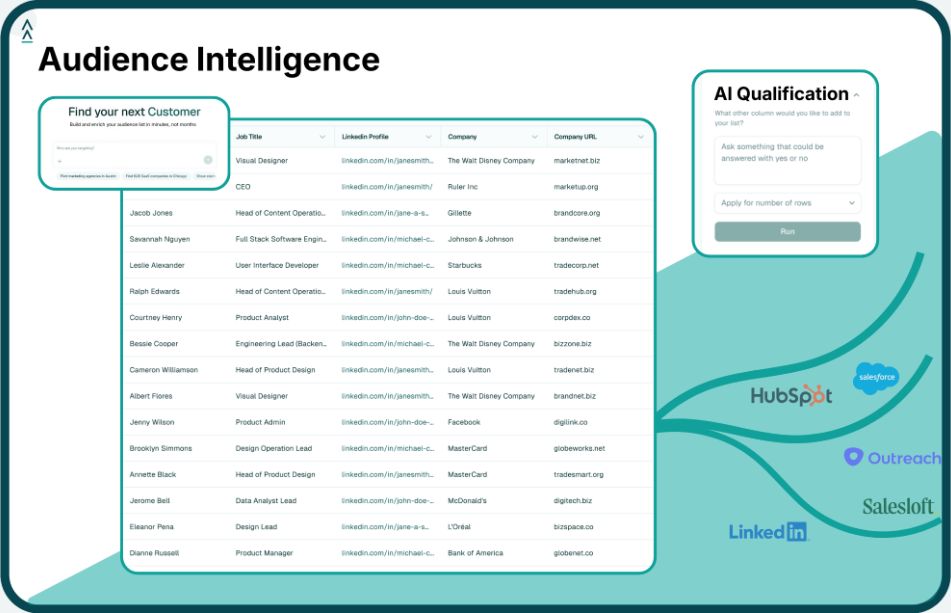
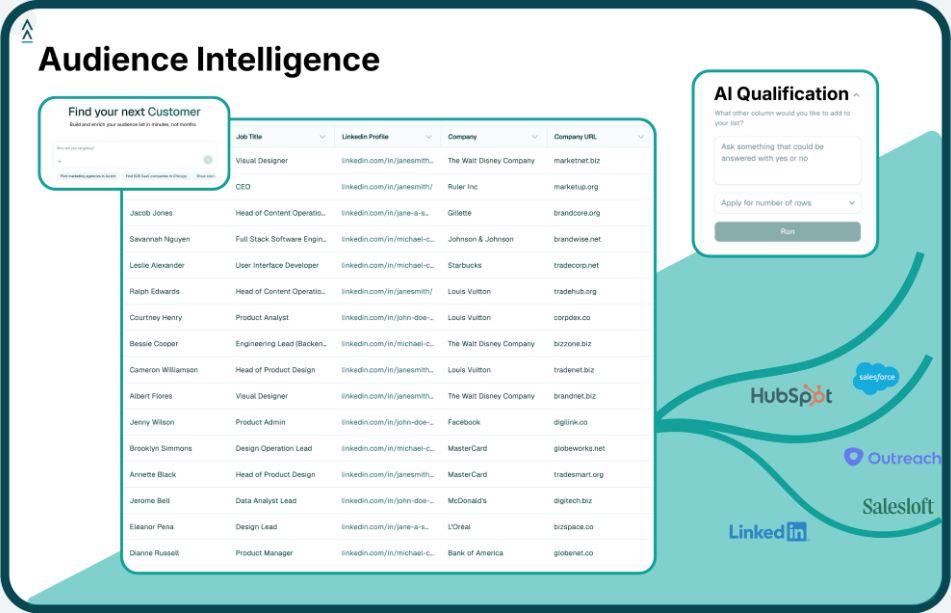
Let’s bring this together in the context of an AI-powered RevOps platform like Landbase, which offers an agentic search capability. The goal of such a platform is to let RevOps managers build and update TAM on the fly, using natural language, across many data sources – without needing a data scientist on staff. Here’s what that looks like in practice:
RevOps-first, not vendor-first: Throughout this process, notice the tone remains practical. The emphasis is on solving RevOps problems (data quality, prioritization, coverage) rather than touting AI buzzwords. A RevOps manager adopting these tools isn’t looking for magic; they’re looking to replace tedious list-building and guesswork with a more efficient, data-driven system. The right platform will speak that language. For instance, Landbase positions Agentic Search as a way to “find and qualify your ideal customers automatically” – aligning to RevOps goals of aligning sales/marketing and filling pipeline, without hype. By using natural language and delivering concrete data, the AI feels like a helpful extension of the RevOps function, not a black box. This calm, practical tone is key to adoption: RevOps teams care about results and reliability. When you can show that an AI-driven TAM is more complete, more current, and directly tied to go-to-market actions, you’ve made your TAM truly defensible.
In the past, defining your total addressable market was often an infrequent, analyst-driven project – and one that started going stale the moment it was done. Today, RevOps teams at even small companies can’t afford static assumptions. The fast pace of B2B markets and the high cost of bad data demand a new approach. By embracing dynamic, AI-assisted TAM building, you turn TAM from a static number into a continuously updated asset for your go-to-market strategy. The combination of rich data sources, real-time signals, and AI “agent” efficiency means you can discover hidden pockets of opportunity and react to market changes as they happen, all without hiring a dedicated analyst or pouring weeks into manual research.
The outcome is a defensible TAM that you can back up with data: a precise list of target accounts and personas that is always current, thoroughly vetted, and aligned with your revenue team’s capacity. Your TAM isn’t just theoretically big – it’s actionable and continuously optimized for conversion. For RevOps leaders, that’s a game-changer. Instead of worrying that you’re missing half the market or chasing dead ends, you have confidence that your TAM is solid ground to plan against. And when the CEO asks how large the real opportunity is in your new segment, you can pull up a living dashboard of accounts and explain exactly how it was built and why each is a contender.
In summary, building a defensible TAM without analysts is entirely achievable with the right strategy and tools. Focus on marrying company-level and contact-level insights, leverage AI for the heavy data lifting, and treat TAM as an ongoing process rather than a one-time task. Your reward will be a sharper go-to-market focus and more pipeline from the segments that truly matter.
Tool and strategies modern teams need to help their companies grow.