.png)
.png)

Daniel Saks
Chief Executive Officer


Most companies think of go-to-market platform as just a strategy deck or a sales playbook, but the real engine behind predictable revenue is GTM Operations (GTM Ops). GTM Ops is the operational backbone that transforms go-to-market strategy from PowerPoint to predictable revenue by aligning people, processes, data, and technology across sales, marketing, and customer success teams. Without it, even the best strategies fall apart in execution. Companies with mature GTM ops reduce overhead by 30%, improve sales productivity by 10%, and increase marketing ROI by 100% compared to those flying blind.
Now, GTM Ops isn't just another department—it's the connective tissue that ensures all revenue-generating functions work from the same playbook. More tools don't equal better outcomes without operational discipline. If you're struggling with siloed teams, inconsistent metrics, or unpredictable pipeline, understanding GTM Ops is your first step toward fixing it.
GTM Operations is the operational engine that connects executive vision to daily execution across sales, marketing, and customer success teams. It's fundamentally different from traditional Revenue Operations (RevOps) in that GTM Ops focuses specifically on how teams execute and report on their GTM strategy, creating an optimal buyer experience through unified processes, data, and systems.
At its core, GTM Ops serves as both strategic planner and tactical implementer, breaking down silos to ensure all revenue-generating teams work from the same playbook. According to CS2 Marketing's framework, GTM Ops consists of six interconnected components: GTM Motions (demand gen, ABM, outbound, partner, customer expansion, product-led), GTM Execution (campaign operations), GTM Foundation (buyer journey operationalization), Unified GTM Data (custom data models), Signals (buyer activity indicators), and GTM Analytics Framework.
The five critical functions of GTM Operations:
Without GTM Ops, companies often suffer from fragmented execution where each team optimizes for departmental metrics rather than unified revenue outcomes. This creates handoff failures, pipeline leakage, and inconsistent customer experiences.
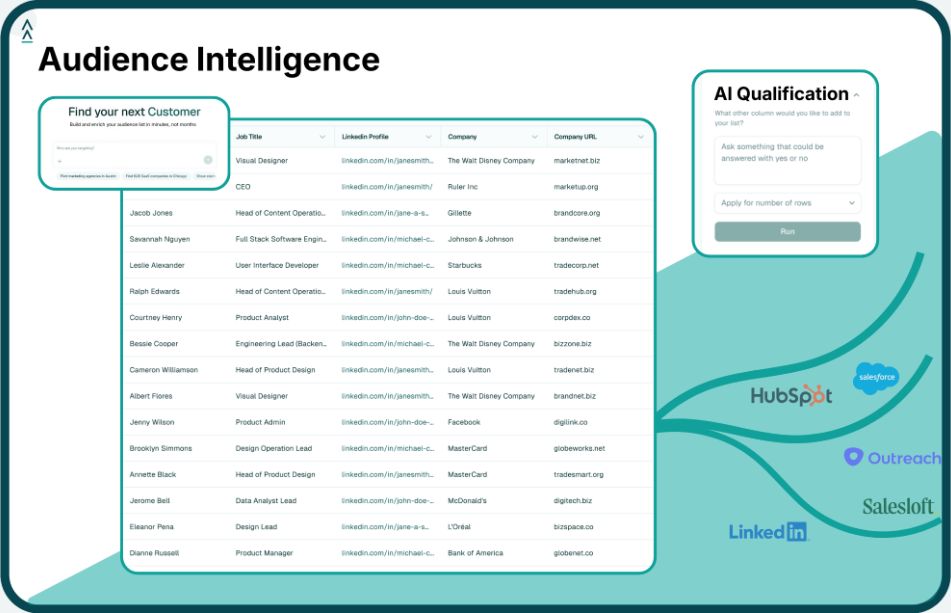
For companies looking to build a foundation for revenue growth, Landbase's platform provides a frictionless audience discovery and qualification system powered by GTM-2 Omni, directly supporting foundational GTM operations by pinpointing target customers with natural-language prompts.
Revenue Operations (RevOps) is the strategic function that aligns and coordinates go-to-market functions to enable the ideal customer journey. RevOps sits at the intersection of sales, marketing, and customer success, ensuring these teams share common goals, metrics, and processes. While GTM Ops handles tactical execution, RevOps provides the strategic framework that makes that execution meaningful.
Key responsibilities of RevOps in GTM Ops:
The most successful RevOps teams act as the "objective voice" in the organization, using data to cut through departmental politics and focus on what actually drives revenue. They don't just report numbers—they provide actionable insights that help teams course-correct and optimize performance in real-time.
Landbase's platform directly enables RevOps by providing precise, AI-qualified audiences and real-time intent tracking that creates a single source of truth for sales and marketing alignment. This eliminates the "spreadsheet wars" where teams report different pipeline numbers and struggle to agree on priorities.
Sales Operations is the tactical engine that ensures sales teams can execute efficiently and effectively. While RevOps sets the strategic direction, Sales Ops builds the systems, processes, and tools that enable sales teams to hit their targets.
Core responsibilities of Sales Operations include:
The impact of effective Sales Ops is significant. Well-implemented Sales Operations can dramatically improve forecast accuracy, rep productivity, and sales velocity in high-priority regions.
Sales Ops teams are increasingly focused on efficiency plays that reduce administrative burden and free up reps to sell. This includes automated lead routing, dynamic territory management, and AI-powered deal coaching. The goal is to eliminate manual tasks that steal time from revenue-generating activities.
Landbase helps sales operations teams identify and qualify prospects, providing qualified audiences for sales teams to build targeted lists. This reduces the time SDRs spend on list building and research, allowing them to focus on high-value conversations.
Marketing Operations is the discipline that ensures marketing activities are executed efficiently and measured effectively. Marketing Ops teams manage the technology stack, automate workflows, and provide the analytics that prove marketing's impact on revenue.
Key responsibilities of Marketing Operations include:
Marketing Ops has become increasingly critical as companies face rising customer acquisition costs and pressure to prove marketing's contribution to pipeline. Modern B2B companies use extensive technology stacks, creating significant complexity that Marketing Ops must manage.
Effective Marketing Ops teams focus on signal-based activation rather than batch-and-blast approaches. They use real-time buyer signals—like website visits, content consumption, and hiring patterns—to trigger automated, contextual outreach that's more likely to convert.
Landbase's platform handles audience discovery and qualification, boosting marketing team efficiency by delivering high-intent leads and exceptional ROI for campaigns. This eliminates the manual work of list building and ensures marketing efforts are focused on prospects most likely to convert.
A successful GTM strategy starts with a clear understanding of your Ideal Customer Profile (ICP) and target market. But in today's fast-moving B2B landscape, static ICPs aren't enough—you need dynamic targeting that adapts to real-time market signals and buyer behavior.
Key components of a modern GTM strategy:
The biggest shift in GTM strategy for 2025-2026 is the integration of AI and agentic workflows. 70% of companies now report moderate or full AI adoption in GTM workflows, with AI-powered GTM workflows delivering 40% faster market entry and 35% higher conversion rates compared to traditional methods.
However, 53% of GTM leaders still report zero AI impact because they lack systematic workflows and governance, not technology access. The winning teams treat AI implementation as an organizational change project requiring leadership alignment, IC reality-checking, and ops translation into process.
GTM-2 Omni is the first agentic AI model specifically built for go-to-market, trained on billions of data points to interpret natural-language queries and qualify audiences. It transforms static ICPs into dynamic targeting that adapts to real-time market conditions and buyer signals.
A successful GTM Operations framework consists of several interconnected components that work together to transform fragmented departmental efforts into a unified revenue engine.
The six essential components of GTM Ops:
Data and signals serve as the lifeblood of GTM Ops. Without accurate, unified data, teams can't make informed decisions or measure performance effectively. The average company struggles with data silos across CRM, marketing automation, and customer success platforms, creating conflicting views of the customer and pipeline.
Signal intelligence has become increasingly critical as buyers research solutions independently before engaging with sales. Companies that can detect and act on buying signals—like website visits to pricing pages, job postings for relevant roles, or technology stack changes—can engage prospects at the optimal moment in their buying journey.
Landbase Intelligence provides GTM intelligence tools like growth signals, Trust Score, and TAM to give in-market signals and insights crucial for GTM Ops. This helps teams move from reactive to proactive engagement based on real-time buyer behavior.
Agentic AI represents the next evolution in GTM automation, moving beyond simple task automation to autonomous agents that can research accounts, qualify prospects, and coordinate team actions without manual intervention.
GTM-2 Omni leverages several advanced AI capabilities to transform GTM operations:
Core AI capabilities in GTM-2 Omni:
The platform features GTM-2 Omni, leveraging agentic AI to instantly generate and qualify audiences based on natural-language prompts, with exports up to 10,000 contacts. This eliminates the complex workflows and technical expertise traditionally required for audience building.
AI agents in GTM-2 Omni coordinate targeting, qualification, and list building based on 1,500+ signals, ensuring that every audience is precisely matched to your ICP and buying stage. The system continuously learns from prompt performance and offline AI qualification, improving results over time.
Measuring GTM Ops success requires a mix of leading and lagging indicators that provide insight into both current performance and future potential.
Key metrics for GTM Ops success:
The most sophisticated GTM Ops teams focus on leading indicators that predict future performance. Effective implementation of milestone-based forecasting and AI-augmented pipeline quality assessment can significantly improve forecast precision compared to typical approaches.
Landbase's platform offers detailed performance metrics and provides AI-qualified audiences ready for immediate activation to help track and improve GTM KPIs. The system tracks metrics like contact accuracy, response rates, and conversion rates to continuously optimize audience quality.
Implementing GTM Ops requires careful planning and execution to avoid common pitfalls that derail transformation efforts.
Best practices for GTM Ops implementation:
The biggest challenge in GTM Ops implementation isn't technical—it's the "activation gap" where teams agree in meetings but fail to execute. This requires strong change management, clear accountability, and continuous reinforcement of new processes.
Landbase's platform supports implementation by offering free, no-login audience building and seamless activation with existing tools, designed for quick adoption. The natural-language interface eliminates technical barriers, allowing teams to start using AI-powered audience discovery immediately without extensive training.
In today's complex B2B landscape, GTM teams need more than just data—they need intelligence that can cut through the noise and deliver precisely targeted audiences ready for engagement. That's where Landbase comes in.
Landbase is the first agentic AI platform built specifically for go-to-market operations, combining GTM-2 Omni (the world's first agentic AI model for GTM) with VibeGTM (an intuitive interface for natural-language audience building). The platform lets you find your next customer in seconds by simply typing a plain-English prompt like "SaaS startups in Europe hiring for RevOps" and receiving an AI-qualified export of up to 10,000 contacts.
What sets Landbase apart is its focus on operational excellence rather than just data access. While traditional data providers give you raw contact information, Landbase delivers ready-to-activate audiences qualified by 1,500+ unique signals including firmographic, technographic, intent, hiring, and funding data. This means your sales and marketing teams can skip the manual research and list-building work that typically consumes 30-40% of their time and jump straight into high-value conversations.
The platform's AI Qualification (Online + Offline) ensures precision by evaluating both digital signals and real-world business context. Plus, with a free tier that includes unlimited prompt searches and up to 10,000 exports per session with no login required, Landbase removes the barriers to adoption that plague many enterprise GTM tools.
For companies looking to implement modern GTM Operations, Landbase provides the foundational audience intelligence layer that powers all other GTM motions—whether you're running outbound campaigns, account-based marketing, partner programs, or customer expansion initiatives.
Agentic AI improves GTM Operations by automating the complex, time-consuming work of audience discovery and qualification that traditionally consumes 30-40% of sales and marketing teams' time. Instead of manually building lists using complex filters and technical queries, teams can use natural-language prompts to instantly generate AI-qualified audiences. GTM-2 Omni interprets plain-English descriptions, evaluates prospects using 1,500+ signals, and delivers ready-to-activate contact lists. The system continuously learns from performance data to improve targeting precision over time.
Sales Ops focuses on tactical execution within the sales function—optimizing sales processes, managing CRM data, and enabling sales teams to hit their targets efficiently through tools and playbooks. Marketing Ops handles campaign execution, marketing automation, and proving marketing's impact on pipeline through attribution and analytics. RevOps is the strategic function that aligns and coordinates all go-to-market functions to enable the ideal customer journey, setting shared goals, metrics, and processes across departments. While Sales Ops and Marketing Ops operate within their functions, RevOps provides the overarching strategic framework.
Absolutely—SMBs often benefit more from GTM Ops because they have fewer resources to waste on inefficient processes and siloed execution. The first GTM Ops hire should be a cross-functional generalist with 5-8 years of experience across at least two ops functions, and this single role can dramatically improve alignment and efficiency. Tools like Landbase's free tier make it possible for SMBs to access enterprise-grade audience intelligence without significant upfront investment. Starting with basic operating cadences and shared data models can deliver immediate impact even with limited resources.
GTM Ops reduces sales cycles and increases revenue by eliminating inefficiencies, improving targeting precision, and ensuring consistent execution across all revenue functions. Companies with mature GTM ops achieve 23% faster revenue growth and 38% higher win rates through aligned metrics and processes. By focusing on signal-based activation and AI-powered efficiency plays, GTM Ops teams can reduce customer acquisition costs while improving conversion rates. The combination of better targeting, streamlined processes, and real-time performance optimization creates compounding improvements in revenue outcomes.
Tool and strategies modern teams need to help their companies grow.