.png)
.png)

Daniel Saks
Chief Executive Officer




The landscape of B2B sales and marketing is evolving rapidly, and businesses that fail to adapt risk being left behind. Traditional go-to-market strategies are often constrained by time-consuming manual processes, fragmented tools, and inefficiencies that slow down pipeline generation. Meanwhile, the adoption of AI in sales is surging: the AI for sales and marketing market is projected to grow from $58 billion in 2025 to over $240 billion by 2030 (32.9% CAGR)(1). A majority of sales leaders are investing heavily – 71% of B2B sales executives increased AI spending in 2024 alone(2) – underscoring that AI-driven automation is now a strategic necessity, not just hype. In this context, autonomous “agentic” AI systems are changing the game. These AI agents can plan, execute, and optimize omni-channel campaigns with minimal human intervention, acting as extensions of your team – analyzing vast datasets, identifying high-intent prospects, orchestrating outreach across multiple channels, and continuously learning from every interaction to boost engagement and conversion rates.
Agentic AI refers to AI that doesn’t just assist with isolated tasks, but can autonomously drive entire workflows with a level of reasoning and decision-making akin to a human agent. In GTM, this means an AI that not only writes an email or suggests a lead, but manages the end-to-end process: finding and qualifying prospects, crafting personalized messaging, conducting outreach across email, calls, and social media, handling follow-ups, and handing off interested leads to sales – all while optimizing itself based on outcomes. This promises to radically accelerate pipeline generation and improve efficiency. Instead of relying on disconnected point solutions and repetitive SDR tasks, AI agents operate in concert as a 24/7 SDR team that never sleeps. Businesses leveraging these autonomous GTM agents are seeing impressive results: faster sales cycles, higher response rates, and significantly lower customer acquisition costs. Below, we explore the top AI agent platforms leading this transformation in go-to-market strategy, including their key capabilities and real-world impact. (Spoiler: one company on this list even had to pause its AI-driven campaign because it was generating more qualified leads than their sales team could handle!)
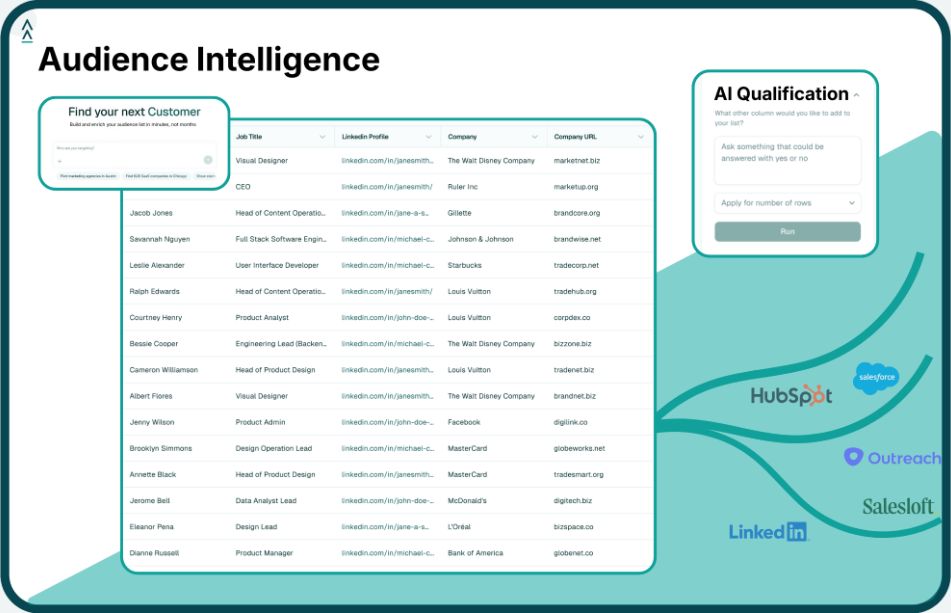
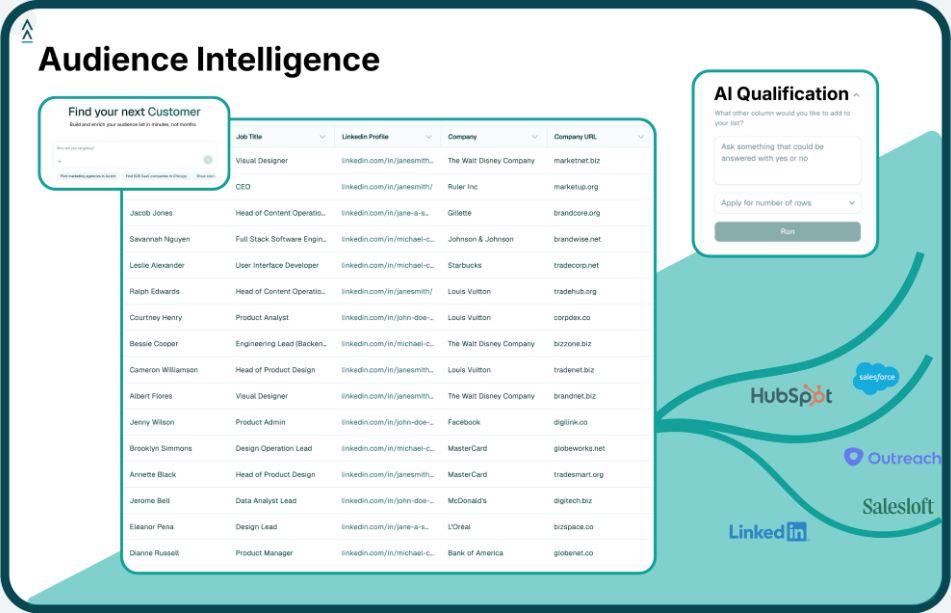
Landbase stands out as the first truly agentic AI platform with complete autonomous workflow execution for B2B sales and marketing. It introduces revolutionary AI agents that independently handle complex sales processes from end to end, essentially functioning as an “AI SDR team” that you can “set and forget”. Landbase’s proprietary AI engine, GTM-1 Omni, is a domain-specific large model trained on an enormous dataset of successful B2B outreach – over 40 million campaigns and 175+ million sales conversations, by the company’s estimates. This gives it a rich foundation of knowledge to generate human-like, contextually relevant sales communications. The AI operates through multiple specialized agents that mimic go-to-market roles: for example, a GTM Strategy planner, an AI SDR to conduct personalized outreach, a RevOps agent for data integration and analytics, even an “AI IT Manager” to manage email deliverability. These agents collaborate to plan and execute multi-channel campaigns autonomously with minimal human input.
Key Features: Landbase comes with an integrated data engine and a library of pretrained GTM agents. Upon onboarding, users can tap into a massive B2B contact database of 220M+ contacts and 24M+ companies (with over 10 million real-time intent signals tracked). The platform continuously enriches leads with firmographic and technographic data, monitors buying signals, and prioritizes prospects that fit your ideal customer profile. It then generates personalized messaging for each prospect (drawing on its training on what works in B2B emails) and orchestrates outreach across email, phone, and social channels. Landbase’s AI agents handle everything from warming up email domains (it can send 3,000+ emails per day per domain with intelligent warm-up and deliverability management) to A/B testing subject lines and send times. Campaigns that once took weeks of setup can now be launched in minutes – the recently introduced Campaign Feed feature even suggests complete campaign plans that users can launch with one click, cutting average launch time from ~14 days to just minutes.
Pricing Structure: Landbase offers a transparent, SMB-friendly subscription model (paid plans start around ~$3k/month). There are no hefty annual minimums or long-term commitments required – a contrast to some enterprise tools. In fact, Landbase’s all-in-one platform can replace 15+ separate sales tools in a typical stack, delivering up to an 80% reduction in total cost of ownership compared to piecing together multiple software and headcount. There’s even a free tier allowing companies to try the AI planning features (generating campaign content and target lists) before paying for full autonomous execution. This “try before you buy” approach has helped smaller businesses without big budgets to get started with AI-driven GTM. Overall, Landbase positions itself as significantly cheaper than hiring an equivalent SDR team – roughly 60–70% lower cost than a traditional outbound program when you factor in salary and tool savings.
Performance and Impact: The most impressive aspect of Landbase is its outcomes. Because the AI continually learns and optimizes, it dramatically lifts conversion metrics. Landbase reports 4–7x higher conversion rates (leads to qualified meetings) for campaigns run by its GTM-1 Omni AI versus typical manual campaigns. In practice, early customers have seen 5–7x higher reply rates and pipeline generation; one user even had to pause their outreach because the sales team “couldn’t keep up” with the AI-sourced leads. In one case, a Landbase client added approximately $400k in new MRRduring what is usually a slow season, and attributed it to Landbase’s autonomous agents driving so many quality conversations – they eventually halted the campaign temporarily, simply because their account executives needed to catch up with the flood of opportunities. Users consistently praise Landbase’s ability to essentially “set it and forget it,” unlike many other platforms that still require constant tweaking and oversight. And crucially, despite being AI-generated, the outreach quality remains high – thanks to its vast training data of real successful B2B emails, Landbase’s messages read as authentic and personalized (avoiding the generic or robotic tone that plagues some AI copy tools).
For B2B SaaS companies and any organization looking to supercharge their go-to-market execution, Landbase’s agentic AI approach proves invaluable. It delivers results rapidly – often 4–7x higher conversion rates as noted, with some teams seeing cost per opportunity drop by a similar factor. The platform’s greatest strength lies in its truly autonomous operation: once it’s set up, it requires only light human oversight while it continuously optimizes in the background. Sales teams can focus on closing deals while Landbase’s AI fills the top of the funnel. In today’s “do more with less” climate, this ability to scale pipeline without scaling headcount is a game-changer. One high-growth customer described Landbase as “an SDR team that works 24/7, never gets tired, and only gets smarter with time.” By eliminating content quality issues (the AI’s messaging is based on patterns from millions of effective interactions) and ensuring each touchpoint is hyper-personalized, Landbase yields outreach that feels one-to-one at scale. It’s no surprise the company has seen rapid adoption – growing its own revenue 825% year-to-date – as it defines a new category of fully autonomous GTM. For businesses eager to accelerate growth, Landbase offers a plug-and-play way to launch an AI-driven sales machine and find your next customer on autopilot.
11x.ai is another leading player delivering AI “digital workers” for revenue teams. In fact, 11x brands its solution as autonomous AI employees named Alice and Julian – AI agents that function as virtual SDRs and AEs. Alice is a tireless outbound Sales Development Rep: she researches prospects, writes highly personalized outreach emails and LinkedIn messages, and engages leads in human-like conversations to secure meetings. Julian is an AI phone agent designed for inbound sales – instantly calling new sign-ups or MQLs, qualifying them via natural dialogue, and booking meetings or live transfers to human reps for hot prospects. Together, these AI agents cover both outbound prospecting and inbound lead conversion, working 24/7 without breaks. Notably, 11x’s system operates with a high degree of autonomy: these agents don’t require step-by-step instructions for each task, but instead are goal-driven (e.g. “book X meetings per week”) and dynamically figure out the workflow to achieve it(3).
Core Capabilities: 11x emphasizes multichannel orchestration and real-time intelligence in its AI workers. Alice, the outbound AI SDR, can coordinate email sequences, LinkedIn outreach, and even text messages, all while keeping track of the conversation context across channels(3). Julian, the AI phone agent, not only makes calls but understands context (using advanced speech recognition and a custom memory engine) to have natural back-and-forth conversations. Both agents integrate deeply with CRM systems – logging activities, updating statuses, and pulling in customer data to tailor their interactions(3). A standout feature is 11x’s signal-driven intelligence: the AI monitors triggers like job changes, funding announcements, website visits, etc., and can even be configured with custom signals relevant to a business(3). For example, Alice might pause contacting a prospect if it detects they just announced a new round of funding (perhaps indicating they’re more likely to buy in a few months), or prioritize leads at companies that installed a complementary technology. This allows 11x’s agents to act not just on static sequences but on timely insights, improving their effectiveness. From a governance standpoint, 11x also includes compliance guardrails (opt-out management, escalation to humans for certain scenarios) and allows customization of the AI’s tone and approach to fit each company’s style.
Competitive Advantage: One of 11x’s claims is that it was first to market with truly autonomous digital workers for sales, rather than just task automation(3). In practice, customers have seen that translate into measurable ROI. For instance, the fintech company Gupshup deployed 11x’s Alice and saw a 50% increase in Sales Qualified Leads (SQLs) per SDR on their team(3). Essentially, each human rep became 1.5x more productive by partnering with the AI (Alice handled the initial outreach and qualification, freeing human reps to focus on later-stage calls and strategic deals). This resulted in more pipeline without adding headcount(3). Moreover, speed-to-lead improved dramatically: Julian can call a new inbound lead within 1 minute of sign-up, which is proven to boost conversion rates by catching prospects when their interest is highest(3). Overall, 11x’s users report that the platform helps book more meetings consistently – one case study noted a 50% uptick in qualified meetings after implementing 11x’s AI SDR(3) – while also ensuring no inbound inquiry falls through the cracks. The multichannel, always-on coverage means prospects get immediate and personalized attention, whether they fill a form at 3am or receive an email during the workday.
While 11x.ai is optimized for sales teams that want out-of-the-box AI SDRs, it does allow some customization. Teams can train the agents on their specific sales playbooks, define ICP filters, and even set niche trigger events for outreach(3). Security-conscious buyers will also appreciate that 11x has enterprise-grade data compliance (they highlight SOC 2security) built in. In summary, 11x provides a relatively turnkey way to get autonomous sales agents working for you. For companies struggling to consistently follow up with all prospects or to scale outbound efforts, 11x’s Alice and Julian can dramatically expand capacity at a fraction of the cost of hiring. They effectively function as digital team members – one that can send individualized emails to hundreds of prospects a day and another that can make calls and qualify leads instantly. The outcome is a higher volume of opportunities entering the funnel and less time wasted by human reps on cold outreach or chasing unqualified leads. As one customer put it, “It’s like having extra SDRs who never sleep, never quit, and always follow the playbook.” Given results like 50% more SQLs per rep with 11x(3), it’s clear why autonomous SDRs are catching on fast.
Artisan has emerged as an intriguing player in AI-driven outbound sales, centered around its AI-powered virtual BDR named Ava. Artisan’s promise is straightforward: automate your entire outbound process – from prospect discovery to personalized email outreach and follow-ups – with an AI “employee” that functions like a Business Development Representative. Ava is essentially an AI SDR that can be hired and onboarded in minutes, and Artisan claims she can handle up to 80% of the tedious outbound sales tasks that would otherwise occupy human reps(4). This includes building lead lists, researching each prospect, writing custom-tailored cold emails, sending them at optimal times, and even responding to simple replies to move conversations forward. By taking on the heavy lifting, Ava frees up your human sales team to focus on high-level activities like demos and closing deals.
How It Works: At its core, Artisan’s platform provides a unified workspace where you can define your Ideal Customer Profile (industry, company size, roles to target, etc.), and then let Ava loose to find and engage those prospects(4). Artisan comes with a massive database of over 300 million B2B contacts (with detailed firmographic and technographic info) that Ava can search and filter through(4). Once you set your targeting criteria, Ava will automatically pull relevant prospects, gather insights on each (such as recent news or common connections), and generate outreach messages that are personalized to each prospect’s context. These aren’t generic form emails – for example, Ava will reference a prospect’s company news or tech stack to make the message highly specific. She then handles sending emails, following up multiple times if needed, and can even update a shared CRM or spreadsheet with the status of each contact. Essentially, you’ve got a hands-free outbound campaign running 24/7. Artisan’s interface allows you to monitor Ava’s activities and tweak messaging or parameters on the fly. Non-technical users appreciate the no-code, point-and-click setup – you don’t need to script anything; Ava comes with preset “plays” and templates out of the box. The platform also includes built-in email deliverability management (auto warm-ups, etc.) to ensure high inbox placement, as well as integration options to pipe responses or leads into Slack, Salesforce, etc., so your team is immediately alerted when a hot lead comes in.
Results: By leveraging Ava, teams have reported drastic efficiency gains. Artisan’s marketing boasts that companies can “increase outbound volume by 5-10x” without additional hires. In practice, one independent review found that up to 80% of outbound sales tasks can be offloaded to Ava, which aligns with Artisan’s own claims(4). This means tasks like prospect research, initial outreach, and follow-up cadences can largely run on autopilot. Anecdotally, users have said that Ava often can book meetings that would have otherwise been missed – for instance, by persistently following up with lukewarm leads or reaching out at times a human SDR wouldn’t (nights, weekends). A stat that Artisan shared is that their early customers saw significant pipeline lift within weeks, though exact numbers vary. What we do know is Artisan secured a $11.5M seed round in 2024 to scale this AI BDR approach, and by that time they had 120 business clients and $1M in annual recurring revenue already(5) – indicating solid market traction. Those clients range from tech startups to more traditional firms that never had outbound programs before (Artisan mentions even small insurance brokers using Ava to find new prospects). The value proposition is especially appealing to small and mid-sized companies: you can get an AI SDR team member for a flat software fee rather than hiring a full human team. The cost savings can be substantial, and because Ava can send thousands of personalized emails in parallel, companies have seen their outreach scale dramatically. Of course, there is a learning curve – some users noted that it takes a bit of time to fine-tune Ava’s messaging to truly sound like your brand, and to calibrate her targeting so the leads are high quality. But once tuned, the payoff is a near hands-free lead generation engine.
Artisan’s focus is relatively narrow (pure outbound email/LinkedIn outreach), but within that scope it excels. It’s worth noting that Artisan intentionally limits Ava to the outbound SDR role (she doesn’t do inbound chat or phone calls, for example). This single-minded approach has allowed them to optimize Ava’s performance on emailing and cadences. While platforms like Landbase or 11x offer multi-agent setups, Artisan’s single agent (Ava) approach can be a simpler on-ramp for teams new to AI – you essentially deploy one AI coworker and focus on making her as effective as possible. The platform’s ease of use and quick deployment (Artisan says you can onboard Ava in 10 minutes, no coding required(4)) are big pluses. For companies that need to ramp up outbound fast – say a startup needing pipeline but not ready to hire a whole SDR team – an AI like Ava is extremely compelling. She can send personalized emails at a scale no human could match, and do it around the clock. If Ava lives up to the 80% automation claim, that means your human salespeople only need to handle the 20% of tasks that truly require a personal touch (like final sales calls), which is a huge productivity boost. It essentially turns your sales team into closers supported by an AI prospector working behind the scenes.
Clay is a bit different from others on this list. It’s not a single AI “agent” contacting leads, but rather an AI-powered data enrichment and workflow platform that turbocharges your prospecting with unique insights. Clay’s motto could be “better data, better outreach.” The platform helps GTM teams automate the process of finding prospects, enriching them with relevant context/triggers, and even preparing personalized touchpoints – which users can then plug into their outreach sequences (via email, LinkedIn, etc.). In essence, Clay acts like an AI research assistant for your sales team, ensuring that every message you send is armed with hyper-relevant details about the prospect. By automating what used to be hours of Googling or fiddling with multiple tools (e.g., LinkedIn, data providers, CRM exports), Clay enables sales reps to focus on selling while still delivering highly personalized outreach.
How it Works: Clay integrates with a variety of data sources and APIs – such as LinkedIn, Apollo, Clearbit, Crunchbase, Google Maps, and more – and allows you to build no-code workflows to pull in information on your target list. For example, you can input a list of company names or LinkedIn URLs, and Clay can automatically fetch each company’s latest funding round, find the decision-makers (e.g., Head of Sales) with verified emails, grab recent news about the company or even specific job postings, and then output a “ready-to-use” snippet of personalized text for an email (“Congrats on the Series B raise! Many companies in {Industry} use our tool to scale post-funding…”). All of this happens in seconds. Reps can then use those snippets in their outreach or have Clay push the enriched data into an email tool or CRM. Clay essentially flips prospecting on its head: instead of starting with a generic list and sending generic emails, you start with dynamic signals and context, and target people who exhibit buying cues. This approach yields far better response rates because the outreach is timely and relevant. For instance, Clay can help you find companies that just hired a new VP of Sales (signal: likely evaluating new tools), use a certain technology (signal: you integrate with it or compete with it), or have job postings for roles that suggest a pain point (e.g., hiring many SDRs might indicate they need better automation). By focusing your efforts where there’s intent, Clay helps avoid the classic “spray and pray” of cold outreach(6).
Impact: The biggest benefit of Clay is efficiency and effectiveness in prospecting. Sales teams using Clay have reported an order-of-magnitude increase in their prospecting throughput. According to one RevOps consultancy, teams using Clay could process 500+ enriched prospects in the time it used to take to research 50 – essentially a 10x boost in output(6). Think about that: what one rep might do in a day, a rep with Clay can do in an hour, with even richer results. This means you can reach many more potential customers and each outreach is far more tailored to the recipient. As a result, response rates go up. Clay users often see substantially higher reply rates because their emails reference very specific details (“I saw you’re expanding to Europe – we have data on that market…” etc.) instead of generic sales pitches. One anecdote: a user mentioned that using Clay’s signals, they found a prospect who had just started a new job; they sent a congrats email tying in how their solution could help in the new role – that cold email turned into a meeting and ultimately a deal, simply because the timing and context were spot on. Such outcomes would be nearly impossible to achieve at scale manually.
Clay also effectively consolidates many prospecting tools into one. Rather than buying separate data enrichment, list building, and workflow automation tools, Clay’s platform connects to dozens of services and lets you orchestrate them together. Power users (often growth hackers or sales ops folks) love Clay for its flexibility – you can create very elaborate automated workflows (for example: “Find companies in X industry hiring >5 engineers, get their Head of Product’s email, run a sentiment analysis on their Glassdoor reviews to tailor a pitch angle, then send all that into a sequencing tool”). But even for less technical users, Clay offers pre-built templates and a visual interface to drag-and-drop data modules. It’s as close to “plug-in AI for prospecting” as it gets.
In practice, Clay is best used in combination with an engagement platform: it provides the fuel (highly enriched lead data and insights) that you then feed into your outreach sequences in tools like Outreach or Salesloft. The end result is a smarter outbound engine. Companies that felt their outbound had gone stale or yielded low ROI have revitalized their approach using Clay’s data-driven strategy. By focusing on quality over quantity – but at a scale enabled by automation – they achieve far better ROI. Clay’s own case studies talk about users achieving things like 10× faster list building and significantly higher conversions from cold outreach. For instance, one team cut their prospect research time from ~6 hours a week to 30 minutes, while increasing meetings booked, because Clay ensured every target was a good fit and every message hit a nerve.
For any GTM team that believes in personalization and targeted selling (as opposed to mass-blast spam), Clay is an invaluable AI-enhanced ally. It doesn’t replace your sales reps or send emails itself; rather, it makes those reps superpowered – giving them deep insight and data at their fingertips, in a fraction of the time. As the saying goes, “time kills deals”; with Clay, you not only save time, but you also spend that time on the right prospects with the right message, dramatically improving outbound success rates.
Unify is a modern GTM automation platform that takes an engineering-driven approach to revenue growth. Its premise is that outbound sales can be transformed from an “art” to a data-driven science, using AI agents that continuously analyze signals and execute the right plays at the right time(8). Unify’s platform is often described as a “system of action” that unifies data, intelligence, and workflow automation in one place. In simpler terms, Unify combines many functions – prospecting, intent data monitoring, email sequences, analytics – and uses a set of coordinated AI agents to run a highly adaptive outbound engine. It’s end-to-end in scope: from identifying who to target and when, to crafting outreach messaging and how to engage them across channels, all the way to handing off meetings to your sales team.
Key Differentiators: One of Unify’s standout features is its focus on real-time intent signals and trigger-based outreach. It doesn’t rely on static lead lists. Instead, Unify’s AI (which includes components dubbed an Observation Model and research agents) constantly scans for meaningful events in your Total Addressable Market – for example, a company in your CRM just raised funding, or a target account had a spike in website visits, or a key contact changed jobs(7). These signals feed into its AI decision engine (built on OpenAI GPT models in Unify’s case(7)), which then decides when to engage a prospect and with what message. Unify’s multi-agent architecture means it has specialized agents for different tasks: one might handle monitoring and data collection (e.g. pulling news or job postings), another handles drafting personalized emails or LinkedIn messages based on that data, and another optimizes the send schedules. All this happens behind the scenes, so by the time a human sees anything, it’s often a notification that “Prospect X showed buying intent due to Y event, and an outreach was already sent.” Unify also tightly integrates with CRMs and marketing automation, ensuring that all this activity is tracked and that it can also pull in first-party data (like product usage or email engagement) as additional signals.
Another big selling point of Unify is speed and volume with precision. It enables what they call “warm outbound” or signal-based outbound, which yields better results than generic cold outreach. By focusing only on high-fit, high-intent prospects and reaching out at the moment something changes for them, Unify users have seen much higher conversion rates. The platform’s users often configure it to generate a steady stream of “sales-qualified opportunities” every week without the usual manual effort of campaigns. In fact, Unify is known to have impressed investors with this approach: it raised a $40M Series B in 2025, with Battery Ventures noting that Unify was “enabling go-to-market teams to identify the right prospects, personalize outreach, and execute high-quality campaigns with minimal human oversight”(8). In under two years, Unify signed up an array of high-performing teams (its customers include tech companies like Airwallex, Perplexity AI, Flock Safety, etc.(8)), showing the appetite for AI-driven GTM among both startups and scale-ups.
Results: Unify has some impressive stats illustrating its impact. According to OpenAI (which featured Unify in a case study), companies using Unify’s model-driven approach have generated 30% more pipeline by scaling targeted outreach with AI(7). In other words, by letting Unify’s agents optimize who/when/how to reach out, these teams saw a 30% lift in pipeline creation versus their previous tactics. Additionally, Unify often cites that it can help achieve that growth “with a fraction of the manual work” – one reason being it replaces the need for large teams of sales researchers/SDRs doing grunt work(7). The OpenAI case study noted that Unify’s own AI-driven system now accounts for 30% of its pipeline generation autonomously(7). In practice, this might manifest as, say, an SDR team of 2 using Unify outperforming a legacy SDR team of 5 in meetings booked, because the AI agents handle so much of the heavy lifting. The platform also touts that it helped some clients generate “millions in pipeline” very rapidly. For example, Battery Ventures shared that a Unify customer was able to build $1M in pipeline in just a month by leveraging Unify’s all-in-one outbound engine (this was mentioned in context of a case where a company identified in-market accounts and immediately spun up tailored outreach)(14). Furthermore, by unifying data and execution, Unify addresses a common issue: sales reps spend too much time juggling tools instead of selling. Users report spending far less time on administrative tasks or list prep – in fact, Unify’s ethos is to treat growth like a software problem where you write some “code” (in this case configure the agents) and then the system runs and iterates continuously. This approach resonates especially with tech-savvy GTM teams who think in terms of systems and leverage (many of Unify’s early adopters are ex-engineers or analytically minded sales leaders).
In summary, Unify is leading the charge on AI-native go-to-market. It combines the best of intent data, AI personalization, and workflow automation into a cohesive platform. For teams that embrace it, the outcome is an outbound process that’s much more targeted and timely – reaching the right prospects at the right moment with a message that clicks. And since it’s largely automated, sales teams can achieve more with fewer people. The ability to generate 30%+ more pipeline without extra effort(7) gives companies a real competitive edge. As buying cycles get more complex and buyer attention spans shrink, having an AI that constantly watches and reacts to buying signals can mean the difference between winning a deal and missing it. Unify’s name is apt: it unifies the fragmented pieces (data, tools, channels) into one AI-powered GTM engine. For those looking to modernize their sales process, it’s a platform to watch – and one that is already delivering significant ROI for its users.
When it comes to enterprise sales technology, Salesforce is a giant – and they’ve entered the agentic AI arena with Salesforce Agentforce, a suite of autonomous AI agents built natively into the Salesforce ecosystem. Announced in 2024, Agentforce leverages Salesforce’s new Atlas AI engine to power intelligent agents for various business functions (sales, service, marketing, etc.). In the GTM context, Agentforce can be seen as Salesforce’s answer to AI SDRs and AI customer service reps, deeply integrated with the CRM data and workflows companies already have on the Salesforce platform. These agents are “out-of-the-box” in the sense that Salesforce provides pre-built agent templates (for example, an agent for lead qualification or an agent for customer case resolution), but they can be customized and extended by users. The key difference here is that Agentforce is natively enterprise: it’s designed to work within the existing Salesforce environment, which for large companies is a big advantage (data doesn’t need to leave, and the AI actions are all recorded in CRM).
Key Capabilities: The Atlas Reasoning Engine is the brain behind Agentforce’s agents. Unlike some simpler chatbot AIs, Atlas is built for “System 2” deliberative reasoning, meaning it can chain together thoughts and make multi-step decisions – closer to how a human would reason through a complex task(9). For example, a sales agent powered by Atlas might evaluate a lead’s history, cross-reference it with similar closed-won opportunities in the CRM, decide the best action is to send a specific follow-up with a relevant case study, draft that email, and schedule a task for a rep to call if the lead replies – all autonomously. Agentforce comes with multiple specialized agents (often shown in demos were agents named after roles, like an “Account Executive agent” or a “Sales Ops agent”). Out of the gate, Salesforce focused a lot on customer support agents, but the sales agents in Agentforce are geared to do things like manage opportunities (updating fields, forecasting), engage with leads (send emails, respond to inquiries in natural language via Salesforce Inbox or Live Chat), and even handle some initial sales calls via voice. Because it’s Salesforce, these agents can seamlessly pull in CRM context – e.g., they know which account a lead belongs to, what products they’ve bought, what tickets they have open, etc., ensuring any outreach or response is contextually informed.
Enterprise Integration: Agentforce’s strong suit is that it’s built into the Salesforce cloud. It has deep CRM integration by design(3). Activities the agents perform (emails sent, tasks created, etc.) are automatically logged. They can be configured with all the security and compliance rules a company has in Salesforce (e.g., respecting field visibility, data sharing rules, approval processes). This is crucial for large enterprises that have strict governance – Agentforce agents will follow the same policies as any Salesforce user would. Salesforce also touts that because of Atlas’s design, their AI agents have a high level of accuracy and relevance: internally they’ve stated Agentforce yields 2x more relevant outputs and 33% higher accuracy than “DIY AI” approaches(10). In real terms, this might mean fewer nonsensical AI errors and more on-point actions, thanks to how Atlas continuously learns from real Salesforce data. In a high-profile example, Salesforce’s CEO Marc Benioff noted that in early trials, companies saw over 90% of routine service and sales tasks resolved by Agentforce agents without human intervention(9). That’s an eye-popping figure – 90-95% of issues handled by AI – which, if achieved in sales, could dramatically reduce workload on reps. Even if those numbers apply more to customer service scenarios, it shows the potential impact on sales follow-ups, lead nurturing, and more.
Use Cases and Impact: For GTM specifically, imagine an Agentforce sales agent that monitors all inbound leads (from web forms, events, etc.) and instantly engages them in a live chat or email thread. Instead of a human rep taking hours or days to respond, the AI agent responds in seconds, answers basic queries, shares collateral, and qualifies the lead. Salesforce has demoed exactly this – with an agent that greeted a website visitor, answered product questions, and scheduled a meeting for a human sales rep, all automatically. They also have showcased agents that help reps internally: for instance, an agent that auto-generates an account plan or drafts a proposal in Salesforce based on an opportunity’s data. The measured outcomes are still early (Agentforce was just rolling out in late 2024/2025), but Salesforce has claimed things like a major increase in case resolution (in service) and productivity. In sales terms, one could extrapolate metrics like faster lead response times (near-instant), improved lead conversion rates due to immediate follow-up, and time saved per rep. Salesforce’s own marketing points to improved accuracy and relevance of AI actions, which means fewer leads dropped or wrong emails sent. Anecdotally, companies in pilot programs said it allowed their salespeople to focus on complex deals while the AI handled the “busy work” – similar to how a junior sales assistant might operate. That aligns with the general promise: augment the sales team with AI agents that handle the repetitive and data-driven tasks. If Agentforce can resolve ~90% of routine tasks as Benioff suggested(9), that potentially frees up enormous human capacity for high-value interactions.
It’s worth noting that deploying Agentforce is not a light switch – large orgs will need to configure and train these agents (Salesforce often involves consulting partners for implementation). It’s enterprise software, after all. But the payoff is an AI that’s deeply tailored to your business and processes, and one that speaks your company’s language (since it’s trained on your Salesforce data). Agentforce, therefore, is especially attractive to existing Salesforce customers who want to stay within that ecosystem for AI automation, rather than layering an external tool.
In summary, Salesforce Agentforce is bringing autonomous AI agents into the mainstream for enterprises. By baking it into the world’s most popular CRM, it can leverage the vast amount of customer data and interactions already there – making its agents smarter and more context-aware than perhaps any standalone system. Early indicators like “90%+ task resolution by AI” in trials(9) and reported improvements like 33% better accuracy than custom-built AI(10)suggest that Agentforce could significantly streamline GTM workflows in large organizations. While still in its nascent stages, Agentforce is one to watch (especially for the Fortune 500), as it could redefine how sales teams use AI at scale – not as sidecar apps, but as native colleagues in their primary systems.
While not a dedicated “sales agent” platform like others here, Copy.ai is highly relevant to go-to-market teams as an AI-powered content generator and writing assistant. In many GTM workflows, creating content – whether it’s cold email copy, ad text, blog posts, or social media updates – is a major component, and Copy.ai has become a go-to tool for automating that creative process. Essentially, Copy.ai provides an AI copywriter that can produce human-like marketing and sales content in seconds. It uses advanced language models (GPT-based) to generate text given a prompt by the user. For example, a sales rep can input a brief description of a product and ask Copy.ai to generate a compelling outreach email or a LinkedIn message tailored to a specific industry. Copy.ai will then output several variations of copy to choose from. This can save enormous time and also help non-writers craft effective messaging.
Why It’s Useful in GTM: Personalization and quality of messaging often determine the success of outreach. Copy.ai helps by not only speeding up content creation but also by improving it through AI training on tons of high-converting copy. It can generate catchy subject lines, pain-point focused value props, and even suggest follow-up email sequences. For marketers, it can crank out blog ideas, ad copy, and landing page text – ensuring the top-of-funnel stays filled with content without needing a huge content team. One feature is “tone” adjustment, allowing users to specify if the copy should sound friendly, professional, witty, etc., to match the brand voice. Another is the templates for different scenarios (e.g., “cold sales email to a lead who downloaded whitepaper X”). Copy.ai also introduced workflow automation where multiple AI tasks can be chained – for instance, take a CRM entry and auto-generate a personalized introduction paragraph for that contact using fields like their company and role. This borders on what one might call an “AI SDR assistant,” though it doesn’t send anything itself, it just writes it. Still, this functionality means GTM teams can quickly get first drafts for virtually any communication.
Adoption and Scale: Copy.ai has seen explosive growth by targeting both individual users and businesses. It offers a freemium model which led to viral adoption among marketers and entrepreneurs. As of mid-2025, Copy.ai’s website touts “trusted by 17 million users” globally(11), an astonishing number that reflects its popularity(11). (For context, this likely includes everyone who has signed up for a free account to try it out; nonetheless, it indicates massive reach.) The company also reached the milestone of 10 million users within four years of launch. This broad usage means a lot of GTM folks are already familiar with Copy.ai or using it for parts of their workflow. It’s also earned high rankings on product review sites and G2 Crowd reports for AI writing assistants.
Impact on Efficiency: By using Copy.ai, teams report significant time savings and output gains. A HubSpot survey noted that teams save on average 2 hours per day using automation tools in tasks like writing(4), and Copy.ai users often fall in that camp – especially content marketers. In specific cases, large enterprises have seen drastic improvements. Copy.ai shares on its site an example of a Fortune 500 company that used it to generate personalized sales collateral for a huge partner network, resulting in $2.6M in cost savings and enabling coverage of a $650M sales channel that would’ve been impossible to support manually(11). In another case, a business used Copy.ai to produce unique product descriptions at scale, cutting content creation operational costs by 80% and improving content coverage by 300%(11). These stats highlight that with AI writing, a lean team can accomplish what previously required an army of content writers or sales copywriters.
For GTM teams specifically, one of the most valuable use cases is accelerating campaign launches. Imagine needing to create a sequence of 5 emails for a new outbound campaign targeting CFOs in fintech. A task that might take a marketer or SDR manager several days (drafting, reviewing, tweaking) can be done in an afternoon with Copy.ai – generate drafts for each step, quickly edit for accuracy, and you’re ready to go. The AI can even inject personalization tokens or suggest variable text if you plan to mail-merge details. This means more campaigns and experiments can be run in parallel, increasing the top-of-funnel opportunities. Also, consistency can improve – if you want all reps to use the best-performing messaging, you can have the AI produce content based on a winning example and ensure everyone is using similarly strong copy.
It’s important to note that while Copy.ai is powerful, it works best with human oversight. Many users treat the AI outputs as first drafts that they then refine. The quality is generally high for short-form copy (like emails or ads) – often requiring only minor edits. For longer-form content, some structural editing is usually needed. But in all cases, the time to first draft is cut dramatically. And sometimes the AI will come up with angles or phrasings humans didn’t think of, sparking new ideas.
In summary, Copy.ai is like having a virtual copywriter on the team who can instantly churn out tailored messaging for any scenario. It might not handle the strategy of who to contact or when (other tools on this list do that), but once you know what you need to say and to whom, Copy.ai ensures you can articulate it in a compelling way without bottlenecks. Its huge user base (millions of users) also means it’s battle-tested and continuously improving through feedback. For any GTM team that needs to produce a high volume of quality content – whether it’s one-to-one sales emails or one-to-many marketing materials – an AI assistant like Copy.ai has become indispensable. It allows your human creatives and sellers to focus on ideas and strategy, while the AI handles the grunt work of wordsmithing.
Lyzr AI is an emerging platform that takes a robust, infrastructure-like approach to AI agents. Think of Lyzr as an “agent orchestration platform” where companies can build, deploy, and manage multiple AI agents tailored to their specific GTM needs. Lyzr stands out for its focus on enterprise readiness, compliance, and customizability. It provides a no-code Agent Studio where users can create complex multi-agent workflows (essentially chaining agents together to handle different parts of a process) and ensure those agents operate within defined guardrails. Lyzr is somewhat akin to an “AI factory” for GTM teams: rather than giving you one monolithic sales AI, it gives you the toolkit to spin up various AI agents (for sales, marketing, ops, etc.) that work in concert.
Agents and Use Cases: Lyzr’s platform supports dozens of agent templates, sometimes even anthropomorphized with names. For example, “Jazon” is one of Lyzr’s AI SDR agents designed to increase MQLs and book meetings. They also have agents like Skott or Diane for other roles (these names appeared in Lyzr’s materials, suggesting they have specialized agents for different tasks). Out-of-the-box, Lyzr provides pre-built agents for things like prospect list generation, email outreach, CRM data hygiene (e.g., an agent that updates missing fields or logs activities), and even RFP automation for sales proposals. One can deploy, say, a “lead researcher” agent to continuously scour the web for new target accounts that match criteria, then hand off to a “sequencer” agent that enrolls those leads into an email campaign, then perhaps a “follow-up” agent that monitors replies and responds or routes as needed. The platform’s multi-agent design means these agents can pass tasks to each other – achieving complex, multi-step workflows without human intervention.
Crucially, Lyzr emphasizes reliability and compliance. The agents have built-in deterministic planning and what Lyzr calls telemetry and hallucination control – basically monitoring the agents’ behavior to prevent them from going off-script or violating rules(12). For industries like finance or insurance (which Lyzr specifically targets, being part of a FinTech accelerator(12)), this is important. They highlight examples like an airline using Lyzr’s agents to optimize seat allocations, or an insurance firm building compliance-proof advisor agents(12). This shows the versatility beyond just sales – but for GTM, it means Lyzr’s agents can be trusted to handle sensitive customer interactions and data carefully.
Traction and Performance: Lyzr AI is relatively new (founded mid-2020s), but it’s gaining attention for its innovative approach. Uniquely, Lyzr even used one of its own AI agents (“Agent Sam”) to run parts of its fundraising process – they launched a Series A where an AI agent interacted with potential investors to answer due diligence questions(12). This dogfooding demonstrates their confidence in the tech. As of mid-2025, Lyzr had 60 paying enterprise customers and about $1.5M ARR, and is on track to reach $2M ARR by the next quarter(12). Those customers include big names: the company mentions global firms like EY, Morgan Stanley, and others experimenting with Lyzr for various agent use cases(12). Moreover, Lyzr has a community of 15,000+ builders across 1,800 organizations using its Agent Studio (many on free plans, presumably)(12), showing substantial interest in custom-building AI workflows.
One notable stat: Lyzr reported that its own AI-driven GTM setup (its SDR and marketer agents) were generating around 400 qualified leads per month for the company(12). That’s a strong validation – the AI agents are effectively doing what a sizeable SDR team might do, producing ~400 SQLs monthly on autopilot. Additionally, because Lyzr’s focus is making AI sustainable and controllable in production, they boast about retention: over half of paying customers build additional agents within a quarter of starting(12). That implies that once a company dips its toes (say with one AI agent), they see results and quickly expand usage (more agents for more tasks).
From a results standpoint for users, one can expect improvements in both volume and consistency of pipeline. By running multiple agents 24/7, gaps in coverage are eliminated – e.g., every inbound lead is followed up the same minute (no more waiting or forgetting), every account gets touched when a signal appears, etc. The scale of outreach can increase without sacrificing personalization or compliance, because each agent is handling a piece in a controlled way. And importantly, cost efficiency is a benefit: one of Lyzr’s value propositions is doing what normally would require a large operations and sales support team. They have mentioned achieving things like significant reductions in manual workload and faster time-to-engage leads. While specific ROI metrics vary, the fact that an organization can run, for example, 10 different AI agents (for the cost of software) instead of hiring 10 additional support staff is a clear win on the balance sheet.
Overall, Lyzr AI is carving a niche with companies that have complex GTM processes or stringent requirements, and want to build their own “AI workforce” with full control. It’s a bit like providing the assembly line and tools to manufacture custom AI agents, whereas others on this list are giving you ready-made agents. The learning curve might be a tad higher, but the flexibility can be greater. As the market matures, Lyzr’s approach might appeal to organizations that view AI agents as long-term infrastructure and want them deeply tailored. Given its early success and the fact that it’s already supporting 1,800+ orgs and 60 enterprise customers in a short time(12), it’s a strong testament to the demand for multi-agent platforms. If your GTM strategy could benefit from multiple coordinated AI helpers – and you need enterprise-level reliability – Lyzr is a platform to consider for building that capability.
Apollo.io is a well-known platform in the sales world, traditionally recognized for its vast B2B contact database and sales engagement tools. While not an “AI agent” system per se, Apollo has been rapidly adding AI features to augment its data and sequences, making it a powerful ally for GTM teams looking to scale outreach efficiently. Think of Apollo as a combination of ZoomInfo (data) + Outreach (engagement) in one, now infused with AI to boost productivity. For companies that prioritize having a rich pool of prospects and a system to reach them, Apollo is often a top choice – it provides the fuel (data) and the engine (cadence automation), with AI acting as the smart co-pilot.
Key Capabilities: Apollo’s core strength is its data: over 200–275 million contacts and 30–60 million companies are in its database, depending on the source(13). This sheer scale means users can find prospects in almost any niche. The data is continually verified and updated (Apollo uses AI to help validate emails, detect job changes, etc.). On top of this, Apollo offers an integrated sequence builder for outreach via email, phone, and LinkedIn, plus a built-in dialer and basic CRM functionalities.
The AI enhancements Apollo introduced include things like: AI-powered search and scoring – helping users prioritize which contacts or accounts might be most likely to engage (a bit of predictive lead scoring based on intent signals and past engagement). They also have AI features to generate email text. For instance, Apollo can auto-write personalized intro lines for cold emails or suggest entire email drafts when you select a contact (using info from that person’s LinkedIn or company news). Another handy AI tool is one that analyzes your sequence performance and suggests optimizations (e.g., “send time A/B test” or “try this variation for better reply rate”). Apollo’s Chrome extension, which many SDRs use for LinkedIn prospecting, also uses AI to recommend contacts similar to ones that have worked well historically. Moreover, Apollo places emphasis on workflow automation – you can set triggers (like “if lead opens email but doesn’t reply, send AI-generated follow-up on Day 3”) to ensure no lead falls through. While Apollo might not be fully “autonomous” in the sense of multi-step reasoning agents, it significantly reduces manual work needed to find prospects and initiate contact.
Impact: Apollo.io has seen tremendous growth, fueled in part by the appeal of its all-in-one solution and AI improvements. As of 2025, Apollo reported reaching $150M in ARR with 5k+ paying customers, and astonishing 500% year-over-year growth, which underscores the market demand(13). It’s also widely adopted in the startup realm – with over 1 million users across 160,000 companies using Apollo (many on its generous free tier). From a GTM perspective, leveraging Apollo can dramatically shorten the time to build target lists and launch campaigns. For example, Apollo’s users can source a list of 1,000 ideal prospects (using filters like industry, title, technographics) in minutes, and immediately drop them into a sequence with templated, semi-AI-personalized emails. This agility can translate to filling the top of funnel faster.
Apollo’s own case studies and third-party reviews highlight benefits such as improved connection rates and time savings. One independent analysis noted Apollo’s platform delivered proven ROI and time savings for knowledge workers by automating tedious prospecting chores(3). Another source mentions Apollo being trusted by over 500,000 companies and “millions of users” globally(13), which, even if marketing speak, suggests a massive user base testing and refining its effectiveness. Because Apollo includes features like email deliverability tools (to warm up domains and avoid spam) and call dialing metrics, teams have seen increased outreach throughput while maintaining or improving reply rates.
One stat from Apollo’s G2 reviews: many users have highlighted that they were able to 5x or 10x the number of outbound touches per rep after switching to Apollo, mainly because the data is there and the sequences can be sent automatically, freeing reps to handle more accounts. Apollo also frequently cites that using its platform can save an SDR a couple of hours per day that would otherwise be spent wrangling spreadsheets or bouncing between a data provider and an email tool.
In terms of AI, while Apollo’s AI features might not grab headlines like “X% lift in pipeline” yet, they quietly add up to better outcomes. For instance, an AI-suggested contact might be one that converts to a meeting that a rep wouldn’t have thought to approach. Or an AI-generated email variant might outperform a rep’s generic message by a few percentage points, which across thousands of emails means dozens more replies. Over time, these incremental gains, plus the sheer scale Apollo allows, can yield a substantial boost in pipeline. Many startups credit Apollo as the backbone of their outbound sales machine, especially when budgets are tight – it provides a lot of bang (huge lead pool + automation) for the buck.
In summary, Apollo.io is a powerhouse for data-driven sales development, and with its increasing infusion of AI, it’s become smarter and more efficient. It might not run fully autonomous campaigns without human oversight, but it arms human salespeople with superpowers: any lead you need, at your fingertips, and tools to reach them en masse with personalization. The result is often a fuller pipeline at a lower cost. Apollo’s huge contact database (210M+ contacts as per one report(13)) and widespread usage mean it’s a proven solution. For any GTM team that needs to scale outbound activity – especially if you value having control over messaging and targeting – Apollo is likely either in your toolkit or on your shortlist.
6sense is a leader in the Account-Based Marketing (ABM) and predictive sales intelligence space, using AI to pinpoint which companies are in-market and how to best reach them. While not an “agent” that sends emails or calls by itself, 6sense functions as an AI-driven brain on top of your sales and marketing data, guiding your GTM teams on who to prioritize, when to engage, and with what message. It’s often described as providing a “sixth sense” (hence the name) about your buyers’ intent – uncovering hidden signals that a prospect is interested in your solution even if they haven’t raised their hand explicitly. For organizations doing ABM or those with long, complex deal cycles, 6sense is incredibly valuable: it focuses your finite resources on the accounts most likely to convert, and it orchestrates personalized outreach across channels in a coordinated way.
Key Features: 6sense’s platform aggregates data from numerous sources – your website (tracking anonymous visitors), marketing automation (email engagement), third-party intent data (e.g., people consuming content on topics related to your product), and CRM – and uses AI models to determine which accounts are in different buying stages (they coin terms like “6QA” for 6sense Qualified Account)(14). It can tell you, for example, that Acme Corp is showing late-stage intent (visiting pricing pages, reading articles, etc.), so your sales team should reach out ASAP, whereas Beta Corp is in early research stage, so marketing should nurture them with ads and content first. This predictive analytics engine has a proven track record: many companies using 6sense see substantial improvements in their pipeline efficiency. For instance, 6sense often highlights that focusing on accounts they deem “in-market” leads to higher conversion rates and larger deal sizes.
In practice, 6sense also has orchestration tools – it can automatically trigger actions like adding an account to a specific ad campaign, personalizing the website for them, or alerting the relevant BDR to reach out with a tailored message. The idea is a seamless ABM motion where marketing and sales are aligned by AI insights. Another feature is conversation intelligence and pipeline analytics (especially after its acquisition of SalesIQ and integration with conversational AI): it can analyze sales call transcripts for signals, identify deals at risk, etc., although that bleeds into revenue intelligence territory (overlap with Gong/Clari). Still, for GTM, the core is that 6sense tells you where to aim and when to pull the trigger.
Results: Companies that implement 6sense often report striking improvements in key metrics. A commonly cited figure is that users experience 30-40% higher deal win rates or pipeline conversion when using 6sense to focus efforts (this is in line with case studies like Snowflake and others). One published customer story showed that using 6sense’s insights, a company grew their pipeline velocity by 30% quarter-over-quarter(14) – meaning deals were moving faster through stages because the right actions were taken at the right time (the AlgoSec case(14)). Another result: 150+ high-value accounts identified in the first year that they otherwise might’ve missed(14). In essence, 6sense shines in uncovering “dark funnel” activity – prospects who haven’t filled a form but are researching you – and making sure you engage them proactively. This can significantly increase pipeline. For example, 6sense helped one client, Vertiv, generate $1M in new pipeline in just 4 weeks by identifying in-market accounts and enabling quick outreach(14). Another stat from 6sense: companies focusing on the AI-identified 6QAs saw 2.5× more pipeline and revenue compared to those that didn’t(14). That indicates how much efficiency is gained by concentrating on the right targets.
Additionally, 6sense helps reduce waste – marketing spend and sales time aren’t squandered on low-fit, low-intent leads. One could say it lowers customer acquisition cost by improving resource allocation. There’s also evidence of improved coordination: one case study (with Cisco’s team) showed that aligning sales and marketing on one platform (6sense) led to a much smoother process and better conversion of marketing leads to sales opportunities.
For ABM-heavy organizations, 6sense is often described as a game-changer. It provides a level of visibility (who’s researching what, which accounts are spiking in interest) that was nearly impossible to get before. Sales reps no longer go in blind; they know which accounts are “warm” even if those accounts haven’t expressed it overtly. Marketing can tailor campaigns to very specific segments based on intent stage, which boosts engagement rates. The combined effect is a more predictable pipeline and often a larger one too.
In summary, 6sense doesn’t send the emails for you or dial the phone (it partners with your CRM, marketing automation, and sales engagement tools for execution), but it supercharges those activities by telling you where to focus and what messaging will resonate. It’s like giving your GTM teams an AI-powered radar: instead of cold calling hundreds of companies, you laser in on the 20 that are currently researching your category. Customers have seen pipeline acceleration, higher conversion rates, and more revenue as a result – for instance, that 30% boost in pipeline velocity mentioned earlier(14), and anecdotal reports of reps exceeding quota because they spent time on the best bets. In the age of information overload, 6sense’s ability to cut through the noise and illuminate real purchase intent is incredibly valuable, making it a top platform for data-driven GTM strategy.
Folloze is an AI marketing orchestration platform built to help B2B marketing teams move from manual campaign execution toward autonomous marketing operations. While intent platforms like 6sense identify in-market accounts and enrichment tools expand company profiles, Folloze focuses on activating those signals into personalized go-to-market experiences that can be launched quickly and optimized continuously. Think of Folloze as the orchestration layer of the GTM stack: where data and intent insights turn into real customer experiences. For companies running account-based marketing programs or large-scale personalization initiatives, Folloze provides the system that translates signals into coordinated engagement across accounts and segments.
Key Capabilities: Folloze enables marketers to build and launch personalized digital experiences without requiring engineering support. Its no-code orchestration environment allows teams to create tailored experiences for individual accounts, segments, or buying groups. Campaigns can incorporate dynamic content, messaging variations, and curated resources aligned to the needs of each audience. Once live, the platform continuously adapts those experiences based on real engagement signals, helping marketers refine messaging and content in near real time. A central feature of Folloze is its AI-assisted campaign creation capability. Marketers can generate campaigns and personalized experiences significantly faster than traditional manual workflows, with the platform reducing campaign build time by up to 50 percent. This acceleration allows marketing teams to experiment more frequently and respond quickly to market signals. Folloze also includes built-in analytics that connect content engagement directly to CRM outcomes. Instead of guessing which assets influence pipeline, marketers can see exactly how content interactions relate to opportunity creation and revenue attribution. Engagement signals are continuously analyzed to inform optimization decisions, allowing teams to adjust messaging, swap content, or refine targeting while campaigns are running. Another important capability is the platform’s unified workspace. A single marketer can manage enterprise-scale personalization programs across many accounts simultaneously. Experiences can be orchestrated across segments, accounts, and buying groups within one environment, eliminating the need to coordinate multiple campaign tools.
Impact: Folloze enables marketing teams to scale personalization without scaling headcount. Traditionally, delivering tailored experiences across hundreds of accounts would require large campaign teams and complex operational workflows. By combining no-code orchestration, AI-assisted campaign creation, and engagement-driven optimization, Folloze allows small marketing teams to operate at enterprise scale. Campaigns can be launched in minutes rather than weeks, enabling marketers to respond quickly to new opportunities or emerging buyer signals. Because the platform connects engagement behavior directly to pipeline metrics through CRM integrations, marketing performance becomes measurable and transparent. Teams can identify which content assets and experiences actually influence deals, improving both campaign efficiency and revenue attribution. In practice, this orchestration model allows companies to run continuous personalization programs rather than static campaigns. Marketing teams can dynamically adjust messaging and experiences based on engagement behavior, making go-to-market execution more adaptive and responsive to buyer intent.
Rounding out our list is Empler AI, a newer entrant that offers a no-code, multi-agent automation framework for go-to-market teams. Empler is geared towards B2B sales and RevOps users who want to harness agentic AI without needing to write code. It provides a visual workflow builder where you can drag-and-drop AI “agents” and tools to create end-to-end GTM automations. In essence, Empler aims to democratize AI agent creation for sales/marketing use cases – recognizing that most GTM professionals aren’t engineers, Empler lets them design AI workflows in an intuitive way.
What It Does: With Empler, a user can configure an “AI team” of agents that collaborate on tasks. For example, you might create an agent that scrapes websites for target signals, another that writes personalized emails, and another that updates your CRM – all linked in one flow. Common use cases include: lead scoring and routing (an agent watches new leads and qualifies them or assigns them), competitor monitoring (an agent keeps tabs on competitors’ news or pricing and alerts your team), and personalized outbound sequences triggered by events (similar to some earlier ones, e.g., an agent sees a funding event and automatically drafts an email to that company’s CEO). Empler comes with pre-built modules/blueprints like “funding-triggered outreach” or “webinar follow-up” – meaning teams can get started quickly by using templates and then customizing them(15). The platform integrates with common tools like CRM, Google Sheets, email, and webhooks, ensuring your AI agents can act across your existing systems.
Ease of Use: A big selling point is the truly no-code interface. Empler provides a drag-and-drop canvas where each agent or function is a block that you connect. Want to add a compliance check (like ensure no email goes out without an unsubscribe link)? There’s a module for that. Want to loop in a human for approval if a deal value is over X? You can include that decision point. This allows non-technical RevOps or sales ops folks to fine-tune how autonomous they want the workflows. Empler emphasizes “visual workflow design for entire agent chains”(15) – you can literally see the flowchart of your AI team’s process. This transparency helps build trust that the AI isn’t doing anything too crazy; you set the rules. Additionally, Empler has taken care of a lot of the backend heavy lifting: it has connectors to data sources and pre-trained models (so you don’t need your own AI model, it uses the best available for the task). They also incorporate compliance and guardrails – for instance, the CRM integration ensures agents follow permission rules, and you can set limits on volumes or criteria to prevent spammy behavior(15).
Why It Matters (Outcomes): While Empler is quite new and we don’t have broad customer metrics yet, the value it promises is similar to others: more pipeline, less manual work, faster execution – but with the twist that it’s very customizable to your unique strategy. Early adopters (likely smaller tech companies or innovative RevOps teams) have reported being able to build and launch multi-step AI automations in days instead of months, thanks to Empler’s no-code system. For example, a company could quickly spin up an agent to mine a list of target accounts’ websites for certain keywords (like “hiring SDRs”) and feed that info to another agent that crafts personalized emails to the sales leaders at those accounts about how your product can help ramp new SDRs faster. Doing that manually would be extremely time-consuming; coding a custom solution would require engineering resources – but with Empler, a RevOps person could assemble this “AI play” in an afternoon. The likely outcomes are improved pipeline generation from catching opportunities that competitors miss, and significant time savings on routine tasks.
One can also foresee cost reduction benefits: Empler could replace the need for several point solutions or outsourced services. If you can automate your data research, list cleaning, email drafting, etc., you might not need a data provider subscription or as many entry-level sales contractors. And because Empler is no-code, you don’t need to pay developers to customize workflows as you would with some other enterprise platforms.
While specific success metrics for Empler users aren’t publicly documented yet (it’s an early-stage product), the qualitative feedback has been that it makes sophisticated GTM automation accessible. It’s like giving every mid-market company their own “AI development team” on a platter. Considering Empler’s focus on GTM teams, it likely emphasizes results such as pipeline lift, faster lead response, and more personalized touches sent out. One could imagine case studies soon where a company says “Using Empler, our small team was able to engage 5× more prospects per week and increase our meeting rate by 2x, without adding headcount.”
From a market perspective, Empler and platforms like it represent the next generation of GTM tooling: not just providing an AI point solution, but a flexible framework to build whatever AI automations give your team an edge. This is powerful, because every business has slightly different workflows – Empler lets you tailor the AI to you, rather than you adjusting to a rigid AI. As companies adopt agentic AI, those who can sculpt it to their unique process will likely outperform those who just use generic capabilities.
In conclusion, Empler AI is one to watch for teams that want the benefits of AI automation but also want control and customization in a user-friendly package. It’s part of an important trend of no-code AI, putting advanced tech into the hands of business users. If it delivers on its vision, Empler could enable even small startups to run highly sophisticated, multi-agent GTM campaigns that rival what much larger teams are doing – a democratization of advanced sales ops. And given the overall trajectory (the global AI agent market is projected to grow nearly 10× to $47 billion by 2030(15)), tools like Empler will play a role in bringing agentic AI into the mainstream of go-to-market strategy.
Why Agentic AI Is the New Competitive Advantage
The above AI agents and platforms each bring a unique flavor to go-to-market execution, but they share a common theme: leveraging autonomous intelligence to drive revenue growth more efficiently than ever before. The GTM landscape is shifting towards AI-driven orchestration, where repetitive tasks and complex campaign management can be handled by smart agents, and human teams can focus on strategy and high-level relationships. Organizations adopting these technologies are seeing tangible benefits – higher conversion rates, greater pipeline, faster sales cycles, and significant cost savings – as evidenced by the data and case studies we’ve highlighted. In today’s competitive market, the ability to scale your revenue operations without scaling headcount is a defining advantage. Businesses that integrate agentic AI into their GTM strategy will not only streamline their operations but also gain deeper insights from the vast data these agents analyze, leading to continuous improvement.
Whether you are a fast-growing startup looking to build your outbound engine from scratch, or an enterprise seeking to optimize a complex sales process, there’s likely an AI agent solution above that fits your needs. From Landbase’s fully autonomous GTM platform delivering 4–7x conversion lifts, to 11x’s tireless AI SDRs booking 50% more meetings, to 6sense’s predictive intelligence accelerating pipeline by double-digits – the evidence is clear that AI agents are not just hype, but a practical path to revenue acceleration. Crucially, these platforms ensure that while the volume of outreach increases, the quality and personalization don’t suffer – in fact, they improve, because the AI can leverage data at a scale and granularity humans simply cannot. This means better engagement with prospects and a more pleasant buying experience, since the right message is delivered at the right time.
References
Tool and strategies modern teams need to help their companies grow.