.png)
.png)

Daniel Saks
Chief Executive Officer


Growth Operations and Revenue Operations (RevOps) are often spoken of in the same breath, but they're not two sides of the same coin. In fact, conflating them is a common mistake that can stall a company's go-to-market (GTM) engine. The key distinction is this: RevOps is about optimizing and governing your existing revenue machine, while Growth Operations is about building the next one. For revenue teams looking to scale, understanding this difference is critical. Platforms like AI-powered audience discovery are now essential for both, providing the intelligence and automation to fuel each function's unique mission.
The market has begun to recognize this split. The role of "GTM Engineer," a growth-focused builder, is seeing increased demand, signaling a clear need for a dedicated innovation function. Meanwhile, Gartner predicts that 75% of RevOps tasks will be executed by AI agents by 2028, a shift that will free RevOps from manual work to focus on strategic governance and AI supervision. This article will break down the core responsibilities, goals, and synergies of each function, and show how modern AI tools are empowering them to drive unprecedented growth.
Growth Operations, sometimes formalized as GTM Engineering, is the R&D arm of your go-to-market strategy. Its primary mandate is to build net-new systems and infrastructure that can automate and scale revenue generation in ways that didn't exist before. This is not about tweaking an existing email sequence but about architecting an entirely new, AI-driven channel from the ground up.
Growth Operators are often hands-on builders with deep technical skills. They are comfortable writing SQL, manipulating Python scripts, and orchestrating complex API integrations between tools. But crucially, they also understand the revenue process from the inside out, often having experience as SDRs or AEs. This commercial intuition is what allows them to build systems that are not just technically sound but also revenue-effective.
The core of Growth Operations is a relentless focus on experimentation and system-building. A Growth Operator's job is to identify a bottleneck or an opportunity in the customer journey and then build an automated solution to address it. For example, if the problem is that leads from a new market are not being qualified effectively, a Growth Operator might build a custom AI agent that scrapes local job boards, analyzes company funding news, and scores prospects based on a bespoke ICP before routing them to sales.
This function is measured on outcomes, not just activity. A typical compensation structure for a GTM Engineer might include 25-50% variable pay tied directly to revenue results, such as meetings booked, pipeline generated, or new MRR from a specific channel. This aligns their incentives with the business's ultimate goal: growth.
A Growth Operator's day-to-day is a mix of technical building and strategic thinking. Their core responsibilities include:
Success in Growth Ops is all about proving the value of new systems. Key metrics include:
If Growth Operations is the R&D lab, RevOps is the central nervous system of the revenue organization. RevOps exists to break down the silos between Sales, Marketing, and Customer Success, creating a unified, efficient, and predictable go-to-market motion. Its mandate is not to invent new engines but to ensure the existing one is running on all cylinders, with every part in perfect sync.
RevOps professionals are masters of process, data, and alignment. They are the ones who define the sales stages, create the lead scoring model, implement the CRM, and build the dashboards that give the entire GTM team a single source of truth. They are strategic partners to the CRO, focused on scaling the business predictably and profitably.
The core mission of RevOps is to align the People, Process, Platform, and Performance (Data) of the GTM team. This is a massive undertaking. A company that successfully aligns these four pillars can achieve significant operational improvements and sustainable growth. RevOps is the function that makes this alignment happen.
The adoption of RevOps models is accelerating rapidly. This is because the complexity of the modern GTM tech stack and the need for data-driven decision-making have made a centralized, cross-functional operations team a necessity, not a luxury.
The RevOps team is the glue that holds the revenue organization together. Their daily work revolves around:
A successful RevOps team is measured by the health and efficiency of the entire revenue organization. Key metrics include:
While their core missions are distinct, Growth Ops and RevOps are not at odds—they are two halves of a powerful whole. The most successful companies create a structured "build vs. run" operating model that leverages the strengths of both.
The key point of convergence is in the handoff. When a Growth Operator runs a successful experiment and builds a system that proves its value, that system doesn't just live in a sandbox forever. It needs to be "graduated" to the production environment, where it becomes part of the standard revenue process. This is where RevOps steps in. They are accountable for the overall performance of the revenue engine, so they must accept the new system from the Growth team, integrate it into the existing workflows, and ensure it's properly monitored and governed.
Both functions are ultimately driven by the same north star: predictable, scalable revenue growth. Their synergies include:
This collaboration is essential. As Andy Mowat, VP of GTM Ops at Carta, notes, "If you're just reporting to the Head of Sales, or just reporting to the Head of Marketing, you cannot drive deep change through the funnel. Few people actually think across departments because they haven't practiced in each of them." A strong RevOps function, working in concert with a nimble Growth Ops team, is the solution to this cross-functional challenge.
The rise of AI is not just a new tool for these functions; it's a fundamental force that is reshaping their roles and accelerating their impact. Gartner's prediction that 75% of RevOps tasks will be automated by AI agents by 2028 is a stark reminder that the future of operations is autonomous.
However, a significant gap exists. A recent survey of over 300 RevOps leaders found that while 71% rate their AI knowledge as high, fewer than 10% are seeing meaningful ROI. The problem is that most teams are using AI in an ad-hoc, tactical manner—for simple tasks like lead enrichment or account research—rather than embedding it into high-impact, strategic workflows like forecasting, pipeline management, or lead routing.
For Growth Operators, AI is the ultimate building block. Instead of having to manually orchestrate dozens of point solutions, they can now use agentic AI models to build complex, multi-step workflows with simple, natural language commands. This dramatically lowers the barrier to innovation, allowing them to test and iterate on new ideas at a pace that was previously impossible. They can focus on the "what" and "why" of growth, while the AI handles the "how."
For RevOps, AI is shifting their role from manual executor to strategic architect and AI supervisor. Instead of spending hours cleaning data or building reports, they can now focus on:
This move from Reactive → Automated → Predictive → Autonomous, as described by Gartner, is the new maturity model for RevOps. The most successful teams will be those that embrace this shift and position themselves as the central hub for AI governance in the revenue organization.
The complexity of building and managing a modern GTM stack is immense. It requires a blend of deep technical expertise, commercial acumen, and a constant focus on data and process. This is where Landbase comes in. Landbase is built on a simple but powerful premise: software should work for you, not the other way around.
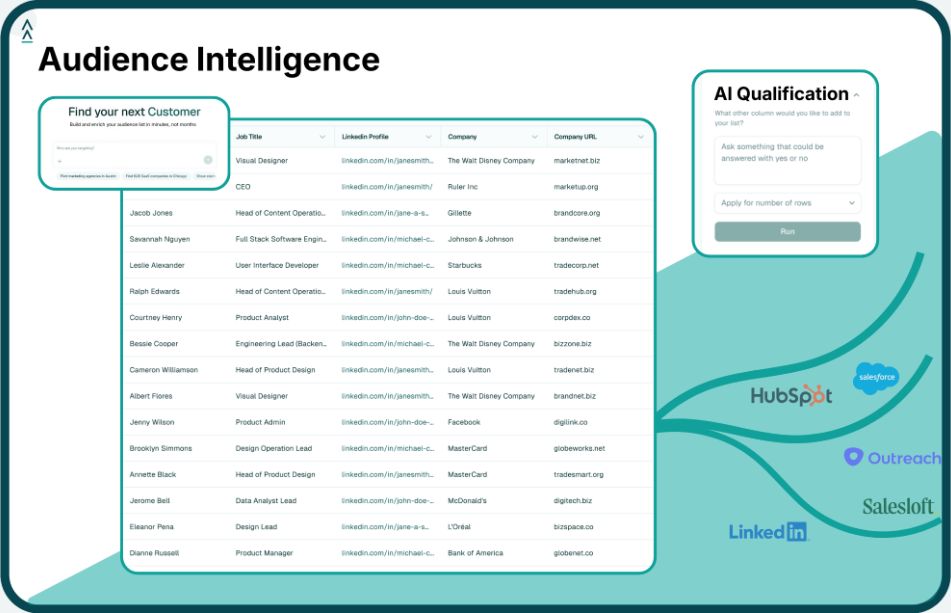
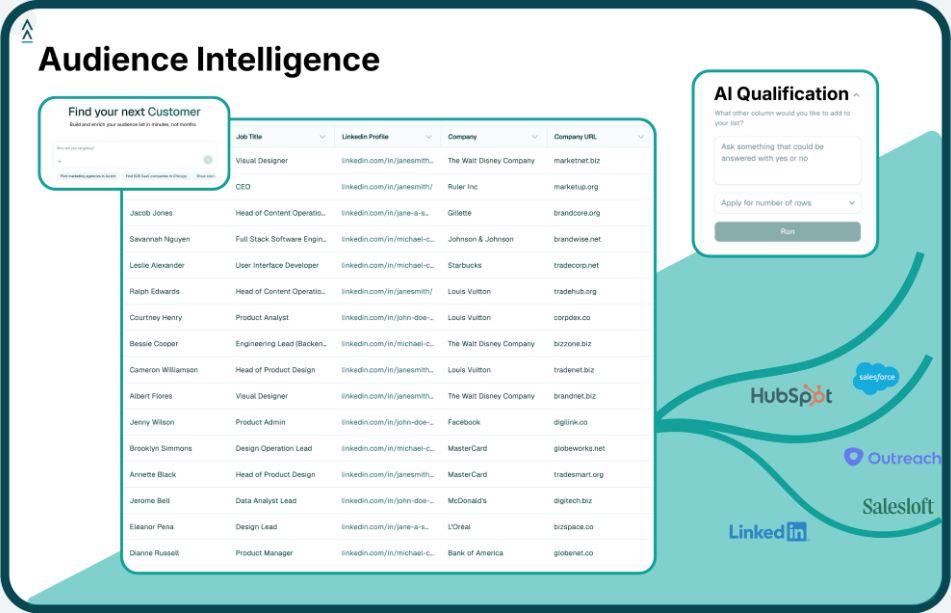
Landbase's platform, powered by the GTM-2 Omni agentic AI model, is designed to serve both the builder and the governor. For Growth Operators, Landbase provides a frictionless way to build and test new audience hypotheses. With just a plain-English prompt like "Find CTOs at Series B fintechs in London that are hiring for data roles," you can instantly generate and export an AI-qualified list of up to 10,000 contacts. This is the power of natural-language targeting in action, turning days of research into seconds.
For RevOps teams, Landbase provides the high-quality, AI-qualified data that is the lifeblood of their operations. The platform's AI Qualification layer ensures that the lists generated are not just large, but also highly relevant and ready for immediate activation. This reduces the burden on sales teams to sift through bad data and allows RevOps to focus on the strategic alignment of their GTM motion.
In essence, Landbase democratizes the power of GTM Engineering. You don't need to hire a team of specialized engineers to build complex audience discovery systems. The platform's Applied AI Lab, staffed by former data scientists from NASA and YouTube, has already done the heavy lifting. This allows your existing revenue team to focus on their core strengths—whether that's building the next growth engine or optimizing the current one.
The primary difference is one of focus: Growth Operations is a "build" function, focused on creating net-new automated systems to unlock new revenue streams through experimentation and technical innovation. Revenue Operations is a "run" function, focused on aligning, governing, and optimizing the existing sales, marketing, and customer success processes for maximum efficiency and predictability. Growth Ops builds the future revenue engine, while RevOps ensures the current one runs smoothly.
Landbase's AI-powered audience discovery platform allows Growth Operators to instantly build and test new audience hypotheses using natural language, dramatically accelerating their experimentation cycle and reducing the technical barrier to innovation. For RevOps teams, it provides a reliable source of high-quality, AI-qualified lead data, ensuring sales teams work with the most relevant prospects. This frees RevOps to focus on strategic process alignment, AI governance, and overall GTM orchestration rather than manual data operations.
Growth Operations is measured on the outcomes of its new systems and experiments. Key metrics include automation coverage (percentage of new processes automated), system reliability (uptime and error rates), experiment win rate (percentage yielding statistically significant results), and direct new revenue generated from the channels and workflows they build. Success is tied to proving tangible business value from innovation.
While a very small startup might manage with a generalist, any company serious about scaling its revenue will struggle without a dedicated RevOps function. The complexity of modern GTM tech stacks, the need for cross-functional alignment, and data-driven decision-making make centralized operations essential. Companies with mature RevOps functions achieve significantly better operational efficiency and are better positioned for sustainable growth.
Agentic AI automates the complex, multi-step process of audience discovery and qualification that traditionally required manual work across dozens of data sources. Instead of humans manually researching and scoring prospects, AI agents can interpret natural language prompts, gather relevant signals, and deliver qualified lists in seconds. This shift frees both Growth and RevOps teams to focus on high-value strategic work rather than manual data wrangling, with Gartner predicting this will see 75% of all RevOps tasks executed by AI agents by 2028.
Tool and strategies modern teams need to help their companies grow.