.png)
.png)

Daniel Saks
Chief Executive Officer


A database stores, organizes, and provides access to data for applications, analytics, AI systems, and other software. The category now spans relational databases, document databases, analytical databases, key-value stores, vector databases, distributed SQL systems, and broader data platforms. AI is adding another layer of demand as applications require fast access to structured records, embeddings, historical context, and continuously changing information.
The companies below stand out based on current revenue or ARR growth, customer expansion, financing, product adoption, and other publicly documented indicators. Because these measures vary significantly between companies, the list is a 2026 growth watchlist rather than an exact ranking.
Databases sit underneath most modern software systems. Their architecture affects how quickly applications retrieve information, how reliably transactions are processed, how data scales across regions, and which analytical or AI workloads can operate on top of the data.
Several trends are shaping database development:
Relational databases remain important for workloads that require structured data, defined relationships between records, and reliable transaction processing. Their use of schemas, integrity constraints, and ACID transactions helps maintain consistency when multiple applications or users read and modify data.
The watchlist considers several forms of growth evidence:
Funding alone does not prove commercial growth, and historical market share does not automatically indicate that a company is currently among the fastest-growing.
Founded: 2013
CEO: Ali Ghodsi
Status: Privately held
Recent Financing: $5B, August 2026
Valuation: $190B
Databricks surpassed a $7 billion annualized revenue run-rate in 2026, with revenue growing more than 80% year over year during its second quarter.
Its database product, Lakebase, also surpassed a $100 million revenue run-rate.
The company closed $5 billion in strategic financing in August 2026 at a $190 billion valuation.
Databricks provides a broad data and AI environment covering:
Its Lakebase product adds managed PostgreSQL-compatible database capabilities to a platform historically centered on lakehouse data infrastructure.
Databricks demonstrates how traditional category boundaries are converging.
Data warehousing, analytics, databases, machine learning, and AI applications increasingly operate within connected platforms rather than entirely separate infrastructure layers.
The growth of Lakebase also indicates demand for database infrastructure designed to work alongside AI agents and analytical workloads.
Company Founded: 2021
CEO: Aaron Katz
Status: Privately held
Recent Funding: $400M Series D, January 2026
Reported Valuation: $15B
ClickHouse passed $250 million in annual run-rate revenue in May 2026, more than tripling year over year.
Its managed ClickHouse Cloud service also surpassed 4,000 customers, adding more than 1,000 customers during the first part of 2026.
ClickHouse develops a column-oriented database designed for high-volume analytical workloads.
Its capabilities span:
ClickHouse was released as an open-source database in 2016, several years before ClickHouse Inc. was established in 2021 to develop commercial products around the technology.
Analytical applications increasingly need to query large amounts of continuously changing data without waiting for lengthy batch-processing cycles.
ClickHouse's growth reflects demand for databases designed around high-volume, low-latency analytical workloads.
This overlaps with a broader move toward real-time architectures, where event streaming allows information to be captured, processed, stored, and routed continuously between systems.
Founded: 2020
CEO: Paul Copplestone
Status: Privately held
Recent Funding: $500M Series F, June 2026
Post-Money Valuation: Approximately $10.5B
Supabase raised a $500 million Series F in June 2026, only months after earlier financing rounds significantly increased its valuation.
The company reported that database launches increased more than 600% year over year and that its developer base had grown to nearly 10 million users.
Supabase also reported that more than 60% of newly launched databases were being created through some form of AI tool.
Supabase provides an open-source developer platform centered on PostgreSQL.
Its products combine:
Supabase illustrates how AI coding tools are changing database distribution.
Developers are no longer always creating databases manually through provider dashboards. Coding assistants and agents can increasingly provision and interact with infrastructure while building applications.
That shifts part of database adoption from human-led configuration toward software-mediated infrastructure creation.
Founded: 2012
CEO: Sridhar Ramaswamy
Status: Public company
Snowflake generated approximately $4.47 billion in product revenue during fiscal 2026, representing 29% year-over-year growth.
Fourth-quarter product revenue increased 30%, while remaining performance obligations reached approximately $9.77 billion, up 42%.
Snowflake also added 740 net new customers during the quarter, representing 40% year-over-year growth in net additions.
Snowflake provides a cloud data platform covering:
Snowflake helped popularize cloud-native analytical database architecture with independently scalable storage and compute.
Its platform has since broadened into data engineering, AI, applications, and agent-oriented workflows.
The company's continued growth demonstrates that analytical databases remain central infrastructure even as newer AI-specific database categories emerge.
Founded: 2007
CEO: Chirantan “CJ” Desai
Status: Public company
MongoDB generated $2.46 billion in fiscal 2026 revenue, up 23% year over year.
MongoDB Atlas revenue increased 29% during both the fourth quarter and full fiscal year, while the company ended January 2026 with more than 65,200 customers.
MongoDB develops a document-oriented database platform.
Its capabilities include:
Document databases provide developers with a more flexible data model than fixed relational tables for many application workloads.
MongoDB's continued Atlas growth demonstrates sustained demand for managed databases that can support operational applications and newer AI-related use cases through the same platform.
Founded: 2011
CEO: Rowan Trollope
Status: Privately held
Redis surpassed $300 million in annual recurring revenue in January 2026.
The company also reported more than 50 customers spending at least $1 million annually, an increase of more than 20% year over year.
Usage of Redis Vector Library expanded rapidly as the company increased its focus on AI and agentic workloads.
Redis is known for an in-memory key-value database and has expanded into a broader real-time data platform.
Its capabilities include:
Applications that require extremely low-latency access often use different database architectures from systems designed primarily for long-term analytical storage.
AI agents add another use case because they may need fast access to session state, context, retrieved knowledge, or intermediate application data.
Redis's current growth reflects demand at this real-time layer of the database stack.
Founded: 2019
CEO: Ash Ashutosh
Founder & Chief Scientist: Edo Liberty
Status: Privately held
Latest Disclosed Funding: $100M Series B, April 2023
Pinecone reported in August 2026 that retention for its Serverless Database was running above 130%.
Annual commitments had increased to roughly 40% of revenue from approximately 25% three quarters earlier, while committed backlog had grown more than 60% since the beginning of the year.
Pinecone also reports serving more than 10,000 customers and one million developers across its broader platform.
Pinecone began as a managed vector database and has expanded its product range around AI knowledge infrastructure.
Its database supports:
Vector databases emerged as an important infrastructure category alongside the growth of embedding-based AI applications.
Instead of retrieving records solely through exact values or relational conditions, vector search retrieves information based on mathematical similarity.
Pinecone's expansion shows that databases increasingly support machine-readable representations of unstructured information alongside conventional structured records.
Founded: 2022
CEO: Jordan Tigani
Headquarters: Seattle, Washington
Status: Privately held
Latest Funding: $52.5M Series B, September 2023
Total Funding: Approximately $100M
MotherDuck reported approximately 850 paying customers after 18 months of commercial operation in June 2026.
The company continued expanding its platform during 2026 and acquired Tower in August to add runtime infrastructure for AI-generated data-engineering tasks.
MotherDuck develops a serverless analytical platform built around the DuckDB ecosystem.
Its capabilities include:
Many analytical workloads do not require the scale or operational complexity associated with large distributed data platforms.
MotherDuck and DuckDB represent growing interest in architectures that make analytical processing simpler for smaller or more localized datasets.
Its recent product expansion also reflects a broader trend toward allowing AI agents to perform data-engineering and analytical tasks directly.
The companies on this list highlight several shifts in modern database architecture.
AI applications often need several forms of data access at the same time.
An application may use:
The growth of Databricks, Redis, Pinecone, Supabase, and ClickHouse illustrates different parts of this emerging stack.
As AI systems gain more access to operational data, governance and reliability also become increasingly important. Frameworks for AI risk management provide broader context for organizations deciding how AI applications should access, use, and act on data.
PostgreSQL remains a major foundation for newer cloud and developer platforms.
Supabase is built around PostgreSQL, while other database companies have developed managed or distributed systems compatible with parts of the Postgres ecosystem.
Its durability reflects the value of combining established relational semantics with newer cloud-management and developer experiences.
Operational systems historically handled transactions while separate data warehouses handled analysis.
Modern platforms increasingly reduce that separation.
ClickHouse, Databricks, Redis, and other providers support architectures where applications need current data for analytics, personalization, AI, monitoring, or automated decisions.
A notable 2026 shift is that databases are increasingly being provisioned, queried, and modified by software agents rather than only by human developers.
Supabase reports that AI tools are responsible for a large share of new database creation, while several other database platforms are developing agent-oriented products.
This changes database design requirements around APIs, permissions, isolation, observability, and automated lifecycle management.
General-purpose database platforms answer questions such as:
GTM teams encounter a more specialized set of data problems.
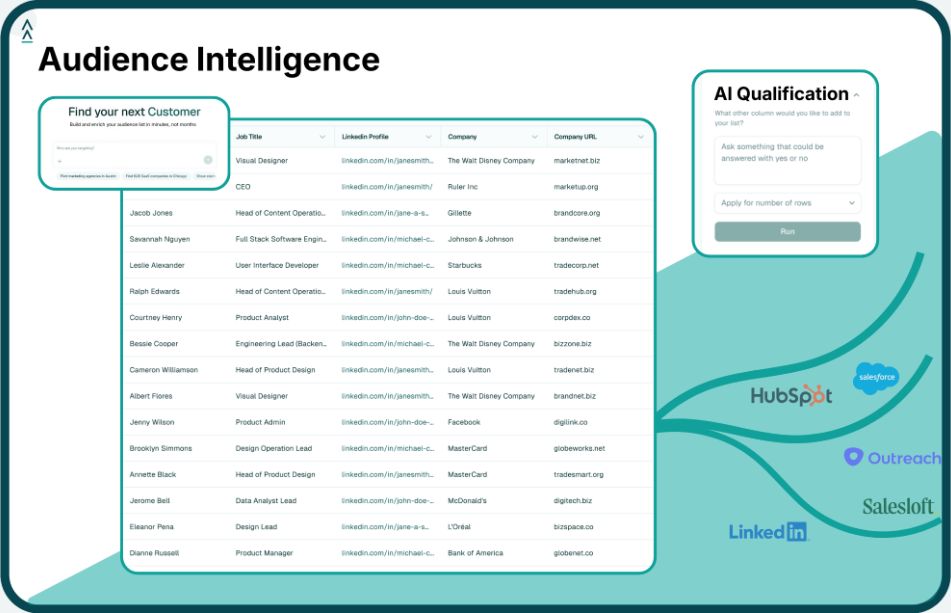
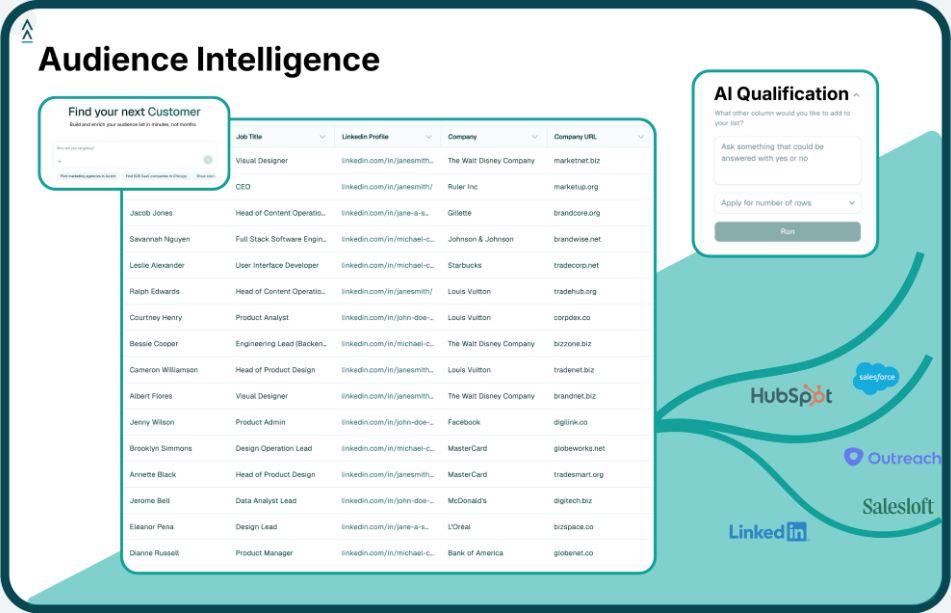
Revenue workflows need to determine which companies and contacts exist in a target market, match those entities against CRM records, enrich missing fields, detect relevant account changes, and prepare the resulting data for sales, marketing, and RevOps systems.
That is where a B2B data layer differs from the general-purpose databases in the watchlist above.
Landbase focuses on B2B company and contact data rather than general-purpose application database infrastructure.
Its B2B database currently reports more than 300 million contacts across 24 million companies, with more than 1,500 enrichment fields and continuous verification using live signals.
The same underlying Landbase data and agent can be accessed through its web application or CLI, allowing GTM data operations to move between interactive and technical workflows.
Landbase supports operations such as:
For existing records, matching and enrichment workflows can resolve companies or people against Landbase data and append available attributes before those records move into another GTM system.
The Landbase CLI provides terminal access to the same underlying Landbase system.
It can run inside environments such as Claude Code and Codex, allowing GTM engineers and RevOps operators to incorporate audience creation, matching, enrichment, and dataset operations into workflows that also involve scripts, CRM records, and other connected tools.
For requirements that extend beyond ordinary audience searches, the advanced dataset creator supports more exact conditions, calculations, aggregations, rankings, and selected output fields.
Landbase does not replace Databricks, MongoDB, PostgreSQL, Redis, or other general-purpose database technologies.
Those systems provide infrastructure for storing and serving organizational or application data.
Landbase addresses a different problem: supplying and operationalizing B2B company and contact data for GTM workflows.
A technical revenue team may therefore use general database infrastructure for internal application or analytical data while using Landbase to create, enrich, and maintain the external B2B datasets needed for targeting, qualification, CRM operations, or downstream analysis.
This separation between database infrastructure and GTM data operations provides the natural connection between the broader database market and Landbase's role within revenue technology.
Relevant indicators include revenue or ARR growth, customer expansion, cloud usage, developer adoption, financing, valuation changes, and growth in specific database products. Because companies report different metrics, several indicators should be considered rather than relying on funding alone.
Common categories include relational databases, document databases, key-value databases, analytical databases, distributed SQL databases, graph databases, and vector databases. Many modern platforms support capabilities that cross several of these categories.
AI is increasing demand for vector retrieval, agent memory, real-time data access, large analytical workloads, and automated database provisioning. AI agents also create new requirements around permissions, isolation, monitoring, and programmatic database management.
Some applications need to react immediately to new events rather than wait for scheduled processing. Examples include payments, fraud detection, monitoring, personalization, logistics, and AI agents. These use cases often rely on databases and streaming infrastructure designed for low-latency access.
General database platforms store and serve application or organizational data. Landbase focuses specifically on B2B and GTM data. It provides company and contact records alongside audience creation, matching, enrichment, signals, and dataset workflows that help revenue teams prepare external market data for operational use.
Tool and strategies modern teams need to help their companies grow.