.png)
.png)

Daniel Saks
Chief Executive Officer


If you are searching for the best tools for automated lead nurturing, there is a good chance your current process is leaking revenue. The data backs that up: widely cited industry research suggests that the vast majority of marketing leads never convert to sales, and in most cases, the cause is not bad leads but absent or poorly timed follow-up. Meanwhile, companies that invest in structured nurturing programs are often cited as generating more sales-ready leads at a lower cost per lead—a dynamic that shows up repeatedly across B2B research.
The gap between "having leads" and "closing deals" is where automated lead nurturing platforms earn their return. And the stakes keep rising. The marketing automation market is projected to grow from $6.65 billion in 2024 to $15.58 billion by 2030, driven by B2B teams demanding tools that do more than drip emails on a timer.
We reviewed nine B2B lead nurturing tools across AI capabilities, multi-channel automation, data quality, integration depth, and real-world user feedback. This guide breaks down what each platform actually does well, who it fits, and where the limitations show up so you can make a confident decision.
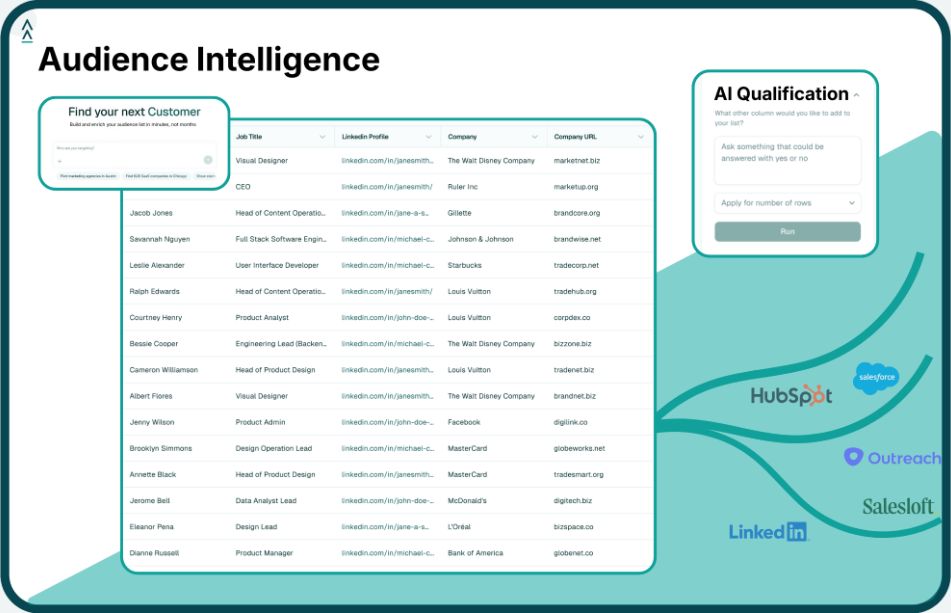
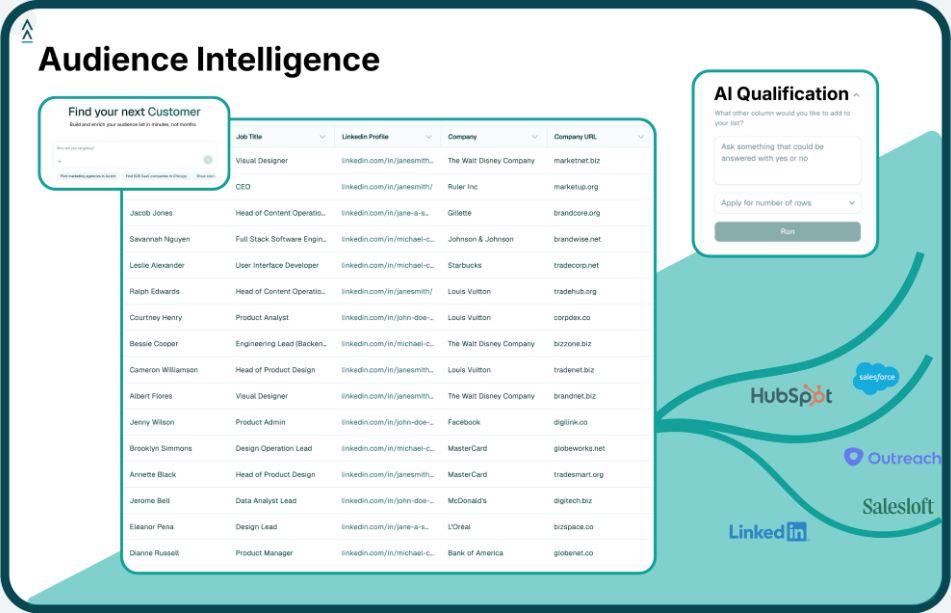
Landbase takes a fundamentally different approach to automated lead nurturing. Rather than requiring you to build workflows, write sequences, and manually configure triggers, Landbase deploys agentic AI that autonomously handles the full pipeline from prospect identification through personalized multi-channel outreach.
The platform runs on GTM-2 Omni, a proprietary domain-specific AI model that powers three specialized agents: a Research Agent that identifies and qualifies prospects, an Identity Agent that classifies contacts against your ideal customer profile, and a Predictive Agent that determines optimal timing and messaging. Landbase says GTM-2 Omni was trained on 40M+ B2B campaigns and 175M+ sales conversations.
These agents work together to turn raw signals into qualified conversations without manual intervention. For B2B teams dealing with the volume of outreach attempts typically needed per contact, this kind of autonomous orchestration changes the unit economics of nurturing entirely.
What separates Landbase from traditional automated lead nurturing platforms is its bundled data layer. The platform includes a 300M+ verified contact database across 24M+ accounts, enriched with firmographics, technographics, job change alerts, hiring signals, and funding triggers. That means you are not importing stale lists from a separate vendor and hoping the data holds up.
Landbase's AI agents use these real-time intent signals to determine which prospects to nurture, what message to send, and which channel (email or LinkedIn) to use, then adapt based on engagement patterns. Multi-channel outreach powered by live signals consistently outperforms single-channel drip sequences.
The results from production deployments reflect this architecture. Landbase reports that P2 Telecom generated 200+ sales-qualified leads worth approximately $5 million in six months, while saving roughly 10 hours per week per sales executive. Oyster achieved 40%+ conversion rates, and QA Wolf saw a 50% improvement in lead quality based on customer case studies. Across the customer base, Landbase reports 4–7x higher conversion rates compared to traditional SDR workflows, with up to 80% lower total cost of ownership.
Landbase was named a Gartner Cool Vendor in AI for Marketing in 2025 and has raised $42.5 million in total funding, including a $30 million Series A led by Sound Ventures and Picus Capital. The platform's Campaign Feed lets you launch campaigns in minutes, not the weeks of configuration typical of legacy marketing automation.
Best for: B2B teams that want AI-autonomous automated lead nurturing from targeting through personalized multi-channel outreach, without building manual workflows. Try Landbase for free to see how agentic AI can automate your targeting, messaging, and multi-channel outreach.
HubSpot Marketing Hub pairs a full CRM with marketing automation tools designed for teams running inbound-led strategies. The platform connects marketing, sales, and service data in one system, which means lead nurturing workflows can trigger based on a contact's entire history rather than isolated email interactions.
The automation builder supports behavior-triggered workflows based on form submissions, email interactions, page visits, and custom events. Lead scoring updates automatically and notifies sales reps when prospects cross defined thresholds. HubSpot introduced Breeze at INBOUND 2024 and has continued expanding it—the AI suite adds content agents that generate personalized emails and landing pages based on user behavior patterns.
Pricing: Free CRM available. Professional starts at $800/mo billed annually (plus a $3,000 onboarding fee); pricing scales with marketing contacts and seats. Enterprise starts at $3,600/mo (with a $7,000 onboarding fee).
Best for: SMBs and mid-market teams wanting a unified inbound marketing and CRM platform with behavior-triggered nurturing.
ActiveCampaign has built its reputation on email automation depth. The platform offers 900+ pre-built automation recipes categorized by industry and use case, with advanced conditional branching that supports multi-path sequences most competing tools cannot match. In independent testing, a complete 7-step lead nurturing workflow was deployed in 12 minutes using pre-built templates.
The built-in CRM integrates directly with automation workflows, so leads move through your sales pipeline as their engagement changes. Predictive sending optimizes delivery timing per contact, and site tracking triggers automations based on browsing behavior.
Pricing: Starts at $81/mo based on contact count and feature tier. Multiple users report price increases of approximately 100% over three years. Check ActiveCampaign's current billing terms directly, as their contact-counting policies have evolved and can affect total cost for lists with inactive addresses.
Best for: SMBs and mid-market teams needing sophisticated email automation with advanced conditional logic.
Salesforce MCAE, still widely known as Pardot, is purpose-built for B2B organizations already running Salesforce CRM. The native integration means lead data flows bi-directionally between marketing and sales without middleware or sync delays.
Engagement Studio provides a visual builder for multi-step drip campaigns that advance prospects through funnel stages. Einstein AI adds predictive lead scoring with explainability, so sales teams can see why a lead received its score rather than relying on opaque numbers. Progressive profiling collects additional information from leads incrementally across multiple form interactions.
Pricing: Starts at $1,250/mo. Annual subscription with edition-based pricing. Requires existing Salesforce CRM.
Best for: Enterprise B2B teams already invested in the Salesforce ecosystem who need tight marketing-to-sales handoff.
Marketo Engage is the enterprise heavyweight for complex B2B marketing operations. Its lead scoring capabilities are well-regarded across the analyst community, with multi-dimensional models that factor in behavioral engagement, demographic fit, and account-level signals. Smart Campaigns use a trigger-filter-flow architecture that gives experienced marketers granular control over nurturing logic.
The platform's account-based marketing capabilities are among the most robust in the category, and revenue cycle analytics tie marketing activity directly to pipeline impact. Automated programs can nurture prospects over extended B2B sales cycles that span months.
Pricing: Quote-based by edition and database size. Typical range is $1,500–$3,000/mo for 50K contacts, scaling to $3,500–$6,000+/mo for 250K contacts. Implementation typically requires 2–3 months.
Best for: Large enterprises with complex B2B marketing operations, big budgets, and dedicated marketing operations teams.
Clay approaches lead nurturing from the data enrichment side. The platform pulls from what Clay describes as 150+ data providers through waterfall enrichment, meaning if one source does not have the data you need, it automatically tries the next. AI agents then use that enriched data to generate personalized outreach messages at scale.
Conditional logic chains let you build multi-step enrichment workflows that adapt based on what data is available for each lead. CRM integrations push enriched profiles directly into your existing systems.
Pricing: Launch plan at $185/mo (2,500 Data Credits, 15,000 Actions). Growth at $495/mo (6,000 Data Credits, 40,000 Actions). Enterprise pricing is custom. A March 2026 overhaul cut data marketplace costs 50–90%, per Clay's own community announcement.
Best for: Revenue teams that need deep data enrichment combined with AI-personalized outreach in one platform.
Instantly.ai focuses on cold email outreach at scale with an emphasis on simplicity. The platform supports unlimited email account connections with built-in warmup to establish sender reputation before campaigns launch. Multi-step sequences automate the progression from initial contact through follow-up.
The B2B lead database (SuperSearch) claims 450M+ contacts, and AI agents handle automated reply categorization and response. The unified inbox (Unibox) consolidates replies across all connected email accounts.
Pricing: Growth outreach starts at $47/mo ($37.60/mo billed annually). Hypergrowth at $97/mo. Typical full-stack (Outreach + SuperSearch + CRM) runs $150–$400/mo.
Best for: Cold email-focused teams needing simple, affordable outreach at scale with built-in deliverability tools.
Apollo.io combines a large contact database with built-in outreach sequencing, making it a popular choice for teams that want prospecting and nurturing in one platform. The contact database includes email addresses, phone numbers, and basic firmographic data. Multi-step, multi-channel sequences support email, calls, and LinkedIn tasks.
AI agents assist with account research, lead scoring, and message generation. The free tier makes it accessible for small teams testing automated outreach workflows.
Pricing: Free plan available with 900 credits/year. Basic at $49/user/mo. Professional at $79/user/mo (adds A/B testing, dialer). Organization at $119/user/mo. Note: actual costs often run 2–3x advertised due to per-seat pricing and credit limits.
Best for: Teams needing affordable combined prospecting and outreach with a large contact database and a free tier to start.
Brevo stands out with a pricing model based on email volume rather than contact count. This means you can store and nurture unlimited contacts without your bill scaling with your list size, which is a meaningful advantage for teams with large databases.
The platform supports multi-channel nurturing across email, SMS, WhatsApp, and social DMs from a unified inbox. The drag-and-drop automation builder handles conditional branching, triggers, and tagging for welcome series, behavioral sequences, and re-engagement campaigns.
Pricing: Starter at $9/mo (5,000 emails, unlimited contacts). Standard at $18/mo. Professional at $499/mo. 78% of reviewers give five stars on G2 and Trustpilot.
Best for: SMBs and ecommerce businesses wanting affordable multi-channel nurturing without per-contact pricing.
Choosing the best tools for automated lead nurturing starts with your team's primary constraint, because each automated lead nurturing platform excels in a different context:
The most common mistake when evaluating automated lead nurturing platforms is choosing a tool that solves today's pain without accounting for tomorrow's scale. Companies adopting marketing automation consistently report growth in lead volume, which means your contact base will grow. The best tools for automated lead nurturing handle that growth without punishing you with per-contact pricing or requiring a migration when you hit feature limits.
The best tools for automated lead nurturing in 2026 split into two camps: legacy workflow builders and a new generation of AI lead nurturing software. Traditional B2B lead nurturing tools like HubSpot, ActiveCampaign, and Marketo still deliver strong results for teams willing to invest the setup time. But the shift toward AI-driven personalization at scale is accelerating. A 2024 HubSpot survey found that 66% of marketers globally use AI in their roles, and industry analysis from Omnisend shows that automated email flows drive roughly 37% of email-generated revenue while representing just 2% of total email volume—underscoring why automation is no longer optional.
For B2B teams that want the most comprehensive approach, Landbase combines the two things most platforms force you to source separately: a verified 300M+ contact database with real-time intent signals, and AI agents that autonomously execute the full nurturing workflow. The result is one of the best tools for automated lead nurturing available today: campaigns that launch in minutes instead of weeks, leads that are qualified by behavior and intent rather than static lists, and conversion rates that customers report at 4–7x traditional approaches. Gartner recognized this model when they named Landbase a Cool Vendor in AI for Marketing, and the platform's 825% revenue growth in 2025 suggests the market agrees. Book a demo to see Landbase in action and evaluate whether it fits your GTM workflow.
Automated lead nurturing is the process of using AI lead nurturing software or automation platforms to deliver targeted, timely communications to prospects as they move through your sales funnel. Instead of manually following up with each lead, automation platforms trigger emails, messages, or multi-channel touchpoints based on a lead's behavior, demographics, or engagement level. The goal is to keep prospects engaged until they are ready to buy. Research suggests that nurtured leads tend to make meaningfully larger purchases than non-nurtured ones.
Pricing varies widely depending on the platform and your scale. Entry-level tools like Brevo start at $9/mo, mid-market platforms like ActiveCampaign begin around $81/mo, and enterprise solutions like Marketo or Pardot range from $1,250 to $6,000+/mo. Many platforms charge per contact, which means costs rise as your list grows. Some newer platforms are priced by email volume or offer bundled models. Expect to budget for implementation time as well, as enterprise tools often require 2–3 months of setup.
The features that drive the most impact for B2B teams are lead scoring (to prioritize follow-up), multi-channel automation (email, LinkedIn, SMS), behavioral triggers (actions that start or modify sequences), CRM integration (to maintain a single view of each contact), and data quality (to ensure your messages reach real, relevant prospects). Personalization capabilities are also critical—prospects who receive irrelevant messaging disengage quickly, which is well-documented across multiple consumer experience studies.
Yes. AI lead nurturing software improves results in three measurable ways: better targeting (AI models identify which leads are most likely to convert), personalized messaging (AI generates contextually relevant content for each prospect), and timing optimization (AI determines when each contact is most likely to engage). Annuitas has reported that companies using marketing automation see significant increases in qualified leads. Across Landbase's customer base, the platform reports 4–7x higher conversion rates compared to traditional SDR workflows, based on customer case studies.
Setup timelines vary significantly by platform. Simple tools like Instantly.ai or Brevo can have basic sequences running within a day. Mid-market platforms like ActiveCampaign or HubSpot typically require 1–2 weeks for initial configuration, plus ongoing optimization. Enterprise tools like Marketo or Pardot often need 2–3 months of implementation, frequently with certified consultants. Agentic AI platforms like Landbase have compressed this timeline, with some customers reporting campaign launches in minutes rather than weeks.
Tool and strategies modern teams need to help their companies grow.