March 3, 2026

SalesOps vs RevOps vs MarketingOps

Understanding SalesOps, MarketingOps, and RevOps is critical for modern B2B growth. Learn how these three distinct but interconnected operations functions drive efficiency, alignment, and predictable revenue.
  • Button with overlapping square icons and text 'Copy link'.
Table of Contents

Major Takeaways

What are the three core GTM operations functions and how do they differ?
SalesOps optimizes sales team efficiency and CRM management, MarketingOps maximizes marketing campaign ROI and lead quality, while RevOps takes a holistic approach across the entire revenue lifecycle—aligning sales, marketing, and customer success for unified growth.
When should a company implement each operations function?
SalesOps and MarketingOps should be implemented as those respective teams scale and complexity increases. RevOps becomes essential around $10-15M in annual revenue or when significant misalignment between sales and marketing functions emerges.
How can AI and automation transform modern GTM operations?
AI-powered platforms enable operations teams to instantly discover and qualify prospects using natural-language targeting, eliminating manual list building and allowing teams to focus on strategic initiatives rather than repetitive data work.

Most folks think of go-to-market operations as just one big function, but honestly, the modern landscape has evolved into three distinct but interconnected roles: Sales Operations, Marketing Operations, and Revenue Operations. Each plays a critical part in driving business growth, but they focus on different aspects of the customer journey and organizational efficiency. With the right tools and strategies, these operations functions can work together seamlessly to create a frictionless path from prospect to customer.

The key to success in today's competitive B2B environment is understanding how these roles complement each other while maintaining their unique responsibilities. SalesOps focuses on optimizing the sales team's efficiency and effectiveness, MarketingOps ensures marketing campaigns deliver maximum ROI, and RevOps takes a holistic view across the entire revenue lifecycle. When these functions are aligned and empowered with the right technology, companies see dramatically improved pipeline velocity, higher conversion rates, and more predictable revenue growth.

If you're building or scaling your go-to-market team, it's essential to understand the distinctions between these roles, when to implement each, and how to leverage technology like Landbase to maximize their impact. Let's break down what each role entails and how they work together to drive business success.

Key Takeaways

  • SalesOps focuses on sales team efficiency, CRM management, and pipeline optimization
  • MarketingOps handles marketing automation, campaign performance, and lead generation quality
  • RevOps takes a holistic approach, aligning sales, marketing, and customer success for unified revenue growth
  • Companies with mature SalesOps functions typically see 20-30% improvement in sales productivity
  • Startups should consider implementing Revenue Operations around $10-15M in annual revenue
  • Technology and AI-powered platforms can empower all three functions with instant audience qualification and natural-language targeting

Understanding the Fundamentals: What is Sales Operations?

Sales Operations (SalesOps) is the backbone of your sales organization, focused on enabling sales teams to sell more efficiently and effectively. SalesOps professionals handle the systems, processes, and data that keep your sales engine running smoothly.

Key Responsibilities of SalesOps

SalesOps teams are responsible for a wide range of activities that directly impact sales performance:

  • CRM Management and Optimization - Maintaining data integrity, managing workflows, and ensuring the CRM serves as a single source of truth
  • Sales Process Design - Creating and refining the sales methodology, stages, and qualification criteria
  • Compensation and Incentive Planning - Designing commission structures that drive desired behaviors and outcomes
  • Sales Forecasting and Reporting - Providing accurate pipeline visibility and performance metrics
  • Sales Enablement - Equipping sales teams with the right tools, content, and training
  • Territory and Quota Planning - Ensuring fair and strategic territory assignments and quota distribution

The primary goal of SalesOps is to remove friction from the sales process, allowing Account Executives and SDRs to focus on what they do best—building relationships and closing deals.

The Role of a Sales Operations Manager

A Sales Operations Manager typically reports to the VP of Sales or Chief Revenue Officer and serves as the strategic partner to the sales leadership team. They're responsible for:

  • Analyzing sales performance data to identify bottlenecks and opportunities
  • Implementing and managing sales technology stack integrations
  • Creating dashboards and reports that provide actionable insights
  • Managing sales operations budget and vendor relationships
  • Leading sales process improvement initiatives

The best SalesOps managers combine analytical thinking with business acumen, understanding both the technical systems and the human behaviors that drive sales success.

SalesOps Impact on Sales Performance

Effective SalesOps can dramatically improve sales team performance. Companies with mature SalesOps functions typically see:

  • 20-30% improvement in sales productivity through streamlined processes and better tools
  • 15-25% increase in forecast accuracy through better data management and reporting
  • Reduced ramp time for new hires through standardized processes and better enablement

SalesOps teams can use Landbase to build precise, AI-qualified prospect lists for their sales teams, improving efficiency and targeting without manual list building. This allows SalesOps to focus on strategic initiatives rather than spending time on tedious data gathering and list creation.

Breaking Down Marketing Operations: Functions and Impact

Marketing Operations (MarketingOps) is the strategic and technical engine that powers your marketing organization. MarketingOps professionals ensure that marketing campaigns are executed efficiently, measured accurately, and optimized for maximum ROI.

Core Functions of MarketingOps

MarketingOps teams handle the critical infrastructure that enables marketing success:

  • Marketing Technology Stack Management - Selecting, implementing, and maintaining marketing automation platforms, CRM integrations, and other martech tools
  • Campaign Operations - Setting up, executing, and tracking multi-channel marketing campaigns
  • Lead Management and Scoring - Defining lead qualification criteria and managing lead flow between marketing and sales
  • Data Analytics and Reporting - Measuring campaign performance, attribution, and marketing ROI
  • Budget Management - Tracking marketing spend and ensuring efficient allocation of resources
  • Compliance and Governance - Ensuring marketing activities comply with data privacy regulations and brand guidelines

MarketingOps bridges the gap between marketing strategy and execution, ensuring that campaigns run smoothly and deliver measurable results.

Optimizing the Marketing Tech Stack

The modern marketing technology stack can include dozens of tools, from email marketing platforms to social media management systems to analytics dashboards. MarketingOps professionals are responsible for:

  • Evaluating and selecting new marketing technologies
  • Integrating tools to ensure seamless data flow
  • Managing user access and permissions
  • Providing training and support to marketing team members
  • Monitoring system performance and troubleshooting issues

A well-optimized marketing tech stack can significantly reduce manual work and improve campaign execution speed.

Decoding Revenue Operations (RevOps): The Holistic Approach

Revenue Operations (RevOps) represents the evolution of go-to-market operations, taking a holistic view across the entire customer lifecycle. RevOps emerged as companies recognized the need for better alignment between sales, marketing, and customer success functions.

Why RevOps is Essential for Growth

RevOps addresses the fundamental challenge that many companies face: siloed go-to-market functions that don't work together effectively. By creating a unified revenue operations function, companies can:

  • Break down organizational silos between sales, marketing, and customer success
  • Create consistent processes across the entire customer journey
  • Establish unified data standards and reporting frameworks
  • Align incentives and goals across all revenue-generating functions
  • Improve customer experience through seamless handoffs and consistent messaging

Companies with mature RevOps functions typically see around 19% higher revenue growth and significant reductions in customer churn.

Integrating Sales, Marketing, and Service

The core responsibility of RevOps is to ensure that all customer-facing functions work together seamlessly. This includes:

  • Unified Data Strategy - Creating a single source of truth for customer data across all systems
  • End-to-End Process Design - Mapping and optimizing the entire customer journey from awareness to advocacy
  • Cross-Functional Goal Setting - Establishing shared KPIs and objectives that align all revenue functions
  • Technology Integration - Ensuring that all go-to-market tools work together seamlessly
  • Change Management - Leading organizational change to support unified revenue operations

RevOps leaders act as the connective tissue between departments, ensuring that everyone is working toward the same goals with consistent processes and data.

The Strategic Value of RevOps

RevOps provides strategic value by:

  • Improving Revenue Predictability through better forecasting and pipeline management
  • Reducing Operational Friction through standardized processes and systems
  • Enhancing Customer Experience through consistent messaging and seamless handoffs
  • Increasing Operational Efficiency by eliminating redundant processes and tools
  • Enabling Data-Driven Decision Making through unified reporting and analytics

RevOps leaders can utilize Landbase for overarching GTM strategy, ensuring consistent, high-quality audience discovery and qualification across all revenue-generating functions. This provides a foundation for unified targeting and messaging across the entire customer journey.

Key Distinctions: SalesOps, MarketingOps, and RevOps Compared

While these three functions work together, they have distinct scopes, responsibilities, and strategic focuses.

Reporting Structures and Team Collaboration

The reporting structure often reflects the scope and strategic importance of each function:

  • SalesOps typically reports to the VP of Sales or Chief Revenue Officer
  • MarketingOps usually reports to the CMO or VP of Marketing
  • RevOps often reports directly to the CRO or CEO, reflecting its cross-functional nature

In companies with mature RevOps functions, SalesOps and MarketingOps may report into the RevOps organization, creating a unified operations structure.

Examples of Overlap and Specialization

There are areas where these functions naturally overlap:

  • Lead Management - MarketingOps defines lead scoring, SalesOps manages lead assignment, RevOps ensures alignment between functions
  • Technology Stack - Each function manages their specific tools, but RevOps ensures integration and data consistency
  • Reporting and Analytics - Each function has their own dashboards, but RevOps establishes unified metrics and reporting standards
  • Process Design - Each function designs their own processes, but RevOps ensures end-to-end alignment

The key is to establish clear roles and responsibilities while maintaining open communication and collaboration between functions.

The Evolution of Operations: From Siloed to Integrated GTM

The go-to-market operations landscape has evolved significantly over the past decade, moving from siloed functions to integrated, customer-centric approaches.

The Shift Towards Unified Operations

Historically, sales and marketing operated in separate silos with different goals, processes, and metrics. This led to:

  • Misaligned incentives between sales and marketing
  • Inconsistent customer experiences across touchpoints
  • Data fragmentation across multiple systems
  • Operational inefficiencies from redundant processes

The emergence of RevOps represents a recognition that revenue generation is a unified process that requires integrated operations, not separate functions working in isolation.

Benefits of an Integrated GTM Team

Companies that have successfully implemented integrated GTM operations see significant benefits:

  • Significant improvements in lead-to-customer conversion rates through better alignment
  • 15-25% reduction in sales cycle length through streamlined processes
  • 10-20% increase in customer lifetime value through better cross-sell and upsell coordination
  • 30-40% improvement in operational efficiency through elimination of redundant processes

The integrated approach also enables better customer experiences, as prospects and customers receive consistent messaging and seamless handoffs between functions.

Future Trends in Sales, Marketing, and RevOps

Several trends are shaping the future of go-to-market operations:

  • Increased use of AI and automation to handle routine tasks and provide predictive insights
  • Greater focus on customer experience as a key differentiator
  • More sophisticated attribution models to understand true marketing impact
  • Enhanced data integration to create unified customer views
  • Agile methodologies applied to go-to-market operations

GTM-2 Omni is an agentic AI model specifically built for GTM automation, empowering integrated operations teams to find and qualify customers using natural-language targeting. This represents the next evolution in go-to-market operations, where AI handles the repetitive work while humans focus on relationship building and strategic decision-making.

Leveraging Technology for Operations Excellence: Tools and Platforms

Technology is the foundation that enables modern go-to-market operations to function effectively. The right tech stack can dramatically improve efficiency, accuracy, and effectiveness.

Essential Tech Stack for SalesOps

SalesOps teams rely on several key technologies:

  • CRM Systems - Salesforce, HubSpot, or Microsoft Dynamics for managing customer relationships
  • Sales Engagement Platforms - Outreach, Salesloft, or Reply.io for multi-channel outreach
  • Sales Intelligence Tools - Landbase, ZoomInfo, or Apollo.io for prospect research and list building
  • Sales Enablement Platforms - Highspot, Seismic, or Showpad for content management and training
  • Business Intelligence Tools - Tableau, Power BI, or Looker for advanced analytics

The key is to ensure these tools integrate seamlessly and provide a unified view of the customer.

Key Tools for MarketingOps Efficiency

MarketingOps teams depend on a robust marketing technology stack:

  • Marketing Automation Platforms - Marketo, HubSpot, or Pardot for campaign execution
  • Email Marketing Tools - Mailchimp, Brevo, or SendGrid for email campaigns
  • Social Media Management - Hootsuite, Buffer, or Sprout Social for social media
  • Content Management Systems - WordPress, Drupal, or Contentful for website management
  • Analytics and Attribution Tools - Google Analytics, Adobe Analytics, or HubSpot for measurement

MarketingOps must ensure that all these tools work together to provide a seamless customer experience and accurate performance measurement.

RevOps Technology for Seamless Integration

RevOps requires technology that spans the entire customer journey:

  • Customer Data Platforms (CDPs) - Segment, mParticle, or Tealium for unified customer data
  • Revenue Operations Platforms - Clari, Gong, or Aviso for revenue intelligence
  • AI-Powered Audience Discovery - Landbase with GTM-2 Omni for intelligent prospecting
  • Integrated CRM and Marketing Automation - Ensuring seamless data flow between systems
  • Unified Analytics Platforms - Providing end-to-end visibility into the customer journey

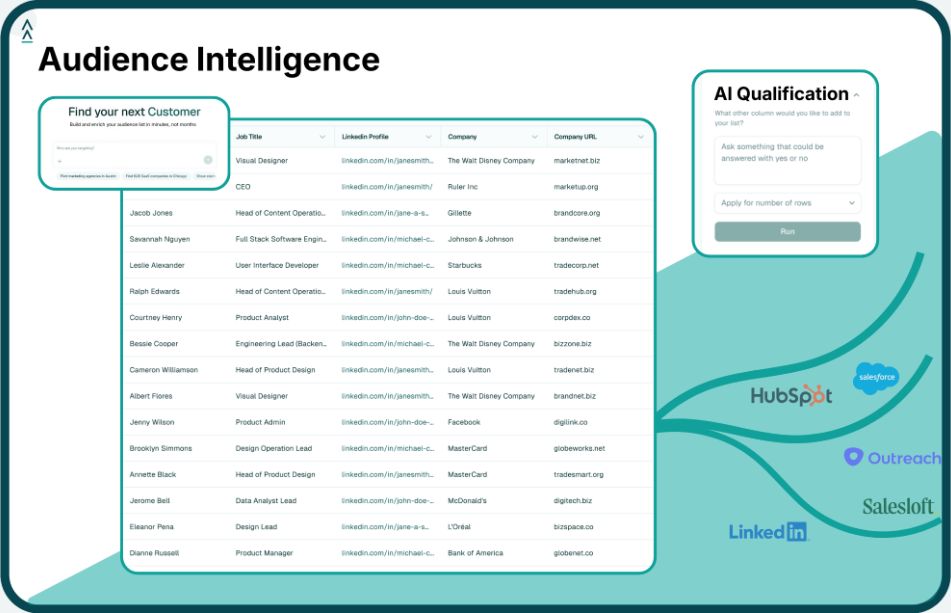
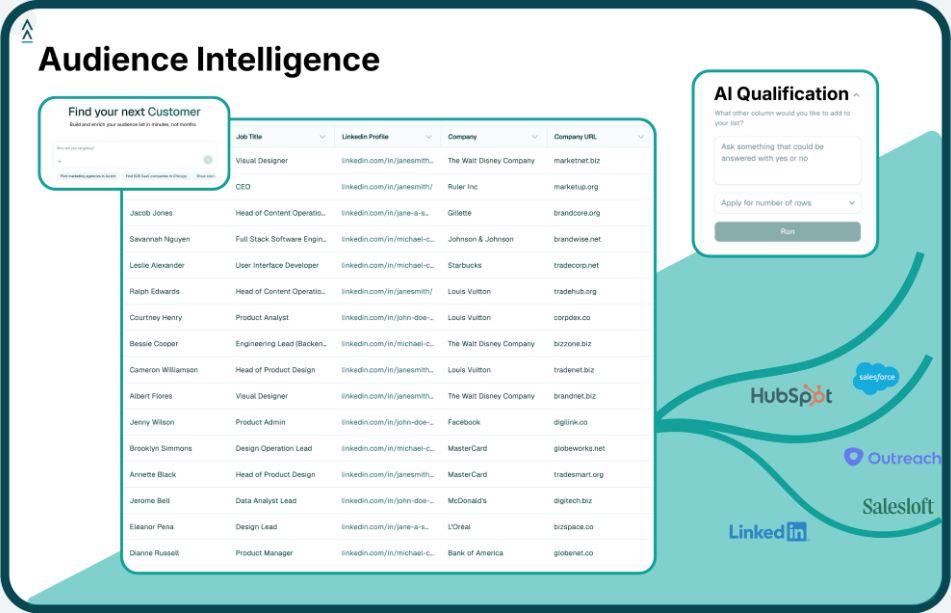
Landbase acts as a foundational AI-powered tool for all operations teams, providing instant, AI-qualified audiences that integrate into existing CRMs and sales engagement tools. GTM-2 Omni's advanced AI capabilities, including semantic search and ICP recognition, revolutionize how operations teams discover and qualify prospects. The VibeGTM Interface empowers operations professionals to build and refine targeted audience lists using natural language, accelerating GTM processes.

Measuring Success: Metrics and KPIs for Operations Teams

Effective operations require clear metrics and KPIs to measure performance and drive continuous improvement.

Essential SalesOps Metrics

SalesOps teams should track these key metrics:

  • Sales Productivity - Revenue per rep, deals closed per rep, average deal size
  • Pipeline Health - Pipeline coverage, win rates, average sales cycle length
  • Forecast Accuracy - Variance between forecast and actual results
  • Sales Activity Metrics - Calls made, emails sent, meetings booked
  • Rep Ramp Time - Time to productivity for new hires

These metrics help SalesOps identify bottlenecks and opportunities for process improvement.

Key MarketingOps Performance Indicators

MarketingOps teams should focus on these metrics:

  • Lead Generation - MQLs, SQLs, cost per lead, lead-to-customer conversion rate
  • Campaign Performance - Open rates, click-through rates, conversion rates, ROI
  • Marketing Attribution - Revenue influenced by marketing, channel effectiveness
  • Content Performance - Engagement rates, conversion rates, content ROI
  • Marketing Efficiency - Marketing spend as percentage of revenue, operational efficiency

These metrics help MarketingOps optimize campaigns and improve marketing ROI.

Holistic RevOps Success Metrics

RevOps teams should track these end-to-end metrics:

  • Revenue Growth - Overall revenue growth, new business growth, expansion revenue
  • Customer Lifetime Value (CLTV) - Total revenue per customer over their lifetime
  • Customer Acquisition Cost (CAC) - Total cost to acquire a new customer
  • CLTV:CAC Ratio - The relationship between customer value and acquisition cost
  • Churn Rate - Customer churn, revenue churn, logo churn
  • Net Revenue Retention - Revenue retention including expansion and churn

Landbase Intelligence provides critical growth signals, Trust Score, and TAM insights, enabling operations teams to measure impact and optimize strategies effectively. These metrics provide a holistic view of revenue performance and help RevOps identify opportunities for improvement across the entire customer journey.

Building Your Next Customer with Landbase: AI for All Operations

In today's competitive B2B landscape, operations teams need technology that can keep pace with rapid market changes and evolving customer expectations. Landbase provides a unified solution that empowers SalesOps, MarketingOps, and RevOps teams to find and qualify their next customer in seconds.

How Landbase Empowers SalesOps for Precision

SalesOps teams can use Landbase to:

  • Build highly targeted prospect lists using natural-language prompts like "CFOs at enterprise SaaS companies that raised funding in the last 30 days"
  • Eliminate manual list building and data gathering, freeing up time for strategic initiatives
  • Ensure data quality through AI qualification and real-time data enrichment
  • Integrate seamlessly with existing CRM and sales engagement tools

With Landbase's free, no-login audience builder, SalesOps teams can instantly generate AI-qualified lists of up to 10,000 contacts, ready for immediate activation in their existing tools.

Supercharging MarketingOps with AI-Qualified Audiences

MarketingOps teams benefit from Landbase by:

  • Creating precise audience segments for targeted campaigns across multiple channels
  • Improving lead quality through AI qualification based on 1,500+ unique signals
  • Reducing campaign setup time from days to seconds with natural-language targeting
  • Ensuring consistent messaging across all marketing channels with unified audience definitions

Landbase's AI-qualified audiences ensure that marketing campaigns reach the right prospects at the right time, dramatically improving campaign performance and ROI.

Streamlining RevOps for Unified Growth

RevOps leaders can leverage Landbase to:

  • Establish consistent targeting criteria across all revenue-generating functions
  • Create unified customer definitions that span the entire customer journey
  • Enable data-driven decision making with real-time market intelligence and intent signals
  • Accelerate GTM strategy execution with instant audience discovery and qualification

Landbase helps all ops roles find and qualify their next customer in seconds using natural-language targeting, reclaiming time for strategic initiatives. With access to 300M+ contacts and 24M+ companies, powered by GTM-2 Omni's agentic AI model trained on billions of GTM data points, Landbase provides the foundation for modern, integrated go-to-market operations.

Frequently Asked Questions

Can a company succeed without a dedicated Marketing Operations team?

While smaller companies can initially manage without a dedicated MarketingOps team, having specialized expertise becomes increasingly essential as marketing activities grow in complexity and scale. As companies implement more marketing technologies, run multi-channel campaigns, and require sophisticated attribution modeling, MarketingOps becomes critical for maximizing ROI and ensuring measurable results. Most B2B companies reaching $5-10M in revenue begin to recognize the need for dedicated MarketingOps support.

When should a startup consider implementing Revenue Operations?

Startups should consider implementing Revenue Operations when they reach $10-15M in annual revenue or when they notice significant misalignment between sales and marketing functions affecting growth. However, even early-stage companies can benefit from RevOps principles by establishing unified processes and data standards from the beginning. Clear indicators that RevOps is needed include inconsistent customer handoffs, siloed department goals, fragmented data across systems, and difficulty forecasting revenue accurately.

What technologies are most important for an effective RevOps strategy?

The most important technologies for RevOps include integrated CRM and marketing automation platforms that ensure seamless data flow, customer data platforms for unified customer views, and revenue intelligence tools for forecasting and pipeline management. AI-powered audience discovery platforms like Landbase are becoming essential for consistent targeting across all functions. The key is ensuring that all systems work together seamlessly with consistent customer definitions and unified reporting capabilities.

Are SalesOps, MarketingOps, and RevOps mutually exclusive, or do they overlap?

These functions are not mutually exclusive and naturally overlap in many critical areas like lead management, technology stack integration, and process design. The most effective go-to-market organizations ensure close collaboration between these functions with clear role definitions and open communication. RevOps often serves as the umbrella function that coordinates and aligns SalesOps and MarketingOps activities, ensuring that all efforts contribute to unified revenue goals while each function maintains specialized expertise in their domain.

Build a GTM-ready audience

  • Button with overlapping square icons and text 'Copy link'.

Turn this list into a GTM-ready audience

Match this list to your ICP, prioritize accounts, and identify who to contact using live growth signals.

Stop managing tools. 
Start driving results.

See Agentic GTM in action.
Get started
Our blog

Lastest blog posts

Tool and strategies modern teams need to help their companies grow.

Discover RevOps roles, responsibilities, and team structures that drive revenue growth. Learn how AI-powered tools accelerate RevOps effectiveness and align sales, marketing, and customer success teams.

Daniel Saks
Chief Executive Officer

GTM Ops transforms go-to-market strategy into predictable revenue by aligning people, processes, data, and technology across sales, marketing, and customer success. Learn how companies achieve 23% faster revenue growth with mature GTM operations frameworks.

Daniel Saks
Chief Executive Officer

Understanding SalesOps, MarketingOps, and RevOps is critical for modern B2B growth. Learn how these three distinct but interconnected operations functions drive efficiency, alignment, and predictable revenue.

Daniel Saks
Chief Executive Officer

How GTM teams turn this list into pipeline

See how GTM teams use fastest-growing lists to define TAM, prioritize accounts, and launch campaigns.