.png)
.png)

Daniel Saks
Chief Executive Officer


Most B2B companies are struggling to keep up with the velocity of go-to-market innovation, but the solution isn't just hiring more RevOps professionals. The real breakthrough comes from understanding the complementary relationship between GTM Engineering and Revenue Operations (RevOps) – two distinct functions that operate in a "build vs. run" model. While RevOps focuses on optimizing existing processes and maintaining operational stability, GTM Engineering builds net-new automated systems using AI and advanced technical capabilities. This distinction matters because companies implementing GTM Engineering can achieve significant improvements in efficiency and conversion rates.
The confusion between these roles is understandable – both work with revenue data, technology, and processes. But conflating them leads to organizational friction, duplicated efforts, and missed opportunities for innovation. GTM Engineering emerged as a formal role in recent years, but has exploded with 205% growth from 2024 to 2025, as companies realize they need dedicated technical talent to build AI-powered revenue systems while their RevOps teams keep core operations running smoothly.
If you're a revenue leader trying to decide whether to hire GTM Engineers, invest in platforms like Landbase's agentic AI, or both, understanding this distinction is critical for your go-to-market strategy.
Before diving into the distinction between GTM Engineering and RevOps, it's essential to understand what a successful go-to-market (GTM) strategy actually entails. At its core, a GTM strategy defines how a company brings its products or services to market, including target audience identification, value proposition development, pricing strategy, distribution channels, and competitive positioning.
A well-executed GTM strategy requires both strategic vision and operational excellence. The strategic elements involve market analysis, understanding buyer personas, and crafting compelling messaging. The operational elements involve the systems, processes, and data infrastructure needed to execute that strategy at scale.
This is where the modern GTM organization splits into two complementary functions: RevOps provides the strategic alignment and process governance, while GTM Engineering provides the technical infrastructure and innovation capacity. Both are essential for high-growth companies that have adopted comprehensive revenue operations models.
The challenge most companies face is that their RevOps teams become overwhelmed with operational maintenance – CRM hygiene, lead routing, compensation plans, dashboard maintenance – leaving minimal bandwidth for the innovation and experimentation needed to stay competitive. This creates a strategic gap that GTM Engineering is designed to fill.
GTM Engineering is the technical backbone of modern revenue operations. Rather than just automating within existing systems, GTM Engineers build net-new revenue systems from scratch using advanced technical capabilities. As Saad Bayezeed, who built one of the first formal GTM Engineering functions, explains: "GTM Engineering is the R&D arm for RevOps. RevOps keeps the trains running; GTM Engineering experiments with how to build faster trains."
GTM Engineers possess a unique blend of technical and commercial skills that sets them apart from traditional RevOps professionals:
This technical foundation enables GTM Engineers to build systems that go far beyond simple workflow automation. They can create sophisticated data pipelines that pull from dozens of sources, implement AI-powered personalization engines, and build autonomous campaign systems that run 24/7 with minimal human intervention.
GTM Engineering serves as the innovation engine for revenue operations. While RevOps teams are burdened with maintaining existing systems, GTM Engineers run rapid experiments with AI and automation tools to test new approaches. Successful pilots get handed off to RevOps for integration and scaling, while failures generate valuable insights without disrupting core operations.
This experimentation capacity is crucial in today's rapidly evolving GTM landscape. With AI capabilities advancing monthly, companies need dedicated resources to evaluate and implement new technologies before competitors do. GTM Engineers provide this capacity while protecting RevOps teams from the chaos of constant experimentation.
Because GTM Engineers create customer-facing outputs (emails, sequences, messaging), they should be compensated differently than traditional RevOps professionals. Industry practitioners recommend that 25-50% variable compensation should be bonus-based, tied to outcomes like meetings booked, leads acquired, or pipeline generated – similar to sales roles.
This compensation structure reflects the reality that GTM Engineering creates direct revenue value, not just operational efficiency. It also aligns incentives with business outcomes rather than just system uptime or process compliance.
Revenue Operations (RevOps) is the strategic function that aligns and optimizes all revenue-generating activities across Sales, Marketing, and Customer Success. RevOps emerged as companies realized they needed a unified approach to revenue management rather than siloed operations for each department.
RevOps teams focus on governance, process standardization, and operational stability:
RevOps professionals are primarily internal-facing, working to ensure that revenue processes run smoothly and efficiently. They define the scoring criteria, monitoring frameworks, and success metrics that govern how revenue teams operate.
The primary value of RevOps is creating alignment across revenue functions. Before RevOps, Sales, Marketing, and Customer Success often operated with conflicting goals, metrics, and processes. RevOps provides the governance framework that ensures everyone is working toward the same objectives with consistent definitions and processes.
This governance function is essential for scaling predictably. As companies grow from $10M to $100M+ in ARR, they need standardized processes that can be replicated across teams and geographies. RevOps provides this standardization while maintaining the flexibility to adapt to changing market conditions.
RevOps teams are typically measured on operational efficiency metrics rather than direct revenue outcomes:
These metrics reflect the internal-facing nature of RevOps work. While crucial for business success, they don't directly measure customer-facing impact in the way that GTM Engineering metrics do.
The confusion between GTM Engineering and RevOps stems from their overlapping focus on technology, data, and revenue processes. However, their objectives, skill requirements, and success metrics are fundamentally different.
The most successful organizations implement a clear "build vs. run" operating model:
This creates a RACI framework where GTM Engineers are "Responsible" for building systems, RevOps is "Accountable" for defining criteria and monitoring performance, and both collaborate on structured handoffs when experiments graduate to production.
The need for these functions varies by company stage:
This staging approach ensures that companies invest appropriately in both stability and innovation as they scale.
Rather than competing functions, GTM Engineering and RevOps work together to create a comprehensive go-to-market machine. GTM Engineering provides the innovation capacity and technical infrastructure, while RevOps provides the governance framework and operational stability.
Successful organizations establish clear collaboration frameworks between these functions:
This collaboration ensures that innovation doesn't happen in a vacuum while operational stability doesn't stifle experimentation.
The relationship between GTM Engineering and RevOps creates powerful feedback loops:
This cycle of continuous improvement enables organizations to stay ahead of competitors while maintaining operational reliability.
Implementing these functions successfully requires careful planning and execution. Here are the key best practices based on practitioner experience:
Start by creating detailed role definitions that clarify the boundaries between GTM Engineering and RevOps:
Document these roles with specific responsibilities, success metrics, and reporting relationships to avoid confusion and territorial disputes.
The reporting structure should reflect the different nature of these functions:
The key is ensuring both functions have direct access to executive leadership and can influence strategic decisions.
Create formal processes for transitioning successful experiments from GTM Engineering to RevOps:
These processes ensure that innovation translates into sustainable operational improvements.
Both functions need access to modern technology platforms that support their distinct needs:
The ideal scenario is a unified platform that serves both needs, reducing tool sprawl while enabling both innovation and governance.
The rise of AI is fundamentally reshaping both GTM Engineering and RevOps. What started as simple automation is evolving into autonomous go-to-market systems that can operate with minimal human intervention.
The next evolution beyond single-purpose AI tools is orchestrated multi-agent systems where specialized agents handle research, copywriting, outreach, and optimization. Landbase's GTM-2 Omni model leads this space with its agentic AI architecture that coordinates multiple specialized agents to execute complete go-to-market motions.
This represents a significant shift from "AI-assisted" to "AI-driven" go-to-market, where campaigns run 24/7 with autonomous decision-making based on real-time signals and performance data.
As AI platforms become more sophisticated, they're democratizing GTM Engineering capabilities. Instead of requiring scarce technical talent with SQL and Python skills, modern platforms like Landbase enable revenue professionals to build sophisticated automated systems through natural language interfaces.
As Landbase CEO Daniel Saks articulates: "The future of GTM shouldn't need to include GTM Engineers. When a GTM Engineer's job is to orchestrate tools like Clay and dozens of enrichment platforms, something's broken. At Landbase, we have an AI lab of data scientists, so you don't have to."
This democratization means that even small companies can access the same sophisticated go-to-market capabilities that previously required large technical teams.
The skill requirements for both functions are evolving rapidly:
Both roles will need to develop new competencies in AI prompt engineering, agent orchestration, and autonomous system management.
While understanding the distinction between GTM Engineering and RevOps is crucial for organizational design, the reality is that most companies – especially those under $50M ARR – can't afford to hire specialized talent for both functions. This is where Landbase provides a compelling solution.
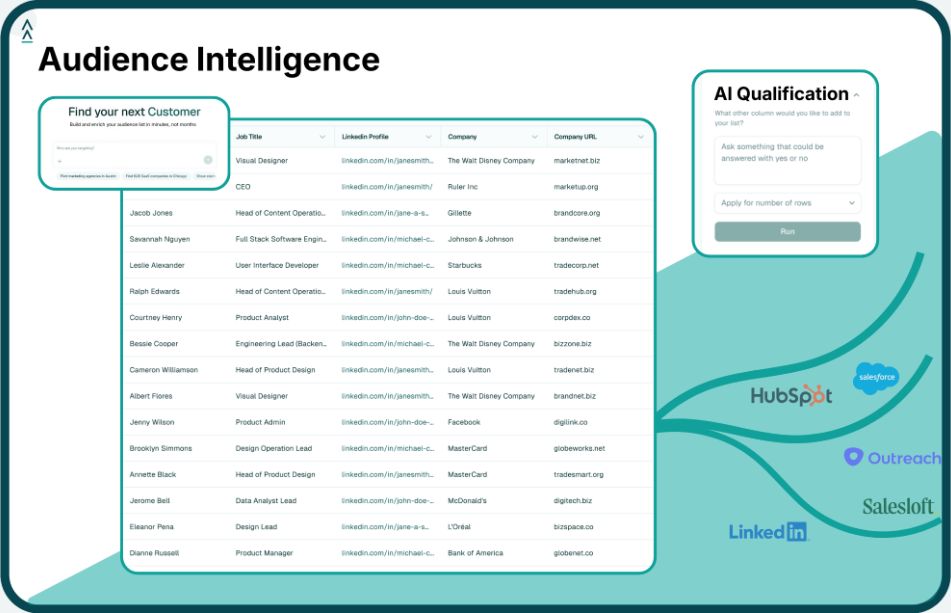
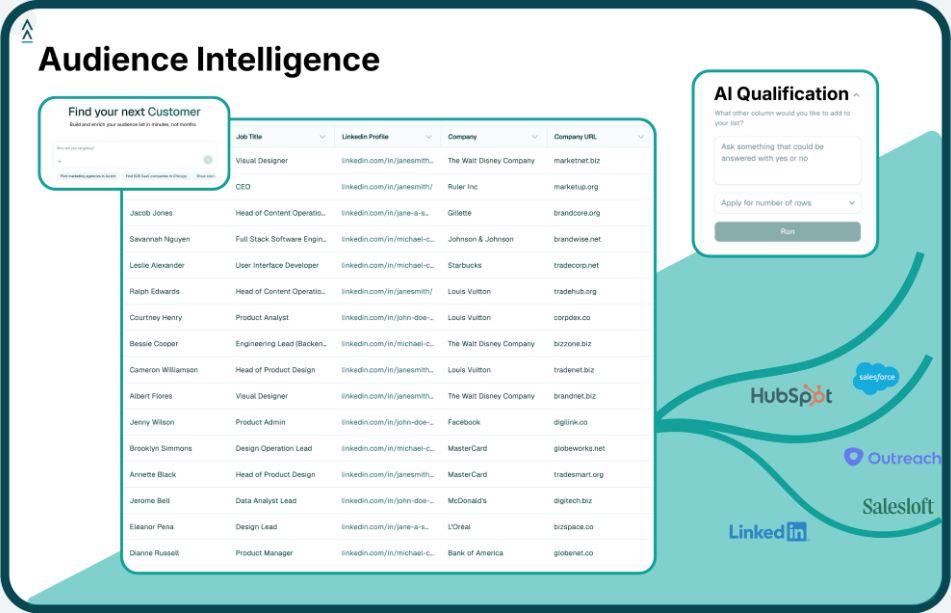
Landbase's autonomous AI platform effectively democratizes GTM Engineering capabilities by providing the technical infrastructure and AI expertise that would otherwise require hiring specialized talent. Instead of needing to build complex data pipelines and AI integrations, revenue teams can simply describe their target audience in plain English and receive AI-qualified contact lists ready for activation.
The platform's GTM-2 Omni model serves as an embedded GTM Engineering team, continuously learning from billions of GTM data points and automatically optimizing targeting based on real-time signals. This means companies get the benefits of sophisticated GTM Engineering without the cost and complexity of hiring specialized technical talent.
For RevOps teams, Landbase provides the governance and reliability they need through consistent data quality and standardized processes that can be easily integrated into existing workflows. The platform's ability to generate AI-qualified audiences ready for immediate activation means RevOps teams can focus on strategic optimization rather than data wrangling.
Most importantly, Landbase's approach aligns with the fundamental insight that emerged from our research: the future of GTM shouldn't require companies to choose between innovation and stability. By providing both the technical infrastructure for experimentation and the governance framework for operational reliability, Landbase enables companies to have both GTM Engineering and RevOps capabilities without the organizational complexity.
GTM Engineering focuses on building net-new automated revenue systems (the "build" function), while RevOps governs and optimizes existing processes at scale (the "run" function). GTM Engineers require advanced technical skills and sales experience to create customer-facing outputs, while RevOps professionals focus on process governance and operational efficiency. The roles are complementary rather than competitive, with GTM Engineering providing innovation capacity and RevOps ensuring operational stability.
AI is transforming GTM Engineering from manual workflow building to AI orchestration, while enabling RevOps to implement more sophisticated governance frameworks. Platforms like Landbase are democratizing these capabilities, allowing companies to access advanced GTM Engineering without hiring specialized technical talent. Both roles now require new competencies in AI prompt engineering, agent orchestration, and autonomous system management as AI-driven go-to-market becomes the norm.
Companies can succeed with just RevOps in the early stages, but as they scale beyond $10M ARR, they typically need both functions to balance innovation velocity with operational stability. However, AI platforms like Landbase can provide both capabilities without requiring separate specialized teams. The key is ensuring you have capacity for both building new systems and maintaining existing operations, whether through dedicated roles or technology platforms.
GTM Engineering should be measured on direct revenue outcomes like meetings booked, leads acquired, and pipeline generated, with 25-50% variable compensation tied to these metrics. RevOps should be measured on operational efficiency metrics like forecast accuracy, data quality, and process adoption. These different metrics reflect the distinct nature of the roles – GTM Engineering creates customer-facing impact while RevOps ensures internal operational excellence.
Tool and strategies modern teams need to help their companies grow.