August 25, 2026

10 Fastest Growing Sustainability Tech Companies and Startups

Explore 10 fast-growing sustainability tech companies in 2026, including their CEOs, funding, technologies, commercial milestones, and latest growth signals.
  • Button with overlapping square icons and text 'Copy link'.
Table of Contents

Major Takeaways

Which sustainability tech companies show the clearest growth signals in 2026?
Helion Energy, X-energy, Form Energy, and Base Power stand out for major 2026 financing and infrastructure expansion. Climeworks is scaling carbon removal, Redwood Materials is expanding battery recycling and energy storage, and 1KOMMA5° continues growing its residential energy platform. Crusoe, Solugen, and Sungrow show how sustainability technology is also expanding across AI infrastructure, industrial chemicals, solar, and energy storage.
Which sustainability technology categories are seeing the most activity?
Growth spans fusion and advanced nuclear power, long-duration energy storage, residential batteries, direct air capture, battery recycling, low-carbon chemicals, solar infrastructure, and energy-efficient computing. The strongest growth signals increasingly come from companies moving beyond early development into manufacturing, commercial deployment, large customer agreements, or broader infrastructure expansion.
How can GTM teams identify sustainability companies entering a new growth phase?
Funding is useful, but it becomes more meaningful when combined with commercial deployments, manufacturing expansion, executive changes, major partnerships, new facilities, and product launches. Landbase can help teams track growth signals across a defined market rather than treating every sustainability company as equally active.

Global clean energy investment is projected to reach approximately $2.2 trillion in 2026, nearly double the amount flowing into fossil fuels. Behind this investment, sustainability tech companies are scaling technologies ranging from fusion power and direct air capture to battery recycling, long-duration storage, and residential energy systems.

For GTM teams looking to target accounts in this rapidly expanding sector, identifying fast-growing companies presents both an opportunity and a challenge. The landscape shifts quickly, with funding rounds, facility deployments, manufacturing expansion, and commercial milestones reshaping the market every quarter.

Key Takeaways

  • Large funding rounds provide useful growth signals - Late-stage financing can support hiring, infrastructure investment, and commercialization
  • Commercial deployments indicate market progress - Utility-scale installations and major customer agreements can show movement toward commercial scale
  • Multi-sector growth enables diverse targeting - Growth spans fusion, residential energy, carbon removal, storage, recycling, chemicals, and solar infrastructure
  • Strategic capital and customer commitments matter - Major investors, power agreements, and partnerships can provide evidence of market demand
  • Operating growth adds context beyond funding - Revenue, bookings, installed capacity, and manufacturing output provide additional evidence of scale

Understanding the Rise of Green Technology and Its Impact

The sustainability tech sector has become an increasingly important part of the global energy and industrial economy. PwC tracked $56 billion in climate-tech financing in the 12 months through the third quarter of 2024, with capital continuing to flow toward energy technologies, AI-enabled climate solutions, adaptation, and commercially scalable technologies.

Several companies on this list have moved beyond early research and pilot stages:

  • Operational infrastructure - Climeworks is ramping its Mammoth direct air capture facility, while Form Energy has deployed its first commercial iron-air demonstration system
  • Revenue growth - 1KOMMA5° reported close to €520 million in 2024 revenue while remaining operationally profitable and debt-free
  • Major commercial relationships - X-energy is developing projects with Dow, Amazon, and Centrica, while Redwood Materials works with major automotive, battery, and energy companies
  • Strategic participation - Nvidia has invested in Crusoe, while Microsoft has a power purchase agreement with Helion

For sales teams and RevOps organizations, these milestones can help identify companies entering new stages of commercial growth.

1. Helion Energy

CEO: David Kirtley | Founded: 2013 | Headquarters: Everett, Washington

What They Do

Helion Energy develops pulsed fusion power systems using field-reversed configuration technology. Its design aims to convert magnetic field changes directly into electricity rather than relying on steam turbines.

Why They're Growing Fast

  • Major 2026 funding - Raised $465 million in Series G funding in June 2026
  • Higher valuation - Reached a $15.5 billion post-money valuation
  • Microsoft PPA - Microsoft has agreed to purchase electricity from Helion's planned first commercial fusion plant
  • Orion progress - Secured key Washington state regulatory licenses in June 2026

Industry Importance

Fusion could provide firm, low-carbon electricity if successfully commercialized at competitive cost. Helion has advanced from prototype development into site development, regulatory work, and a commercial power agreement, although commercial fusion power has not yet been delivered.

2. X-energy

CEO: J. Clay Sell | Founded: 2009 | Headquarters: Rockville, Maryland

What They Do

X-energy develops Xe-100 small modular reactors designed to produce electricity and high-temperature industrial heat. It is also developing TRISO-X nuclear fuel manufacturing capacity.

Why They're Growing Fast

  • IPO completion - Generated approximately $1.1 billion in net IPO proceeds in April 2026
  • Operating growth - Q2 2026 revenue and grant income rose 154% year over year to $54.6 million
  • Large project pipeline - Reported approximately 11.5 GW across 144 Xe-100 reactors as of March 31, 2026
  • Major relationships - Projects and agreements involve Dow, Amazon, and Centrica
  • Fuel manufacturing - Continued advancing its TX-1 fuel fabrication facility

Industry Importance

Advanced nuclear could provide firm power alongside variable renewable generation while also supporting industrial heat applications. X-energy's public-market capital provides additional resources to advance reactor and fuel projects toward deployment.

3. 1KOMMA5°

CEO: Philipp Schröder | Founded: 2021 | Headquarters: Hamburg, Germany

What They Do

1KOMMA5° provides residential solar, batteries, heat pumps, EV charging, and energy-management software. Its Heartbeat AI platform also connects distributed household energy assets into a virtual power plant.

Why They're Growing Fast

  • Revenue growth - Reported close to €520 million in 2024 revenue
  • Organic expansion - Organic sales increased to approximately €490 million in 2024
  • Profitable operations - Reported being operationally profitable and debt-free
  • Pre-IPO financing - Raised €150 million in December 2024, later extended in July 2025
  • VPP expansion - Heartbeat AI reached 1 GW of shiftable load in May 2026

Industry Importance

1KOMMA5° combines traditionally fragmented home-energy technologies in one platform. Its profitability and 1 GW virtual power plant milestone provide evidence of operating scale beyond venture funding.

4. Climeworks

Co-CEOs: Christoph Gebald and Jan Wurzbacher | Founded: 2009 | Headquarters: Switzerland

What They Do

Climeworks develops direct air capture technology that removes CO2 from ambient air for permanent storage and other carbon-removal applications. Mammoth in Iceland is its largest facility to date.

Why They're Growing Fast

  • Large-scale DAC development - Mammoth is designed for up to 36,000 tons of annual nameplate capture capacity
  • Additional equity capital - Raised $162 million in 2025
  • Growing contracted removal - Announced 14 new partnerships in H1 2026 covering about 450,000 tonnes of contracted carbon removal
  • Buyer diversification - Agreements span banking, aviation, healthcare, luxury, retail, and technology

Industry Importance

Durable carbon removal can address residual emissions that are difficult to eliminate directly. Climeworks' progression to Mammoth represents an important scale-up, although the facility remains in operational ramp-up and its nameplate capacity does not represent current net annual removals.

5. Crusoe

CEO: Chase Lochmiller | Founded: 2018 | Headquarters: Denver, Colorado

What They Do

Crusoe develops vertically integrated AI infrastructure spanning large-scale data centers and cloud computing. Its projects can use grid power, renewables, natural gas, battery storage, and other energy sources.

Why They're Growing Fast

  • Major financing - Announced an initial $1.375 billion Series E closing in October 2025
  • Higher expected valuation - Expected to value Crusoe above $10 billion
  • Infrastructure expansion - Contracted AI infrastructure capacity approached 4.9 GW by June 2026
  • Large pipeline - Reported more than 40 GW of additional development pipeline
  • AI demand growth - 2025 cloud bookings through Q3 were five times total 2024 bookings

Industry Importance

AI workloads are driving rapid growth in electricity and data-center infrastructure demand. Crusoe sits at the intersection of computing and energy development, with its environmental profile varying according to each project's power mix.

6. Form Energy

CEO: Mateo Jaramillo | Founded: 2017 | Headquarters: Somerville, Massachusetts

What They Do

Form Energy develops iron-air batteries designed to store electricity for approximately 100 hours, targeting multi-day gaps in renewable generation.

Why They're Growing Fast

  • New 2026 financing - Raised $750 million in Series G funding in August 2026
  • Expanding backlog - Reported approximately 80 GWh of project backlog
  • Commercial deployment - Its Great River Energy demonstration project has been deployed, with full operation expected in 2026
  • Large projects - Pipeline includes a planned 300 MW/30 GWh project involving Xcel Energy and Google
  • Manufacturing scale-up - New funding supports additional manufacturing and project delivery

Industry Importance

Multi-day storage can help grids manage extended periods of low wind or solar generation. Form Energy's iron-air technology targets these longer-duration needs as renewable penetration increases.

7. Base Power

CEO: Zach Dell | Founded: 2023 | Headquarters: Austin, Texas

What They Do

Base Power installs residential batteries that provide household backup power while creating distributed capacity that can support the electricity grid.

Why They're Growing Fast

  • Major 2026 funding - Raised $1 billion in Series D financing in August 2026
  • Higher valuation - Reached a $13 billion post-money valuation
  • Rapid deployment - Reported serving more than 20,000 homes by June 2026
  • New battery platform - Launched Base Core in August 2026
  • Manufacturing expansion - Began production at its Austin manufacturing facility

Industry Importance

Distributed batteries can provide household resilience while creating flexible grid capacity. Base Power's model combines residential energy services, hardware manufacturing, and virtual power plant participation.

8. Redwood Materials

CEO: JB Straubel | Founded: 2017 | Headquarters: Carson City, Nevada

What They Do

Redwood Materials recovers critical materials including nickel, cobalt, copper, and lithium from batteries and manufacturing scrap for reuse in new batteries. It has also expanded into stationary energy storage.

Why They're Growing Fast

  • Expanded Series E - Closed a $425 million Series E in January 2026
  • Growing production - Reported producing 60,000 metric tons of critical minerals in Nevada during 2025
  • Energy-storage expansion - Broadened beyond recycling into grid-scale battery systems
  • Major relationships - Works with companies including Panasonic, GM/Ultium Cells, Toyota, Amazon, and Volkswagen

Industry Importance

Battery recycling can reduce dependence on newly mined materials, lower waste, and increase domestic supplies of critical minerals. Redwood's move into stationary storage also expands its role beyond recycling into energy infrastructure.

9. Solugen

CEO: Gaurab Chakrabarti | CTO: Sean Hunt | Founded: 2016 | Headquarters: Houston, Texas

What They Do

Solugen uses enzymes and catalysis to manufacture chemicals from bio-based feedstocks. Its Bioforge platform targets low-carbon and, for certain products, carbon-negative alternatives to conventional chemicals.

Why They're Growing Fast

  • Large equity financing - Raised more than $200 million in Series D funding in 2022
  • Government-backed expansion - Received a conditional commitment for a DOE loan guarantee of up to $213.6 million in 2024
  • Manufacturing expansion - Broke ground on its Bioforge Marshall facility in Minnesota
  • Commercial operations - Its Houston Bioforge moved the company into commercial chemical production

Industry Importance

Chemical production relies heavily on fossil-derived feedstocks and energy-intensive processes. Solugen's commercial-scale manufacturing tests whether lower-carbon chemistry can compete on performance, price, and supply reliability.

10. Sungrow Power Supply

Chairman & President: Cao Renxian | Founded: 1997 | Headquarters: Hefei, China

What They Do

Sungrow manufactures solar inverters, energy-storage systems, EV charging technology, and other renewable-energy equipment.

Why They're Growing Fast

  • Revenue growth - Reported CNY 89.184 billion in 2025 revenue, up 14.55%
  • Storage expansion - Energy-storage revenue reached CNY 37.287 billion, up 49.39%
  • Largest segment - Energy storage surpassed PV inverters and other power-conversion products by revenue
  • Large installed base - Reported 870 GW of installed power-electronic converters as of June 2025
  • International growth - Overseas revenue rose 48.76% in 2025

Industry Importance

Solar inverters and storage systems are core renewable-energy infrastructure. Energy storage becoming Sungrow's largest product category by revenue in 2025 shows how central storage has become to its growth.

Identifying and Engaging Sustainability Tech Leaders with Landbase

For GTM teams targeting sustainability tech, the challenge is identifying relevant accounts at the right stage of growth and connecting them with accurate company, contact, and signal data.

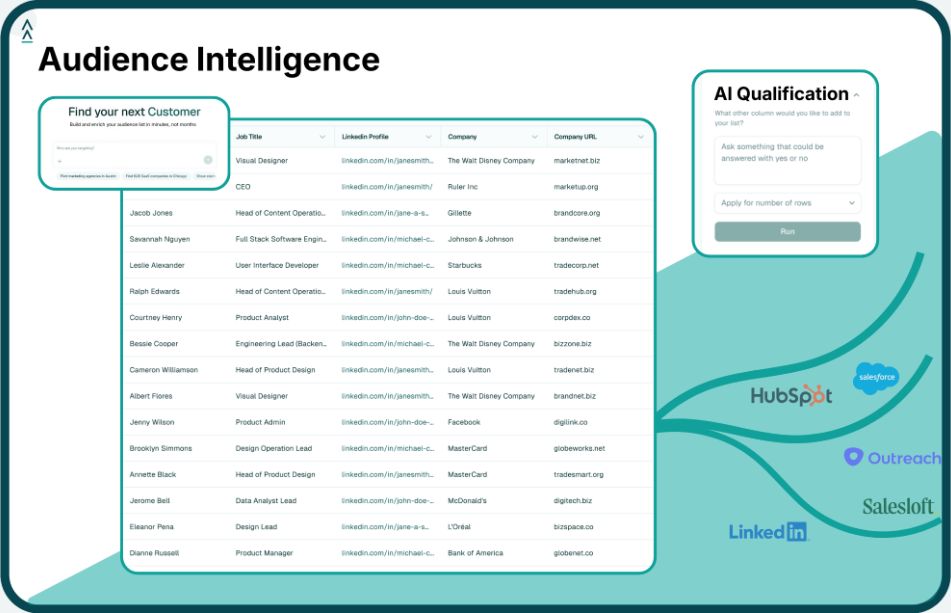
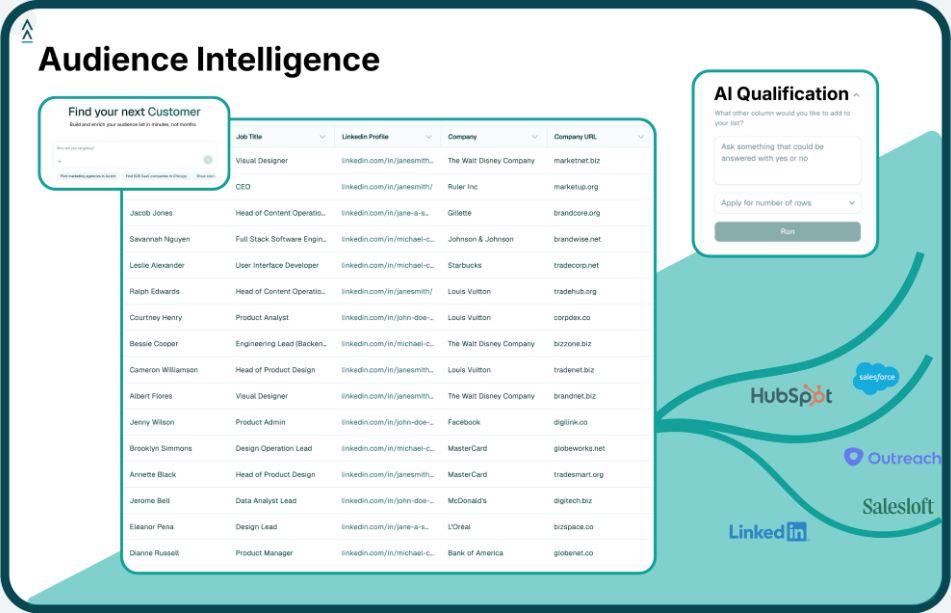
Landbase CLI provides programmatic access to Landbase data and agent workflows from the terminal and environments such as Claude Code and Codex. Teams can define audiences in natural language and return structured outputs for downstream workflows.

Streamlining GTM for Green Tech

Natural-Language Audience Search: Teams can describe criteria such as "Series B+ sustainability technology companies in North America with 50-200 employees hiring RevOps leaders." Landbase's guidance on prompting like an operator shows how natural-language requests can support structured audience searches.

Funding and Buying Signals: Funding becomes more useful when combined with hiring, executive changes, technology adoption, or expansion. Landbase workflows can stack buying signals to refine account selection.

Contact Data Enrichment: Landbase supports matching and enrichment for company and contact records before they move into downstream GTM systems.

From Data to Impact: Practical CLI Applications

Landbase CLI supports sustainability tech targeting workflows that can:

  • Build audience lists using industry, funding stage, geography, technology focus, and growth signals
  • Upload and match datasets through file-based enrichment workflows
  • Enrich company and contact records before CRM or outbound use
  • Export structured datasets into scripts, dashboards, CRM systems, or outbound programs
  • Work inside Claude Code and Codex through Landbase CLI

For RevOps teams, this connects market research, account identification, enrichment, and downstream execution.

Frequently Asked Questions

How can GTM teams identify sustainability tech companies ready to buy?

Funding can be a useful timing signal, but a financing round alone does not establish purchasing intent. Stronger qualification comes from combining funding with evidence such as hiring, facility expansion, new leadership, commercial deployments, partnerships, or technology changes. Landbase workflows for stacking buying signals can help combine these indicators when defining target accounts.

What makes sustainability tech targeting different from other B2B sectors?

Sustainability technology spans highly different sub-sectors, including fusion, nuclear, batteries, carbon removal, residential energy, industrial chemistry, and renewable-energy hardware. Growth can also change quickly as companies raise capital, commission facilities, secure permits, or sign large commercial agreements. Natural-language audience creation can help express these multi-layered criteria without reducing the market to a single industry classification.

How do funding stages correlate with purchasing authority in sustainability tech?

Funding stage can provide context about company maturity, but purchasing authority varies considerably by business model, capital intensity, customer base, and commercialization stage. A Series B hardware company building its first manufacturing facility may have different needs from a software company at the same funding stage. GTM teams can use list-building workflows to combine funding information with employee count, hiring activity, geography, industry, and other qualification criteria.

What role does contact data freshness play when targeting fast-growing companies?

Fast-growing businesses can add leaders, reorganize teams, and change employee responsibilities quickly. Contact records therefore need to be checked rather than assumed to remain current. Contact matching and enrichment can help refresh company and person records before they move into outreach or CRM workflows.

How can RevOps teams build always-on targeting for the sustainability sector?

Rather than rebuilding a sustainability prospect list from scratch each quarter, RevOps teams can define an ICP and combine it with signals such as funding, hiring, leadership changes, and other company events. Landbase's always-on list workflows are designed to keep account selection connected to changing market data so newly relevant companies can be surfaced as conditions change.

Build a GTM-ready audience

  • Button with overlapping square icons and text 'Copy link'.

Turn this list into a GTM-ready audience

Match this list to your ICP, prioritize accounts, and identify who to contact using live growth signals.

Stop managing tools. 
Start driving results.

See Agentic GTM in action.
Get started
Our blog

Lastest blog posts

Tool and strategies modern teams need to help their companies grow.

Review Seamless.AI’s features, pricing, ratings, data workflows, and user feedback, and compare its approach with Landbase for technical GTM operations.

Daniel Saks
Chief Executive Officer

Review Apollo’s features, pricing, ratings, data quality, and GTM workflows, and compare its approach with Landbase for technical audience operations.

Daniel Saks
Chief Executive Officer

Review Clay’s features, pricing, ratings, enrichment workflows, and user feedback, and compare its approach with Landbase for technical GTM data operations.

Daniel Saks
Chief Executive Officer

How GTM teams turn this list into pipeline

See how GTM teams use fastest-growing lists to define TAM, prioritize accounts, and launch campaigns.