.png)
.png)

Daniel Saks
Chief Executive Officer


Most folks think of Revenue Operations as just a fancy name for Sales Operations, but honestly, the landscape has evolved dramatically. More and more organizations are finding that Revenue Operations has become an enterprise-wide discipline that aligns marketing, sales, and customer success around unified metrics, processes, and technology—representing the operational backbone of modern B2B growth.
At the same time, Customer Experience Operations has transformed from a support function into a revenue driver, with CX leaders showing a 14-percentage-point advantage in revenue growth compared to laggards. The real magic happens when these two functions converge, creating what high-growth companies are calling "unified operations."
The integration isn't just theoretical—organizations with mature RevOps functions achieve faster revenue growth and higher profitability compared to siloed operations. With 79% of organizations entering 2025 now having formal RevOps functions, understanding this convergence is no longer optional for competitive organizations.
Revenue Operations (RevOps) represents a strategic evolution from traditional Sales Operations, encompassing marketing, sales, and customer success under a unified framework. Unlike SalesOps which focuses narrowly on sales team efficiency and pipeline management, RevOps takes a holistic approach to the entire customer lifecycle, managing revenue from initial awareness through renewal and expansion.
This shift reflects the modern B2B reality where a substantial portion of SaaS revenue now comes from expansion rather than new customer acquisition. When you're generating a significant share of your revenue from existing customers, you can't afford to have disconnected teams managing different parts of the relationship.
Revenue Operations serves as the central nervous system for go-to-market activities, with several critical functions:
The goal is to create what experts call "revenue efficiency"—maximizing revenue output while minimizing go-to-market expenses. Organizations with mature RevOps functions achieve significant reductions in operational costs through process optimization and waste elimination.
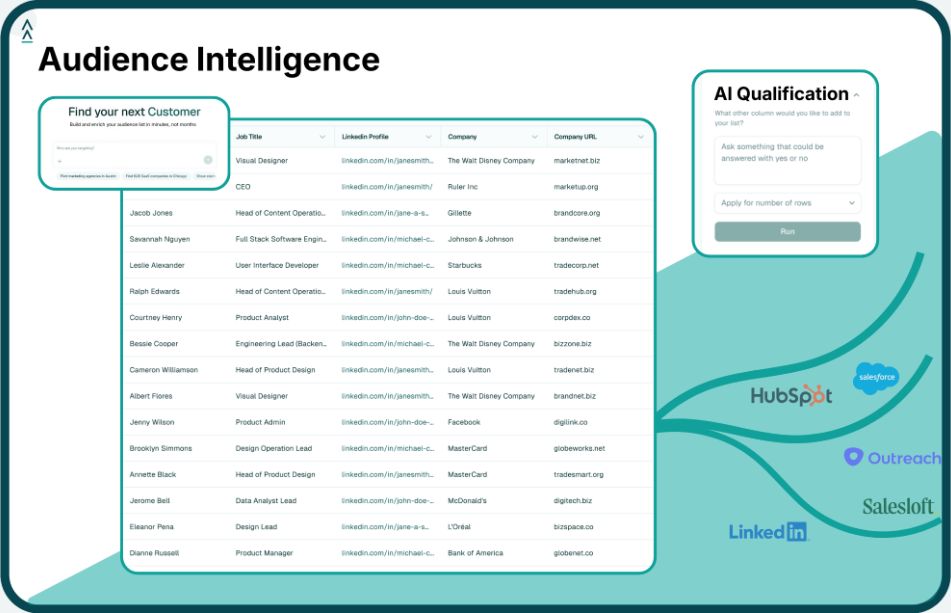
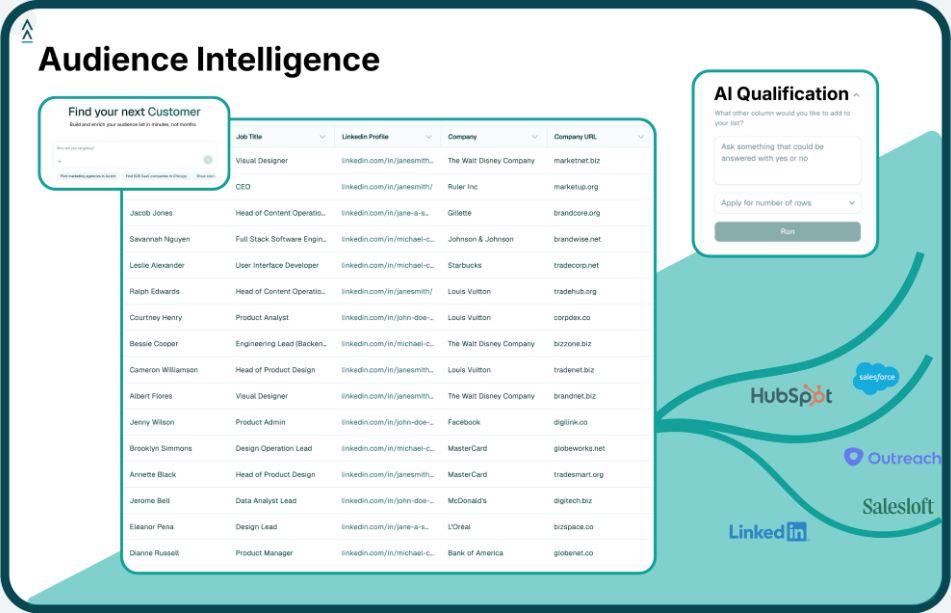
For teams using Landbase's AI-qualified audiences, RevOps becomes significantly more effective because the platform provides precise targeting for sales and marketing campaigns, reducing the need for manual list building and enhancing pipeline efficiency from the very first touchpoint.
Customer Experience Operations focuses on optimizing every interaction a customer has with your organization across their entire journey. It's moved far beyond traditional customer support to encompass strategic initiatives that drive customer satisfaction, loyalty, and ultimately, revenue growth.
The key shift for 2025 is that CX is being measured not just by satisfaction scores but by direct revenue attribution and pipeline impact. Companies that lead in customer experience show a 14-percentage-point advantage in revenue growth compared to laggards, while a 5% increase in retention can boost profits by 25%.
CX Operations aims to create seamless, personalized experiences that build trust and drive business outcomes:
Satisfied customers spend 140% more than those with poor experiences in transactional B2B models, making CX a direct revenue driver rather than a cost center. Furthermore, customers are increasingly willing to pay a premium for better customer experience, demonstrating the value of superior service.
Landbase Outbound supports CX operations by helping identify prospects along their journey, ensuring customer support and sales teams engage with relevant, qualified leads who are genuinely interested in solutions.
The most successful organizations don't treat CX and RevOps as separate functions—they recognize them as two sides of the same coin. When properly integrated, they create a virtuous cycle where better experiences drive revenue growth, which funds further CX improvements.
Organizations with aligned CX and RevOps functions achieve faster revenue growth and 27% faster profit growth compared to misaligned peers. This integration is particularly powerful because it addresses the fundamental truth that in B2B, relationships drive revenue.
The intersection of CX and RevOps happens at several critical junctures:
The primary barrier to this integration is data fragmentation across systems. Leading organizations solve this through unified customer data platforms that consolidate marketing automation, CRM, customer success platforms, and analytics into a single source of truth. Companies implementing centralized data governance see 10-20% increases in sales productivity and significantly higher ROI on marketing spend.
Landbase Platform's AI-qualified audiences ensure that both RevOps and CX operations work with accurate, high-intent data, fostering better alignment between initial outreach and customer satisfaction throughout the relationship.
While CX and RevOps are increasingly integrated, they maintain distinct focuses and measurement frameworks that reflect their different—but complementary—roles in the organization.
RevOps primarily concentrates on efficiency, predictability, and revenue optimization:
Key RevOps metrics include sales cycle length, win rates, forecast accuracy, pipeline velocity, and customer acquisition cost (CAC).
CX Operations centers on relationship quality, satisfaction, and loyalty:
Key CX metrics include customer satisfaction scores, churn rate, retention rate, customer lifetime value, and referral rates.
Landbase Intelligence provides growth signals and insights that both RevOps and CX teams can leverage for their respective metrics and strategic planning, creating a common foundation for decision-making.
Establishing a robust Revenue Operations framework requires more than just hiring a RevOps leader—it demands a fundamental shift in how the organization approaches go-to-market activities. The most successful implementations follow a systematic approach that addresses people, processes, and technology in sequence.
Effective RevOps strategies include several critical elements:
The technology stack is important, but it's secondary to getting the foundational elements right. As one expert notes, "AI + messy data = a bigger mess"—you need clean, unified data before automation can deliver value.
Landbase's platform helps RevOps teams "build lists in seconds using natural language" and receive "AI-qualified audiences ready for immediate activation," streamlining their process and delivering a 4.8 G2 rating. This capability directly addresses one of the biggest pain points in RevOps: the time and resources wasted on manual data gathering and list building.
Optimizing Customer Experience Operations requires a systematic approach to understanding and improving the customer journey. The most effective CX strategies are data-driven, proactive, and integrated with revenue operations.
Successful CX Operations implementations focus on several key areas:
The key is moving from reactive support to proactive relationship management. As customer experience becomes a primary competitive differentiator, organizations that can anticipate and meet customer needs before they're expressed gain significant competitive advantage.
Landbase Outbound can generate lists for customer support and lead qualification which directly supports optimized CX operations by providing targeted insights about which customers might need additional attention or are ready for expansion conversations.
The convergence of CX and RevOps is creating exciting new career opportunities for professionals who can bridge these traditionally separate domains. As organizations recognize the importance of unified operations, demand for specialized talent is growing rapidly.
The integration is spawning new hybrid roles including:
With 79% of organizations entering 2025 now having formal RevOps functions, there is significant demand for professionals with the right blend of technical, analytical, and strategic skills.
Compensation for operations professionals varies widely based on experience, industry, and geographic location, but generally follows these patterns:
The most successful professionals combine technical proficiency (CRM systems, data analytics, automation) with strategic thinking about the entire customer journey. Certifications in specific platforms (Salesforce, HubSpot) and methodologies (Six Sigma, Lean) can also boost earning potential.
The future of both CX and RevOps lies in AI-powered personalization that operates at every stage of the customer journey. Leading organizations are deploying agentic AI systems—autonomous agents that handle email sequencing, lead scoring updates, personalized content delivery, and customer success interventions without manual triggers.
These systems analyze sentiment, intent data, and engagement patterns to deliver contextual experiences that feel personal without requiring massive human effort. However, effectiveness depends entirely on clean, structured data: "AI + messy data = a bigger mess" is the consistent warning across sources.
Landbase's GTM-2 Omni represents the cutting edge of this trend as "the first agentic AI model specifically built for go-to-market." The platform enables users to "type a plain-English prompt and receive an AI-qualified export," directly impacting operational efficiency by automating the most time-consuming aspects of audience discovery and qualification.
This capability is particularly valuable because it addresses the fundamental constraint facing most RevOps and CX teams: time. By automating routine data gathering and list building tasks, teams can focus on strategic activities that require human judgment and relationship-building skills.
The ultimate promise of AI in operations is what Landbase calls "Reclaiming Your Day"—freeing professionals from repetitive, manual tasks so they can focus on high-value activities that drive real business impact. This doesn't mean replacing humans; it means enhancing human capabilities by handling the mundane work that machines do better.
As B2B buyers increasingly prefer self-service experiences, organizations that can deliver seamless, automated interactions while maintaining the human touch when it matters most will gain significant competitive advantage.
For organizations looking to bridge the gap between CX and RevOps, Landbase offers a unique solution that addresses the fundamental challenge of data fragmentation. The platform's AI-driven audience discovery capabilities provide a unified foundation that both revenue and customer experience teams can build upon.
What sets Landbase apart is its combination of agentic AI with comprehensive B2B data, enabling teams to move beyond manual list building to intelligent audience qualification. The natural-language targeting interface means that both technical and non-technical users can access the same high-quality data, breaking down barriers between departments.
With the ability to export up to 10,000 contacts instantly and integrate with existing tools, Landbase provides the data foundation that both RevOps and CX operations need to succeed. Whether you're building targeted prospect lists for sales outreach or identifying at-risk customers for proactive retention efforts, the platform delivers the intelligence needed to drive results.
Most importantly, Landbase's approach recognizes that technology alone isn't enough—you need the right data, the right intelligence, and the right human-AI collaboration to truly transform operations. By handling the repetitive work of data gathering and qualification, Landbase enables teams to focus on what they do best: building relationships and driving business outcomes.
Strong CX strategies directly drive revenue growth through multiple proven mechanisms that impact both acquisition and retention. Companies leading in customer experience show a 14-percentage-point advantage in revenue growth compared to laggards, while a 5% increase in retention can boost profits by 25%. Additionally, satisfied customers spend 140% more than those with poor experiences, and customers are increasingly willing to pay premium prices for superior service.
Yes, Landbase's platform supports both functions by providing unified, high-quality customer intelligence that serves as a common foundation for decision-making. For RevOps, it enables rapid audience discovery and qualification for targeted campaigns, eliminating manual list building and improving pipeline efficiency. For CX, it helps identify customer segments, track engagement patterns, and support proactive retention efforts by surfacing at-risk customers or expansion opportunities. The platform's AI-qualified audiences ensure both teams work from the same accurate data foundation, reducing silos and improving cross-functional collaboration.
Career paths typically progress from Operations Analyst to Operations Manager to Operations Director to VP/Head of RevOps or CX, with compensation ranging from $60,000 to $250,000+ annually based on experience level. Emerging specialized roles include AI GTM Engineers, Revenue Intelligence Managers, and Customer Success Operations specialists that blend technical and strategic skills. With 79% of organizations entering 2025 now having formal RevOps functions, there is significant and growing demand for professionals who combine technical proficiency in CRM systems and data analytics with strategic thinking about the entire customer journey.
Data integration is crucial because data fragmentation across systems is the primary barrier preventing effective CX-RevOps integration in most organizations. Without unified data, teams operate from different facts about the same customers, creating inconsistent experiences, misaligned strategies, and conflicting priorities that damage both customer relationships and revenue outcomes. Companies implementing centralized data governance see 10-20% increases in sales productivity and dramatically higher ROI on their technology and operations investments. Clean, unified data is the foundational requirement before AI and automation can deliver value.
Agentic AI reclaims time by autonomously handling repetitive, manual tasks like data gathering, list building, basic qualification, and routine follow-up communications that traditionally consume hours of operations professionals' time. This allows teams to redirect their energy toward strategic activities that require uniquely human capabilities like complex problem-solving, relationship-building, and high-value customer interactions. Landbase's approach enables users to "type a plain-English prompt and receive an AI-qualified export," eliminating hours of manual research and data processing while ensuring higher data quality and consistency than manual methods typically achieve.
Tool and strategies modern teams need to help their companies grow.