.png)
.png)

Daniel Saks
Chief Executive Officer


Choosing the right go-to-market intelligence platform determines whether your RevOps team spends weeks on manual research or minutes launching targeted campaigns. While 6sense and Demandbase established themselves as enterprise ABM leaders with advertising and predictive analytics, Landbase represents the AI-native evolution, purpose-built for RevOps teams who need autonomous qualification and seller productivity, not just marketing analytics. Understanding these fundamental differences, between execution intelligence and traditional ABM, helps revenue teams select the platform that matches their urgency, resources, and growth objectives.
Landbase positions itself as an agentic AI platform for RevOps teams. Founded in 2024 by former AppDirect co-CEO Daniel Saks and Oyster HR founder Emily Zhang, Landbase has secured backing from Picus Capital, 8VC, and Sound Ventures. The platform serves enterprises across 25+ industries including major tech firms like HP, HubSpot, Slack, and Salesforce. Landbase's core innovation is autonomous AI agents that continuously qualify, score, and prioritize high-fit accounts across the total addressable market, enabling campaigns to launch in minutes rather than weeks.
6sense established itself as a market leader in predictive ABM and revenue AI, founded in 2013 with enterprise-scale deployments. The platform focuses on predictive buying stage modeling (Awareness→Decision stages) and multi-channel orchestration, with strong intent data from billions of interactions. 6sense supports identifying in-market accounts through predictive models and provides sales enablement through its Sales Copilot AI assistant.
Demandbase has positioned itself as a market leader in ABM advertising and account intelligence since 2006. The platform offers native B2B display advertising through its DSP, comprehensive account intelligence, and advanced buying group mapping across 150M+ professional profiles. Demandbase supports account-based advertising campaigns and website personalization for enterprise deals.
The fundamental difference lies in delivery philosophy: Landbase automates execution intelligence for RevOps teams, while 6sense and Demandbase provide analytics and advertising for marketing-centric ABM programs.
Landbase's agentic AI approach includes:
This execution-focused approach works for RevOps teams needing seller-ready outputs without manual research overhead.
6sense's predictive ABM capabilities focus on:
Demandbase's advertising-centric features emphasize:
For RevOps teams, Landbase's execution intelligence helps bridge the gap between insight and action within GTM workflows.
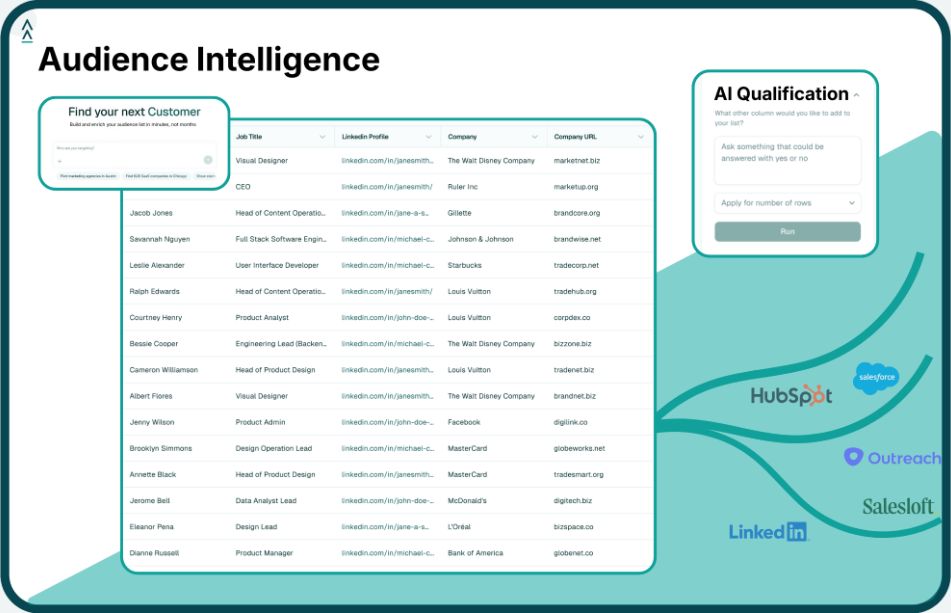
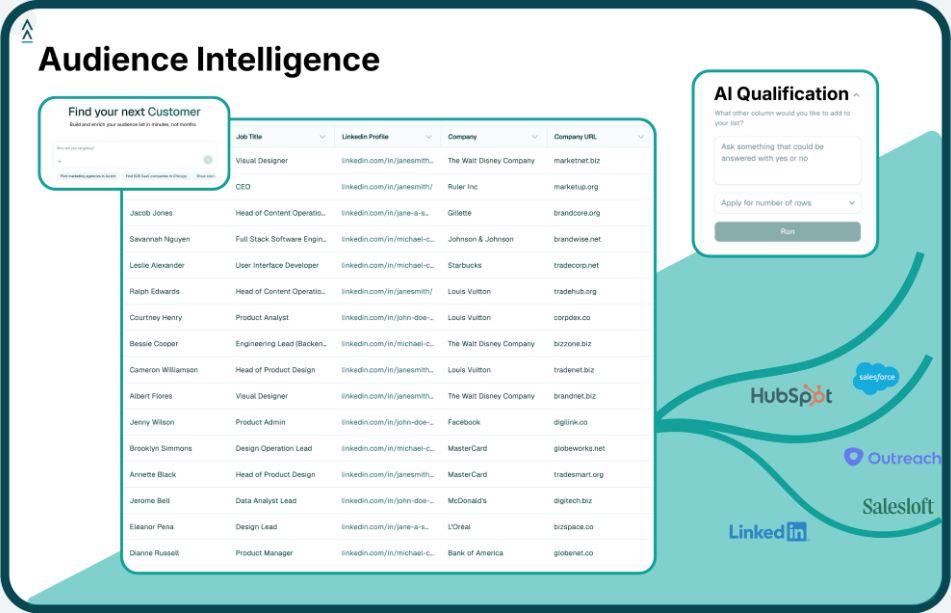
Landbase's agentic AI methodology centers on autonomous qualification through its proprietary GTM Omni multi-agent system. This platform orchestrates entire GTM workflows,from targeting to prioritization,with minimal supervision. The AI agents continuously evaluate every account against exact criteria and answer custom fit questions automatically, reducing manual research effort by 80%. Landbase's approach enables teams to define their ideal customer profile in plain English rather than building complex filter logic, making GTM intelligence accessible across sales, marketing, and RevOps teams.
6sense's predictive AI approach relies on advanced machine learning models for buying stage prediction and intent scoring. The platform identifies in-market accounts through billions of interactions and supports configurable segmentation workflows. 6sense's Sales Copilot provides AI-generated outreach within CRM workflows.
Demandbase's intelligence engine focuses on account data depth and account intelligence. The platform provides comprehensive firmographic, technographic, and contact data through integrated data sources and supports manual segmentation and list building workflows. Demandbase's strengths center around advertising and enterprise account visibility.
The automation philosophy difference is significant: Landbase's agentic AI emphasizes autonomous research and qualification, while 6sense and Demandbase focus on analytics, orchestration, and account intelligence.
The deployment timeline reveals each platform's operational approach.
Landbase implementation advantages:
6sense implementation considerations:
Demandbase implementation considerations:
The speed difference is meaningful for RevOps teams facing pipeline pressure. Landbase streamlines manual research workflows while traditional ABM platforms often involve broader enterprise deployment processes.
All three platforms provide intent data, but with different approaches and use cases.
Landbase's Signals track real-time buying signals including hiring trends, funding rounds, and technographic shifts to focus teams on accounts showing meaningful change. The platform integrates intent data directly into account scoring and qualification workflows, providing seller-ready insights.
6sense's intent capabilities rely on proprietary AI models analyzing billions of interactions to predict buying stages. The platform provides intent visibility for identifying in-market accounts and sales prioritization.
Demandbase's intent data offers broad coverage with large-scale signal tracking and multilingual support through its multi-source approach. This data supports advertising campaigns and account engagement programs.
For RevOps teams prioritizing seller productivity, Landbase's integration of intent data into autonomous qualification provides direct operational value.
Landbase's qualification approach uses AI qualification agents to continuously evaluate accounts against custom fit questions, not just scoring models. This autonomous qualification improves prospect quality and enables tailored outreach workflows. The platform's always-on monitoring automatically adds new matches and flags changes without manual rebuilding.
6sense's scoring methodology relies on predictive buying stage models that identify accounts in specific purchase phases. This approach supports marketing orchestration and account prioritization workflows.
Demandbase's qualification system uses engagement-based scoring tied to advertising interactions and website behavior. This framework supports advertising campaigns and account engagement programs.
The qualification difference matters fundamentally: Landbase delivers seller-ready accounts with autonomous validation, while competitors emphasize account scoring and engagement insights.
Landbase's Enrichment runs waterfall enrichment across 20+ data providers and validates every result through four layers of verification. This multi-source approach provides strong contact accuracy and coverage across 300M+ B2B contacts and 24M+ accounts. The platform's verification process supports high-quality outreach campaigns.
6sense's enrichment capabilities integrate with third-party data providers and technographic data sources to support account intelligence workflows.
Demandbase's enrichment strengths include integrated firmographic and technographic intelligence that supports enterprise account visibility and segmentation.
For outbound campaigns requiring reliable contact accuracy, Landbase's verification process and multi-provider enrichment framework provide meaningful operational advantages.
RevOps teams face urgent challenges that require execution intelligence and streamlined qualification. These teams benefit from platforms that reduce manual research and accelerate GTM execution.
Key advantages of Landbase's approach:
For RevOps teams seeking to reduce manual research and accelerate qualification while maintaining operational simplicity, Landbase offers an AI-native approach to go-to-market intelligence. The combination of agentic AI automation, rapid implementation, and execution-focused design creates strong value for modern GTM organizations.
Landbase's agentic AI replaces significant portions of manual research through autonomous AI agents that continuously qualify accounts against custom fit questions, reducing manual effort by 80%. Traditional ABM platforms like 6sense and Demandbase provide analytics and scoring workflows that support qualification and list building. Landbase's natural language ICP definition allows teams to describe target accounts in plain English rather than building complex filter logic, making GTM intelligence accessible across GTM teams. Teams interested in onboarding guidance, workflow recommendations, or tailored pricing details are encouraged to contact Landbase or request a demo.
Landbase integrates intent data directly into autonomous qualification workflows, providing seller-ready insights about accounts showing meaningful changes like hiring, funding, or technographic shifts. 6sense uses intent data for predictive buying stage modeling to identify in-market accounts through billions of interactions. Demandbase offers broad intent coverage that supports advertising and engagement programs. For sales teams prioritizing outreach execution, Landbase's integration of intent into qualification provides immediate operational value.
All three platforms integrate with major CRM systems including Salesforce, HubSpot, and Microsoft Dynamics. Landbase supports CRM synchronization for campaigns and outreach coordination. 6sense provides CRM embedding with Salesforce intelligence layers. Demandbase offers ecosystem connectivity across a wide range of enterprise applications. Landbase's streamlined setup enables faster integration compared to broader enterprise ABM deployment cycles.
Landbase customers report improvements in prospect qualification quality, conversion rates, and outreach efficiency through autonomous qualification and streamlined GTM execution. 6sense focuses on pipeline acceleration through earlier identification of in-market accounts. Demandbase emphasizes advertising efficiency and account engagement. The ROI timeline varies by implementation scope and deployment strategy.
All three platforms maintain enterprise-grade security and compliance standards appropriate for B2B data handling. Landbase's multi-provider waterfall enrichment includes verification processes that support data quality and compliance across sources. 6sense's intent network operates within privacy-conscious frameworks for behavioral data collection. Demandbase's account intelligence workflows align with enterprise data governance practices. Specific compliance details should be evaluated through each vendor's security documentation and legal agreements during procurement.
Tool and strategies modern teams need to help their companies grow.