.png)
.png)

Daniel Saks
Chief Executive Officer


AI coding environments are becoming workspaces for more than software development. GTM engineers, RevOps operators, growth teams, and technical founders can use tools like Codex, Claude Code, notebooks, scripts, and internal agents to inspect data, prepare workflows, generate reports, clean CRM exports, and build repeatable revenue operations processes.
That shift changes what GTM teams should expect from their software. OpenAI’s Codex CLI is designed to run locally in the terminal, which makes structured data access especially important for teams that want GTM work to happen inside technical environments rather than across disconnected browser tabs and spreadsheets.
This guide reviews 10 GTM tools that can support AI coding workflows in different ways. Some help teams find and enrich B2B records. Others support CRM operations, technographic analysis, attribution, outbound engagement, or sales conversation intelligence.
AI coding environments turn GTM operations into something closer to a data workflow. Instead of manually pulling lists, cleaning spreadsheets, and uploading files into other systems, technical teams can build repeatable processes that start with data and end with a usable output.
That does not mean every GTM tool needs to be a CLI. It does mean teams should evaluate how the tool exposes data, how predictable its outputs are, and whether it can support the way technical teams already work.
A GTM workflow inside an AI coding environment may involve:
The best tool depends on the bottleneck. A team with messy CRM data needs a different tool than a team trying to measure paid campaigns or analyze sales calls.
Primary Use Case: Technical GTM teams that need command-line access to B2B audience data for Codex, Claude Code, scripts, notebooks, dashboards, CRMs, outbound tools, and AI-assisted workflows.
Plan Details: Contact Landbase for tailored pricing details.
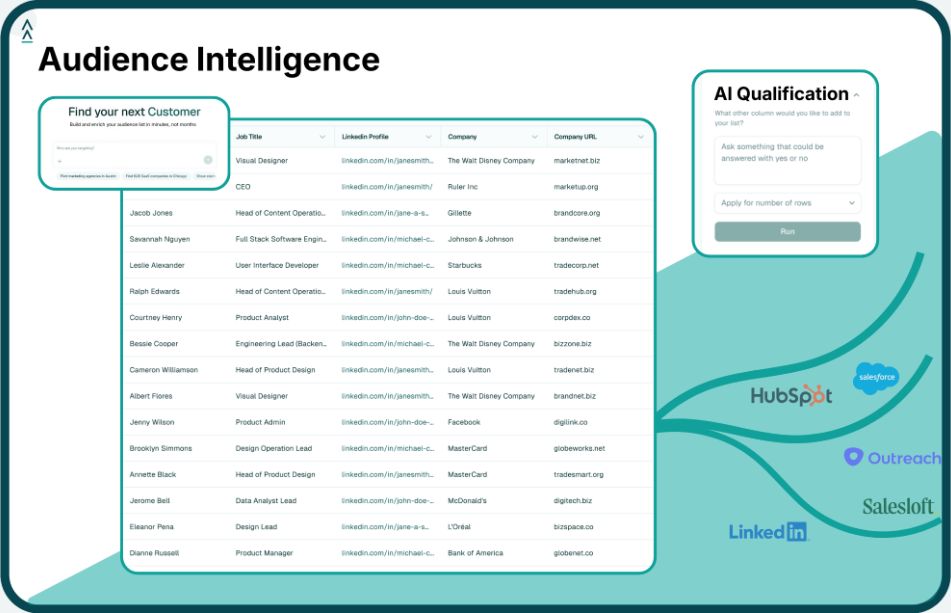
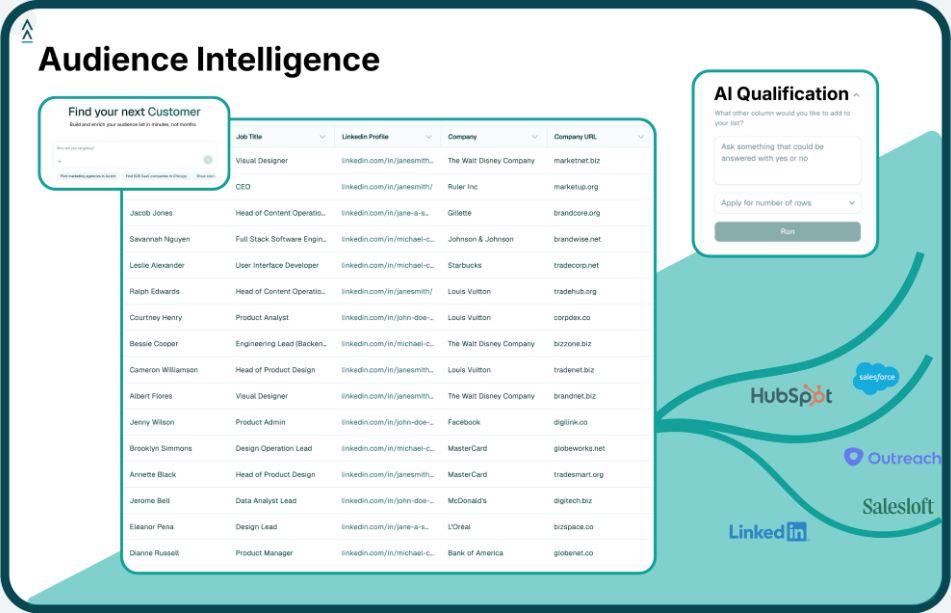
Landbase CLI helps teams work with B2B audience data from the terminal. Instead of treating list building, enrichment, matching, and exports as separate manual steps, GTM teams can use Landbase to prepare structured datasets before those records move into CRM, outbound, analytics, or AI-assisted workflows.
For AI coding environments, the main value is workflow control. A GTM engineer or RevOps operator can start with an audience idea, uploaded list, CRM export, or incomplete record set, then use Landbase to search, enrich, match, manage, and download the data needed for the next system.
AI coding environments are most useful when GTM data can be searched, cleaned, enriched, and reused without manual spreadsheet work. Landbase gives technical teams a CLI-first way to prepare audience data before it moves into scripts, notebooks, CRMs, outbound platforms, dashboards, or AI-assisted workflows.
Primary Fit: Teams building Codex, Claude Code, notebook, script-based, or agent-assisted GTM workflows that need reusable B2B datasets instead of one-off browser exports.
Primary Use Case: Mid-market and enterprise teams that need B2B sales intelligence, account research, contact data, intent data, and CRM-connected workflows.
ZoomInfo is commonly evaluated as a B2B data and sales intelligence platform. Teams use it for company research, contact discovery, intent data, technographics, and CRM-connected sales or marketing workflows.
ZoomInfo may be relevant when teams need a sales intelligence source that can feed account research, contact discovery, or CRM-connected GTM workflows.
Teams should evaluate data coverage, export rules, API needs, governance requirements, CRM compatibility, and how much of the workflow needs to happen outside the platform interface.
Primary Use Case: GTM teams that need technographic intelligence, IT spend context, and technology adoption data for account targeting.
HG Insights focuses on technographic and market intelligence. It is commonly evaluated by teams that sell into technical buyers and need context about software usage, technology categories, IT spend, or account-level technology environments.
HG Insights may be relevant when account selection depends on the technologies a company uses. Technical GTM teams may use this type of data to segment accounts, qualify lists, or add context to sales and marketing workflows.
Teams should evaluate data delivery options, integration needs, regional coverage, field availability, and how technographic data will be combined with CRM or enrichment data.
Primary Use Case: Marketing and growth teams that need attribution, measurement, and campaign performance data connected to analytics workflows.
SegmentStream focuses on marketing measurement and attribution. It is often evaluated by teams that need to understand campaign performance across channels and connect measurement outputs with analytics or reporting workflows.
SegmentStream may be relevant when AI coding workflows are used for campaign analysis, reporting, or marketing performance review. It is not a prospecting database, but it can support the measurement layer of GTM operations.
Teams should evaluate data sources, attribution methodology, reporting needs, warehouse or analytics fit, and how outputs will be used by marketing, RevOps, or growth teams.
Primary Use Case: Teams that want CRM, marketing, sales, service, and customer data workflows inside one ecosystem.
HubSpot is commonly evaluated by teams that want CRM data, marketing automation, sales workflows, service records, and reporting in a connected platform. It may be relevant for technical GTM teams that need to work with company records, contact records, deals, lifecycle stages, tickets, or marketing data.
HubSpot may be relevant when AI coding workflows need to work around CRM and customer data. Technical teams may evaluate it for record cleanup, CRM-adjacent automation, reporting, lifecycle analysis, or workflow documentation.
Teams should evaluate permissions, object structure, integration needs, governance requirements, and whether work should run inside HubSpot or through external scripts and tools.
Primary Use Case: Sales teams that want prospecting data, enrichment, sequencing, calling, and CRM sync in one workspace.
Apollo.io combines company search, contact search, enrichment, outbound sequencing, calling, and CRM-connected activity. It is commonly evaluated by teams that want prospecting and outbound engagement functions inside the same platform.
Apollo.io may be relevant when teams need prospecting data, enrichment, or engagement context connected to sales workflows. It can fit organizations that prefer a web-based workspace for list building and outbound execution.
Teams should evaluate data quality, export rules, CRM sync behavior, governance needs, and whether technical workflows require more control outside the Apollo interface.
Primary Use Case: GTM teams that want spreadsheet-style enrichment, account research, and workflow orchestration.
Clay provides a table-based workspace for GTM enrichment and research workflows. Teams use it to bring records into rows and columns, connect data providers, apply enrichment steps, create formulas, and prepare outputs for downstream systems.
Clay may be relevant when teams want enrichment workflows managed in a visual workspace. Technical teams may use AI coding environments to support planning, documentation, transformation logic, or workflow design around enrichment processes.
Teams should evaluate export options, API needs, credit usage, workflow maintenance, governance, and whether a table-based workspace fits the team’s operating model.
Primary Use Case: Sales teams that want prospecting, enrichment, intent signals, and outbound engagement in one platform.
Amplemarket is commonly evaluated by teams that want a consolidated outbound workflow across prospecting, enrichment, signals, and engagement. It may be relevant when a sales team wants to keep several outbound steps inside one workspace.
Amplemarket may be relevant when teams want prospecting and engagement workflows connected in one platform. For AI coding environments, teams should evaluate what data can be exported, integrated, or reused outside the platform.
Teams should review CRM fit, export behavior, workflow ownership, permission needs, and whether the team wants one outbound workspace or a more modular technical stack.
Primary Use Case: Enterprise teams that need CRM data, account workflows, sales operations, reporting, governance, and ecosystem integrations.
Salesforce is commonly used as a system of record for enterprise GTM teams. It supports accounts, contacts, leads, opportunities, cases, workflows, reporting, and custom objects across sales, marketing, service, and operations.
Salesforce may be relevant when AI coding workflows need to support CRM operations, data preparation, reporting, documentation, or internal tooling around Salesforce processes.
Teams should evaluate implementation complexity, admin ownership, data governance, integration requirements, and whether workflow changes need formal Salesforce administration.
Primary Use Case: Sales teams that need conversation intelligence, call transcripts, deal context, coaching workflows, and engagement insights.
Gong focuses on conversation intelligence and revenue insights. Teams use it to review calls, analyze sales conversations, understand deal risks, coach reps, and capture customer-facing activity that does not always fit neatly into CRM fields.
Gong may be relevant when AI coding workflows need to reason over sales call context, deal notes, objections, or coaching patterns. It is not a prospecting database, but it may provide useful context for sales analysis, enablement, and internal reporting.
Teams should evaluate access controls, data privacy, transcript availability, CRM integration needs, and whether conversation data should feed internal analysis or coaching workflows.
When GTM work moves into coding environments, the data layer becomes more important. A script, notebook, or agent can only act on records that are structured, accessible, and complete enough for the task.
Landbase CLI supports this layer by helping technical teams turn audience ideas, uploaded files, and partial records into usable GTM datasets. Teams can search, enrich, match, manage, and export records from the command line, then move those outputs into CRMs, outbound tools, dashboards, scripts, notebooks, or AI-assisted workflows.
For teams building repeatable GTM operations, Landbase helps make B2B audience data easier to work with as infrastructure rather than a one-time list pull. Teams can review the quickstart guide, explore CLI workflows, or connect through the demo page.
GTM tools for AI coding environments help technical teams work with revenue data through scripts, APIs, CLIs, connectors, structured exports, or AI-assisted workflows. They may support audience creation, enrichment, CRM preparation, attribution, reporting, outbound engagement, or sales intelligence.
AI coding environments are useful when GTM teams need to repeat data-heavy workflows. They can help operators inspect files, prepare scripts, document processes, transform records, and connect outputs across systems. They work best when the underlying GTM data is accessible and structured.
Landbase gives GTM engineering teams a command-line way to work with B2B audience data. Teams can search for audiences, enrich company and contact records, match partial data, manage datasets, and export structured files for downstream systems.
Browser-based sales intelligence tools are usually designed around manual search, saved filters, and exports. Landbase CLI is designed for technical workflows. It lets teams work with GTM data from the command line, making it easier to connect audience creation, enrichment, matching, and exports with scripts, notebooks, CRMs, dashboards, and AI-assisted systems.
Technical teams can use Landbase to prepare target account lists, contact records, company data, enriched fields, matched records, uploaded datasets, and structured exports. These outputs can support CRM cleanup, outbound preparation, analytics, reporting, and AI-assisted workflows.
Tool and strategies modern teams need to help their companies grow.