.png)
.png)

Daniel Saks
Chief Executive Officer


Mental health technology remains an active part of the broader digital health market. U.S. digital health startups raised $7.4 billion across 244 deals in the first half of 2026, up from $6.4 billion across 245 deals in the first half of 2025. Large behavioral-health rounds reinforce that activity: Talkiatry raised a $210 million Series D in February 2026, while Grow Therapy raised a $150 million Series D in March 2026.
Demand for mental healthcare access also remains substantial. According to the U.S. Health Resources and Services Administration, approximately 137 million people, or 40% of the U.S. population, lived in a Mental Health Professional Shortage Area as of December 2, 2025. HRSA also identifies telebehavioral health and integrated care among the approaches that may help address workforce shortages and geographic gaps in access.
Key Takeaways
The market has moved beyond the earlier wave of standalone therapy apps. Current growth spans virtual psychiatry, employer benefits, provider enablement, AI documentation, interventional treatment, and clinical-stage neuropsychiatry.
U.S. digital health startups raised $14.2 billion across 482 deals in 2025, a 35% increase from 2024. Funding became increasingly concentrated: 26 nine-figure deals accounted for 42% of total funding, while AI-enabled companies captured 54% of all digital health funding. That concentration continued into 2026, with 12 mega-deals accounting for 59% of the $4 billion raised in Q1.
For mental health specifically, this helps explain why current growth leaders look different from earlier app-first companies. Some operate scaled care-delivery networks with payer contracts, others provide AI infrastructure to clinicians, and others are building clinics or advancing therapeutic pipelines. Each model requires different evidence of growth.
Several factors are shaping this shift:
For GTM teams researching this market, these signals provide more useful context than funding alone. Landbase resources for account research and prospecting can support broader market mapping.
CEO: April Koh, Co-founder | Latest Funding: $100M Series E, July 2024 | Valuation: $3.3B
Spring Health provides employer- and health-plan-based mental healthcare spanning digital support, coaching, therapy, medication management, and specialty care through an AI-enabled platform.
Spring Health's current growth story is driven less by its 2024 funding round and more by consolidation, payer reach, and expansion into a broader mental health platform.
CEO: Jennifer Schulz | Latest Disclosed Funding: $235M financing, January 2022 | Total Raised: $900M+
Lyra Health provides workforce mental healthcare through therapy, coaching, psychiatry, specialty programs, and a global network of evidence-based providers.
Lyra remains a scaled enterprise mental health platform, with current momentum coming from provider-network reach, AI product expansion, and large employer distribution rather than a recent venture round.
CEO: Jake Cooper, Co-founder | Recent Funding: $150M Series D, 2026 | Valuation: $3B
Grow Therapy connects patients with in-network therapists and psychiatric providers while providing clinicians with scheduling, billing, EHR, documentation, and practice-management tools.
Grow combines provider infrastructure, payer distribution, and measurable appointment growth. Its 2026 financing also supports expansion into employer and health-system partnerships.
CEO: Jon R. Cohen, MD | 2026 Milestone: Acquired by Universal Health Services for approximately $835M
Talkspace provides virtual therapy and psychiatry through video, audio, messaging, and medication-management services, with distribution through health plans, employers, and direct consumer access.
Talkspace is no longer an independent public-company growth story. Its acquisition creates a new integration path between virtual behavioral health and UHS's inpatient and outpatient behavioral-health network.
CEO: Sahil V. Kirpekar, MD | Recent Funding: $133M Series A final close, September 2025
Reunion Neuroscience develops next-generation psychedelic-inspired therapeutics for mental health conditions. Its lead candidate, RE104, is a short-duration serotonergic psychedelic prodrug.
Reunion's growth is tied to clinical validation and pipeline expansion rather than software adoption. Positive trial results unlocked additional capital and broader development plans.
CEO: Daniel Cahn, Co-founder | Funding: $93M raised through Series A financing
Slingshot AI develops Ash, an AI system built specifically for mental health support and based on a foundation model designed for psychology.
Slingshot represents a newer AI-native category in mental health. Its growth reflects investor interest in specialized models built around psychological support rather than general-purpose AI.
CEO: Alon Joffe, Co-founder | Recent Funding: $60M Series C, January 2025
Eleos Health provides purpose-built AI for behavioral-health organizations, including clinical documentation, compliance review, and workflow automation.
Eleos demonstrates how AI growth in mental health is extending into provider infrastructure. Its platform targets administrative burden and compliance rather than replacing clinical care.
CEO: Noah Whitehead | Recent Funding: $35M Series B, December 2025
Ritten provides an AI-powered system of record for behavioral-health organizations, supporting clinical, operational, and administrative workflows across mental health and addiction treatment.
Ritten addresses the infrastructure layer of behavioral healthcare, where growing provider organizations need specialized systems that can support complex care settings and operational requirements.
CEO: John Capecelatro, Co-founder | Recent Funding: $50M Series A, December 2025
Radial operates an interventional psychiatry network offering treatments such as TMS, Spravato, medication management, and other advanced mental-health services supported by clinical and reimbursement technology.
Radial is not a psychiatric drug developer. Its growth comes from building a technology-enabled clinic network around interventional psychiatry and expanding access to treatments that require specialized delivery.
CEO: Robert Krayn, Co-founder | Recent Funding: $210M Series D, February 2026
Talkiatry provides virtual, in-network psychiatric care through an employed clinical workforce and technology platform, with services covering medication management and a broad range of psychiatric conditions.
Talkiatry's 2026 financing, clinician scale, and payer-connected model make it one of the clearest current growth stories in virtual psychiatry.
Mental health technology spans several categories that traditional industry filters may separate: virtual care, biotechnology, health benefits, behavioral-health software, AI infrastructure, and clinic networks. That fragmentation can make market mapping difficult.
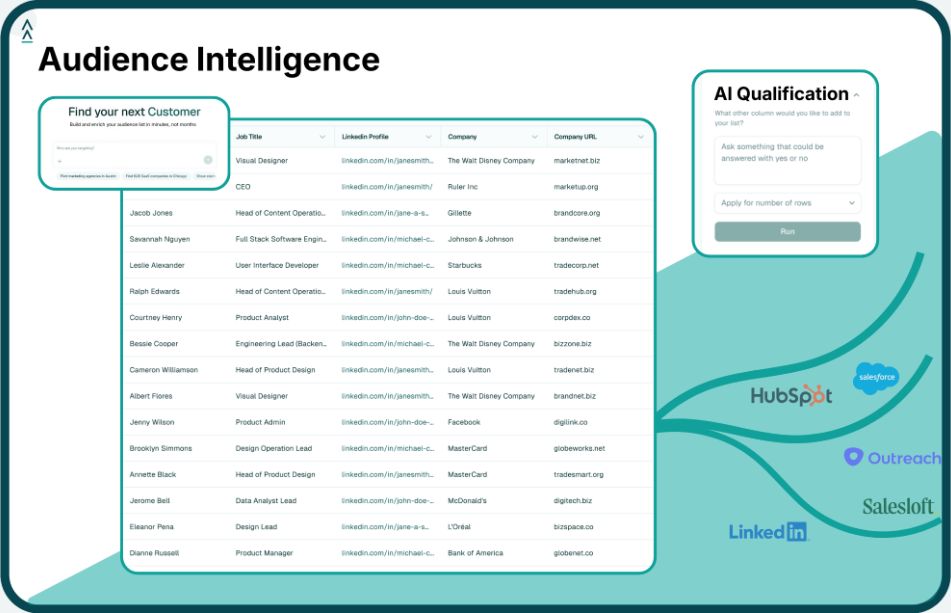
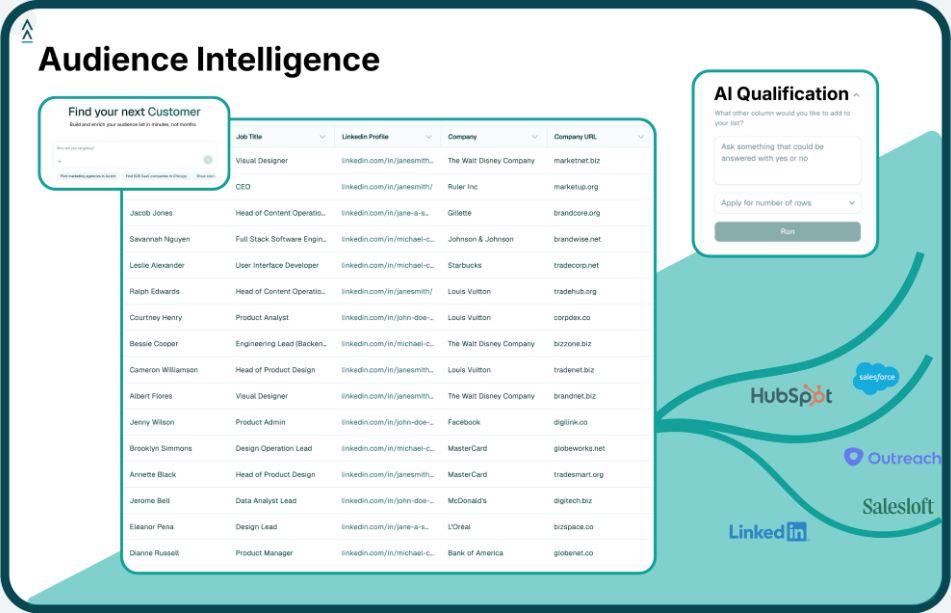
Landbase CLI provides programmatic access to Landbase data and agent workflows from the terminal and environments such as Claude Code and Codex.
Natural-language searches can combine criteria such as funding stage, mental-health focus, geography, headcount, or recent company activity. Landbase's guidance on prompting like an operator provides a framework for translating those requirements into structured audience requests.
That approach is particularly useful in mental health because two companies can serve the same market while appearing under very different conventional industry classifications. A virtual psychiatry company, behavioral-health EHR provider, and neuropsychiatric therapeutics developer may all be relevant to the same GTM strategy.
Funding can be combined with hiring, executive changes, technology adoption, or other company events. Landbase workflows can stack buying signals to help distinguish actively changing accounts from companies that simply fit a broad industry label.
Existing healthcare account lists can be uploaded and processed through file matching and enrichment. Company and contact records can then be prepared for CRM, research, or outbound workflows.
For RevOps teams, the result is a repeatable way to connect market research with structured account data as mental health companies raise capital, add executives, expand clinical networks, or enter new markets.
A fast-growing mental health tech company typically shows several forms of momentum, including recent financing, revenue growth, acquisitions, provider or patient expansion, payer coverage, and new product launches. Growth signals vary by business model: virtual-care platforms may emphasize visits and covered lives, while therapeutics companies rely more heavily on clinical and regulatory milestones. Combining multiple indicators provides a clearer view of current momentum than funding alone.
AI is increasingly used for provider matching, clinical documentation, compliance review, care navigation, patient support, and administrative automation. Slingshot AI focuses on AI-based mental health support, while Eleos Health applies AI to behavioral-health documentation and operational workflows. Other platforms incorporate AI into broader clinical systems rather than positioning it as a standalone form of care.
Insurance integration can reduce patient costs while giving mental health platforms access to substantially larger populations. Companies such as Grow Therapy and Talkiatry have made payer relationships central to their scaling strategies, while Spring Health and Lyra Health reach users through employers and benefit programs. Broad payer access can therefore become an important indicator of distribution strength and commercial scale.
Funding becomes more meaningful when it coincides with operating changes such as provider hiring, health-plan partnerships, acquisitions, geographic expansion, clinical progress, or revenue growth. These indicators can show whether new capital is translating into actual commercial or organizational expansion. GTM teams can stack buying signals to distinguish actively changing accounts from companies that simply fit a target industry.
Landbase CLI can help GTM teams define specialized mental health technology audiences using natural-language criteria and company-level signals. Relevant accounts can be narrowed using factors such as funding, hiring activity, executive changes, company characteristics, and market expansion. Landbase's matching and enrichment workflows can then prepare company and contact data for downstream research, CRM, and outbound processes.
Tool and strategies modern teams need to help their companies grow.