.png)
.png)

Daniel Saks
Chief Executive Officer


Y Combinator has funded more than 5,000 companies since 2005 and says more than 100 YC companies are now valued above $1 billion. The accelerator currently receives more than 10,000 applications every three months and typically accepts about 1% of applicants.
AI has become increasingly visible within newer YC cohorts. In the Winter 2025 batch, YC managing partner Jared Friedman said roughly one-quarter of the companies had codebases that were 95% AI-generated, excluding imported libraries. That reflects how AI-assisted development is changing startup execution, although YC's high-growth portfolio continues to span many industries beyond AI.
Fast-growing private companies can show momentum through revenue, ARR, transaction volume, customer adoption, financing, and valuation growth. The ten YC-backed companies below demonstrate recent momentum across one or more of these measures.
YC Batch: Winter 2021
Founded: 2021
CEO and Co-Founder: Aadit Palicha
Latest Funding: $450 million, October 2025
Valuation: $7 billion
Zepto is an Indian quick-commerce company delivering groceries, electronics, apparel, and other everyday products through a network designed for rapid local fulfillment. Its YC company profile describes the business around 10-minute grocery delivery and a network of hyperlocal dark stores.
Zepto raised $450 million in October 2025 at a $7 billion valuation, up from a $5 billion valuation in its previous funding round. Reporting around the financing also pointed to more than 20% growth in order volumes.
The combination of operating expansion, additional capital, and a higher private-market valuation keeps Zepto among the more closely watched YC-backed consumer companies.
Zepto participates in India's rapidly expanding quick-commerce market, where platforms compete on fulfillment speed, assortment, logistics density, and unit economics. Its growth illustrates how technology-heavy logistics models are changing the way urban consumers purchase everyday goods.
YC Batch: Winter 2020
Founded: 2019
CEO and Co-Founder: Grant LaFontaine
Latest Funding: $545 million Series G, August 2026
Valuation: $20 billion
Whatnot operates a livestream-shopping marketplace connecting buyers and sellers across collectibles, fashion, electronics, jewelry, food, and other categories. Its YC company profile describes Whatnot as a leading livestream-shopping marketplace.
Whatnot raised $545 million in Series G financing in August 2026 at a $20 billion valuation, nearly double its $11.5 billion valuation from October 2025.
Operating activity has also accelerated. Whatnot said sellers generated more GMV during the first half of 2026 than during all of 2025, while more than 650,000 people were joining the platform each week. Earlier in 2026, it also reported more than 20 million new accounts over the preceding year and 285% year-over-year growth in first-time buyers.
Whatnot demonstrates that livestream commerce can extend beyond collectibles into a broader marketplace model. Its expansion across hundreds of categories and multiple countries gives it a growing role in the evolution of community-driven digital commerce.
YC Batch: Winter 2019
Founded: 2019
CEO and Co-Founder: Alex Bouaziz
Latest Funding: $300 million Series E, October 2025
Valuation: $17.3 billion
Deel provides a global payroll and HR platform covering payroll, HRIS, compliance, benefits, mobility, performance, and equipment management across international workforces. Its YC company profile identifies Deel as a Winter 2019 company.
Deel announced a $300 million Series E in October 2025 at a $17.3 billion valuation. Earlier that year, the company surpassed $1 billion in annual recurring revenue.
By September 2025, Deel had also recorded its first $100 million revenue month and three consecutive years of profitability. Its current company information reports more than 40,000 customers.
Deel has expanded from international hiring and contractor management into a broader global HR infrastructure platform. Its growth reflects continued demand for systems that manage payroll, employment, compliance, and workforce operations across multiple countries.
YC Batch: Winter 2018
Founded: 2016
CEO and Co-Founder: Amjad Masad
Latest Funding: $400 million, March 2026
Valuation: $9 billion
Replit provides an AI-assisted software-creation platform that allows users to build and deploy applications from a browser-based environment. It participated in YC's Winter 2018 batch.
In September 2025, Replit said annualized revenue had increased from $2.8 million to $150 million in less than a year. Six months later, the company raised another $400 million at a $9 billion valuation, tripling its valuation from its previous financing.
Replit also reported more than 50 million users in March 2026 and said users from 85% of the Fortune 500 were building with the platform.
Replit is part of the shift from AI-assisted coding toward software creation in which AI agents can perform larger portions of development work. Its expansion into enterprise use also shows how these tools are moving beyond individual developers and prototypes.
YC Batch: Winter 2019
Founded: 2019
CEO and Co-Founder: Tarek Mansour
Latest Funding: $1 billion Series F, May 2026
Valuation: $22 billion
Kalshi operates a federally regulated U.S. prediction market where users can trade event contracts tied to real-world outcomes. Its YC company profile describes it as a federally regulated exchange built around event trading.
Kalshi raised $1 billion in Series F financing in May 2026 at a $22 billion valuation, twice the $11 billion valuation attached to its December 2025 funding round.
The company also reported that institutional trading volume increased 800% over six months. During the same period, annualized trading volume rose from $52 billion to $178 billion.
Kalshi has helped move prediction markets into regulated U.S. financial infrastructure. Its recent institutional expansion shows growing interest in event contracts for trading and hedging risks tied to economic, political, financial, and other real-world outcomes.
YC Batch: Winter 2017
Founded: 2016
CEO and Founder: Parker Conrad
Latest Funding: $450 million Series G, May 2025
Valuation: $16.8 billion
Rippling provides a unified platform spanning HR, IT, identity, payroll, benefits, spend management, and related workforce systems. YC lists Rippling as a Winter 2017 company.
Rippling raised $450 million in new financing in May 2025 at a $16.8 billion valuation. The financing also accompanied agreements to repurchase up to $200 million of equity from current and former employees.
At the time of the round, Rippling had more than 20,000 customers and approximately $570 million in annualized revenue. The company has since reported more than 30,000 companies using the platform.
Rippling's expansion reflects the broader enterprise-software trend toward connecting HR, IT, identity, and finance around a common employee-data layer. The platform now spans more than two dozen products across those functions.
YC Batch: Summer 2017
Founded: 2017
CEO and Founder: Garrett Langley
Latest Funding: $275 million, March 2025
Valuation: $7.5 billion
Flock Safety develops public-safety technology used by law enforcement, businesses, schools, neighborhoods, and other organizations. YC lists the company as an active Summer 2017 graduate.
Flock raised $275 million in March 2025 at a $7.5 billion valuation. At the time, the company reported more than $300 million in annual recurring revenue following 70% year-over-year ARR growth.
Its platform spans license-plate readers, video cameras, mobile security trailers, drone-response technology, and software designed to support incident detection, investigation, and response.
Flock demonstrates how recurring software and data platforms can be combined with physical hardware in public-safety markets. Its expansion also places privacy, data governance, retention, and appropriate-use controls alongside product growth as important considerations for customers and communities.
YC Batch: Winter 2018
Founded: 2018
CEO and Founder: Christina Cacioppo
Latest Funding: $150 million Series D, July 2025
Valuation: $4.15 billion
Vanta provides trust-management, security, and compliance software designed to automate evidence collection, continuous monitoring, risk management, and workflows around frameworks such as SOC 2 and ISO 27001. YC lists Vanta as a Winter 2018 company.
Vanta raised $150 million in Series D financing in July 2025 at a $4.15 billion valuation. At that point, the company supported more than 12,000 customers.
In April 2026, Vanta crossed $300 million in ARR. It took nine months to move from $200 million to $300 million after previously taking 15 months to grow from $100 million to $200 million.
Vanta has helped shift compliance workflows toward continuous monitoring and structured trust management. As security reviews become more important in enterprise procurement and AI adoption, compliance infrastructure is increasingly connected to sales, vendor management, and broader governance processes.
YC Batch: Winter 2016
Founded: 2016
CEO and Co-Founder: Jake Loosararian
Latest Funding: $125 million Series D, June 2025
Valuation: $1.25 billion
Gecko Robotics combines robotics, sensors, and AI to inspect and analyze critical physical infrastructure. Its YC company profile lists the company in the Winter 2016 batch.
Gecko raised $125 million in Series D financing in June 2025 at a $1.25 billion valuation, approximately doubling its valuation from its previous funding round. The company cited accelerating demand across manufacturing, energy, and defense.
Gecko works with large companies in energy, oil and gas, and manufacturing as well as organizations including the U.S. Air Force and U.S. Navy.
Gecko illustrates how AI and robotics are moving into industrial environments where physical infrastructure requires inspection, maintenance, and modernization. Its platform combines data gathered from physical assets with software designed to support operational decision-making.
YC Batch: Summer 2016
Founded: 2016
CEO: Francis deSouza
Founder and Chairman: Alexandr Wang
Latest Major Investment: Meta investment, June 2025
Valuation: More than $29 billion following the Meta transaction
Scale AI builds data infrastructure, evaluations, and AI applications for model developers, enterprises, and governments. YC lists Scale as an active Summer 2016 company.
Meta made a significant investment in Scale in June 2025 that valued the company above $29 billion. Scale remained an independent company following the transaction.
Scale described 2025 as its strongest financial year, reporting more than $1 billion in new business. Its applications business more than doubled revenue during the second half of the year, while its international public-sector business doubled revenue over the full year.
Scale appointed Francis deSouza CEO effective August 10, 2026. Alexandr Wang, who joined Meta's AI efforts in 2025, remains Scale's founder and chairman.
Scale has expanded beyond its original AI-data business into model evaluation and applications for enterprise and government customers. Its evolution reflects increasing demand for infrastructure that supports training, evaluating, and deploying AI systems in production environments.
Companies experiencing rapid expansion often undergo changes in staffing, technology, geography, leadership, and operating requirements. Those changes can provide useful context for GTM teams researching potential accounts.
Funding activity can indicate that a company has entered a new phase of expansion, while the purpose and timing of the round help clarify how the business is evolving.
Hiring changes can reveal which functions a company is building. A growing finance, security, RevOps, engineering, or operations team can provide additional context around organizational priorities.
Technology changes can show how a company's infrastructure is evolving as it scales.
Geographic expansion can create new operational requirements around payroll, compliance, IT, logistics, and other business functions.
Combining several signals provides a more complete account picture than relying on a funding announcement or employee count alone.
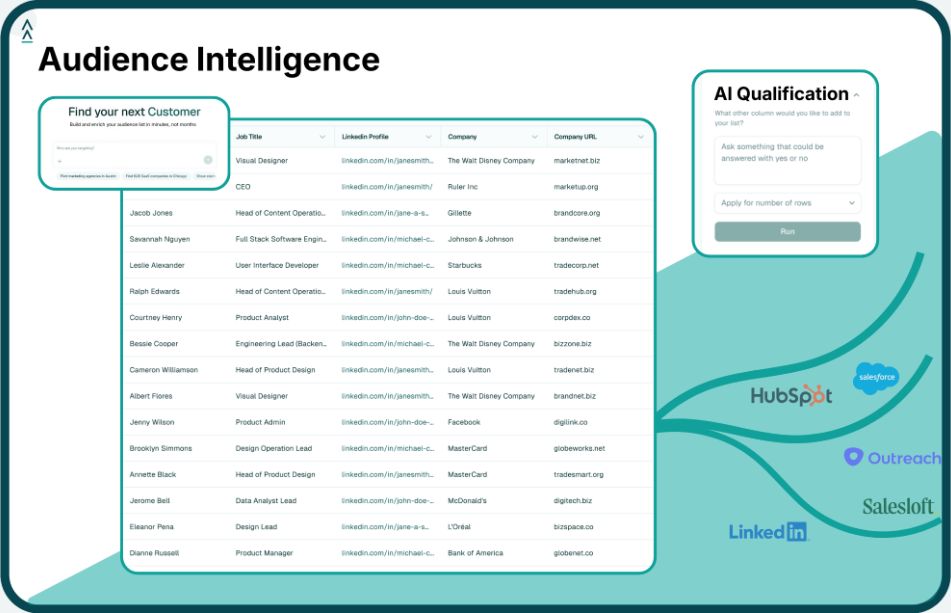
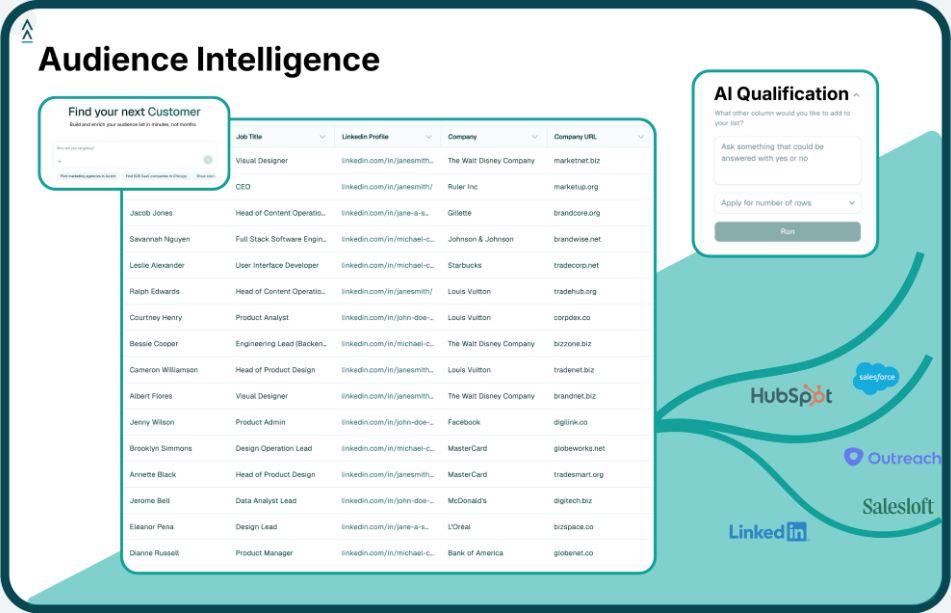
Tracking YC-backed companies manually can require combining accelerator directories, financing announcements, hiring data, company websites, and other sources. Landbase can help structure that research and turn it into reusable GTM datasets.
Landbase provides recent funding data that can help teams identify companies following newly announced financing rounds.
Teams can combine funding activity with company characteristics, hiring patterns, technology changes, and other signals to narrow a broader set of startups to accounts relevant to a specific GTM strategy.
Landbase's company data profiles combine information such as funding history, hiring trends, company characteristics, and technology context.
For deeper investigation, the account research workflow brings firmographic, technology, signal, and contact information into structured account profiles.
Landbase's buying signal tracking covers developments including funding, hiring, leadership changes, and technology shifts across its company dataset.
Those signals can be combined to narrow a larger YC-backed universe to companies showing the changes most relevant to a particular GTM strategy.
The Landbase CLI workflows can run inside AI-assisted environments such as Claude Code and Codex. The CLI provides access to Landbase data and workflows from the terminal, allowing search, matching, enrichment, and dataset operations to become part of repeatable technical processes.
For example, a GTM operator could define a group of YC-backed companies, narrow the dataset by funding recency or hiring activity, add relevant account information, and pass the resulting structured data into downstream workflows.
Growth can appear through revenue or ARR increases, transaction volume, customer adoption, financing, valuation changes, geographic expansion, or other operating metrics. Because private companies disclose different information, multiple indicators can provide a broader view of momentum than valuation alone.
Y Combinator says more than 10,000 companies apply every three months and that its typical acceptance rate is about 1%. It has funded more than 5,000 companies since 2005, and more than 100 of its companies are valued above $1 billion.
AI has changed both what many startups build and how quickly teams can develop software. YC said roughly one-quarter of its Winter 2025 companies had 95% of their codebases generated by AI, excluding imported libraries. Companies such as Replit and Scale AI also demonstrate how established YC graduates are participating in increased enterprise investment in AI.
Recent financing, hiring growth, new executives, geographic expansion, customer growth, product launches, and technology changes can all provide useful evidence that a company is evolving. These signals become more informative when considered alongside the company's business model, stage, and current strategic priorities.
Landbase can help teams identify companies using structured company data, monitor relevant funding, hiring, leadership, and technology changes, research accounts and contacts, and work with the resulting datasets through its web interface or CLI. This allows recurring YC-company research to become a structured workflow rather than a series of manual company-by-company searches.
Tool and strategies modern teams need to help their companies grow.