.png)
.png)

Daniel Saks
Chief Executive Officer


Sequoia Capital was founded in 1972 by Don Valentine and has since partnered with multiple generations of technology companies, including Apple, Cisco, Google, Instagram, Airbnb, and Stripe.
Its current portfolio spans far more than one technology category, but artificial intelligence has become increasingly prominent. At AI Ascent 2026, Sequoia brought together more than 150 AI founders and researchers and highlighted areas including long-horizon agents, robotics, AI infrastructure, and enterprise adoption.
Fast-growing private companies disclose different measures of expansion. Revenue, ARR, customer adoption, transaction volume, product usage, financing, and valuation growth can each provide useful evidence of momentum. The ten active Sequoia-backed companies below show significant recent movement across one or more of those measures.
Industry: Prediction Markets / Fintech
Founded: 2018
CEO and Co-Founder: Tarek Mansour
Latest Funding: $1 billion Series F, May 2026
Valuation: $22 billion
Kalshi operates a federally regulated exchange for event contracts, allowing users to trade on outcomes connected to economic indicators, elections, financial markets, weather, and other real-world events. Sequoia lists Kalshi among its active portfolio companies.
Kalshi raised $1 billion in Series F financing in May 2026 at a $22 billion valuation.
The company reported that institutional trading volume increased 800% over the preceding six months. Annualized trading volume increased from $52 billion to $178 billion over the same period.
Kalshi is expanding prediction markets from primarily consumer-oriented trading toward institutional applications. Its product increasingly serves hedge funds, asset managers, trading firms, and other organizations using event contracts to express views or manage exposure to real-world outcomes.
Industry: Enterprise AI / Customer Experience
Founded: 2023
Co-Founders: Bret Taylor and Clay Bavor
Latest Funding: $950 million, May 2026
Valuation: More than $15 billion
Sierra develops AI agents for customer-facing business workflows. The platform enables companies to build agents that handle customer interactions while connecting with existing enterprise systems and business processes.
Sequoia partnered with Sierra in 2023.
Sierra announced a $950 million financing in May 2026 at a valuation above $15 billion.
The company said it had grown from four initial design partners to serving more than 40% of the Fortune 50. Agents built on Sierra were also handling billions of customer interactions.
Sierra reflects the movement from conventional customer-service chatbots toward AI agents designed to complete more complex business tasks. Its expansion across large enterprises provides evidence that customer-facing agents are moving into production environments rather than remaining limited to pilots.
Industry: Healthcare AI
Founded: 2022
CEO and Co-Founder: Daniel Nadler
Latest Funding: $250 million Series D, January 2026
Valuation: $12 billion
OpenEvidence provides an AI-powered medical information platform designed for physicians. It searches and synthesizes information from medical literature to support clinical decision-making.
Sequoia partnered with OpenEvidence in 2024.
OpenEvidence raised $250 million in Series D financing in January 2026 at a $12 billion valuation, doubling its valuation from its previous financing three months earlier.
At the time, the company said the platform supported approximately 18 million clinical consultations from verified U.S. healthcare professionals during December, compared with about three million per month a year earlier. It had also surpassed $100 million in revenue.
Healthcare AI requires access to specialized information and workflows where accuracy, sourcing, and professional judgment are especially important. OpenEvidence's physician adoption illustrates the growth of domain-specific AI products designed around a particular professional audience.
Industry: Legal AI / Professional Services
Founded: 2022
CEO and Co-Founder: Winston Weinberg
Co-Founder: Gabriel Pereyra
Latest Funding: $200 million growth round, March 2026
Valuation: $11 billion
Harvey develops AI products for legal and professional-services workflows. Its platform supports research, document analysis, drafting, due diligence, and multi-step agent workflows.
Sequoia first partnered with Harvey in 2023.
Harvey raised $200 million in March 2026 at an $11 billion valuation, with GIC and Sequoia co-leading the round.
The company said customers were running more than 25,000 custom agents on Harvey. By July 2026, Harvey also reported that it had added more than $100 million in ARR during its first quarter of the year.
Harvey demonstrates how AI can be adapted to workflows requiring specialized domain context, permissions, and professional review. Its adoption across law firms and corporate legal departments also illustrates the expansion of vertical AI into established professional-services markets.
Industry: Enterprise AI / Knowledge Management
Founded: 2019
CEO and Founder: Arvind Jain
Latest Funding: $150 million Series F, June 2025
Valuation: $7.2 billion
Glean provides an enterprise AI platform that connects company knowledge, applications, people, and workflows while preserving source permissions and governance.
Sequoia has partnered with Glean since 2022.
Glean surpassed $300 million ARR in May 2026, only 15 months after reaching $100 million ARR.
The company also said its Fortune 500 customer count had nearly doubled year over year.
Its latest major financing was a $150 million Series F in June 2025 at a $7.2 billion valuation.
Enterprise AI depends on more than access to a general-purpose model. Systems also need reliable access to organizational context, permissions, applications, and internal knowledge. Glean's growth reflects enterprise demand for infrastructure that connects those elements.
Industry: Developer Infrastructure / Durable Execution
Founded: 2019
CEO and Co-Founder: Samar Abbas
CTO and Co-Founder: Maxim Fateev
Latest Funding: $300 million Series D, February 2026
Valuation: $5 billion
Temporal provides open-source durable execution infrastructure for distributed applications and long-running workflows. Its technology helps applications resume correctly after failures, timeouts, and other disruptions.
Sequoia has partnered with Temporal since 2019.
Temporal raised $300 million in Series D financing in February 2026 at a $5 billion valuation.
The company reported more than 380% year-over-year revenue growth, a 350% increase in weekly active usage, and a 500% increase in installations. Monthly installations had surpassed 20 million.
As AI agents take on longer and more complex tasks, software needs infrastructure that can maintain state and recover from failures. Temporal's growth reflects demand for durable execution across both conventional distributed applications and emerging agentic systems.
Industry: Security and Trust Management
Founded: 2017
CEO and Founder: Christina Cacioppo
Latest Funding: $150 million Series D, July 2025
Valuation: $4.15 billion
Vanta provides security, compliance, and trust-management software. Its platform supports continuous monitoring, evidence collection, vendor-risk management, compliance workflows, and other governance processes.
Sequoia partnered with Vanta in 2021.
Vanta crossed $300 million ARR in April 2026. The company reached that milestone nine months after reaching $200 million ARR and said its growth rate had increased in each of the preceding four quarters.
Vanta also reported 16,000 customers.
Its latest major financing was a $150 million Series D in July 2025 at a $4.15 billion valuation.
Security and compliance increasingly extend beyond periodic certification exercises into ongoing risk and trust management. Vanta's expansion reflects demand for platforms that connect compliance, security controls, vendor risk, and continuous monitoring.
Industry: Enterprise Browser / Security
Founded: 2020
CEO and Co-Founder: Mike Fey
CTO and Co-Founder: Dan Amiga
Latest Funding: $250 million Series E, March 2025
Valuation: $4.8 billion
Island develops an enterprise browser with security, access, data-protection, and workforce controls built directly into a Chromium-based browser.
Sequoia partnered with Island at its founding stage in 2020.
Island raised $250 million in Series E financing in March 2025, increasing its valuation to $4.8 billion less than five years after founding.
The platform has continued expanding its enterprise footprint. In 2026, Island received the Customers' Choice distinction in Gartner Peer Insights' Voice of the Customer for Secure Enterprise Browsers, based on 331 verified reviews submitted over an 18-month period.
Island represents a different approach to enterprise security: embedding governance and protection directly into the browser where much of modern knowledge work occurs. The model can address use cases involving remote work, contractors, BYOD, application access, and data protection.
Industry: Software Supply Chain Security
Founded: 2021
CEO and Co-Founder: Dan Lorenc
Latest Major Priced Round: $356 million Series D, April 2025
Valuation: $3.5 billion
Chainguard provides hardened open-source software, container images, libraries, virtual-machine images, and related software supply chain security infrastructure.
Sequoia partnered with Chainguard in 2022.
Chainguard raised $356 million in Series D financing in April 2025 at a $3.5 billion valuation. The company subsequently announced an additional $280 million growth investment later that year.
Its product footprint has continued expanding. Chainguard currently reports customer outcomes spanning more than 424,000 engineering hours saved and 106,000 CVEs remediated across its customer base.
Modern applications depend heavily on open-source components. Chainguard addresses security earlier in the software supply chain by providing maintained and hardened software artifacts rather than relying only on detecting vulnerabilities after components have entered production environments.
Industry: AI-Powered Offensive Security
Founded: 2024
Founder and CEO: Oege de Moor
Latest Financing: $35 million Series C extension, May 2026
Series C Valuation: More than $1 billion
XBOW uses AI to automate offensive security and penetration testing. Its platform attempts to identify and validate exploitable vulnerabilities continuously rather than relying only on periodic manual assessments.
Sequoia partnered with XBOW in 2024.
XBOW initially raised $120 million in Series C financing in March 2026 at a valuation above $1 billion.
In May, the company added another $35 million to the round from strategic investors. At that point, XBOW reported more than 100 customers worldwide and more than 250 employees.
AI can increase the speed at which both software and attacks evolve. XBOW applies autonomous systems to offensive security, attempting to make vulnerability discovery and validation more continuous as application-development cycles accelerate.
Several patterns connect these companies even though they operate in very different markets.
Sierra, OpenEvidence, Harvey, and Glean all apply AI to distinct business contexts. Their products depend on domain knowledge, enterprise data, permissions, or workflows rather than simply providing access to a general-purpose model.
Temporal provides durable execution for long-running workflows, while companies such as Glean provide organizational context for enterprise AI. As agents become more capable, the surrounding infrastructure for reliability, data access, governance, and execution becomes increasingly important.
Island focuses on the enterprise browser, Chainguard on trusted open-source software, Vanta on continuous trust management, and XBOW on autonomous offensive security. Each addresses a different part of an expanding enterprise-security stack.
A financing round can support research, hiring, international expansion, infrastructure, or product development. Revenue, ARR, customer growth, product usage, and operational expansion provide additional context for understanding how a company is scaling.
A Sequoia portfolio list can be a useful starting point for market research, but GTM teams may need to distinguish companies by growth stage, industry, revenue profile, hiring activity, and the specific business changes most relevant to their product.
Landbase's new lead investor signal can identify companies whose latest financing was led by a particular investor or syndicate.
For an existing portfolio list, the Analyze Patterns tool can surface shared characteristics such as industries, technologies, company sizes, and other account patterns.
Funding can be evaluated alongside operating characteristics. Landbase's high-growth revenue data adds revenue-stage context, while the signal stacking workflow can combine developments such as:
This can help separate companies that recently completed a financing event from those experiencing broader organizational expansion.
For deeper analysis, the Advanced Dataset Creator supports custom filters, calculations, comparisons, ratios, and ranking logic.
A GTM operator could use those capabilities to compare Sequoia-backed businesses by factors such as funding stage, employee growth, revenue range, industry, or combinations of several indicators.
Landbase's web application and CLI operate as two connected interfaces to the same underlying system.
That allows RevOps teams and GTM engineers to explore company data interactively, then move recurring searches or dataset operations into terminal-based workflows using Claude Code, Codex, scripts, or other AI-assisted environments.
Growth can appear through ARR or revenue expansion, customer adoption, transaction volume, product usage, fundraising, valuation changes, or organizational expansion. Private companies disclose different metrics, so several indicators usually provide a more useful view of momentum than valuation alone.
Sequoia Capital was founded in 1972 by Don Valentine. Its early investments included Apple and Atari, and it later partnered with companies including Cisco, Google, Instagram, Airbnb, Stripe, and many other technology businesses.
AI is creating opportunities across several layers of technology rather than one standalone category. Current Sequoia-backed companies apply AI to enterprise knowledge, healthcare, legal work, customer experience, cybersecurity, and other operational workflows, while infrastructure companies support the systems needed to run those applications reliably.
Useful indicators can include new financing, high revenue or ARR growth, headcount expansion, hiring activity, new executives, customer growth, geographic expansion, acquisitions, and technology changes. Examining multiple indicators can provide a fuller picture of how a company is evolving.
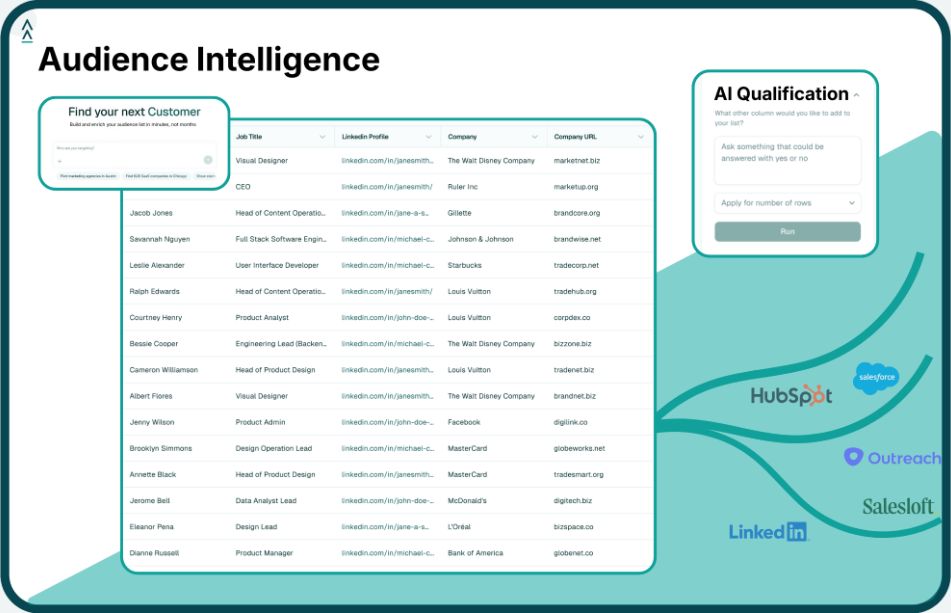
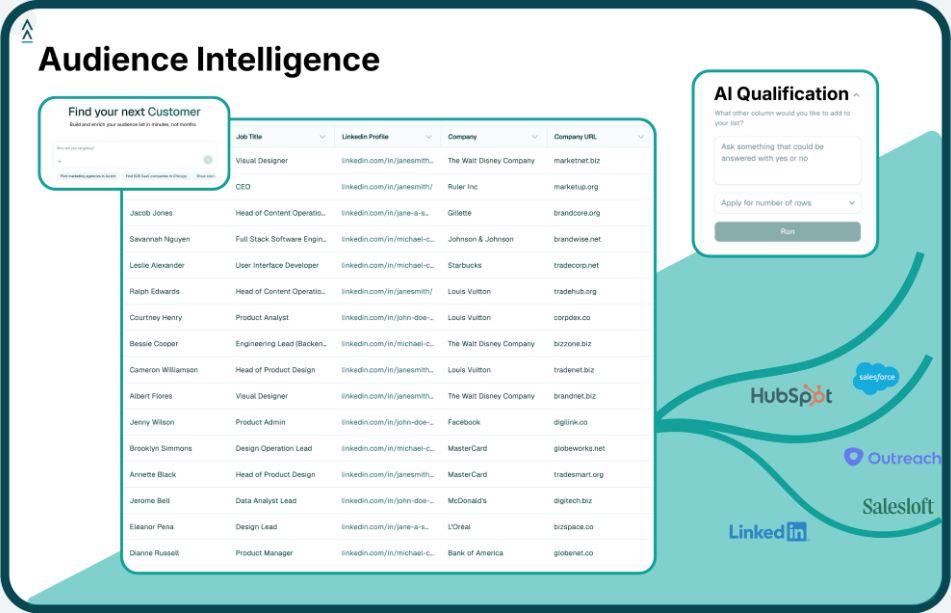
Landbase can help teams organize companies by investor relationships, industry, growth characteristics, funding, revenue context, and other business signals. Teams can then identify relevant decision-makers, refine datasets, and use the same information through the web application or Landbase CLI for repeatable GTM research.
Tool and strategies modern teams need to help their companies grow.