.png)
.png)

Daniel Saks
Chief Executive Officer


Carbon capture entered 2026 with more capital moving into projects that have progressed beyond early development. According to the IEA's 2026 CCUS financing analysis, investment in carbon capture, utilization, and storage increased more than fifteenfold from 2020 to 2025, exceeding $5 billion last year. More than 30 projects reached final investment decisions during the previous two years, while more than 70 large-scale capture facilities are now operating worldwide.
Direct air capture remains much earlier in its commercialization curve. The IEA's latest DAC tracking counts 27 commissioned plants capturing roughly 0.01 million tonnes of CO₂ annually, alongside at least 130 larger facilities in various stages of development.
That gap between today's operating capacity and the industry's project pipeline is shaping the next stage of carbon capture. Companies are increasingly being evaluated on whether they can manufacture equipment, secure storage, finance facilities, sign customers, and operate projects reliably rather than on announced capacity alone.
Carbon capture covers two related but distinct challenges.
Point-source carbon capture separates CO₂ from industrial or energy-related exhaust streams before it reaches the atmosphere. Because these streams typically contain much higher CO₂ concentrations than ambient air, the process differs technically and economically from atmospheric removal.
Direct air capture, or DAC, removes CO₂ that is already present in the atmosphere. When the captured carbon is permanently stored, DAC can generate durable carbon dioxide removal.
Both markets are moving toward larger infrastructure projects, but neither is uniform. Capture technology must connect with compression, transportation, permanent storage, monitoring, project finance, permitting, and customer demand.
For GTM teams, that creates a much broader ecosystem than a simple search for "carbon capture companies." A more useful carbon management market map may include equipment manufacturers, project developers, storage operators, engineering firms, industrial customers, carbon-market companies, and specialized technology providers.
Co-Founders and Co-CEOs: Christoph Gebald and Jan Wurzbacher
Headquarters: Zurich, Switzerland
Recent Funding: $162 million equity financing in July 2025
Recent Growth Signal: 14 new carbon removal partnerships in H1 2026
Climeworks raised $162 million in 2025, pushing cumulative equity financing above $1 billion. In the first half of 2026, its carbon removal business added 14 corporate partnerships while the company continued operating and developing DAC projects.
Climeworks develops solid-sorbent direct air capture systems that remove CO₂ from ambient air for permanent storage or downstream use. It also provides carbon removal procurement services for corporate buyers.
Climeworks combines one of the longest commercial DAC operating records with technology development and carbon removal sales, giving it experience across multiple parts of the emerging market.
President and General Manager: Michael Avery
Headquarters: Houston, Texas
Parent Company: Occidental
Recent Growth Signal: STRATOS progressing through start-up activities in 2026
1PointFive entered 2026 with its STRATOS facility in West Texas moving through start-up activities. The plant is designed to capture up to 500,000 tonnes of atmospheric CO₂ annually at full operation.
The company has also secured multi-year carbon removal agreements with several major corporate buyers.
1PointFive develops large-scale direct air capture and geological sequestration projects using technology originally developed by Carbon Engineering.
STRATOS is one of the largest DAC projects moving toward operation, making its commissioning and performance important indicators for the industry's ability to scale.
CEO: Shashank Samala
Headquarters: Brisbane, California
Recent Funding: $150 million Series B in December 2024, followed by strategic investment in 2025
Recent Growth Signal: 17,000-tonne Louisiana facility planned for operation in 2026
Heirloom is developing two Louisiana DAC facilities with nearly 320,000 tonnes of combined planned annual capacity. The first is designed to remove about 17,000 tonnes per year and is scheduled to begin operating in 2026.
Heirloom uses limestone-based chemistry to absorb CO₂ from ambient air, then releases the concentrated carbon for permanent storage.
The company is moving from smaller commercial installations toward substantially larger infrastructure, providing a test of how mineral-based DAC performs at greater scale.
President and CEO: Claude Létourneau
Headquarters: Burnaby, British Columbia
Recent Growth Signal: Acquired Carbon Alpha in March 2026
Svante expanded into project development by acquiring Carbon Alpha in 2026. Its Redwood manufacturing facility is also operating with capacity to produce sorbent filters for projects representing up to 10 million tonnes of annual CO₂ capture or removal when fully deployed.
Svante develops solid-sorbent filters and rotary adsorption systems for industrial point-source capture and direct air capture applications.
Svante is combining capture technology, manufacturing capacity, and project development, addressing more of the infrastructure required to move carbon capture projects toward deployment.
CEO: Alexandra Petre
Headquarters: Montreal, Quebec
Funding: More than $130 million
Recent Growth Signal: Delivered certified DAC removals in June 2026
Deep Sky Alpha began operating in Alberta in 2025 and permanently stored atmospheric CO₂ underground. In June 2026, removals from the facility became the first independently certified DAC carbon removal credits issued in North America.
Deep Sky is also developing a larger Manitoba project targeting up to 500,000 tonnes of annual removal capacity at full scale.
Deep Sky develops carbon removal projects using multiple DAC technologies rather than relying on one proprietary capture system. It combines capture, storage, monitoring, and credit delivery within the same project environment.
Its model gives emerging DAC technologies a shared path to field deployment, permanent storage, and verified commercial carbon removal.
Co-Founder and CEO: Aniruddha Sharma
Headquarters: London, United Kingdom
Recent Growth Signal: 86.35% revenue growth over three years
Carbon Clean entered 2026 after reporting 86.35% revenue growth over the preceding three years and more than 50 project references globally. It continues expanding industrial partnerships while commercializing its CycloneCC platform.
Carbon Clean develops modular point-source carbon capture systems for industrial facilities. Its technology is designed to reduce the footprint of conventional capture equipment.
Its modular approach targets industries where space, installation complexity, and retrofit requirements can make conventional carbon capture difficult to deploy.
CEO: Adrian Corless
Headquarters: Los Angeles, California
Recent Funding: $80 million Series A in March 2024
Recent Growth Signal: Project Tamarack achieved first capture in October 2025
CarbonCapture achieved first capture at Project Tamarack in Alberta in October 2025. The installation is designed to remove up to 2,000 tonnes of atmospheric CO₂ annually at full operation.
The company has also established manufacturing operations in Arizona for its modular Leo Series DAC systems.
CarbonCapture develops standardized solid-sorbent DAC modules that can be combined into larger installations.
The company is treating DAC partly as a manufacturing challenge, using standardized modules to increase capacity without designing every project from scratch.
Co-Founder and CEO: Nicholas Chadwick
Headquarters: London, United Kingdom
Recent Funding: £21.8 million Series A
Recent Growth Signal: Joined the 60,000-tonne-per-year UnionDAC project in 2026
Mission Zero has deployed three DAC systems across the UK and Canada. It also secured UK government funding for engineering work on a 10,000-tonne-per-year system and joined the UnionDAC consortium developing a larger facility in Teesside.
Mission Zero develops electrochemical DAC systems using modular equipment and established industrial components.
Its rapid move into multiple field deployments provides operating experience across permanent storage, fuels, and building-material applications.
Co-Founder and CEO: Rory Brown
Headquarters: United Kingdom
Recent Growth Signal: Acquired Carbyon in July 2026
Airhive began commissioning its Project Tenet DAC system in Teesside in March 2026 and has also deployed technology at Deep Sky Alpha in Canada.
Its July 2026 acquisition of Carbyon added another European DAC technology team, while Airhive continues participating in the planned UnionDAC project.
Airhive develops modular DAC systems using fluidized-bed technology and solid sorbents.
The Carbyon acquisition expands Airhive's technical capabilities while its project portfolio moves from demonstrations toward larger planned deployments.
CEO: Ethan Cohen-Cole
Primary Offices: San Francisco Bay Area and New Zealand
Recent Funding: $27.5 million in company and project financing in March 2025
Recent Growth Signal: Additional Project Monarch financing in May 2026
Capture6 raised $27.5 million in 2025 to advance integrated carbon removal and water-recovery projects. Additional financing secured in May 2026 is supporting the next phase of Project Monarch in California.
Capture6 combines carbon removal with brine and water management, using waste streams from water-treatment systems as inputs while recovering additional freshwater.
Its model links carbon removal with water infrastructure, creating a pathway where one project can address both CO₂ removal and water-management needs.
Carbon capture is a difficult market to research through standard company categories. A DAC manufacturer, industrial capture provider, storage developer, project operator, and carbon removal marketplace can participate in the same project while appearing in completely different database segments.
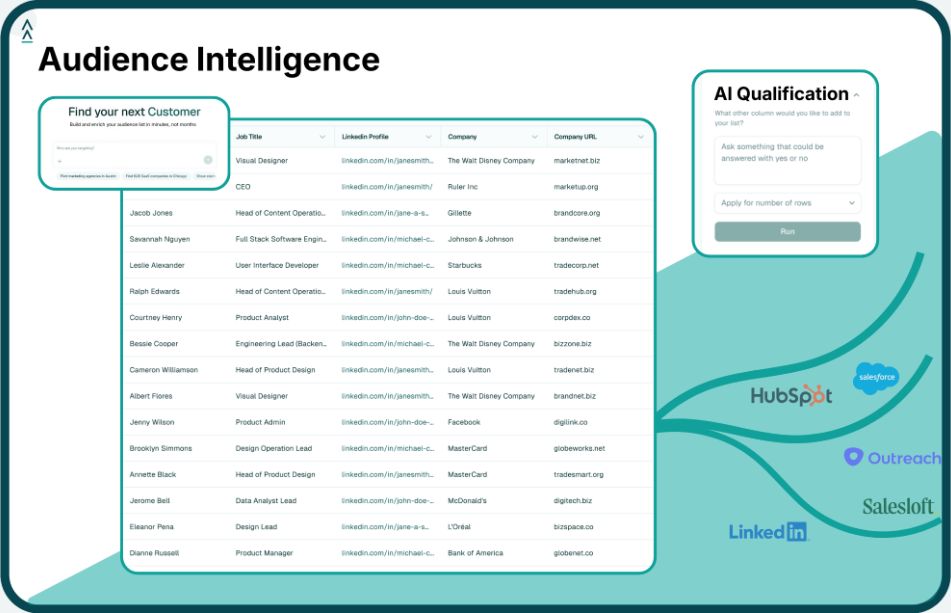
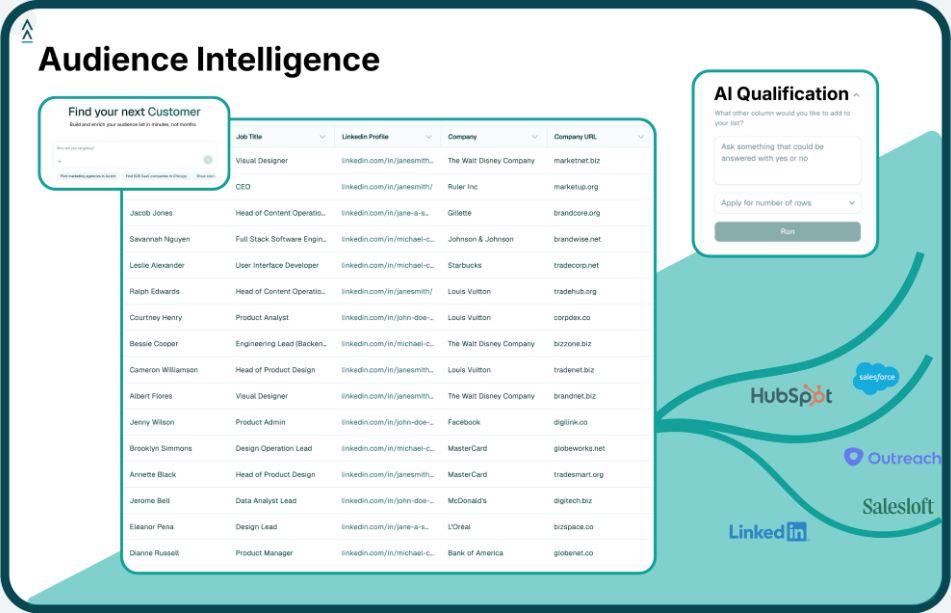
Landbase gives GTM teams a way to build the market around how carbon capture projects actually develop.
A useful starting point is identifying companies moving from technology development into physical deployment.
Signals can include:
Landbase's company growth signals can add another layer to a carbon capture audience so teams can prioritize accounts where something material is changing.
A company selling industrial equipment may care about capture developers and EPC partners. A software provider may be more interested in project operators, storage companies, or companies managing large carbon-credit portfolios.
With advanced dataset creation, teams can define different account groups around business model, geography, company characteristics, or other requirements instead of forcing the entire sector into one list.
Carbon capture purchasing often happens around projects.
A new DAC facility can create potential demand for engineering, equipment, storage, monitoring, construction, software, and professional services. A point-source installation can involve the emitter, technology provider, EPC contractor, transport operator, and storage partner.
Landbase can help turn those project relationships into an account universe that is easier to research and qualify.
The relevant buyer depends heavily on the offer.
Potential stakeholders can include:
The decision-maker discovery workflow helps teams move from target companies to people connected with the specific business decision.
Projects can move quickly from feasibility to financing, construction, commissioning, or cancellation. Static market maps become outdated as those stages change.
The Landbase CLI brings audience creation, matching, enrichment, and dataset management into environments such as Claude Code and Codex. Technical GTM teams can revisit the same market logic as projects advance rather than reconstructing the sector from scratch.
Growth can appear through funding, revenue, new projects, manufacturing capacity, commercial agreements, or movement from pilot systems into larger deployments. The right metric depends on whether the company sells capture equipment, develops projects, operates DAC facilities, or provides another part of the carbon-management stack. No single public metric supports a precise ranking across every private and public company. Teams researching the market can use funding and expansion signals alongside project activity to build a more complete view.
Point-source carbon capture removes CO₂ from an industrial or energy-related gas stream before the emissions reach the atmosphere. Direct air capture removes CO₂ from ambient air after it has already entered the atmosphere. DAC can support durable carbon removal when captured CO₂ is permanently stored. The two technologies therefore address different parts of the emissions problem and operate under different technical conditions.
DAC facilities are operating today, but global capacity remains small. The IEA counts 27 commissioned plants capturing roughly 0.01 million tonnes of CO₂ annually, while far larger projects remain under construction or development. The market is therefore transitioning from pilots and early commercial facilities toward larger infrastructure rather than already operating at gigaton scale. Companies such as Climeworks, 1PointFive, Heirloom, and Deep Sky are pursuing different paths through that scale-up.
Long-term purchases can give project developers clearer visibility into future demand and revenue. That can be especially important for first-of-a-kind facilities that require substantial capital before commercial operation begins. Buyers also increasingly require measurement, certification, and durable storage before removals can be recognized. For GTM research, account-level signals around new commercial partnerships can provide useful context about which carbon removal businesses are moving toward customer delivery.
Landbase can help teams build separate audiences for DAC developers, industrial capture companies, storage businesses, infrastructure providers, or other carbon-management segments. Existing company lists can be matched and enriched with additional company and contact data rather than rebuilt manually. Teams can also layer recent changes such as funding or hiring onto the underlying market definition. For technical GTM workflows, file matching and enrichment and the CLI make it possible to keep carbon capture datasets structured and reusable as the market evolves.
Tool and strategies modern teams need to help their companies grow.