.png)
.png)

Daniel Saks
Chief Executive Officer


Telehealth growth in 2026 is increasingly concentrated in specialized care platforms rather than general-purpose video appointments. Virtual psychiatry, consumer health services, and employer-sponsored mental healthcare are showing clear activity through financing, international expansion, and consolidation.
Talkiatry raised $210 million in equity and debt financing to expand its telepsychiatry services and supporting technology. The investment reflects continued demand for virtual mental healthcare built around licensed psychiatrists, therapists, insurance coverage, and clinical oversight.
International expansion is another major development. Hims & Hers agreed to acquire Eucalyptus in a $1.15 billion deal, giving the company a larger presence in Australia, Japan, the United Kingdom, Germany, and Canada.
Mental health consolidation is also reshaping the market. Spring Health agreed to acquire Alma, combining an employer-focused mental health platform with a network that supports independent clinicians. The combined company expected to generate approximately $1 billion in revenue during the year following the merger.
1. Grow Therapy
CEO: Jake Cooper
Headquarters: New York, New York, United States
Grow Therapy ranked first in the Financial Times and Statista ranking of the Americas’ fastest-growing companies for 2026. Its revenue increased from $3.6 million in 2021 to $617.4 million in 2024, representing a compound annual growth rate of 455.6%.
The ranking is current to 2026, although the underlying revenue comparison covers 2021 through 2024. Grow Therapy’s reported valuation had reached approximately $3 billion by 2026.
Grow Therapy connects patients with therapists who offer online and selected in-person sessions. The platform handles insurance eligibility, scheduling, billing, documentation support, and practice administration.
The company works with more than 125 insurers and also distributes care through employer relationships. Patients pay an average of approximately $21 per session, while about one-third pay nothing, according to the company.
Grow Therapy’s expansion is closely tied to insurance-based access rather than direct consumer subscriptions. This model can support larger patient volumes but requires dependable reimbursement, provider credentialing, claims management, and insurer renewals.
CEO: Robert Krayn
Headquarters: New York, New York, United States
Talkiatry raised $210 million in financing led by Perceptive Advisors, with additional participation from Andreessen Horowitz, Blisce, Left Lane Capital, Sofina, and Banc of California. The transaction brought the company’s total disclosed capital above $400 million.
The company plans to use the capital to expand its care offerings and build technology for administrative and operational work. Talkiatry has also been preparing its internal operations for a possible future public offering, although no immediate IPO plan has been announced.
Talkiatry reported employing more than 800 full-time licensed psychiatrists and more than 300 therapists. It provides virtual care for adults and children, including psychiatry, medication management, and therapy.
The company participates in networks operated by major insurers, including Aetna and UnitedHealthcare. This distinguishes Talkiatry from platforms that depend primarily on cash payments or subscription counseling.
Its growth reflects demand for clinical mental health services that include prescribing and psychiatric oversight rather than therapy alone.
CEO: Andrew Dudum
Headquarters: San Francisco, California, United States
Hims & Hers generated $608.1 million in first-quarter 2026 revenue, an increase of 3.7% from the corresponding prior-year period. Subscribers reached 2.6 million, compared with more than 2.5 million at the end of 2025.
The company raised its full-year 2026 revenue outlook to as much as $3 billion, although its first-quarter loss and regulatory uncertainty surrounding weight-management products affected investor expectations.
Hims & Hers agreed to acquire Australian telehealth company Eucalyptus in a transaction valued at up to $1.15 billion. Eucalyptus operated across Australia, the United Kingdom, Germany, Japan, and Canada, with more than 775,000 customers and an annual revenue run rate above $450 million.
Hims & Hers provides telehealth consultations and treatments across sexual health, hair care, dermatology, mental health, weight management, and other consumer health categories.
Its acquisition strategy is intended to expand the same subscription and digital-prescribing model into additional international markets.
CEO: Sean Duffy
Headquarters: San Francisco, California, United States
Omada Health reported first-quarter revenue of $78 million, representing 42% year-over-year growth. Membership reached 1.02 million, an increase of 51%.
The company narrowed its net loss to approximately $3 million and reported positive adjusted EBITDA of $1 million. It also raised its full-year revenue guidance to between $324 million and $332 million.
Omada provides digital programs for diabetes, hypertension, musculoskeletal conditions, weight management, and related metabolic health needs. Its services combine connected devices, coaching, education, behavioral support, and clinical teams.
Omada primarily reaches members through employers and health plans. Its GLP-1 Care Track was also added to Eli Lilly’s Employer Connect program, allowing employers to combine medication coverage with behavioral and lifestyle support.
CEO: April Koh
Headquarters: New York, New York, United States
Spring Health agreed to acquire Alma in a cash-and-stock transaction announced in January 2026. The combined company expected to generate approximately $1 billion in revenue during the year following the merger, according to people familiar with the businesses.
The acquisition was expected to close after regulatory and customary reviews. Alma was set to continue operating as a Spring Health business unit under founder Harry Ritter.
Spring Health offers therapy, psychiatry, coaching, self-guided tools, and care navigation through employer and health-plan relationships. The company reported that more than 50 million people had access to its services.
Alma provides insurance, billing, practice-management, and patient-acquisition support to independent clinicians. Combining Alma with Spring Health connects employer distribution with a larger provider-support platform.
The transaction reflects continued consolidation in virtual mental healthcare as companies seek stronger insurer, employer, and clinician networks.
CEO: Joanna Strober
Headquarters: Palo Alto, California, United States
Midi Health crossed a $1 billion valuation following a February 2026 funding round. The company was serving more than 20,000 patients each week by April.
Its earlier Series C financing had brought total disclosed funding to approximately $150 million. Midi previously reported a $150 million annual revenue run rate, up from approximately $60 million at the end of 2024.
Midi provides virtual care for perimenopause, menopause, and other health needs affecting women in midlife. Its services include prescription care, preventive health support, testing, and access to trained clinicians.
The company developed a curated AI system to help train providers and respond to questions using vetted women’s health information. Midi has also used AI to reduce administrative work and standardize internal processes.
CEO: Linda Yaccarino
Headquarters: Miami, Florida, United States
eMed reported raising $200 million in a financing round that valued the company above $2 billion. The company appointed former X chief executive Linda Yaccarino as CEO in 2025.
The new capital is intended to support eMed’s technology platform and employer-focused payment model. The financing figures were reported from company disclosures and Reuters-derived reporting.
eMed works with employers and government payers to manage access to GLP-1 medications used for diabetes and weight management. Its model combines prescribing support, monitoring, patient engagement, and payment arrangements.
The company is positioning telehealth as a way to control the cost and clinical management of expensive medications. Its growth depends on employer adoption, medication economics, member adherence, and continued regulatory compliance.
CEO: Kate Ryder
Headquarters: New York, New York, United States
Maven Clinic expanded its use of AI through tools such as Ask Maven and Maven Intelligence. Ask Maven allows members to ask questions about health benefits, while the wider intelligence layer connects care navigation, clinical services, and benefit administration.
Maven supports fertility, maternity, postpartum care, pediatrics, menopause, and other family-health needs. Services are offered primarily through employers and health plans.
The company reported working with more than 2,000 employers. Although Maven’s most recent major financing occurred in 2024, its 2026 relevance comes from continued employer adoption, AI product development, and expansion across women’s and family health.
CEO: Chris Altchek
Headquarters: New York, New York, United States
Cadence reported 100% year-over-year revenue growth during 2025 and said it was on track to exceed $100 million in annual recurring revenue during 2026. These figures were supplied by the company.
The company had raised approximately $141 million and served more than 70,000 patients across about 20 health systems.
Cadence provides remote clinical monitoring for patients with chronic conditions. Connected devices collect information such as blood pressure, weight, heart rate, and glucose readings.
Clinical teams review the information and contact patients when readings or trends require follow-up.
Cadence works through health systems including Providence and Hackensack Meridian Health. This model integrates virtual monitoring with existing providers instead of creating a separate consumer clinic.
CEO: Aidan Dewar
Headquarters: New York, New York, United States
Nourish raised $70 million in Series B financing at a reported valuation above $1 billion. Although the round occurred in 2025, the company remains relevant in 2026 because it had reached profitability and employed more than 3,000 registered dietitians.
The company reported treating hundreds of thousands of patients through relationships with insurers, employers, health systems, and provider groups.
Nourish provides virtual appointments with registered dietitians for metabolic health, digestive conditions, weight management, and other nutrition-related needs.
Its platform also includes meal logging, messaging, administrative support, and tools intended to help clinicians prepare for and document appointments.
Approximately 95% of Nourish patients received care fully covered by insurance when the company announced its Series B. Its growth demonstrates how nutrition counseling can scale when care is integrated into payer and employer benefits.
The telehealth ecosystem includes virtual clinics, mental health networks, remote-monitoring platforms, employer benefits, medication-management companies, digital pharmacies, and health-system partners.
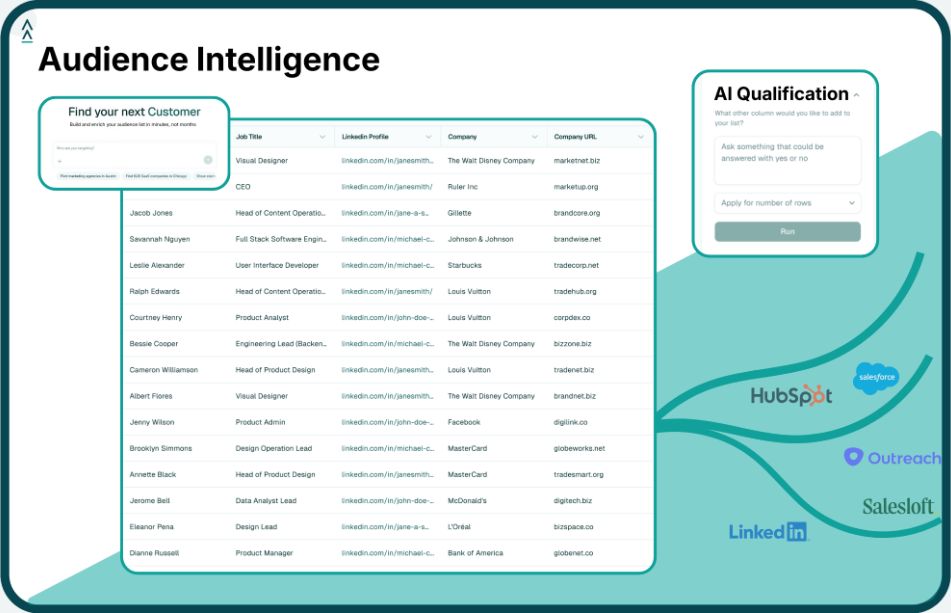
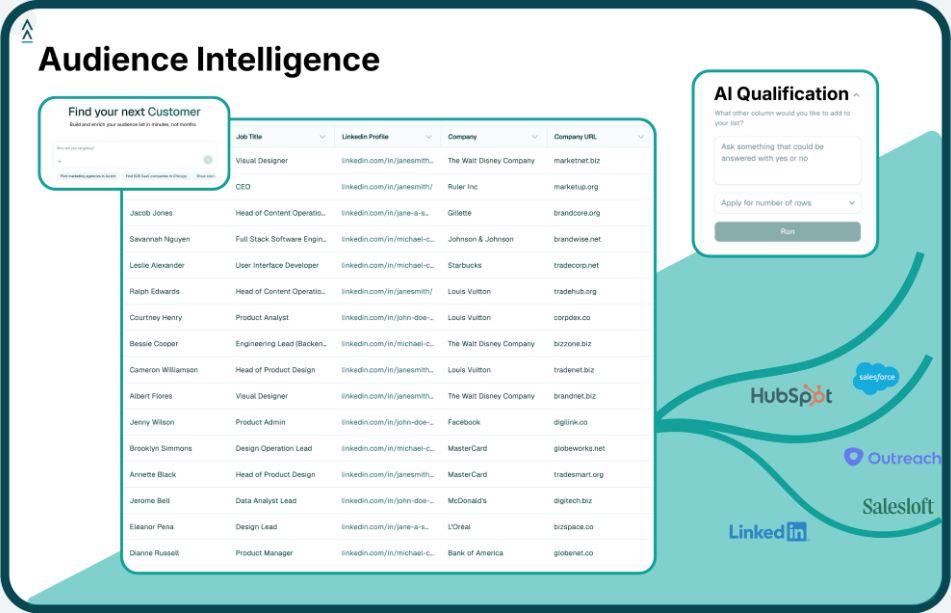
Teams can request an audience using plain English and narrow the results by funding stage, care specialty, company size, payer model, geographic reach, hiring activity, or professional role.
Potential telehealth audiences include:
For more specialized segmentation, advanced audience search supports exact filters, historical conditions, rankings, uploaded account data, and custom output fields.
Landbase can match existing account records, enrich missing company and contact fields, identify relevant decision-makers, and preserve the results as reusable datasets.
Technical GTM teams can use Landbase CLI through Claude Code, Codex, scripts, or a terminal. Structured outputs allow telehealth audiences to move into CRMs, databases, dashboards, analytical notebooks, and outbound workflows.
Mental health platforms are building clinician networks, insurer relationships, prescribing capabilities, and administrative systems that require substantial capital. Demand also remains high across therapy, psychiatry, and employer-sponsored care. Companies with in-network providers can reach larger patient populations than cash-only services. Growth still depends on provider availability, reimbursement, patient retention, and clinical quality.
Insurer contracts can make virtual care available to millions of eligible members while reducing direct patient costs. They also require credentialing, claims management, negotiated reimbursement, and compliance with payer requirements. A company may report a large eligible population without achieving equivalent appointment volume or engagement. Active patients, renewals, and completed visits therefore provide important additional context.
GLP-1 medications have increased demand for virtual weight-management, prescribing, nutrition, and monitoring services. Employers and insurers are also looking for ways to manage medication costs and support continued patient engagement. Companies such as Hims & Hers, Omada, eMed, and Nourish approach this market through different combinations of prescribing, behavioral care, nutrition, or benefits management. Regulatory requirements and drug availability remain important operating risks.
Standard telehealth commonly centers on scheduled video, audio, or messaging appointments. Remote monitoring collects patient information between appointments through connected devices and other digital inputs. That data must be reviewed, interpreted, and escalated through a clinical process. Companies therefore need device logistics, software integrations, clinical staffing, and clear alert-management procedures.
The strongest signals include completed funding, rising patient volume, provider hiring, insurer agreements, employer contracts, acquisitions, and new geographic markets. Public-company revenue and membership results provide additional evidence when available. Several signals should be considered together because valuation or financing alone may not indicate durable operating growth. Landbase can support this research through company matching, audience creation, enrichment, and reusable datasets.
Tool and strategies modern teams need to help their companies grow.