.png)
.png)

Daniel Saks
Chief Executive Officer


Your CRM is full of accounts. Your reps are busy. But pipeline is flat — because knowing who to target and knowing who is ready to buy are two different problems. The best intent signal detection tools solve the second one. Some market-research firms estimate the buyer intent data category in the low-single-digit billions, though public estimates vary materially and the market continues to expand rapidly. Intent-data adoption is meaningful and growing, but public benchmarks do not consistently show a vast majority of B2B marketers using it for account prioritization. Yet relatively few teams report exceptional ROI from their intent data investments.
The gap is not in detection. It is in activation. Most B2B buying groups have already ranked their preferred vendors before contacting sales, and buyers complete the majority of their decision-making before reaching out. Most b2b intent signal platforms can tell you which accounts are in-market. Far fewer can tell you which specific contact to reach, what to say, and then actually execute outreach before the buying window closes. Vendor and practitioner content widely suggests that teams acting on intent signals quickly see substantially higher conversion rates — and inbound web-lead response-time research shows that prospects contacted within 5 minutes are 21x more likely to convert than those contacted after 30 minutes, though that finding originates from online sales lead research rather than modern intent-signal workflows specifically. Yet two-thirds of marketing leaders say their dashboards show success that does not translate to revenue (DemandScience, 2026 State of Performance Marketing).
This guide breaks down 12 buyer intent detection tools across every category: third-party data networks, AI-native platforms, ABM suites, review-based signals, managed services, and budget-friendly options. Whether you need enterprise-grade predictive intelligence or an affordable entry point into intent data tools 2026, you will find the right fit below.
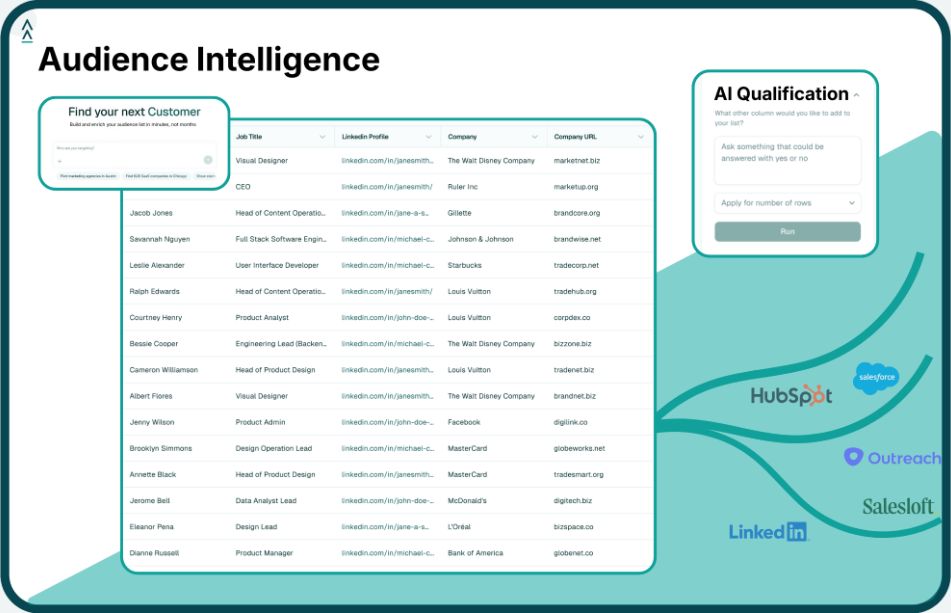
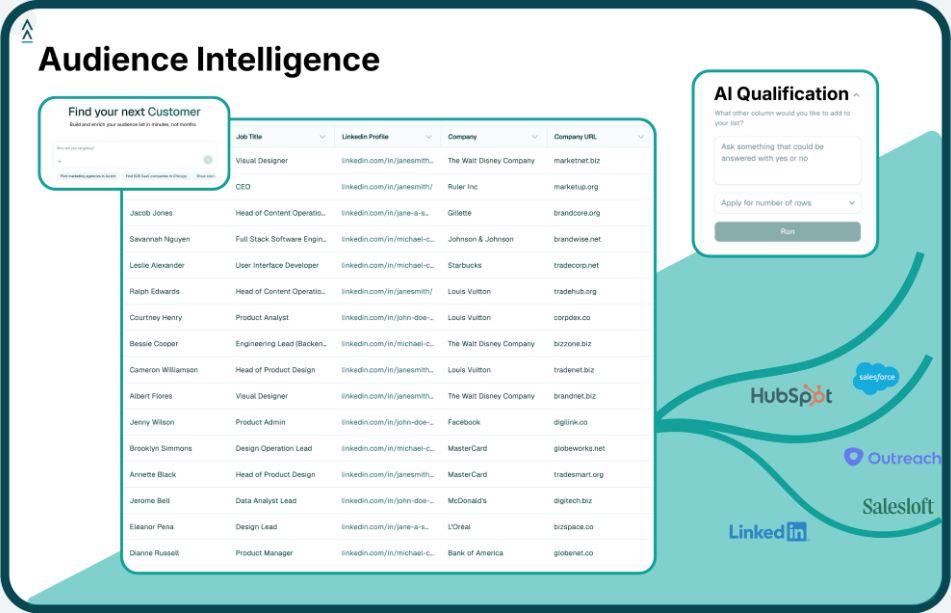
Landbase is the first agentic AI platform built to handle the full intent signal lifecycle — from detection through personalized outreach — without requiring separate tools for each step. Where most b2b intent signal platforms stop at surfacing which accounts are showing elevated research activity, Landbase's AI agents (Research, Identity, and Predictive) automatically identify the right contact within that account, enrich their profile with 1,500+ data fields, generate personalized messaging, and launch multi-channel outreach.
This matters because the biggest bottleneck in intent data is not detection — it is activation. Acting quickly on buying signals is widely recognized as critical, and most teams burn through the optimal activation window while manually interpreting dashboards, cross-referencing contact databases, and building sequences in separate tools. Landbase collapses that workflow into minutes. The platform monitors 10M+ intent signals in real-time and uses its proprietary GTM-2 Omni model to autonomously prioritize accounts, match signals to contacts, and execute outreach — all within the activation window that drives the highest conversion rates.
The data infrastructure behind Landbase supports contact-level signal resolution across a database of 300M+ verified contacts. That is a meaningful distinction from account-level-only providers like Bombora, where knowing a company is in-market still leaves sales reps searching for the right person to contact. Landbase resolves intent to the individual, enriches with firmographic, technographic, and behavioral data, and layers on natural language targeting so teams can describe their ICP in plain English and let AI find matching contacts with active intent signals.
Key capabilities:
Proven outcomes:
Credibility: Gartner Cool Vendor recognition, $30M Series A led by Sound Ventures, 8VC, and Picus Capital, and $42.5M total funding. Founded by Daniel Saks, co-founder of AppDirect.
Best for: B2B teams that want to detect intent signals and act on them automatically — without stacking 4-5 separate tools for data, enrichment, sequencing, and analytics. Ideal for organizations ready to move from manual signal interpretation to agentic AI for GTM.
Bombora operates the largest B2B intent data co-operative network, tracking billions of interactions monthly across 5,000+ publisher websites. Its Company Surge signal detection identifies accounts showing research activity above their historical baseline across more than 17,000+ intent topics.
Bombora is a detection-only provider — it does not handle outreach or activation. The platform feeds signals into your existing tech stack (CRM, ABM platforms, ad networks) through integrations with most major sales and marketing tools. What makes Bombora's position in the market distinctive is its role as the upstream data source: many other vendors on this list license Bombora data as their intent layer, which means a significant share of "intent data" in the market traces back to the same co-op network.
Key features:
Pricing: Custom; unofficial market estimates suggest $25K-$100K/year depending on topic volume and account limits, but Bombora does not publicly validate this range.
Best for: Mid-market and enterprise teams wanting the broadest third-party intent coverage as a foundational data layer to feed into existing activation tools.
6sense takes a predictive-first approach to intent signal detection. The platform processes 1 trillion buying signals daily and applies AI models to classify accounts into buying stages — Awareness, Consideration, Decision, and Purchase. From there, 6sense orchestrates activation across display advertising, sales engagement, and marketing automation within a unified ABM interface.
6sense has maintained its position as a Gartner MQ Leader for five consecutive years and received Forrester Leader recognition. Its RevvyAI agents add conversational intelligence to the platform.
Key features:
Pricing: Custom pricing. A free tier with 50 credits/month is available for basic access, but full platform pricing is not publicly documented.
Best for: Enterprise ABM teams needing full-stack intent detection, predictive scoring, and multichannel activation capabilities.
Demandbase occupies a unique position among b2b intent signal platforms by bundling intent detection with account-based advertising under one roof. The platform tracks hundreds of billions of signals monthly across 375,000+ intent keywords sourced from more than 18 billion signals per day, and applies identity resolution to connect anonymous web traffic to known accounts.
The practical advantage for marketing teams is a closed loop between detection and ad activation: you can identify accounts showing elevated research activity and immediately serve programmatic display campaigns to those same accounts without exporting data to a separate DSP. Demandbase holds both Gartner MQ Leader and Forrester Leader positions.
Key features:
Pricing: Custom; unofficial market estimates suggest $18K-$100K+/year depending on module selection and account volume, but Demandbase's public pricing page does not validate this range.
Best for: Marketing-led ABM teams wanting to combine intent data with account-based advertising and website personalization in a single platform.
ZoomInfo pairs its 500M+ contact database with Streaming Intent capabilities, adding buying signal detection to what is primarily a contact discovery platform. The ZoomInfo Copilot AI layer, launched in recent updates, surfaces intent-driven recommendations within the platform's prospecting workflows.
As a contact database with intent as an add-on, ZoomInfo is a practical choice for teams already embedded in the ZoomInfo ecosystem. Note that while older public materials tied ZoomInfo's Streaming Intent directly to Bombora, current ZoomInfo intent documentation does not clearly confirm whether the intent layer remains Bombora-sourced or has evolved to include proprietary elements. ZoomInfo holds Gartner MQ Leader status and a Gartner Customers' Choice designation.
Key features:
Pricing: ZoomInfo now offers ZoomInfo Lite with access starting at $0, and tailored pricing by usage and plan. Unofficial market estimates of legacy pricing tiers may not reflect current packaging.
Best for: Enterprise sales teams already using ZoomInfo for contact data who want to add intent signals without migrating to a new platform.
G2 Buyer Intent draws from a signal source that other buyer intent detection tools cannot access: real-time vendor evaluation behavior on the world's largest B2B software review platform. With 6 million in-market buyers every month — totaling roughly 100M+ annual software buyers — G2 surfaces signals tied to genuine purchase activity, not passive content browsing.
The signal types include profile views, competitor comparisons, category research, and review reading behavior. Because these actions represent buyers already deep in vendor evaluation — rather than general topic research — G2 intent data tends to correlate with later-stage purchase readiness compared to third-party content consumption signals from publisher co-ops.
Key features:
Pricing: Custom; unofficial estimates suggest $8K-$50K/year, but G2's public pricing materials do not validate this range or the 38%+ discount claim sometimes cited in market data.
Best for: Software and SaaS vendors wanting to capture buyers who are already actively evaluating solutions and comparing competitors on G2.
TechTarget Priority Engine is one of the few intent signal software platforms that delivers contact-level resolution natively. The platform draws signals from its network of editorial technology publications, where 32 million opt-in B2B professionals consume content across specialized IT topics. That opt-in model generates intent signals tied to individual readers — not anonymous account-level clusters.
For technology vendors, this distinction matters. Most buyer intent detection tools flag a company and leave sales reps to research who within that company is actually driving the evaluation. TechTarget skips that step because it knows exactly which person consumed which content. Forrester named Informa TechTarget a Leader and Customer Favorite in its Q1 2025 Wave, citing the fidelity of its opt-in signal model.
Key features:
Pricing: Custom pricing based on topic and geography; unofficial market estimates suggest $5K-$15K/month, but this range is not publicly verified by Informa TechTarget.
Best for: Technology vendors selling to IT decision-makers who need contact-level intent data with high signal fidelity from opted-in professionals.
Intentsify blurs the line between intent data platform and managed services agency. Rather than selling raw signal data and leaving activation to your team, the platform bundles content syndication, programmatic advertising, and sales enablement support into its offering. Its Precision Intent technology aggregates multiple third-party intent sources, while the Orbit identity graph resolves signals to buying groups — mapping the full committee, not just a single account.
This managed model appeals to teams that lack the internal ops bandwidth to operationalize intent data themselves. Forrester gave Intentsify the highest Current Offering score among all providers in its Q1 2025 Wave, recognizing the managed approach as a meaningful differentiator in a market where most platforms assume the buyer has a RevOps team to handle activation.
Key features:
Pricing: Custom pricing; Intentsify does not publicly disclose specific ranges.
Best for: Mid-to-enterprise teams that want managed intent activation services rather than a self-serve data platform.
Warmly is one of the more accessible entry points into intent data tools 2026. The platform identifies website visitors at the company level with match rates around 65%, while person-level identification rates are materially lower, typically in the 15-25% range — a distinction worth noting when comparing against vendors that emphasize company-level match rates. Warmly then bundles an AI chatbot and automated email sequences so you can act on those visitors without leaving the platform.
For SMBs and startups that cannot justify the annual contracts typical of enterprise intent providers, Warmly fills the gap. Paid tiers add Bombora third-party intent data, layering broader market signals on top of the first-party website visitor core — a practical way to graduate from website-only intelligence to multi-source coverage as budgets grow.
Key features:
Pricing: Warmly's current intent-platform pricing starts at $15,000/year for TAM and $30,000/year for Inbound. A separate, more limited free plan exists but does not cover the full intent platform offering.
Best for: SMBs and startups wanting affordable website visitor identification with built-in automation to act on signals immediately.
Apollo.io has evolved from a sales engagement platform into a multi-signal prospecting tool with intent data baked into its core workflow. The platform combines a large contact database (Apollo publicly cites figures ranging from 210M+ to 270M+ contacts across different pages) with Bombora-powered third-party intent signals, job change tracking, funding alerts, and hiring velocity data — layering multiple buying signals beyond traditional content consumption patterns.
Apollo's strength is accessibility. A free tier includes basic contact search and limited intent signals, making it one of the few intent data tools 2026 where teams can start without a five-figure annual commitment. The platform's Sequences feature lets users build automated outreach triggered by intent signals, job changes, or custom events without needing a separate sales engagement tool.
The trade-off is signal depth. Apollo's intent data is Bombora-sourced (not proprietary), and the enrichment layer — while improving — lacks the 1,500+ data fields per contact that more AI-native platforms provide. For teams that have outgrown basic prospecting and need deeper signal intelligence with automated activation, Apollo can feel like a stepping stone rather than an end-state platform. Apollo's recent acquisition of Pocus signals its intent to deepen signal intelligence capabilities.
Key features:
Pricing: Free tier available; paid plans scale by usage and feature access. Apollo's public pricing page confirms the free Starter plan, but the exact upper-tier ranges are not clearly documented publicly.
Best for: Early-stage and growth-stage sales teams that need an affordable all-in-one prospecting and intent platform without the $25K+ annual commitment of enterprise vendors.
Cognism is the intent data provider of choice for teams selling into European markets. The platform partners with Bombora for third-party intent signals, layering those signals on top of its GDPR-compliant contact database with phone-verified mobile numbers — a combination that matters in regions where data privacy regulations constrain what most US-centric providers can legally deliver.
The practical advantage is compliance without compromise. Where other buyer intent detection tools force European teams to choose between signal coverage and regulatory risk, Cognism's data collection methodology is built for GDPR, CCPA, and SOC 2 compliance from the ground up. Phone-verified direct dials — a feature Cognism emphasizes as a differentiator — give sales reps a faster path from intent signal to live conversation, particularly in markets where email deliverability is lower.
Cognism's case study data supports the speed-to-value argument. Ultima, a UK-based IT services company, reported ROI within 8 weeks of deploying Cognism's intent data and direct dial combination — with a single deal covering the cost of an annual subscription. For teams operating 6-8 month sales cycles, that payback period stands out.
Key features:
Pricing: Custom pricing; Cognism does not publicly disclose specific ranges.
Best for: B2B teams selling into EMEA markets where GDPR compliance is mandatory and phone-verified direct dials provide a meaningful outreach advantage.
Leadfeeder — the result of the 2022 merger between Leadfeeder and Echobot that originally created the Dealfront brand — rebranded back to Leadfeeder in March 2026. The platform focuses on first-party website visitor identification with a European data compliance backbone. It identifies companies visiting your website using IP-to-firmographic matching, then enriches those visitors with contact-level data and triggers automated alerts to sales reps via Slack, email, or CRM.
For teams whose primary intent signal is website traffic, Leadfeeder provides a lightweight entry point. The current pricing page emphasizes a free 14-day trial rather than a persistent free tier. Paid tiers add contact enrichment and CRM integrations. The Google Analytics integration is a differentiator for marketing teams already tracking website behavior — Leadfeeder layers account identification on top of existing analytics infrastructure.
Leadfeeder's European DNA makes it a natural fit for EMEA-focused teams. The platform maintains separate EU and US data processing environments and offers GDPR-compliant visitor tracking.
Key features:
Pricing: Custom paid plans with a free trial available. Specific pricing ranges and tier details are not clearly documented on Leadfeeder's current public materials.
Best for: Marketing teams wanting affordable website visitor identification with European data compliance, particularly those already using Google Analytics for web tracking.
One dimension most buyers overlook when evaluating intent signal software is signal decay — how quickly a buying signal loses its predictive value after detection. A company researching "enterprise CRM migration" today may have already shortlisted vendors by next week. Acting on that signal 30 days later is not just suboptimal — it is effectively cold outreach with extra steps.
The signal freshness hierarchy:
Most intent data platforms refresh signals on weekly or bi-weekly cadences. The platforms that refresh in real-time or near-real-time — Landbase (continuous monitoring of 10M+ signals), Warmly (live website visitor identification), and 6sense (daily signal processing) — give teams the tightest activation windows. If your team's median response time from signal detection to first touch exceeds 72 hours, improving that speed will likely generate more pipeline than switching intent vendors.
Many marketing leaders say their dashboards show success that does not translate to actual revenue. The problem is rarely bad data — it is bad activation. These five practices separate the minority of teams generating exceptional intent ROI from the rest.
1. Layer multiple signal types. Do not rely on a single intent source. Combine third-party content consumption (Bombora, 6sense) with second-party review signals (G2) and first-party website behavior (your analytics). Teams using layered signals report significantly better conversion rates and larger deal sizes. Add complementary buying signals — job changes, funding rounds, hiring velocity, technology adoption — for the fullest picture of purchase readiness.
2. Measure signal-to-pipeline, not signal volume. The metric that matters is not how many accounts are flagged as "in-market." It is how many of those accounts convert to qualified pipeline within 30 days. Track conversion rate from intent signal to first meeting, first meeting to opportunity, and opportunity to closed-won. If your signal-to-meeting rate is below 5%, the problem is activation, not detection.
3. Automate the first touch. Manual signal interpretation is the #1 ROI killer. By the time a rep reads a dashboard, researches the contact, writes a personalized email, and sends it through a sequence tool, the optimal activation window has often passed. Platforms with built-in outreach automation (Landbase, Warmly, Apollo) eliminate that latency by generating and sending personalized outreach within minutes of signal detection.
4. Apply signal decay scoring. Weight signals by recency — not just intensity. A moderate signal from yesterday is more actionable than a strong signal from three weeks ago. Configure your scoring model to depreciate signals at 15-20% per week, and set auto-expiration rules so stale signals do not crowd active buying intent in your pipeline.
5. Align sales and marketing on signal definitions. Define exactly what constitutes a "sales-ready" intent signal versus a "marketing nurture" signal. If sales reps receive every account that reads two blog posts on a relevant topic, they will lose trust in the data. Set thresholds — minimum topic surge score, minimum signal recency, minimum number of contacts showing intent within the same account — and enforce them consistently.
The intent signal detection market in 2026 is consolidating rapidly — Apollo acquired Pocus, Clari merged with Salesloft, HG Insights absorbed TrustRadius — and the trend is clear: standalone detection tools are giving way to platforms that bundle signals with activation. Gartner predicts AI agents will vastly outnumber sellers by 2028, and the majority of teams that still cannot translate intent data into pipeline are running out of time to close the activation gap.
If your primary need is broad third-party signal coverage as a data layer, Bombora remains the industry standard. If you need a full ABM orchestration suite with predictive scoring, 6sense and Demandbase serve enterprise programs well. For technology-sector contact-level data, TechTarget is unmatched. For EMEA-focused teams, Cognism and Leadfeeder provide GDPR-compliant alternatives. For budget-constrained teams, Warmly, Apollo.io, and Leadfeeder offer accessible starting points that make intent data available without a five-figure commitment.
Landbase addresses the activation gap directly by unifying intent detection, contact-level resolution, AI-driven enrichment, and automated outreach in a single agentic AI platform. Instead of stacking 4-5 separate tools — and losing critical time at every handoff — Landbase's AI agents move from signal detection to personalized multi-channel outreach in minutes. With 300M+ contacts, 1,500+ enrichment fields, and a track record of delivering 4-7x conversion improvements for customers like P2 Telecom, Oyster, and QA Wolf, the platform is built for teams that need their intent data to drive revenue, not just populate dashboards.
Intent signal detection tools are B2B software platforms that identify when companies or individuals are actively researching topics related to your product or service. They monitor signals like content consumption across publisher networks, review site activity, website visits, search behavior, and organizational changes (hiring, funding, technology adoption) to flag accounts and contacts showing elevated purchase intent.
Buyer intent data works by monitoring digital behavior across multiple sources — publisher networks, review sites, search engines, and your own website — to identify patterns that suggest a company is actively evaluating solutions. When an account's research activity on relevant topics exceeds its historical baseline, the platform flags it as "in-market." Sales teams then prioritize these accounts over cold prospects, focusing outreach on buyers already showing purchase signals.
First-party intent data comes from your own properties: website visits, form fills, content downloads, and chatbot interactions. Third-party intent data comes from external sources: content consumption across publisher networks (like Bombora's 5,000+ B2B site co-op), search behavior, and social engagement across the broader web. Second-party intent data comes from partner platforms where buyers actively research vendors, such as G2 or TrustRadius review activity. Combining multiple signal types yields the strongest results — teams using layered signals report significantly better conversion rates.
Traditional intent data providers (Bombora, G2, TechTarget) focus on signal detection — they surface which accounts are in-market and leave activation to your team. AI-powered platforms go further by automating the steps between detection and action: identifying the right contact, enriching their profile, generating personalized messaging, and executing outreach. Gartner predicts AI agents will vastly outnumber sellers by 2028, and this shift from manual signal interpretation to autonomous action is reshaping the intent data category.
ROI varies significantly based on activation capability. While some market reports cite high adoption figures and conversion improvements of 25-40%, these benchmarks are not consistently supported by high-quality primary research. What is well-established is that relatively few teams report exceptional ROI, suggesting that signal detection alone is not enough. The strongest returns come from platforms that can operationalize signals quickly — teams acting within the optimal activation window see substantially higher conversion rates compared to those with slower response times.
Contact-level intent data is generally more actionable because it identifies the specific individual showing purchase signals, not just the company. With account-level data, sales reps still need to research and identify the right contact — a process that can take hours per account and often exceeds the optimal activation window. Contact-level providers (TechTarget, Landbase) resolve intent to the person, enabling immediate personalized outreach without manual research steps.
For small businesses and startups with limited budgets, Warmly offers one of the more accessible entry points with affordable website visitor identification and a built-in AI chatbot for immediate activation. Landbase also provides a strong option for growing teams that want to skip the tool-stacking phase entirely — its agentic AI platform handles detection, enrichment, and outreach in one workflow, which can reduce total cost of ownership compared to assembling separate tools. The key consideration at smaller scale is not just data cost but the operational overhead of activating signals manually versus using a platform that automates that process.
Intent signals lose predictive value quickly. Signals within the first 48 hours carry the highest conversion potential — teams acting in this window see substantially higher conversion rates. Between 3-14 days, signals retain moderate value but should be weighted by recency in scoring models. After 30 days, most intent signals should be treated as historical context rather than active buying indicators. Best practice is to apply a 15-20% weekly decay function in your scoring model and set auto-expiration rules so stale signals do not crowd active purchase intent in your pipeline.
Several major acquisitions are consolidating the intent signal landscape. Apollo acquired Pocus to add signal intelligence capabilities beyond its Bombora-licensed data. Clari merged with Salesloft, combining revenue intelligence with sales engagement. TrustRadius was acquired by HG Insights, merging review-based intent with technographic data. HubSpot absorbed Clearbit, embedding enrichment directly into its CRM. These moves reflect a broader trend toward platforms that combine multiple signal types and activation capabilities rather than offering point solutions for detection alone. For buyers, consolidation means fewer standalone vendors and more pressure to evaluate platforms based on their full activation stack — not just signal quality.
Tool and strategies modern teams need to help their companies grow.