.png)
.png)

Daniel Saks
Chief Executive Officer


Choosing between traditional sales intelligence platforms and agentic AI-driven GTM systems can determine your revenue team's efficiency and growth trajectory. While ZoomInfo provides comprehensive B2B data with manual workflow requirements, Landbase delivers autonomous campaign execution through its multi-agent AI system. Understanding these fundamental differences—between data access and autonomous execution—helps RevOps teams select the approach that matches their need for speed, automation, and conversion optimization.
When revenue teams need to accelerate growth in competitive markets, the choice between data-centric platforms and autonomous AI execution becomes critical. Two distinct approaches—ZoomInfo and Landbase—represent fundamentally different philosophies toward B2B go-to-market intelligence. While ZoomInfo operates as a comprehensive B2B database with AI-assisted features requiring manual workflow setup, Landbase provides an agentic AI GTM platform that autonomously executes entire campaigns from targeting to optimization. This comparison highlights why Landbase's execution-first approach stands out for modern RevOps teams focused on automation, speed, and measurable pipeline growth.
ZoomInfo positions itself as a leading B2B intelligence platform with extensive company and contact coverage, proprietary intent data, and enterprise prospecting capabilities. The platform provides firmographic, technographic, and intent data while enabling teams to build workflows, set up campaigns, and optimize performance over time.
Landbase takes a different approach centered around autonomous go-to-market execution through its proprietary GTM Omni multi-agent system. Rather than only providing data for manual workflows, Landbase's AI agents collaborate continuously to execute complete GTM workflows—from market mapping to campaign optimization—with minimal human supervision. The platform has gained traction with modern RevOps organizations seeking AI-powered efficiency and workflow automation.
The fundamental difference lies in delivery: ZoomInfo provides data infrastructure for teams to work with, while Landbase combines data, automation, and AI agents to execute campaigns end-to-end.
ZoomInfo's data-centric capabilities include:
This data-first approach supports enterprises with established workflows and RevOps teams that manage campaign setup and optimization internally.
Landbase's autonomous execution capabilities focus on end-to-end GTM automation:
The execution-first model helps eliminate the gap between data access and campaign results that often exists with data-centric approaches.
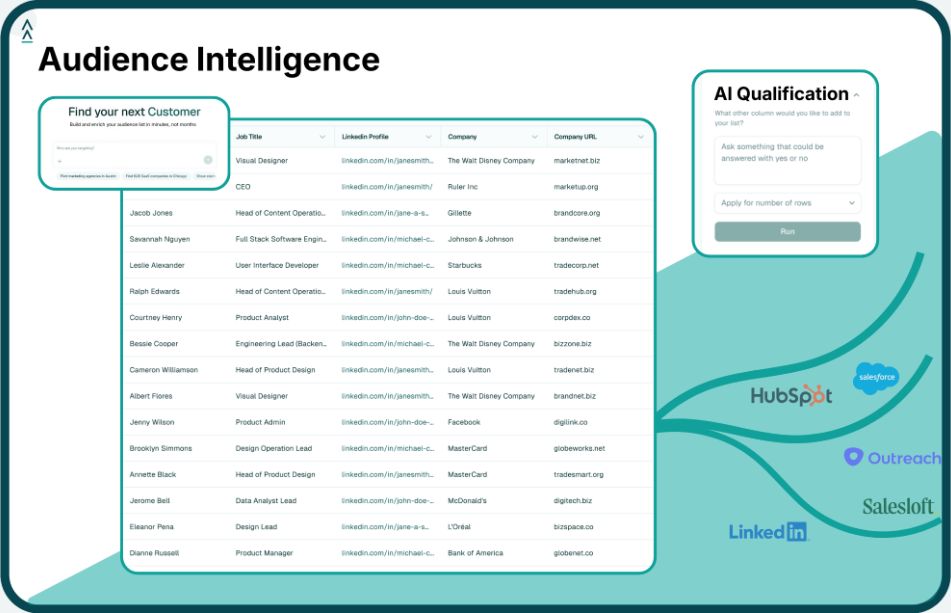
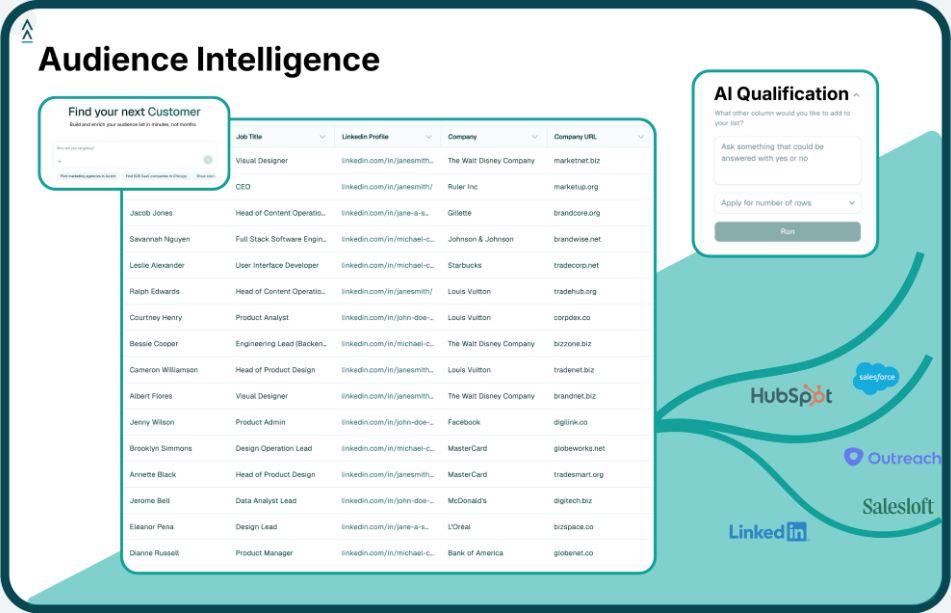
For example, while ZoomInfo may provide extensive account data requiring manual list building and campaign setup, Landbase's AI agents can launch multi-channel campaigns in minutes after describing your ICP in plain text. This speed advantage is especially valuable for agile GTM teams where rapid execution drives pipeline creation.
Both platforms offer extensive B2B databases, but their approach to targeting differs significantly.
ZoomInfo's targeting approach relies on:
This approach provides broad data coverage while allowing teams to define targeting strategies internally.
Landbase's targeting approach leverages autonomous AI:
The key difference is autonomy versus manual effort. ZoomInfo provides a strong data foundation for manual targeting workflows, while Landbase's AI agents continuously qualify, score, and prioritize high-fit accounts across your TAM with minimal ongoing intervention.
For RevOps teams managing complex ICPs across multiple segments, Landbase's autonomous approach can significantly reduce manual research effort while improving targeting precision through continuous AI optimization.
The most significant difference between these platforms emerges in campaign execution capabilities.
ZoomInfo's outreach capabilities include:
This approach gives teams flexibility and control over campaign execution.
Landbase's autonomous outreach capabilities feature:
The autonomy difference is substantial. ZoomInfo workflows typically require manual campaign configuration and ongoing optimization, while Landbase's AI agents continuously manage and improve outreach performance.
Customer success stories highlight Landbase's ability to streamline outbound workflows and accelerate campaign launches while helping teams focus on strategy and revenue growth.
The pricing structures reflect each platform's delivery philosophy and target audience.
ZoomInfo typically uses enterprise-oriented pricing structures with annual agreements, usage-based considerations, and additional modules for expanded functionality.
Landbase offers a subscription-based SaaS platform designed to unify data, outreach, deliverability, and AI optimization in a single solution. For tailored pricing information and platform recommendations, contact Landbase.
When evaluating total cost of ownership, many teams consider factors such as workflow consolidation, operational efficiency, automation benefits, and reduced tool sprawl alongside direct software costs.
For organizations prioritizing AI-driven automation and workflow efficiency, Landbase's integrated approach can simplify go-to-market operations while supporting scalable growth.
Both platforms offer CRM integrations, but their technical requirements differ.
ZoomInfo's integration approach includes:
Landbase's integration approach includes:
For RevOps teams focused on operational simplicity, Landbase's built-in deliverability infrastructure and unified workflow approach can reduce the technical overhead associated with managing multiple disconnected systems.
Customer feedback often highlights Landbase's ability to streamline outbound execution and improve deliverability management through automation.
Both platforms highlight customer outcomes, though the focus of those results differs.
ZoomInfo emphasizes:
Landbase emphasizes:
For revenue teams working toward ambitious pipeline goals, automation and execution speed can be significant differentiators. Landbase's autonomous campaign orchestration and continuous optimization capabilities are designed to help teams move from planning to pipeline creation more efficiently.
Customer stories frequently highlight the ability to launch campaigns quickly and scale outbound operations without increasing manual workload.
ZoomInfo primarily serves organizations that:
Landbase is designed for revenue teams that:
This distinction matters because organizations evaluate GTM platforms differently based on operational maturity, internal resources, and automation priorities.
For companies embracing AI-driven GTM strategies, Landbase represents an evolution toward autonomous execution, helping teams move beyond manual workflows and fragmented tooling.
Modern revenue teams face growing pressure to accelerate pipeline creation while improving efficiency and operational alignment.
Key advantages of Landbase's agentic AI approach include:
For revenue teams seeking AI-powered automation and scalable outbound execution, Landbase offers a modern go-to-market platform that combines intelligence, orchestration, and autonomous optimization in a single environment.
Teams interested in tailored onboarding guidance, workflow recommendations, or pricing details can contact Landbase for additional information.
Landbase's agentic AI approach differs from traditional sales intelligence platforms by combining data intelligence with autonomous workflow execution. While platforms like ZoomInfo provide data and prospecting infrastructure, Landbase's GTM Omni multi-agent system helps automate targeting, qualification, outreach, and optimization workflows. This allows teams to launch campaigns faster while AI agents continuously improve performance based on campaign activity and engagement signals.
Landbase offers several AI-powered lead generation capabilities, including Agentic Search, automated qualification, enrichment workflows, and real-time signal monitoring. Teams can describe an ICP in plain language and receive verified, scored account lists ready for CRM activation. The platform also includes built-in deliverability infrastructure and AI-driven optimization workflows that support scalable outbound execution.
Yes. Landbase is designed to automate large portions of the go-to-market workflow through AI-powered orchestration. AI agents support market mapping, account qualification, outreach execution, and performance optimization workflows. This enables RevOps teams to reduce manual operational work while focusing more on strategy, forecasting, and revenue acceleration.
Landbase supports enrichment quality through multi-source enrichment workflows, layered verification processes, and continuous signal ingestion. The platform combines large-scale B2B account coverage with AI-powered validation and enrichment automation to help maintain accurate targeting and qualification data across campaigns.
Organizations implementing Landbase often focus on benefits such as improved workflow efficiency, stronger outbound performance, faster campaign launches, and operational consolidation. By combining targeting, enrichment, outreach, optimization, and deliverability into one platform, Landbase helps teams streamline GTM execution and improve overall pipeline generation efficiency.
Landbase provides customized pricing recommendations based on each organization's GTM goals, workflow requirements, and scaling needs. Teams interested in tailored pricing details, onboarding guidance, or platform recommendations are encouraged to contact Landbase or request a demo.
Tool and strategies modern teams need to help their companies grow.