.png)
.png)

Daniel Saks
Chief Executive Officer


Go-to-market teams face unique orchestration challenges that general-purpose data tools are not always designed to address directly. While 80,000+ organizations leverage Apache Airflow for data engineering workflows, GTM engineers need specialized platforms that can enrich contact data, process intent signals, and trigger campaigns based on buying behavior, all while maintaining data integrity across the revenue stack.
Landbase, an agentic AI GTM intelligence platform, addresses these specific needs by combining autonomous AI agents, verified B2B data, and signal-based workflow automation in a single system. For GTM engineers building audience discovery and campaign orchestration systems, having the right data orchestration tool can mean the difference between manual research cycles and automated, high-conversion revenue pipelines.
We analyzed 10 orchestration platforms across four dimensions: GTM engineering fit, technical capabilities, adoption metrics, and implementation ease. This guide ranks the best tools specifically for GTM engineering workflows in 2026.
Traditional data orchestration focuses on ETL pipelines and warehouse transformations. GTM orchestration, however, requires a different approach, managing dynamic data flows between enrichment providers, intent signals, CRM systems, and outreach platforms.
GTM engineers need tools that can:
This specialized workflow benefits from platforms that understand the unique data structures of B2B sales and marketing alongside general data engineering principles. The right orchestration tool eliminates manual research bottlenecks while ensuring data quality for revenue-critical processes.
Best For: Enterprises seeking autonomous GTM workflows with minimal manual intervention
Pricing: For tailored pricing details, contact Landbase to discuss the right deployment plan.
Landbase is the only platform purpose-built for GTM data orchestration, combining a multi-agent AI system with comprehensive B2B data and signal processing capabilities. Its GTM Omni model, trained on 40M+ B2B campaigns and 175M+ sales conversations, orchestrates entire GTM workflows with minimal supervision.
Landbase is designed specifically for GTM engineers, helping teams coordinate workflows in one unified system. Customers report 4-7x higher conversion rates compared with traditional GTM stacks, with one customer achieving 50% improvement in qualification quality after replacing manual research processes.
As a Gartner Cool Vendor 2025, Landbase has secured $30M in Series A funding and serves enterprise customers including HP, Salesforce, and HubSpot. The platform's agentic architecture enables campaigns to launch in minutes rather than weeks, reducing manual research effort by approximately 80%.
Best For: Technical GTM teams with data engineering resources
Price: Free (open-source); managed services from ~$1,000/month
Apache Airflow remains the industry standard for workflow orchestration, with 80,000+ organizations and 31M downloads/month as of February 2025. Originally developed by Airbnb, Airflow uses directed acyclic graphs (DAGs) to define workflow dependencies.
Airflow's massive ecosystem makes it a familiar choice for technical teams building custom GTM data pipelines. It is designed around general workflow orchestration, and its flexibility allows engineers to build highly tailored systems.
For GTM engineers with data engineering support, Airflow offers unmatched integration breadth and community resources. Implementing GTM-specific features like intent signal processing may involve custom development.
Best For: Teams seeking modern Python orchestration with faster time-to-value
Price: Free tier; paid plans from $0.20/hour runtime
Prefect represents a modern approach to workflow orchestration, offering a streamlined API and intuitive design. Founded in 2018 by former Airflow contributor Jeremiah Lowin, Prefect focuses on developer experience while maintaining enterprise-grade capabilities.
Backed by Tiger Global and Bessemer Venture Partners, Prefect offers a streamlined implementation experience while maintaining strong orchestration capabilities.
For GTM engineers building event-driven workflows (e.g., triggering campaigns when intent signals appear), Prefect's webhook-based triggers support use cases beyond purely scheduled systems. The platform's cleaner API reduces development time while maintaining the flexibility needed for complex GTM pipelines.
Best For: Analytics engineering teams using dbt for GTM data transformation
Price: Free open-source; Dagster+ (managed) with custom pricing
Dagster takes an asset-centric approach to data orchestration, treating data workflows as versioned, testable software artifacts. This approach provides strong data quality controls and clear visibility into pipeline dependencies.
For GTM engineering teams working closely with analytics teams using data, Dagster provides visibility into data quality and lineage. Its asset-centric model ensures that transformations are properly versioned and tested, reducing errors in critical GTM reports and dashboards.
Dagster's integration with Alation for enterprise metadata management adds governance capabilities important for regulated industries. While not GTM-specific, its focus on data quality makes it valuable for teams where accurate pipeline metrics directly impact revenue decisions.
Best For: RevOps teams focused on data enrichment workflows
Price: Free tier available; paid plans from approximately $185/month (annual billing)
Clay is widely used for GTM data enrichment, providing a spreadsheet-like interface for building data operations workflows. The platform consolidates 150+ data provider integrations into unified enrichment workflows.
Clay's GTM-specific focus makes it accessible to RevOps teams without engineering resources. The platform's spreadsheet interface lowers the barrier to entry while still providing powerful automation capabilities. For teams primarily focused on data enrichment rather than full campaign orchestration, Clay offers an excellent balance of power and usability.
Clay primarily focuses on data enrichment workflows. Teams seeking broader autonomous GTM execution can evaluate Landbase for unified targeting, qualification, enrichment, and campaign orchestration.
Best For: Technical GTM teams requiring self-hosted automation
Price: Free (self-hosted); Cloud from $24/month
n8n provides open-source workflow automation with full control over data through self-hosted deployment. The platform's fair-code license allows customization and self-hosting while maintaining an active community.
For GTM engineering teams concerned about data privacy or requiring custom integrations, n8n's self-hosting capability provides significant advantages. The platform's visual workflow builder makes automation accessible to non-developers while still offering the flexibility needed for complex use cases.
n8n serves as a middle ground between no-code tools and full programming frameworks. Its extensive integration library can support many GTM stack requirements, with GTM-specific capabilities such as intent signal processing typically handled through custom workflows or connected tools.
Best For: Analytics engineering teams transforming GTM data in warehouses
Price: dbt Core (free); dbt Cloud from $100/month
dbt has become the standard for analytics engineering, enabling teams to transform data using SQL-based models. While not a traditional orchestration tool, dbt's scheduling capabilities make it essential for GTM data workflows.
For GTM engineering teams working with pipeline metrics, conversion funnels, and revenue reporting, dbt provides the transformation layer that feeds into orchestration workflows.
While dbt handles transformations inside the warehouse, it typically integrates with orchestration tools like Airflow or Prefect for end-to-end workflow management. For teams focused on analytics rather than prospecting, dbt remains essential infrastructure.
Best For: Analyst-friendly lightweight orchestration
Price: Free open-source
Mage provides a lightweight alternative to complex orchestration platforms, featuring a notebook-style interface that appeals to analysts rather than engineers. The platform emphasizes fast setup with minimal configuration.
As noted by Kanerika, Mage is a "lightweight tool targeting folks that want to build pipelines without dealing with too many config files." For GTM engineering teams without dedicated data engineers, Mage provides an accessible entry point into orchestration.
The notebook interface makes Mage particularly appealing to analysts who prefer interactive development over traditional coding environments. Mage is often a practical fit for teams with simpler orchestration requirements and analyst-led workflows.
Best For: Cloud-native teams running on Kubernetes
Price: Open-source (free); Enterprise with custom pricing
Kestra represents the next generation of cloud-native orchestration, designed specifically for containerized workflows running on Kubernetes. The platform's modern architecture appeals to teams already invested in cloud infrastructure.
For GTM engineering teams operating in cloud-native environments, Kestra provides orchestration designed from the ground up for containerized workflows. Kestra's cloud-native architecture is aligned with teams already invested in Kubernetes. The platform's growing adoption reflects the industry's shift toward containerized, cloud-first infrastructure.
Best For: GTM teams standardized on AWS infrastructure
Price: Pay-per-use ($25 per million state transitions)
AWS Step Functions provides serverless workflow orchestration deeply integrated with the AWS ecosystem. The platform eliminates infrastructure management while providing native integration with AWS services.
For GTM teams already standardized on AWS, Step Functions provides native orchestration with minimal operational overhead. The serverless architecture eliminates infrastructure management concerns, while the pay-per-use model ensures cost efficiency. Step Functions is AWS-specific, so teams using multi-cloud or non-AWS infrastructure may evaluate it alongside other orchestration options.
When evaluating data orchestration tools for GTM engineering, Landbase stands out as the superior option for teams seeking purpose-built GTM automation. While other platforms offer value in specific areas, Landbase's comprehensive approach addresses the unique data orchestration challenges of modern revenue teams.
Landbase combines autonomous AI agents, verified B2B data, and signal-based workflow automation in a single platform. While general-purpose orchestration tools can be configured for many workflows, Landbase delivers immediate GTM value through its multi-agent AI system that continuously qualifies, scores, and prioritizes high-fit accounts across the total addressable market.
The platform's GTM Omni model orchestrates entire GTM workflows with minimal supervision. This supports fast campaign launches while reducing manual research effort by approximately 80%.
Landbase customers report 4-7x higher conversion rates compared with traditional GTM stacks, with one customer achieving 50% improvement in qualification quality after replacing manual research processes. The platform's comprehensive data includes 300M+ verified contacts and 24M+ accounts with 4-layer verification across 20+ data providers.
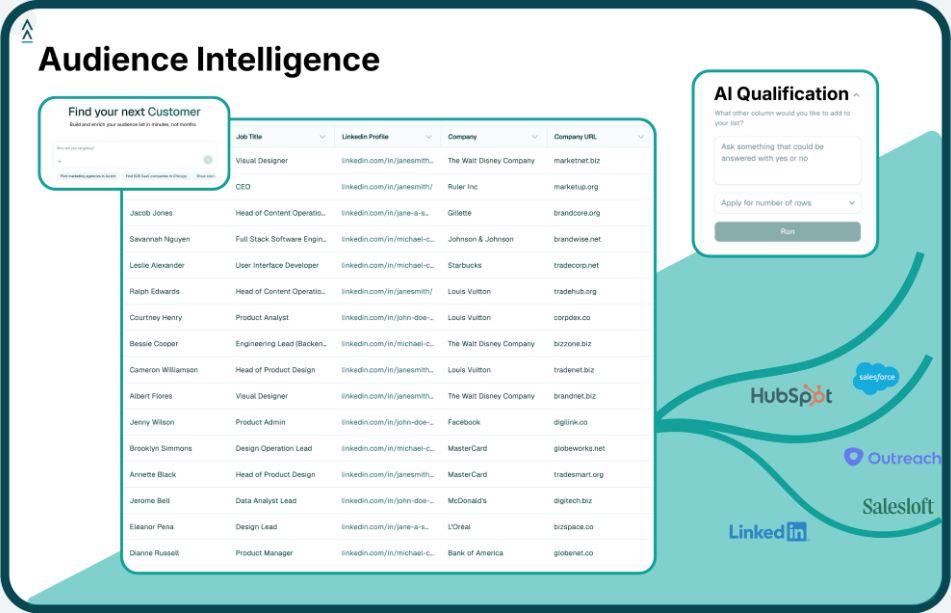
For GTM engineers building audience discovery and campaign orchestration systems, Landbase helps coordinate core workflows in one platform. Its Agentic Search feature allows teams to describe their ICP in plain text and receive verified, scored account lists ready for CRM integration. The platform's Signals capability processes real-time intent data including funding announcements, hiring trends, and technographic shifts to focus outreach on accounts showing meaningful change.
Ready to transform your GTM orchestration? Request a demo to see how Landbase can accelerate your revenue workflows.
Data orchestration for GTM engineering involves managing dynamic data flows between enrichment providers, intent signals, CRM systems, and outreach platforms. Unlike traditional data orchestration focused on ETL pipelines, GTM orchestration requires specialized capabilities for enriching contact data, scoring accounts against ICP criteria, processing real-time signals, and automating campaign triggers. The right orchestration tool maintains data integrity across the revenue technology stack while eliminating manual research bottlenecks.
Landbase's Agentic AI platform enhances GTM efficiency through autonomous AI agents that continuously qualify, score, and prioritize high-fit accounts with minimal supervision. The GTM Omni model orchestrates entire GTM workflows and reduces manual research effort by approximately 80%. Customers report 4-7x higher conversion rates compared with traditional GTM stacks, demonstrating strong performance across efficiency and targeting accuracy.
Integrating sales engagement platforms with data orchestration tools ensures that outreach efforts are based on accurate, up-to-date prospect information, enabling seamless handoffs between marketing and sales teams. This integration maintains CRM data integrity and allows for dynamic campaign triggering based on real-time signals like funding announcements or hiring trends. Purpose-built platforms like Landbase provide native integrations with CRM and marketing tools, facilitating streamlined sales engagement workflows with streamlined implementation.
Yes, purpose-built GTM orchestration tools excel at B2B lead generation and qualification by automating account evaluation against specific ICP criteria. Landbase's AI agents automatically evaluate every account and answer custom fit questions, driving precise lead generation with minimal manual effort. The platform's waterfall enrichment across 20+ data providers with 4-layer verification ensures high data quality throughout the qualification process, resulting in more accurate targeting and higher conversion rates.
Intent data and signals enable proactive, dynamic GTM strategies by identifying accounts showing meaningful change indicators like hiring activity, funding rounds, or technographic shifts. This real-time intelligence allows sales teams to execute timely outreach when prospects are most receptive, converting at significantly higher rates than static prospecting approaches. Landbase tracks thousands of intent signals to focus teams on accounts with active buying signals, enabling teams to act on opportunities at optimal moments in the buyer journey.
GTM engineers should evaluate orchestration tools based on GTM-specific capabilities including autonomous qualification against ICP criteria, comprehensive B2B data with verification processes, real-time signal processing, and seamless CRM integration. Purpose-built GTM platforms typically deliver immediate value for teams that want GTM-specific workflows without heavy configuration. Engineers should also consider the platform's ability to reduce manual research effort, maintain data quality, and scale with growing team requirements.

Tool and strategies modern teams need to help their companies grow.






