.png)
.png)

Daniel Saks
Chief Executive Officer


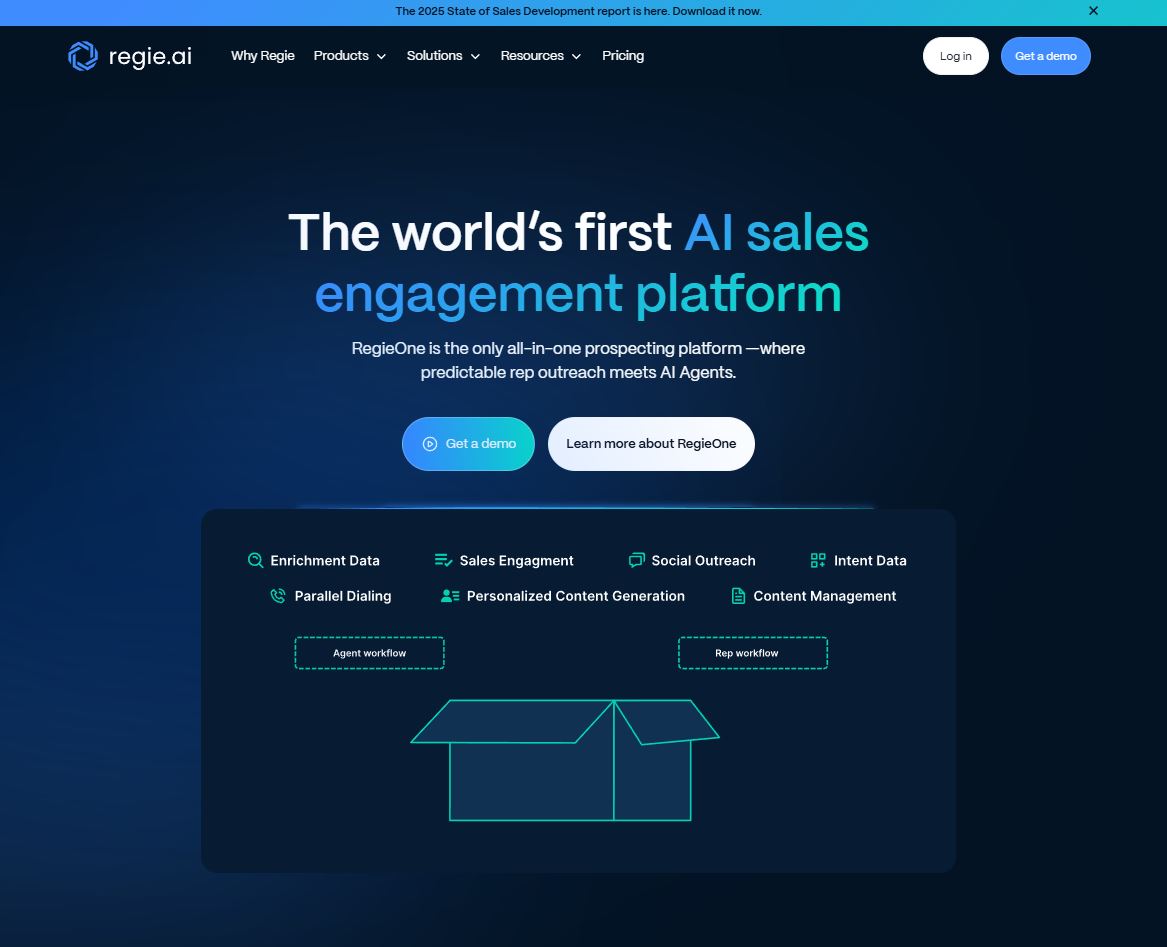

Regie.ai is often evaluated by GTM teams looking for AI-assisted prospecting, sales engagement, AI SDR workflows, sequencing, and outbound support in one platform. For RevOps teams, GTM engineers, Sales Ops teams, and growth operators, the broader question is whether the team needs a sales engagement system, a GTM data layer, or a workflow tool that prepares better account and contact data before outreach begins.
Some teams need AI-assisted messaging, sequencing, and rep productivity tools. Others need more control over audience creation, enrichment, matching, data cleanup, and structured exports. That distinction matters because sales engagement platforms still depend on the quality of the GTM data flowing into them.
Primary Use Case: Technical GTM teams, RevOps engineers, Sales Ops teams, growth teams, and AI agents that need structured B2B audience data inside terminal and AI-assisted workflows.
Plan Details: Contact Landbase for tailored pricing details.
Landbase gives technical revenue teams a CLI-first way to work with B2B audience data through Landbase CLI. Teams can search for audiences, enrich company and contact records, match existing data, manage datasets, and export structured results directly from the command line, Claude Code, Codex, scripts, dashboards, notebooks, and other technical environments.
For teams comparing Regie.ai alternatives, Landbase fits the GTM data layer behind AI sales workflows. AI engagement platforms can help with messaging, sequencing, and sales activity, but those workflows still depend on accurate audiences, complete contact data, and structured outputs that can move into CRM, outbound, analytics, and agentic systems.
Landbase CLI gives GTM operators and AI agents direct access to B2B audience data from terminal and LLM-assisted environments. Instead of relying only on static databases, fixed filters, manual exports, or spreadsheet-heavy processes, teams can create, enrich, match, manage, and download GTM datasets for downstream workflows.
Landbase is listed first because it supports the data workflow that comes before sales engagement. While Regie.ai and similar platforms focus on AI-assisted outbound, sequencing, and rep workflows, Landbase helps technical GTM teams prepare the account and contact data those systems rely on.
This is useful for teams that want more control over audience quality, enrichment, matching, and export workflows. RevOps teams, GTM engineers, and technical founders can use Landbase CLI to turn targeting criteria into usable datasets, improve existing lists, and move structured data into the systems where GTM work happens.
The CLI-first approach also supports agentic workflows. By making GTM data available from terminal and LLM-assisted environments, Landbase helps teams connect audience creation, enrichment, matching, and structured downloads with scripts, dashboards, CRMs, outbound platforms, and AI agents.
Best For: Technical GTM teams, RevOps engineers, and AI agents that need a flexible GTM data layer for audience creation, enrichment, matching, dataset management, and structured exports from the command line.
Primary Use Case: Sales teams that want prospecting data, enrichment, outbound email, calling, and CRM sync in one workspace.
Apollo.io combines company search, contact search, enrichment, email sequencing, calling, and CRM-connected sales workflows. It is commonly evaluated by startups, SMBs, and mid-market teams that want prospecting and engagement activity in one platform.
Apollo.io is included because it combines data access and engagement capabilities in one platform. For teams that want fewer handoffs between prospect discovery and outreach, this can simplify day-to-day sales workflows.
Its fit is strongest for teams that want a web-based prospecting and engagement workspace. Technical teams that need command-line access, structured exports, or more programmable GTM data workflows may still evaluate a CLI-first data layer upstream.
Primary Fit: Sales teams that want prospecting and engagement features in one sales workspace.
Primary Use Case: Enterprise revenue teams that need B2B sales intelligence, company data, contact data, intent data, and CRM-connected workflows.
ZoomInfo is a B2B data and sales intelligence platform used for account research, contact discovery, intent data, technographics, and go-to-market planning. It is commonly evaluated by larger revenue teams that need broad sales intelligence workflows.
ZoomInfo is included because it is often part of the evaluation set for teams comparing sales intelligence and GTM data tools. It can support teams that need broad account and contact records before those records move into CRM or engagement systems.
Its fit is strongest for organizations that want an established sales intelligence platform with enterprise workflows. Technical teams that need CLI-first access, structured exports, and agent-ready data operations may evaluate Landbase as a more programmatic option.
Primary Fit: Enterprise teams that need broad B2B sales intelligence and account research workflows.
Primary Use Case: Revenue teams that need sales engagement, sequence management, deal workflows, conversation intelligence, and AI-assisted sales execution.
Outreach focuses on sales execution workflows for revenue teams. It supports sequencing, rep task management, deal visibility, forecasting, conversation intelligence, and AI-assisted workflows for sales organizations.
Outreach is included because many teams evaluating Regie.ai alternatives are also evaluating sales engagement platforms. It is most relevant when the team already has a data source and needs a system for managing outreach, rep activity, and pipeline execution.
Its fit is strongest for sales organizations focused on engagement and revenue execution. Teams that need to build, enrich, and export B2B audience data before engagement may still need a separate GTM data layer.
Primary Fit: Revenue teams that need sales engagement, deal workflows, and rep execution support.
Primary Use Case: Sales organizations that need revenue orchestration, sales engagement, conversation intelligence, and forecasting workflows.
Salesloft provides revenue orchestration capabilities across engagement, pipeline workflows, conversation intelligence, and sales team productivity. It is commonly evaluated by teams that want to coordinate sales activity from first touch through later pipeline stages.
Salesloft is included because it is a common option for teams evaluating sales engagement and revenue workflow platforms. It can help sales organizations manage rep activity, follow-up, coaching, and pipeline execution in one system.
Its fit is strongest when a team already has a process for sourcing and preparing prospect data. Teams that need more flexible audience creation, enrichment, matching, and structured exports may still need a GTM data layer before engagement workflows begin.
Primary Fit: Sales organizations that need revenue orchestration and engagement workflows for rep productivity.
Primary Use Case: Sales teams that want AI-assisted prospecting, signal-based selling, research support, multichannel outreach, and deliverability workflows.
Amplemarket offers AI-assisted sales workflows that combine prospecting, research, signals, outreach, and deliverability support. Its Duo Copilot system is positioned around helping sales teams find relevant accounts, research buyers, and support outbound activity.
Amplemarket is included because it combines several parts of the outbound workflow, including signals, research, messaging, and deliverability. This can be useful for teams that want AI assistance around prospecting and outbound preparation.
Its fit is strongest for teams that want a guided sales workflow rather than a purely technical data layer. Teams that need direct command-line access to structured B2B data may evaluate Landbase for the data preparation layer before outreach.
Primary Fit: Sales teams that want AI-assisted prospecting and outbound workflows with signal and deliverability support.
Primary Use Case: Teams that need multichannel sales engagement, AI-assisted outreach, CRM sync, and outbound automation.
Reply.io provides sales engagement workflows across channels such as email, LinkedIn, phone, and SMS. It is commonly evaluated by teams that want to manage outbound campaigns and automate parts of sales follow-up.
Reply.io is included because it focuses on engagement execution rather than GTM data infrastructure. It can support teams that already have contact data and need a way to run multichannel outbound workflows.
Its fit is strongest for sales teams that want campaign automation and multichannel sequencing. Teams that need audience building, enrichment, matching, and structured exports may need an upstream data workflow before using an engagement platform.
Primary Fit: Sales teams that want multichannel outbound execution and AI-assisted engagement workflows.
Landbase CLI gives technical GTM teams direct access to B2B audience data from the terminal. Instead of relying only on web interfaces, fixed filters, manual exports, or spreadsheet-heavy processes, teams can work with GTM data inside Claude Code, Codex, scripts, dashboards, notebooks, and other technical environments.
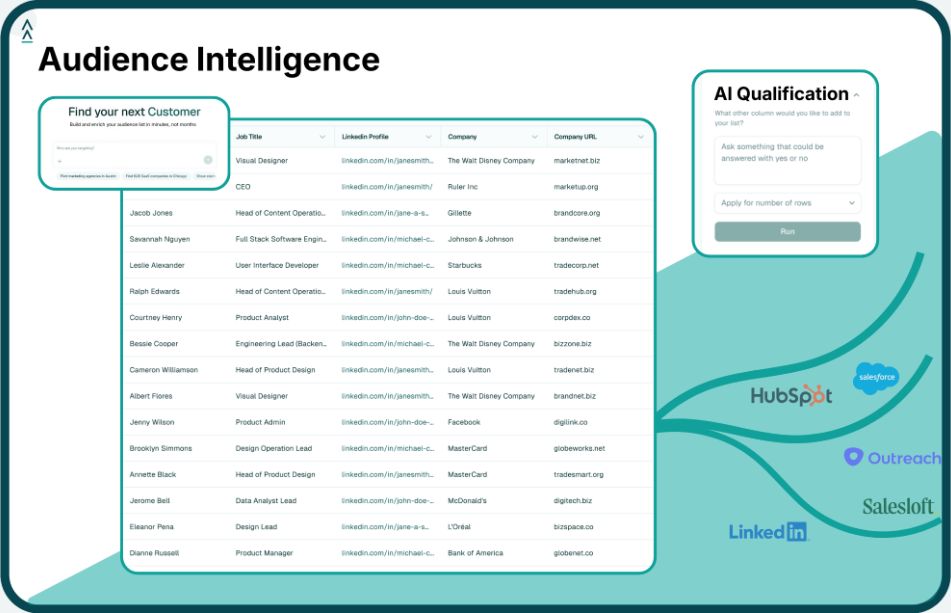
Landbase CLI lets users describe the audience, account list, or GTM segment they need in plain English and return structured results. This helps teams move from ICP criteria to usable account and contact data without depending only on preset filters or manual database navigation.
Landbase CLI supports the practical work that happens before GTM execution. Teams can enrich company and contact records, match partial data from uploaded spreadsheets or CRM exports, manage datasets, and prepare records for the next workflow. This makes Landbase useful as a data layer before sales engagement, AI SDR workflows, analytics, or CRM operations.
Results can be exported in machine-readable formats such as JSONL, CSV, and Parquet. These outputs work well with CRMs, dashboards, scripts, notebooks, outbound systems, and AI agent workflows. This helps technical teams move GTM data across the systems where revenue operations already happen.
Landbase CLI is designed for humans and AI coding agents. Teams can use it inside Claude Code, Codex, and other LLM-assisted environments so agents can search, enrich, transform, and export GTM data more easily. This supports repeatable workflows for GTM engineers, RevOps teams, growth teams, and technical founders.
For GTM teams evaluating Regie.ai alternatives, Landbase provides a different approach: a CLI-first GTM data layer that helps teams prepare, enrich, and operationalize B2B audience data before sales engagement workflows take over. Teams can review Landbase CLI, explore B2B audience data, or connect with Landbase through the demo page.
Regie.ai focuses on AI-assisted sales engagement and outbound workflows. Landbase CLI focuses on the upstream GTM data layer: audience creation, enrichment, matching, dataset management, and structured exports. This makes Landbase useful for technical GTM teams that want more control over the data before it moves into CRM, engagement, analytics, or AI-assisted workflows. Teams can use Landbase alongside or instead of engagement tools depending on where the workflow problem sits.
Landbase CLI gives technical teams direct access to B2B audience data from the terminal. Users can describe the companies or contacts they need in plain English, enrich records, match uploaded data, manage datasets, and export structured files. Those outputs can support CRMs, dashboards, scripts, notebooks, outbound systems, and AI-assisted workflows. This helps teams reduce manual list-building and spreadsheet-heavy data preparation before sales engagement begins.
Yes. Landbase CLI is designed for use inside Claude Code, Codex, scripts, notebooks, and other LLM-assisted environments. It gives AI agents a structured way to work with B2B audience data, including search, enrichment, matching, dataset management, and export workflows. This makes GTM data easier for agents to access and use without relying only on manual web-interface steps. It is especially relevant for GTM engineers and RevOps teams building repeatable technical workflows.
Teams should first identify which part of the workflow they need to improve. Some tools focus on sales engagement, while others focus on data access, enrichment, sales intelligence, multichannel outreach, deliverability, or revenue orchestration. Teams should also evaluate data quality, CRM compatibility, export flexibility, technical workflow support, and whether the platform fits their operating model. For technical teams, structured exports and command-line access can be especially important.
AI sales tools work better when they receive clean, complete, and usable account and contact data. Structured GTM data helps teams move from audience criteria to enriched records that can feed CRM, outbound, analytics, and AI workflows. Instead of manually cleaning spreadsheets or moving records between disconnected tools, teams can create data outputs that downstream systems can use more reliably. Landbase CLI supports this by helping teams produce structured files from the same workflow used to build, enrich, and manage audiences.
Tool and strategies modern teams need to help their companies grow.