.png)
.png)

Daniel Saks
Chief Executive Officer


Win rate is the metric that tells you whether your sales team is closing efficiently or burning capacity on deals that were never going to close. According to 2026 win rate benchmark data, the average B2B sales team wins roughly 21% of its deals. That number rises to 29% when you only count qualified opportunities.
The gap between 21% and 29% matters enormously. It means 8 percentage points of your lost deals were never really qualified. Those were deals that consumed rep time, CRM space, and pipeline coverage without ever having a realistic chance of closing. Better qualification eliminates them before they waste resources.
According to an Optifai benchmark study of 847 B2B SaaS companies, win rates follow a clear pattern by deal size:
The pattern is consistent: as deal size increases, win rates decrease. Larger deals involve more stakeholders, longer procurement cycles, and higher competitive intensity. Enterprise deals in 2026 average 13 decision-makers per deal, which means more people who can say no and more time for deals to stall or get deprioritized.
Companies selling sub-$10K deals with 15-30 day sales cycles typically see win rates of 30-45% on qualified pipeline. High-velocity motions favor volume over depth, and the smaller buying committees (1-3 people) reduce deal complexity.
For B2B SaaS mid-market deals ($10K-$50K ACV), 20-28% is the normal range with a median around 24%. Mid-market deals involve 3-7 stakeholders and 60-90 day sales cycles.
Enterprise deals above $100K ACV typically land between 12-18%. The lower win rates reflect longer cycles (90-180 days), more competitors per deal, and complex procurement processes. A 15% win rate in enterprise is healthy and sustainable.
Deals above $500K can see win rates of 8-15%. These deals are often multi-year, multi-stakeholder engagements that take 6-18 months to close. The low win rate is expected and should be factored into pipeline coverage calculations.
Where the deal originated has a measurable impact on win rate:
The spread between cold outbound (8-15%) and signal-based outbound (15-25%) highlights why data quality matters for win rates. According to buying signal research, stacked signals convert at 5-10x the rate of cold outreach. Teams that target signal-backed accounts see meaningfully higher win rates across every deal size tier.
The single biggest lever for win rate improvement is ensuring that only genuinely qualified deals enter the pipeline. Every unqualified deal that enters the pipeline drags down the win rate and consumes rep capacity.
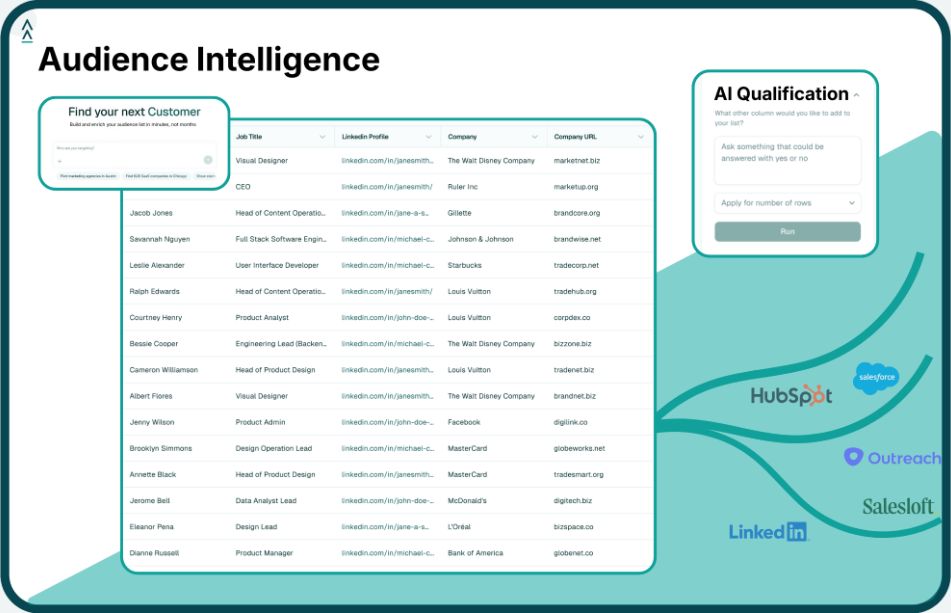
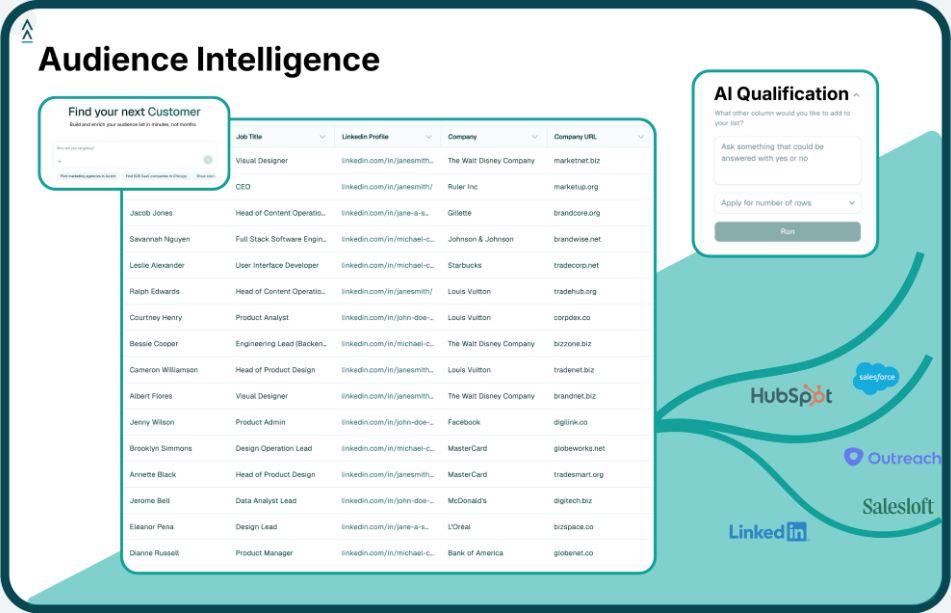
AI-powered qualification using platforms like Landbase scores accounts against 1,500+ enrichment fields and your custom ICP criteria. Teams using AI qualification report 50% better ICP accuracy, which directly translates to higher win rates because reps spend time on accounts that actually fit.
Targeting accounts that show active buying signals (hiring, funding, technology changes, intent data) produces higher win rates than targeting accounts based on firmographic fit alone. Signals indicate timing, and timing is one of the biggest factors in whether a deal closes.
Deals with a single point of contact are fragile. When that contact leaves, changes priorities, or loses budget authority, the deal dies. Multi-threading across 3-5 stakeholders reduces this risk and increases win rates by 20-30% in enterprise deals.
Reps who walk into conversations with context (technology stack, recent company news, competitive landscape, organizational changes) close at higher rates than reps who wing it. The quality of pre-call research depends directly on the quality of account data.
Including unqualified leads in the denominator produces artificially low win rates that confuse benchmarking. Only count opportunities that have passed initial discovery and meet your qualification criteria.
A blended win rate across SMB and enterprise deals is meaningless because the benchmarks are different. Always segment by deal size, source, and team before drawing conclusions.
Win rate fluctuates quarter to quarter. Use a 4-quarter rolling average for trend analysis and a single-quarter number for operational decisions.
Depends on your deal size. For mid-market SaaS ($10K-$50K), 20% is at the low end of normal. For enterprise deals above $100K, 20% is above average. Always compare to the benchmark for your specific segment.
Teams using AI qualification report 50% better ICP accuracy, which typically translates to a 5-10 percentage point improvement in win rate over 2-3 quarters. The improvement comes from removing unqualified deals that were dragging down the average.
Both, but win rate improvement usually has higher ROI. Doubling your pipeline at the same win rate costs 2x in resources. Improving your win rate by 10 points on existing pipeline is effectively free revenue.
Inverse for most teams. Deals that close quickly tend to have higher win rates because the buyer had strong intent and the qualification was solid. Deals that drag on tend to have lower win rates because the buyer is less committed or the deal was not well-qualified.
Tool and strategies modern teams need to help their companies grow.