.png)
.png)

Daniel Saks
Chief Executive Officer


Here's what most B2B teams get wrong about sales intelligence pricing: they focus on the quoted price rather than the hidden costs, implementation timelines, and opportunity costs of inefficient prospecting. The gap between sticker price and true cost can mean thousands in unexpected expenses and months of delayed revenue.
Revenue teams don't need "just another contact database", they need verified, high-fit account intelligence that converts. They don't want "pricing upon request" opacity, they need transparent investment expectations that align with measurable ROI. When your sales intelligence strategy aligns with documented pricing data and proven efficiency metrics, you stop overpaying for undifferentiated data and start investing in intelligence that accelerates pipeline.
This is where agentic AI for GTM intelligence separates market leaders from followers. Teams using AI-driven account qualification transform static data purchases into dynamic, conversion-focused intelligence that continuously identifies and prioritizes the accounts most likely to buy. The question isn't whether to use sales intelligence, it's whether you can afford to compete with outdated, manual approaches.
SalesIntel operates on a quote-based annual subscription model with no public pricing available. Every potential buyer must complete a "Request Pricing" consultation to receive customized quotes based on team size, required features, and data needs. This approach creates significant information asymmetry between buyer and seller.
SalesIntel's 2026 pricing structure includes:
The median annual contract value of $17,599 represents 20 real transactions analyzed by Vendr, providing the most reliable pricing benchmark available. However, individual contracts vary significantly based on negotiation timing, competitive pressure, and specific requirements.
SalesIntel moved toward unlimited-access packaging by 2023, but legacy and contract-specific credit mechanics still appear in SalesIntel's own support documentation covering credit balances, shared credits, and export limits. The unlimited branding eliminates stated credit anxiety but buyers should confirm their specific contract terms, as usage controls may still apply.
Small sales teams typically pay between $8,000 and $15,000 annually for SalesIntel's entry-level plans, based on Vendr's observed contract data. These packages include basic search functionality, CRM integrations, and human-verified contact data; contract-specific credit and export allocations vary.
Typical entry-level features:
Because SalesIntel does not publish per-user dollar pricing, per-seat cost estimates vary by source. One third-party source (SaaS Blue Book) lists platform users at approximately $1,200/user/year. Buyers should treat any per-user figures as directional estimates until verified against their own quote.
Mid-market teams with 5-20 users typically pay $25,000 to $60,000 annually, based on Vendr's observed contract data. These packages include advanced search filters, increased contact export allocations, and access to add-on modules.
Illustrative mid-market configuration (verify inclusions against your order form):
Note: per-seat pricing in SaaS commonly decreases as user count increases in larger deals. Do not assume per-seat costs escalate with scale; your actual per-user economics depend on seats, credit volume, modules, and negotiated terms.
Enterprise deployments with 20+ users typically cost $75,000 to $200,000+ annually. These packages include custom data services, advanced API access, dedicated support teams, and enterprise-grade security features. Per-user pricing at the enterprise tier is fully custom and quote-based; buyers should not rely on third-party per-seat estimates without direct contract verification.
Enterprise features include:
Enterprise contracts often include multi-year commitments with meaningful discounts for longer terms. Third-party examples support discounts of up to approximately 25% for three-year commitments (SaaS Blue Book), though auto-renewal clauses typically include annual price escalations (see below).
SalesIntel's Advanced Intent Data add-on, powered by Bombora, is listed on SalesIntel's pricing page as an add-on to the base platform. Third-party sources commonly estimate this at $5,000 to $10,000+ annually; higher enterprise-level pricing may occur in specific contracts, but figures above that range should not be assumed without direct contract evidence.
Intent Data features:
SalesIntel's VisitorIntel add-on identifies companies visiting your website by company of origin; per SalesIntel's own support documentation, individual anonymous visitors are not identified. Third-party sources estimate this add-on at $1,000 to $3,000 annually, though SalesIntel does not publish an official price. Evaluate analytics depth and integration capabilities against dedicated web analytics tools during a demo.
The "Research on Demand" feature provides 10 human researcher credits per user per month at no additional cost. This unique feature allows teams to request specific contacts not found in SalesIntel's database. Turnaround time depends on request volume per SalesIntel's SLA documentation: smaller requests (0-5 contacts) may be fulfilled in approximately 2 hours, while larger batches of hundreds of contacts can take several days; uploading after QA may take an additional 48 hours. User reviews highlight Research on Demand as a standout differentiator; overall ease of use is the most-cited positive with 90 mentions on G2.
Although SalesIntel markets unlimited export and enrichment credits, its Terms of Service state that users may not reveal more than 3,000 companies or contacts per month, and support documentation describes license credits, shared credits, monthly credit limits, and admin-configurable export caps that vary by contract. One third-party source (SaaS Blue Book) lists additional credits at approximately $0.33 each; SalesIntel does not publish official overage or additional-credit pricing. Buyers should verify their specific order form for credit pool sizes, monthly reveal limits, and any applicable overage terms.
SalesIntel's standard Terms of Service permit fee adjustments at renewal with 60 days' notice. Third-party procurement data (e.g., Vendr) suggests annual renewal escalations of 5-10% are common in practice, though exact increases are contract-specific. For example, a $40,000 initial contract reaching $44,100 by year three under a 5% annual escalation would add approximately $6,100 in cumulative costs, a material figure worth negotiating upfront.
SalesIntel has earned a G2 "Most Implementable" recognition and describes teams being able to see buyer intent signals within days of activation. Actual implementation time varies by integration scope and team size; buyers with complex CRM or workflow requirements should confirm expected onboarding timelines with their SalesIntel account team before signing.
SalesIntel claims approximately 95% accuracy for its human-verified data tier, refreshed every 90 days. Buyers should note that SalesIntel's contractual accuracy guarantee, per its Terms of Service, is narrower: it covers human-verified contact information consisting of a person's name and company affiliation, measured in aggregate, not at the individual record level.
SalesIntel's data accuracy tiers:
The 90-day refresh cycle creates a meaningful limitation: data can be up to three months old at any given time. In fast-moving markets, this delay means teams may be contacting accounts that have already changed roles, companies, or buying priorities.
User reviews show mixed experiences, with 40 specific mentions of "outdated data" on G2 alone. Third-party pricing and review summaries suggest SalesIntel's coverage is strongest in North America; buyers targeting EMEA or APAC markets should specifically test data quality in those regions during a trial before committing.
The human verification process employs 2,000+ researchers who reverify human-verified contacts every 90 days. Teams in particularly fast-moving sectors should evaluate whether this refresh cadence meets their needs and consider testing data freshness for their specific target accounts during the trial period.
End-of-quarter periods are broadly supported by third-party procurement guidance (SaaS Blue Book, Prospeo) as favorable negotiation windows, when sales representatives face quota pressure. Prospeo specifically identifies January, March, November, and December as potentially favorable months. SalesIntel's specific fiscal year-end has not been independently verified; engage well ahead of your renewal date rather than assuming a particular quarter is optimal.
Multi-year commitments can yield meaningful discounts. Third-party examples support savings of up to approximately 25% for three-year terms (SaaS Blue Book), while mentioning competitive evaluations from alternative vendors may also improve leverage. Exact savings are contract-specific and cannot be guaranteed in advance.
Right-sizing contracts by accurately forecasting user counts and contact needs may reduce costs compared to over-provisioning, though confirmed savings percentages vary by contract.
Engaging SalesIntel well ahead of your renewal date preserves maximum negotiation leverage. Last-minute renewals typically result in standard pricing with minimal concessions.
An illustrative 10-user mid-market deployment may include:
A three-year enterprise contract with auto-renewal escalations (illustrative, at 5%):
Renewal escalations, while contract-specific, can add materially to total cost over a multi-year term and are worth addressing explicitly during initial negotiations.
SalesIntel works best for:
Consider alternatives when:
While SalesIntel represents the legacy approach to sales intelligence, human verification, opaque pricing, and static data, Landbase offers a modern alternative designed for today's revenue teams.
Landbase's agentic AI platform delivers key advantages:
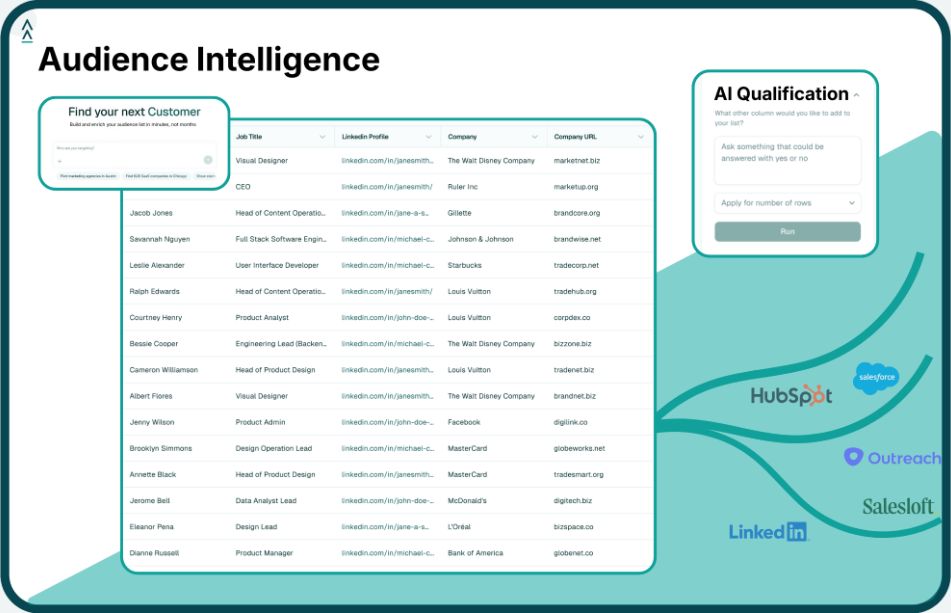
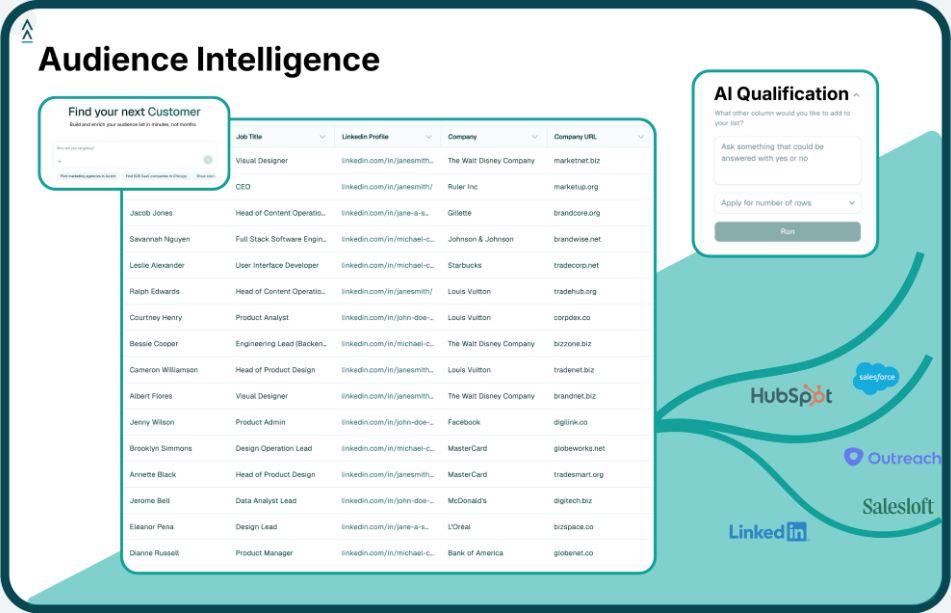
Landbase's GTM Omni multi-agent system orchestrates the entire go-to-market workflow autonomously, scanning 1,500+ enrichment fields across your total addressable market to continuously surface accounts matching your ideal customer profile. Unlike SalesIntel's static database approach, Landbase's AI agents automatically evaluate every account against your exact criteria and answer custom fit questions in real-time.
For revenue teams frustrated by SalesIntel's $17,599 median pricing and lack of transparency, Landbase offers a compelling alternative that delivers superior intelligence and measurable revenue impact. The platform serves enterprises across 25+ industries and counts major tech firms including HP, HubSpot, Slack, and Salesforce as clients. Contact Landbase for tailored pricing details.
Modern RevOps teams don't just need contact data, they need intelligent account prioritization that drives measurable revenue impact. Landbase's approach eliminates the guesswork and manual research that constrain traditional sales intelligence platforms.
SalesIntel's median contract of $17,599 positions it below ZoomInfo's typical reported mid-market and enterprise costs, which third-party sources and procurement data (Vendr) place in the range of approximately $30,000-$60,000+ annually for mid-market teams. However, both platforms use opaque, quote-based pricing models that disadvantage buyers. SalesIntel differentiates with human verification and Research on Demand, while ZoomInfo offers broader database coverage. For mid-market teams prioritizing US contact accuracy over international reach, SalesIntel may offer better value, but modern AI-native alternatives deliver continuously refreshed intelligence that neither platform provides.
SalesIntel advertises a free trial on its website, including a 14-day period. SalesIntel's trial blog describes access to intent topics powered by Bombora, CSV export, and CRM/marketing automation export among available trial features. Trial access may be gated via a sign-up form; buyers should verify current trial scope and any limitations directly with SalesIntel, as terms can vary.
Realistic discounts vary by contract and negotiation circumstances. Third-party sources suggest that multi-year commitments can unlock discounts of up to approximately 25%, and competitive quotes from alternative vendors may improve leverage. End-of-quarter timing is broadly supported as favorable. Exact savings are contract-specific and should not be assumed in advance; engage early and come prepared with competitive alternatives to maximize your position.
SalesIntel claims approximately 95% accuracy for human-verified contacts, with every detail reverified every 90 days. Buyers should note that SalesIntel's contractual accuracy guarantee (per its Terms of Service) is more narrowly scoped, covering name and company affiliation in aggregate for human-verified contacts. User reviews show mixed experiences with 40 "outdated data" complaints on G2, though many users praise US contact accuracy. The 90-day refresh cycle means data can be up to three months old. Buyers in fast-moving sectors should test freshness for their specific target accounts during a trial.
SalesIntel has earned a G2 "Most Implementable" recognition and describes intent signals being accessible within days of activation. Actual implementation time varies by integration scope and team size; buyers with complex requirements should confirm expected timelines during the sales process. Landbase and similar AI-native platforms are designed for rapid activation with pre-built integrations, helping teams start generating pipeline intelligence sooner.
SalesIntel's observed entry contracts (Vendr) start around $8,670, with third-party sources listing starting prices around $10,000 annually. Teams with budgets under $10,000 annually may find better-fit alternatives, including platforms with transparent per-user pricing available well below that threshold. SalesIntel's model works best for established small-to-mid-size businesses with five or more sales users and predictable outbound volumes, but the lack of monthly billing options and minimum contract requirements create barriers for early-stage or highly variable teams.
Tool and strategies modern teams need to help their companies grow.