.png)
.png)

Daniel Saks
Chief Executive Officer


Most sales leaders know manual lead qualification is slow. Few of them have actually run the numbers on how slow, how expensive, and how much pipeline it costs. The answer is uncomfortable.
According to Salesforce's State of Sales research, sales reps spend 70% of their time on non-selling tasks. Manual qualification, research, and data entry eat the largest chunks. B2B teams spend $50 to $500 per qualified lead on average, with cost varying by industry and lead source.
For most B2B teams, manual qualification looks like this:
This takes 5-15 minutes per lead. Multiply by 50 leads per day and you have an SDR who spends 4-12 hours every day on qualification work. That is 50-100% of their available time, depending on their lead volume.
Most teams calculate cost per qualified lead by adding up tools, salaries, and some overhead. For a typical mid-market B2B team:
Total cost per SDR: $115,000-$165,000/year. If that SDR qualifies 1,000 leads per year, the cost per qualified lead is $115-$165 just on direct expenses.
Direct costs are the iceberg's tip. The real cost is opportunity cost: every hour spent qualifying is an hour not spent on activities that generate pipeline.
If an SDR who could be booking meetings spends 60% of their time on qualification, you are losing 60% of the meetings they could have booked. For a team of 10 SDRs at 1 booked meeting per hour of selling time, that is 1,200 lost meetings per year. At a 25% close rate and a $30k average deal size, that is $9 million in lost annual revenue.
Even if you assume those numbers are 50% optimistic, you still lose $4.5 million per year on a 10-person team. For most SaaS companies, that is the difference between hitting plan and missing it.
Slow qualification costs you time. Bad qualification costs you deals. According to research on B2B lead qualification, 67% of lost sales come from improper qualification and 79% of marketing leads never convert to sales.
Why so bad? Because manual qualification has three failure modes:
An SDR looking at a lead for 5 minutes can check basic firmographics (company size, industry, location) but cannot evaluate buying signals, technographic fit, or competitive context. They make a yes/no decision based on incomplete information.
SDRs under quota pressure either rush qualification (and miss good leads) or over-qualify (and bury AEs in bad ones). There is no good answer when you are trying to do good work in 5 minutes per lead.
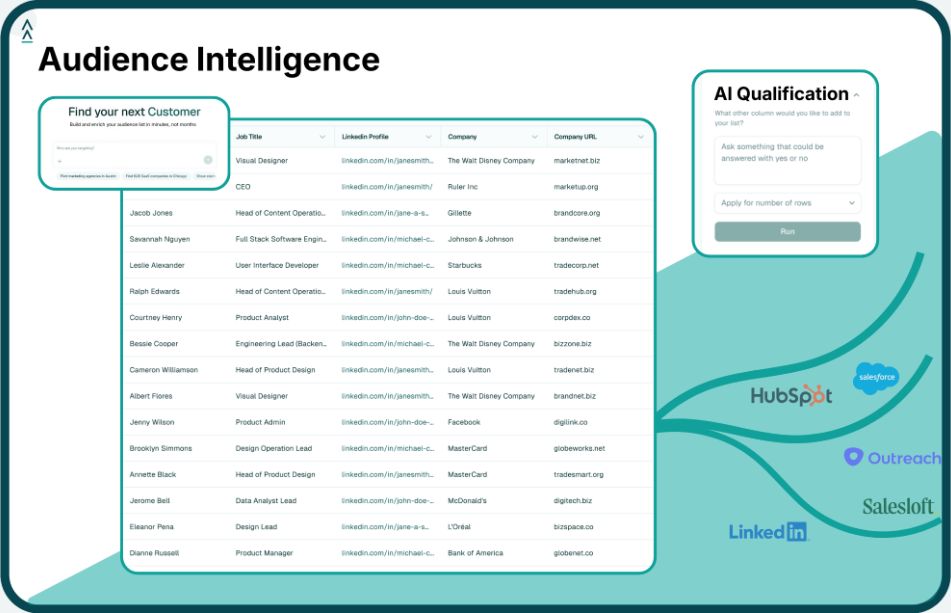
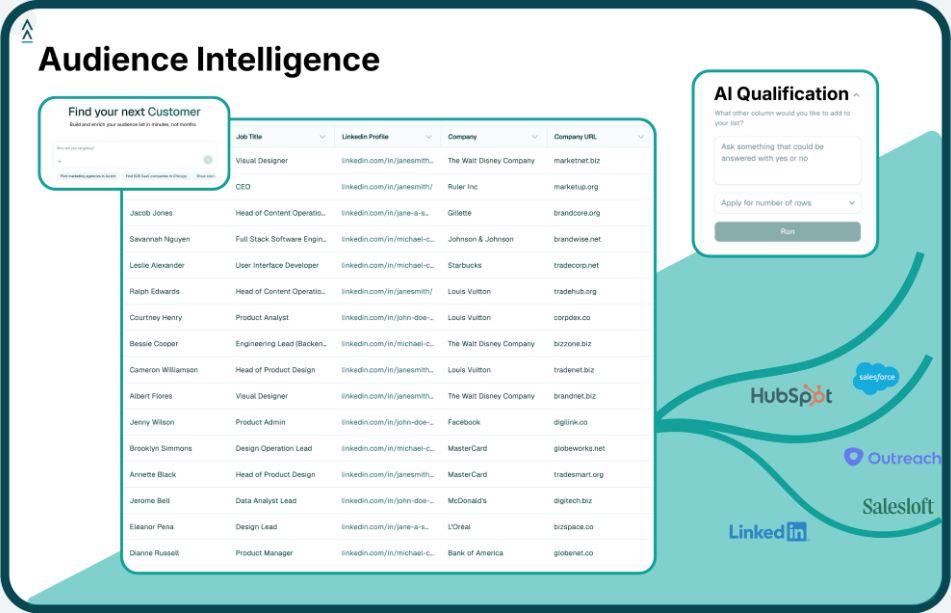
AI qualification flips the time and cost equation. Instead of a human spending 5-15 minutes per lead, an AI agent spends a few seconds and applies a consistent set of criteria to every record.
According to Salesforce's 2026 State of Sales report, 54% of sellers have already used AI agents and 83% of sales teams that used AI in the past year saw revenue growth, compared to 66% of teams that did not.
The mechanics are straightforward. An AI qualification system:
The whole process takes seconds and costs pennies. The SDR gets pre-qualified leads with context, not raw form fills they have to research from scratch.
For a 10-person SDR team:
The numbers compound at scale. A 50-person SDR team running AI qualification recovers 15-20 SDRs worth of selling capacity without adding headcount. That is the equivalent of hiring 15-20 SDRs for free.
Three reasons. First, change is hard. SDR teams have built their workflow around manual qualification. Switching to AI requires retraining people and rewriting processes.
Second, leaders confuse activity with productivity. A team of busy SDRs feels productive even when they are wasting time. The shift to AI qualification can look like reducing activity, even though it is increasing output.
Third, the tools were not good enough until recently. AI qualification used to mean rule-based scoring that broke when the rules changed. Modern AI agents can apply criteria across thousands of accounts with consistency and explain their reasoning. This is a 2025-2026 capability that did not exist three years ago.
If you want to know what manual qualification actually costs your team, run this exercise:
Not yet. AI handles the consistent, criteria-based work better than humans. Humans are still better at nuanced judgment calls and complex enterprise deals. The right model is hybrid: AI does the bulk qualification, humans review the edge cases.
Modern AI qualification systems report 85-95% accuracy when given clear ICP criteria. That is significantly better than manual qualification, which is closer to 60-75% consistency across reps.
Most teams can deploy a basic AI qualification workflow in 2-4 weeks. The bottleneck is usually defining the criteria clearly enough for the AI to apply them. Teams with well-documented ICPs move faster.
No. Lead scoring assigns a number based on rules. AI qualification evaluates each account against your criteria using multiple data sources and explains its reasoning. Scoring is one input. AI qualification is the whole decision process.
Tool and strategies modern teams need to help their companies grow.