.png)
.png)

Daniel Saks
Chief Executive Officer


Pipeline coverage ratio is the metric every CRO checks on Monday morning. It answers a simple question: do we have enough pipeline to hit the number? The formula is straightforward. The interpretation is where most teams get it wrong.
According to pipeline coverage research, the commonly referenced benchmark is 3-5x. But that benchmark comes from the 1990s enterprise software world where Oracle and SAP sold six-figure deals with 20% win rates and 9-month sales cycles. It probably does not work for your business.
Pipeline coverage ratio = total open pipeline value / quota target for the period.
If your team has $3M in open pipeline and a $1M quota for the quarter, your coverage ratio is 3x. That means you need to close one out of every three dollars in your pipeline to hit the number.
The formula is simple. The variables inside it are where complexity hides.
Only count opportunities that have been qualified and are actively being worked. Do not count leads that have not been qualified, deals that are stalled with no activity, or opportunities created to hit activity targets that nobody actually believes will close.
Most teams inflate their coverage by counting everything in the CRM that has a dollar amount. This produces a comforting 4x ratio that turns into a missed quarter when 60% of that pipeline was never real.
Match the coverage calculation to the sales cycle. If your cycle is 90 days, calculate coverage for the current quarter. If your cycle is 180 days, you need to look at 2-quarter coverage. Pipeline that closes in 6 months does not help you hit this quarter's number.
The 3x rule assumes a 33% win rate. According to 2026 win rate benchmarks, the average B2B win rate is 21% across all opportunities and 29% for qualified opportunities. Those numbers produce very different coverage requirements.
Here is the math for calculating your actual required coverage:
Required coverage = 1 / historical win rate
An SMB team running at 60% win rates that targets 3x coverage is wasting resources generating pipeline it does not need. An enterprise team with 15% win rates that accepts 3x coverage will miss quota every quarter.
Do not calculate one coverage number for the whole company. Segment by team, product line, deal size tier, and source. Each segment has different win rates and different coverage needs.
Strip out unqualified opportunities, stalled deals, and pipeline created for activity tracking. Only count deals where the prospect has confirmed interest, budget exists, and a timeline is defined.
Pull 4-6 quarters of historical data for each segment. Calculate the actual win rate (closed-won / total qualified opportunities). This is your denominator.
Required coverage for each segment = 1 / segment win rate. Compare to actual coverage. Any segment below the required ratio is at risk of missing quota.
Pipeline that has been open for longer than 2x your average sales cycle is unlikely to close. Either remove it from the coverage calculation or apply a decay factor. A deal open for 180 days in a 60-day sales cycle should count for much less than face value.
Pipeline coverage is only as reliable as the data underneath it. If deal values are guesses, stages are inaccurate, or qualification is inconsistent, the coverage number is meaningless.
According to CRM data hygiene research, 76% of CRM entries are less than half complete. If your pipeline data is in that 76%, your coverage ratio is built on incomplete information.
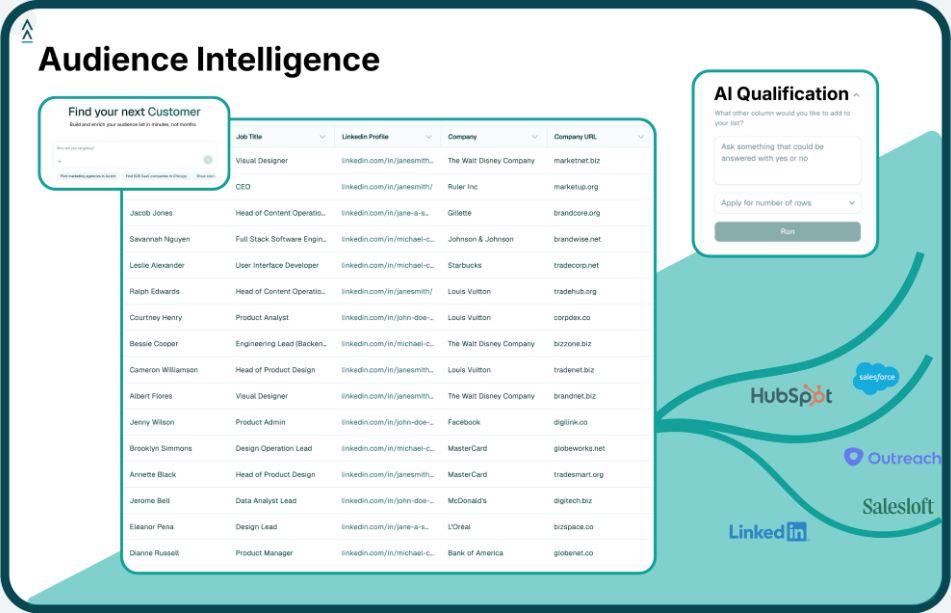
The fix starts with data quality at the account level. Platforms like Landbase deliver accounts enriched with 1,500+ data fields so the accounts entering your pipeline have the firmographic, technographic, and signal data needed to qualify accurately. When qualification is accurate, coverage becomes trustworthy.
Reps who sandbar (understate deal value to beat expectations later) deflate coverage. Reps with happy ears (overstate deal value because they believe every prospect) inflate coverage. Both make the metric unreliable.
Address this with consistent qualification criteria and deal inspection rather than trusting the number at face value.
Coverage should be measured weekly, not quarterly. Pipeline moves constantly. A 4x ratio on January 1 can be 2x by February 15 if deals push, churn, or stall. Measure weekly, act on trends, and treat the number as a living indicator rather than a snapshot.
These ranges assume qualified pipeline with accurate deal values. If your pipeline includes unqualified or stale deals, add 1-2x to each range to compensate for the noise.
Only if your win rate is 33% or higher. For most B2B SaaS teams with win rates of 20-30%, 3x is cutting it close. Calculate your required coverage from your actual win rate instead of relying on a generic benchmark.
Yes, but weight them by stage probability. A deal in negotiation with a 70% probability contributes more to real coverage than a deal in discovery with a 10% probability. Weighted coverage gives a more accurate picture.
Two levers: generate more qualified pipeline (outbound, ABM, signal-based targeting) or improve win rates (better qualification, better data). Generating more unqualified pipeline actually makes the problem worse by inflating the ratio without improving the outcome.
Strong correlation. Teams with accurate coverage ratios (built on qualified pipeline and real win rates) forecast within 10% of actual. Teams with inflated coverage ratios (built on unqualified pipeline) consistently miss forecasts because the coverage number promised more than the pipeline could deliver.

Tool and strategies modern teams need to help their companies grow.






