.png)
.png)

Daniel Saks
Chief Executive Officer


Most folks think of sales outreach platforms as just a way to send more emails, but honestly, the game has changed. In 2026, the real cost of outreach isn't just the subscription fee, it's the hidden expense of unvalidated, AI-generated content that fails to convert. Landbase's agentic AI addresses this head-on by continuously qualifying, scoring, and prioritizing high-fit accounts with built-in verification, enabling campaigns to launch in minutes rather than weeks. As AI floods the market with polished but potentially hollow outreach, the platforms that bake in validation layers, like Landbase's four-stage data verification, are the ones delivering real ROI for RevOps teams.
Now, the sales engagement landscape is trickier than ever. Traditional players are tacking on AI features, but without the underlying architecture to verify outputs, they risk creating what researchers call "polished mediocrity." The science behind effective GTM intelligence is clear: AI excels as an "Evaluator" synthesizing data but struggles as an autonomous "Scientist" on complex tasks. Platforms that understand this distinction, and build human-centered validation into their core, are the ones worth the investment. If you're evaluating outreach solutions for 2026, it's worth learning about total cost of ownership, hidden fees, and, most critically, how platforms prevent confidently stated falsehoods from reaching your prospects.
Sales engagement platform pricing in 2026 is no longer just about per-user fees or feature tiers. The landscape has shifted toward value-based pricing tied to AI capabilities, data quality, and, most importantly, validation infrastructure. As LLMs become ubiquitous, the differentiator isn't who has AI, it's who has AI with built-in truth mechanisms.
Outreach does not publish pricing publicly. Most implementations require annual contracts with minimum user commitments.
Several forces are reshaping how vendors price their platforms:
The market is responding to a fundamental truth: AI dramatically increases output but creates risk of polished mediocrity, volume without verification degrades rather than enhances knowledge work. This has forced vendors to either invest in validation architecture or compete solely on price in an increasingly commoditized segment.
Traditional sales platforms used straightforward pricing:
AI-driven platforms like Landbase are pioneering new models:
This shift reflects the research finding that LLMs function best as Evaluators for data synthesis, moderately as Collaborators for idea generation, and poorly as autonomous Scientists, with direct implications for appropriate GTM applications. Platforms that price based on evaluation and collaboration capabilities like account scoring and list building rather than autonomous outreach deliver better value.
AI's impact on sales engagement isn't just about automation, it's about fundamentally restructuring how value is delivered and priced. The most successful implementations mirror the pharmaceutical industry's approach to AI: well-defined success criteria, clear validation checkpoints, and measurable outcomes.
The numbers tell a compelling story:
These gains come from applying AI to well-defined search spaces with clear success metrics, exactly what Landbase's qualification system does by evaluating every account against exact criteria and answering custom fit questions automatically.
Traditional sales workflows followed a linear path:
AI-native platforms like Landbase enable a continuous, validated cycle:
The headline price of a sales engagement platform is often just the tip of the iceberg. Savvy buyers look beyond feature lists to understand total cost of ownership and true value drivers.
Hidden costs that can double your effective spend:
Platforms that address these hidden costs upfront, like Landbase's enrichment system that runs waterfall enrichment across 20+ data providers and validates every result through 4 layers of verification, deliver lower total cost of ownership despite potentially higher subscription fees.
Data quality isn't just a feature, it's the foundation of all AI effectiveness. In sales, poor data quality translates directly to:
Landbase addresses this through its underlying database of 300M+ B2B contacts and 24M+ accounts continuously validated through multiple verification layers. This ensures that the AI agents building your target lists are working with verified data rather than hallucination.
Beyond cost and features, the most valuable platforms deliver strategic advantages that are difficult to quantify but impossible to ignore.
The priceless benefits include:
Landbase's lookalikes product exemplifies this by enabling teams to upload their best accounts and find net-new companies that share the same traits, signals, and buying patterns. This isn't just a feature, it's a revenue expansion engine.
The most successful platform investments align directly with revenue goals:
Landbase's signals product directly supports these objectives by tracking hiring, funding, technographic shifts, and other real-time intent data to focus your team on accounts showing meaningful change.
The future of sales engagement belongs to platforms that move beyond simple automation to true agentic intelligence, systems that can reason, validate, and act autonomously within human-defined guardrails.
Landbase's GTM-2 Omni represents a fundamental shift in platform architecture. Unlike traditional platforms that automate individual tasks, GTM-2 Omni orchestrates the entire GTM workflow end-to-end with minimal supervision. This multi-agent system:
This architecture addresses the research finding that LLMs consistently perform at roughly half human expert capability, by designing systems that acknowledge this limitation and build in human oversight at critical decision points.
Agentic AI transforms outreach from batch-and-blast to continuous intelligence:
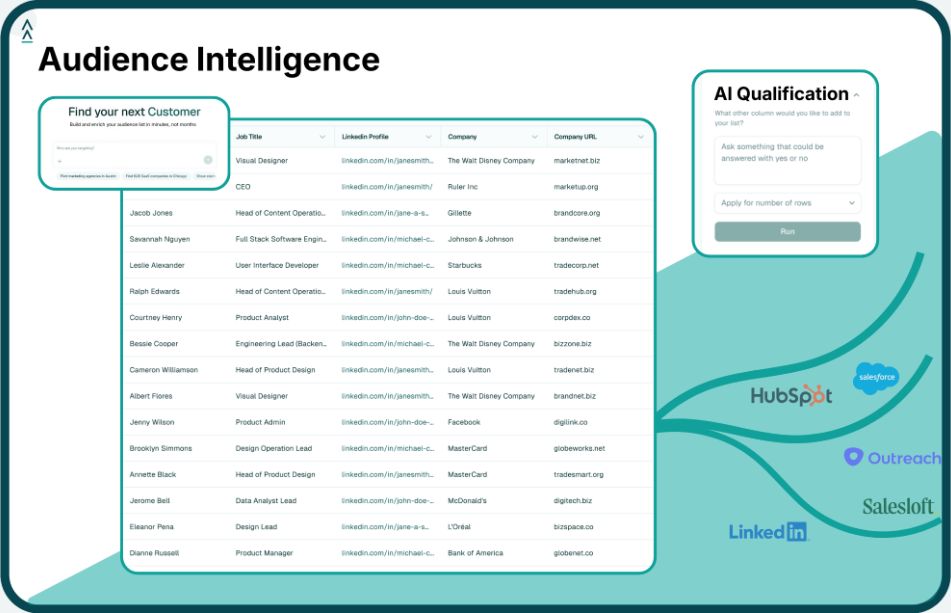
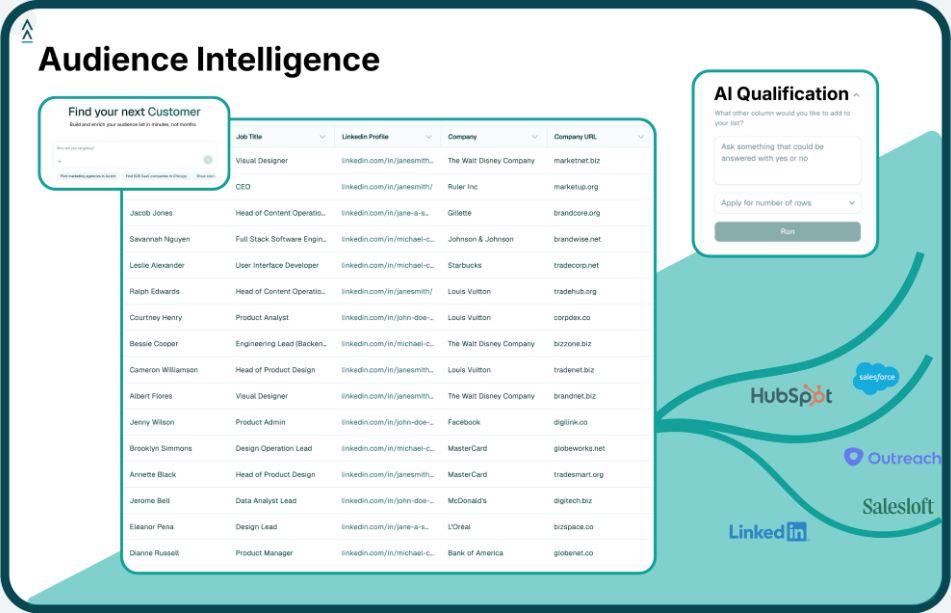
Landbase provides an AI-native GTM intelligence platform that automates end-to-end prospecting, qualification, and enrichment workflows. The platform combines agentic search, autonomous qualification, waterfall enrichment, and real-time signals to help RevOps teams identify and prioritize high-fit accounts with built-in data verification.
While traditional sales engagement platforms like Outreach struggle to integrate meaningful AI capabilities, Landbase was built from the ground up as an AI-native GTM intelligence platform. The company's leadership team includes veterans from EverString, ZoomInfo, Salesforce, and Google's AI labs, ensuring deep expertise in both GTM workflows and artificial intelligence.
Landbase's approach directly addresses the productivity-quality paradox: AI dramatically increases output but creates risk of polished mediocrity. Instead of just generating more outreach volume, Landbase's platform ensures that every account, contact, and insight is validated through multiple verification layers before reaching your team.
Key Stats / Metrics:
Leadership: The platform is backed by experienced GTM and AI leadership, though specific executive names are not publicly featured on their current website.
Recent Funding: Funding details are not publicly disclosed. Landbase focuses on demo-driven engagement to understand specific client needs rather than publicizing valuation metrics.
Notable Customers: Major enterprises including HP, HubSpot, Slack, and Salesforce have adopted Landbase because they understand that in 2026, the cost of bad data and unvalidated AI insights far exceeds any subscription fee savings from less sophisticated platforms.
When you use Landbase's agentic search to describe your ideal customer profile in plain language, you're not just getting a list, you're getting a verified, scored, and prioritized set of opportunities ready for immediate action.
For RevOps teams tired of choosing between AI-powered volume and human-verified quality, Landbase offers a third way: agentic AI with built-in validation architecture. This isn't just about saving time, it's about ensuring that every outreach attempt is based on verified data rather than AI hallucination, dramatically improving conversion rates and protecting your brand reputation.
Choosing the right platform in 2026 requires asking the right questions about both pricing and validation architecture.
When evaluating platforms, ask:
The right vendor partnership should:
Landbase's emphasis on demo requests and direct engagement suggests a partnership model focused on specific client needs rather than one-size-fits-all solutions.
The main drivers are AI validation architecture depth, data quality guarantees, TAM intelligence capabilities, integration complexity, and outcome-based pricing models. Platforms with built-in verification like Landbase's 4-layer validation command premium pricing but deliver lower total cost of ownership through reduced manual validation and higher conversion rates. Traditional platforms range from $50-150 per user monthly, while AI-native platforms justify higher costs through measurable improvements in conversion rates and research time savings.
Traditional platforms adding AI features face the productivity-quality paradox where increased output volume doesn't translate to better results. Platforms without validation architecture risk delivering polished mediocrity that fails to convert, wasting both subscription costs and sales team time. AI-native platforms with built-in verification improve ROI by ensuring every insight is validated, reducing wasted outreach and improving conversion rates by 4-7x compared to traditional approaches.
Hidden costs include data inaccuracies wasting sales time, manual validation of AI outputs, integration complexity requiring IT resources, training costs for complex platforms, and opportunity costs from limited TAM coverage. Landbase addresses these through its waterfall enrichment across 20+ data providers with 4-layer verification, reducing manual research effort by approximately 80 percent. The true cost comparison should include these factors, not just subscription fees.
Landbase follows a typical enterprise SaaS model with pricing details not publicly disclosed, focusing instead on demo requests to understand specific client needs. This approach allows them to tailor pricing to actual ROI potential rather than generic feature tiers, which is common for advanced AI platforms serving mid-market and enterprise clients.
Landbase's GTM-2 Omni multi-agent system orchestrates the entire GTM workflow end-to-end with minimal supervision, moving beyond simple task automation to true autonomous intelligence. This justifies premium pricing through measurable outcomes like 4–7x higher conversion rates and approximately 80 percent reductions in manual research time, rather than just feature checklists. The platform combines specialized AI agents with continuous validation, delivering verified intelligence rather than just increased volume.
Mid-market companies should budget for the total cost of ownership rather than just subscription fees. Traditional platforms range from $50-150 per user monthly, with typical mid-market teams of 10-50 users spending $12,000-$90,000 annually on subscriptions alone. However, hidden costs of data inaccuracies, manual validation, and missed opportunities can double effective costs. Platforms with built-in validation like Landbase may have higher subscription costs but deliver lower effective costs through improved conversion rates and reduced manual effort.
Tool and strategies modern teams need to help their companies grow.