.png)
.png)

Daniel Saks
Chief Executive Officer


The outbound vs inbound debate has been going on since 2009. Both sides have data. Both sides cite case studies. And in 2026, the actual answer depends on factors that most of the debate ignores: company stage, average deal size, ICP density, and how much time you have before you need pipeline.
This guide cuts through the noise with real conversion data, real cost numbers, and the framework for choosing the right mix for your team. The short version: most companies should run both, but most companies do one well and the other poorly.
Most outbound vs inbound debates start with cost per lead. The numbers usually look like this:
According to research compiled by Entrepreneurs HQ, inbound marketing methods cost 62% less per lead than outbound and inbound leads are 61% more cost-effective.
But this comparison is misleading for two reasons.
First, the inbound cost calculation usually excludes upfront investment. If it costs $300k to build the SEO foundation, content library, and conversion infrastructure that delivers cheap leads, that money has to be amortized somewhere. Most teams ignore it.
Second, the outbound cost calculation usually excludes the deal size advantage. Outbound is the best-performing source for sub-500 employee companies, with 3x greater average deal values than inbound. A more expensive outbound lead that closes a 3x larger deal is not actually more expensive.
The headline numbers favor inbound. But the close rates do not tell the whole story because they do not account for volume. A team running outbound at scale can generate 10x more leads than a team running inbound, even at lower close rates.
If you are pre-PMF or early Series A, outbound is almost always the right answer. You need pipeline now. You do not have time to wait for SEO to compound. Outbound lets you hand-pick the accounts that match your ICP and start conversations immediately.
If your ICP is small (say, 5,000 target accounts globally), inbound is hard to scale. Most of your buyers are not searching Google for your category. Outbound lets you reach them directly.
Enterprise deals require multiple stakeholders, long sales cycles, and personalized engagement. Outbound is better suited for the multi-touch, multi-thread approach enterprise sales requires.
If your buyer makes decisions during specific windows (new fiscal year, budget cycles, leadership changes), outbound lets you reach them at the right moment. Inbound requires the buyer to come to you, which they may not do until it is too late.
If your category is well-defined and buyers are searching for solutions, inbound captures intent at the moment it appears. SEO and content marketing are high-leverage when the demand exists.
Product-led growth motions rely on inbound to drive trials and self-serve conversions. The buying journey is buyer-led, which is what inbound is designed for.
Once inbound is built out, the marginal cost per lead is very low. Established inbound engines can deliver leads for $20-$50 each at scale, which is cheaper than any outbound motion.
For SMB-focused products selling at lower ACVs, the math only works at high lead volume. Inbound delivers volume more efficiently than outbound at this segment.
Companies that go all-in on either outbound or inbound usually leave revenue on the table.
Pure outbound teams hit a ceiling when they exhaust their target account list and have nowhere to grow. Inbound creates a continuous pipeline of new buyers entering the category.
Pure inbound teams hit a ceiling when they realize 80% of their ideal buyers are not searching for them. Outbound lets you reach the 80% who would buy if they knew you existed.
The data backs this up. According to 2026 sales statistics from Martal, the most effective 2026 teams design integrated conversion paths where outbound creates a spark and inbound content plus product proof does the heavy lifting.
Here is the playbook used by the best B2B teams in 2026:
Identify your top 500-2000 target accounts. Run targeted outbound campaigns to introduce your category and start conversations. The goal is to create awareness and put you on the consideration list, not to close deals on the first touch.
Once a target account is aware of you, they will research before they buy. SEO content, case studies, webinars, and product comparisons close the gap between awareness and decision. Inbound nurtures the journey.
When a target account hits a buying signal (new hire, content download, pricing page visit), trigger a second outbound touch. This is the conversion-driving moment. Triggered outbound converts 5-10x cold outbound because the timing is right.
Track which channels drove which deals. Most teams find that hybrid attribution shows both outbound and inbound contributing to most closed deals. The buyer touched 5-15 things before deciding to buy.
Hybrid GTM only works if your data is unified across channels. You need to know:
Most teams do this badly. They run outbound off one list and inbound off a separate database, then wonder why their attribution is broken.
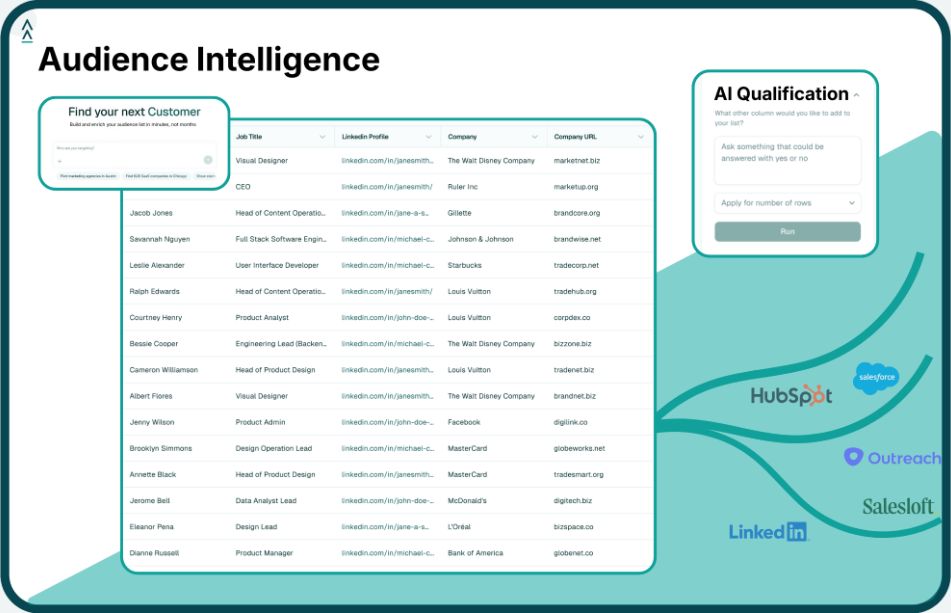
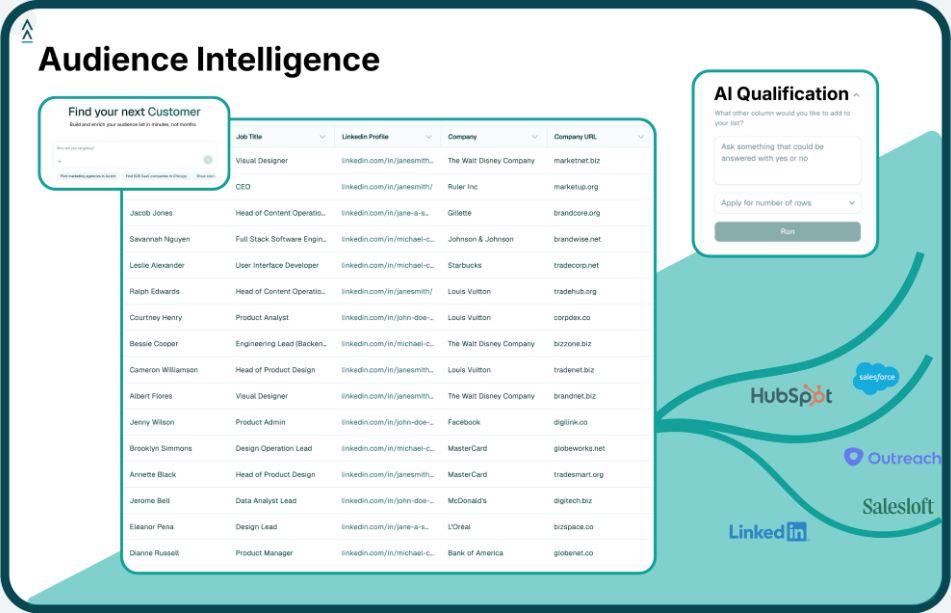
The fix is a unified data layer. Modern GTM platforms like Landbase deliver verified accounts with 1,500+ enrichment fields, including engagement signals, so you can run outbound and inbound off the same source of truth. The hybrid model only works when the data underneath is unified.
If you are reading this trying to decide where to invest your GTM budget, here is the framework:
The wrong answer in 2026 is to ignore one channel entirely. The data shows that the teams winning in this market do both, and they do them well.
No. Outbound is changing. Cold outbound at scale is increasingly ineffective. Triggered, signal-based outbound is more effective than ever. The death of outbound is really the death of bad outbound.
Most B2B inbound programs take 6-12 months to deliver meaningful pipeline. SEO compounds slowly. Content marketing requires consistency. If you need pipeline this quarter, inbound will not save you.
The best signals are personnel changes (new VP hires in your buyer persona), funding events, technology adoption changes, and engagement with your inbound content. Stacked signals are far more predictive than any single signal alone.
Probably not. Even pure inbound teams need outbound for follow-up on inbound leads. The best teams use outbound to nurture inbound interest into closed deals. Cutting outbound entirely usually reduces inbound conversion rates.
Tool and strategies modern teams need to help their companies grow.