.png)
.png)

Daniel Saks
Chief Executive Officer


Here's what most sales teams get wrong about prospecting tools: they focus on list price instead of total cost of ownership. The gap between advertised pricing and actual spending costs thousands in unexpected overages and wasted effort.
Sales development representatives don't just need email addresses, they need accurate, verified contacts with contextual insights that drive conversations. They don't want credit-limited lookups, they need comprehensive account intelligence that scales with pipeline demands. When your prospecting strategy aligns with real pricing transparency and proven data quality, you stop burning credits on inaccurate phone numbers and start building pipelines that convert.
This is where AI agents for autonomous prospecting separate efficient revenue teams from those stuck in manual workflows. Organizations using agentic AI to power end-to-end go-to-market execution transform static contact databases into dynamic, conversion-focused experiences that learn from every interaction. The question isn't whether to evaluate LeadIQ pricing, it's whether you understand the full scope of costs that, in certain usage scenarios, can substantially inflate budgets while delivering inconsistent data quality.
LeadIQ currently publicly lists three pricing tiers on its pricing page: Free, Pro, and Enterprise. An Essential plan appeared in older LeadIQ materials and help documentation but is no longer listed on the current public pricing page. Each tier operates on a Universal Credit system where different actions consume varying amounts of credits, creating complexity that impacts total cost of ownership.
Free Plan ($0/month)
Essential Plan (~$39/user/month, Historical/Legacy)
Pro Plan (starts at $200/month for up to 5 users)
Enterprise Plan (Custom, typically $130-$150+/user/month per Vendr marketplace data)
LeadIQ's Universal Credit system appears straightforward but contains hidden cost multipliers that significantly impact total spending. Different actions consume different credit amounts, and understanding these ratios is essential for accurate budgeting.
Credit Usage Breakdown:
The 10x cost difference between emails and phone numbers creates substantial budget pressure for calling-focused teams. A team making 100 phone calls monthly burns through 1,000 credits just on phone lookups, potentially exceeding their entire monthly allocation. This pricing structure means that teams with balanced email and phone outreach can see actual costs run substantially higher than advertised list prices in practice.
Additional Cost Factors to Consider:
These cost factors can materially increase what appears to be a straightforward subscription cost. For teams requiring more than 5 users, LeadIQ's current public Pro plan would not apply; such teams would need an Enterprise agreement. Based on Vendr's reported typical Enterprise range of $130-$150+/user/month, a 10-user team could face base costs of $15,600-$18,000 annually. In modeled scenarios that layer in optional but commonly used Sales Navigator seats, credit overages, and third-party sequencing tools, total Year 1 spending can materially exceed these base figures.
Understanding LeadIQ's true cost requires examining scenarios that reflect actual team usage patterns. The examples below demonstrate how different prospecting approaches impact total spending. Note that several cost components in Scenarios 2 and 3 are modeled estimates based on available marketplace data and should be treated as illustrative rather than definitive.
Scenario 1: Small SDR Team (3 users, Pro Plan)
Scenario 2: Mid-Market Sales Team (10 users)
Scenario 3: Enterprise Organization (50 users, Custom Plan)
In modeled scenarios that include Sales Navigator seats, extra credits, and engagement tooling, effective cost per user can materially exceed base subscription pricing. According to Vendr marketplace data based on 103 purchases, actual buyer spend on LeadIQ ranges from $5,290 to $66,080 annually, with a median of $26,400, reflecting the gap between list price and total cost of ownership.
Despite pricing complexities, LeadIQ delivers genuine strengths that make it valuable for specific use cases. Understanding these advantages helps determine if the platform fits your team's actual needs.
Lightning-Fast LinkedIn Capture LeadIQ's Chrome extension enables one-click contact extraction from LinkedIn profiles, minimizing manual data entry and delivering meaningful efficiency gains for LinkedIn-heavy workflows. LeadIQ case studies report significant time savings; for example, one customer reported saving 1,000 hours per quarter and achieving a 19% increase in discovery calls.
Strong Email Data Quality LeadIQ's help documentation indicates verified emails carry approximately 95% accuracy. The platform uses waterfall verification across multiple data providers to support reliable deliverability, which helps build sender reputation and reduces wasted outreach efforts on invalid addresses.
Seamless CRM Integration The platform offers excellent one-click sync with Salesforce and HubSpot, including automatic duplicate detection and custom field mapping in the Enterprise tier. This integration eliminates manual data entry and maintains cleaner CRM records.
Job Change Tracking Real-time alerts when saved contacts change roles provide ideal timing for outreach to new decision-makers. This feature alone drives significant pipeline opportunities for account-based teams.
User-Friendly Interface With 129+ G2 mentions of ease of use, LeadIQ's intuitive interface enables fast team adoption with minimal training costs. The low learning curve makes it accessible for teams without technical expertise.
These strengths make LeadIQ particularly well-suited for email-focused SDR teams in mid-market organizations that primarily prospect through LinkedIn and prioritize email outreach over phone calls.
While LeadIQ excels in specific areas, several critical limitations can significantly impact return on investment, especially for teams with broader prospecting requirements.
Inconsistent Phone Number Data Phone number data quality represents a commonly cited weakness in LeadIQ user reviews, with G2 reviewers reporting inconsistent accuracy in some cases. It is worth noting that LeadIQ explicitly distinguishes personal mobile device numbers as a premium credit type, so receiving a personal mobile rather than a direct work line reflects a product design choice rather than always being a data-quality failure. Buyers should evaluate whether the available phone data types align with their outreach strategy. LeadIQ's current pricing page separately claims verified phone accuracy above 90% and an 85% global match rate.
No Built-In Sequencing LeadIQ lacks native email sequencing capabilities, requiring separate tools like Outreach or Salesloft for automation. This creates additional costs, integration complexity, and workflow friction that fragment the prospecting process.
Signal Depth Varies by Plan LeadIQ includes signals such as 10-K filings, podcast mentions, and hiring activity in its plan matrix, though buyers should verify which signal types and volumes are available at their specific plan level. Teams requiring intent signals beyond job change tracking should confirm coverage before committing.
Credit Refresh Policy Monthly credits refresh each billing period. Third-party pricing guides report that unused credits do not carry over to the following month, creating potential use-it-or-lose-it pressure. Teams cannot bank credits during slow periods for use during high-activity campaigns, potentially leading to either unused allocations or unexpected overages.
LinkedIn Sales Navigator as a Companion Cost LeadIQ is especially strong in LinkedIn and Sales Navigator workflows, and many teams use the two together. LeadIQ's data page notes that its data draws from public and private sources, public domains, providers, community data, and proprietary algorithms, so performance is not strictly contingent on LinkedIn. However, teams that rely heavily on LinkedIn for prospecting may find Sales Navigator an effective companion tool, adding a per-seat cost to their total stack.
These limitations particularly impact call-heavy teams, multi-channel outreach strategies, and organizations requiring comprehensive buying signals beyond basic contact information.
When evaluating LeadIQ pricing, it's essential to consider alternative approaches to prospecting that may deliver better ROI for your specific use case. Different tools serve different needs, and understanding these distinctions helps make informed decisions.
Database-Focused Alternatives Tools like ZoomInfo and Apollo.io provide larger databases with more comprehensive firmographic data, though pricing varies by contract and should be confirmed directly with each vendor.
Phone-Accuracy Focused Alternatives Cognism specializes in GDPR-compliant phone verification. Cognism claims its Diamond Data phone verification can help reps connect with up to 87% of their list, and Cognism cites 85% data accuracy in some of its comparison materials. Teams with heavy phone outreach requirements should evaluate accuracy alongside overall cost when considering their options.
All-in-One Sales Engagement Platforms Platforms like Salesloft and Outreach combine prospecting with built-in sequencing, eliminating the need for separate tools. However, they typically focus more on engagement than data quality, often requiring integration with dedicated data providers.
AI-Native GTM Platforms Agentic AI platforms like Landbase offer fundamentally different approaches, using autonomous agents to handle entire prospecting workflows rather than just providing data access. These platforms focus on end-to-end automation rather than manual lookup capabilities.
The optimal choice depends on your team's primary prospecting method, data quality requirements, and workflow complexity. Email-focused teams may find LeadIQ's strengths outweigh its limitations, while calling-heavy or multi-channel teams may benefit from alternatives with better phone accuracy or built-in sequencing. For teams that process a high volume of contacts monthly or have significant phone lookup requirements, the economics of alternatives should be modeled carefully against your specific usage patterns before drawing conclusions.
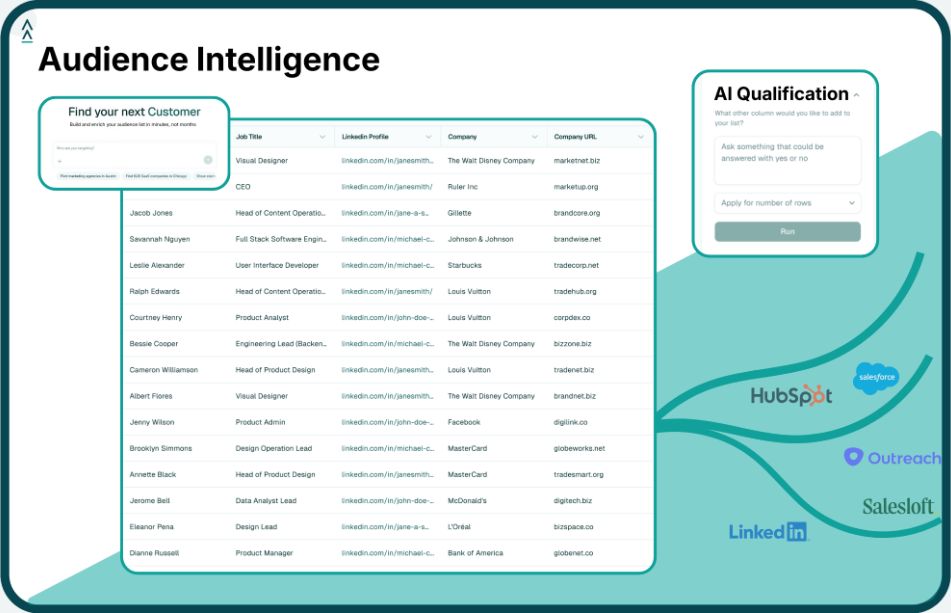
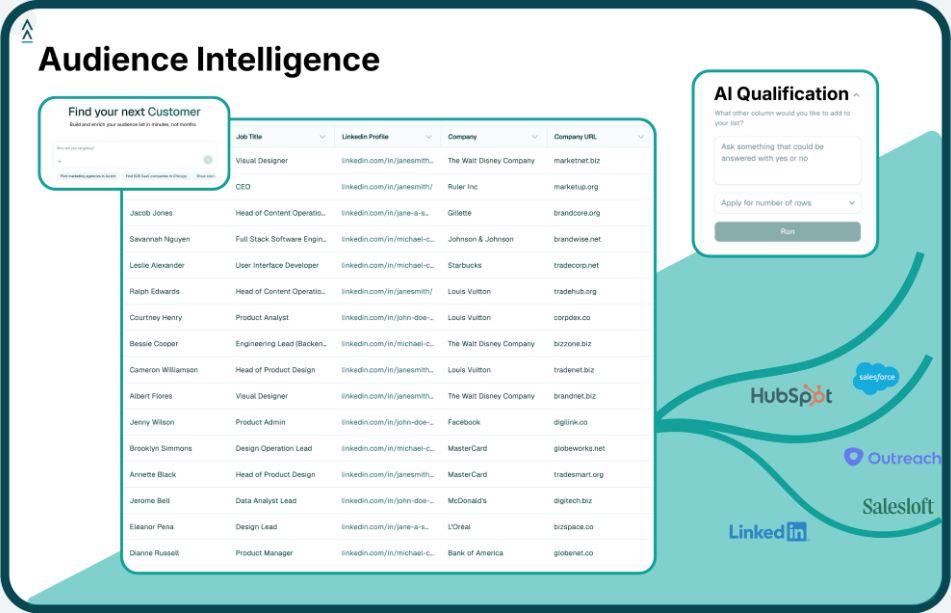
While LeadIQ optimizes manual prospecting workflows, Landbase reimagines the entire go-to-market process through agentic AI. Instead of providing credits for individual lookups, Landbase's autonomous AI agents handle end-to-end prospecting workflows 24/7, eliminating the credit-based pricing complexity that inflates LeadIQ costs.
Addressing LeadIQ's Core Limitations:
Landbase's agentic AI platform reduces manual research effort by approximately 80% while delivering 4-7x higher conversion rates compared to traditional multi-tool stacks. Rather than optimizing human prospecting efficiency, Landbase automates the entire process through its GTM Omni multi-agent system.
For teams frustrated by LeadIQ's credit limitations, phone accuracy issues, and tool stack complexity, Landbase offers a fundamentally different value proposition: autonomous go-to-market execution rather than manual data access. This approach eliminates the hidden costs and workflow friction that characterize credit-based prospecting tools while delivering superior pipeline outcomes.
Organizations seeking to move beyond the limitations of traditional prospecting tools can explore Landbase's AI-powered enrichment capabilities and autonomous targeting workflows to understand how agentic AI transforms pipeline generation.
LeadIQ charges 10 credits per phone lookup compared to 1 credit per email, making phone-heavy prospecting significantly more expensive. This 10x cost difference means calling-focused teams can spend substantially more than advertised pricing suggests. Cognism takes a different approach, claiming its Diamond Data phone verification helps reps connect with up to 87% of their list. LeadIQ's pricing page claims verified phone accuracy above 90%, but G2 reviewers report inconsistent real-world results for some users. For teams making 100+ calls monthly, data quality differences across providers can translate into meaningful variations in calling time and SDR productivity.
Yes, negotiation is possible with LeadIQ, particularly for annual commitments and larger teams. According to Vendr marketplace data, customers typically achieve around 22% average savings on initial contracts. The most effective negotiation strategy focuses on credit refresh policies and overage rates rather than just base pricing, as these factors represent the largest portion of total spending for active prospecting teams.
Conventional tools like LeadIQ optimize manual workflows by making data access faster, but still require human execution of outreach. Agentic AI platforms like Landbase use autonomous AI agents that handle the entire go-to-market workflow end-to-end, from target identification and qualification to multi-channel outreach and follow-up. LeadIQ provides credits for individual lookups within a human-driven process, while Landbase's AI agents execute complete campaigns 24/7 without per-action costs. This fundamental difference transforms prospecting from an efficiency optimization problem into an autonomous execution capability.
For email-focused teams of up to 5 users, LeadIQ's Pro plan ($200/month, up to 5 users) may offer solid value relative to enterprise alternatives for lighter usage. However, the break-even point against alternatives like Cognism depends heavily on your specific contract pricing, phone-to-email outreach mix, connection rate expectations, user count, and workflow costs, there is no universally applicable threshold. Enterprise teams (50+ users) should evaluate whether LeadIQ's custom Enterprise costs justify its limitations compared to comprehensive platforms offering built-in sequencing and broader data quality guarantees. Model your specific usage patterns carefully before drawing conclusions.
Calculate your actual costs by auditing your current prospecting patterns: count your monthly email lookups, phone lookups, and account enrichments. Multiply emails by 1 credit, phones by 10 credits, and accounts by 3 credits to determine your total monthly credit needs. Add a 20-30% buffer for growth and unexpected requirements. Compare this total to LeadIQ's credit allocations at each tier, and clarify the credit refresh and rollover policy directly with LeadIQ before signing. Factor in any Sales Navigator seats your team already uses or plans to adopt (approximately $1,080/user/year for Core on annual billing), plus any required sequencing tool expenses, note that enterprise-grade sequencing platforms like Outreach and Salesloft are typically priced per user and quote-based, often running significantly higher than nominal estimates, for a complete picture of total cost of ownership.
Tool and strategies modern teams need to help their companies grow.