.png)
.png)

Daniel Saks
Chief Executive Officer


Lead routing is the invisible infrastructure that determines whether a prospect talks to the right person in five minutes or sits in a queue for five days. Most teams underestimate how much revenue depends on getting this right.
According to B2B lead routing research, 78% of deals go to the first responder. Companies responding to leads within one hour are 7x more likely to qualify them than those responding even one hour later. Routing determines response time, and response time determines win rate.
Distribute leads evenly across reps. Best for teams with similar territories and similar skill levels. Simple to implement but does not account for rep specialization or capacity.
Route by geography, industry, or company size. Best for teams with defined territories. Requires complete data on the routing fields. If the territory field is blank, the lead routes nowhere.
Route to the rep who already owns the account. Best for ABM-style motions where multiple contacts at the same company should go to the same rep. Requires clean account-to-rep mapping.
Route based on each rep's current workload. Best for teams with uneven lead flow. Prevents one rep from being buried while another has an empty calendar.
Route based on rep specialization: product line, deal size, or language. Best for teams selling multiple products or serving global markets.
Route high-scoring leads to senior reps and lower-scoring leads to SDRs. Requires a reliable scoring model, which in turn requires complete data.
Route based on buying signals: recent funding, hiring activity, technology changes, or intent data. Accounts showing multiple signals route to senior reps for immediate outreach. This is the strategy most teams want but few have the data quality to support.
Every routing strategy above depends on data fields. Territory routing needs geography. Account routing needs domain matching. Score routing needs firmographic completeness. Signal routing needs enrichment data.
When those fields are missing, routing fails silently. The lead goes to a default queue, sits there for days, and becomes a lost opportunity. According to CRM data hygiene research, 76% of CRM entries are less than half complete. That means a significant portion of incoming leads may route incorrectly because the data needed for routing rules is blank.
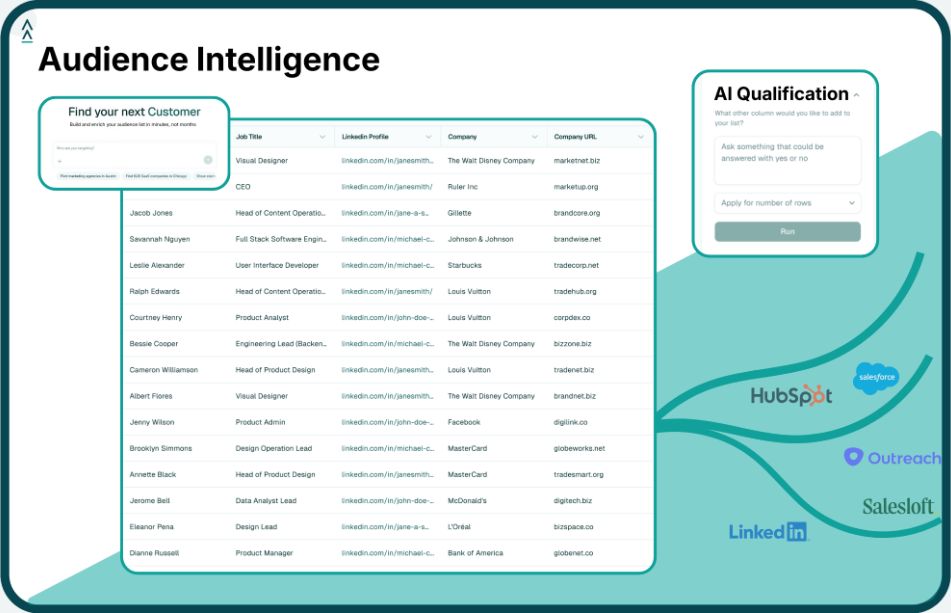
The fix is to enrich leads at the point of entry before routing rules fire. Platforms like Landbase deliver accounts with 1,500+ enrichment fields that you can use to populate the routing fields before the lead hits the queue. When every lead arrives with industry, company size, geography, and signal data, your routing rules work as designed.
Reps join, reps leave, territories shift, and product lines expand. Each change requires routing rule updates. Most teams update the rules late, and leads fall through cracks during the gap.
Build a routing maintenance calendar. Review rules monthly and after every territory change, headcount change, or product launch.
When no routing rule matches a lead, what happens? In most CRMs, the lead goes to an unassigned queue where it sits until someone notices. Build explicit fallback rules: if no rule matches, assign to a designated catch-all rep or round-robin pool.
Before touching the CRM, write out: if [condition], then [assign to]. Cover every combination of territory, segment, product, and edge case. Include fallback rules for every path.
Run a report on the fields your routing rules depend on. If any field is below 90% populated, your routing will misfire on 10%+ of leads. Enrich before routing.
Use native CRM automation (Salesforce Flows, HubSpot Workflows) for routing. Avoid manual assignment for any volume above 50 leads per day.
For every routing branch, define what happens when the condition does not match. Round-robin to a pool is the safest fallback.
Create 20-30 test leads with different field values and run them through the routing. Verify each one ends up with the right rep. Test the fallback paths too.
Track unassigned leads, time-to-first-touch, and routing accuracy weekly. When a number moves, investigate immediately.
Start with round-robin plus territory. It is simple, fair, and scales to 20-30 reps without complexity. Add capacity-based and signal-based routing as you grow past 30 reps and your data quality supports it.
Instantly, through automation. If routing takes more than 5 minutes, you are losing deals. The 7x qualification improvement for responding within one hour is well-documented, and automated routing is how you get response times under 5 minutes.
The lead either misroutes or goes to an unassigned queue. Both cost you revenue. The solution is to enrich leads at the point of entry so routing fields are populated before the rules fire.
If your routing logic is complex (5+ segments, multiple products, global territories), dedicated tools like LeanData pay for themselves in reduced lead leakage. For simpler setups, native CRM automation is sufficient.
Tool and strategies modern teams need to help their companies grow.