.png)
.png)

Daniel Saks
Chief Executive Officer




When a potential customer signs up for a free trial, the goal is simple: get them to experience value and ultimately become a paying customer. But heavy friction in the signup and login process can kill that momentum before it starts. Lengthy forms, email confirmations, and especially creating yet another password can turn eager prospects away. Many new users will simply abandon signing up rather than commit to another set of login credentials(1). Every abandoned signup is a lost opportunity – and a lead that never even enters your scoring model.
This is where passwordless authentication comes in. By letting users sign up or log in via a magic link, one-time code, or biometric scan instead of a password, you remove a huge hurdle from the onboarding process. The result: more trial users completing registration and actually getting into your product. For example, a subscription SaaS that switched to multi-factor passwordless login (email magic links and SMS codes) saw a 33% increase in trial-to-paid conversion(1). That’s a massive lift in revenue simply by making the onboarding seamless. Fewer people bounced at the “create password” screen, so more stuck around long enough to experience the product’s value and eventually convert.
Why does this identity tweak have such an impact on lead scoring and conversions? First, more trial users = more qualified leads entering your pipeline. If 1,000 visitors start a trial but 300 quit in frustration during account creation, you’ve lost 300 leads upfront. Removing passwords and other friction can recapture many of those leads. In fact, one study notes that without password requirements, significantly more visitors complete account registration(1). Those additional trial users now get to actually use your product – giving your sales team something to work with. A user that might have dropped off at signup could turn into a high-scoring lead after a week of product usage.
Secondly, modern authentication often doubles as identity verification. When a user signs up via email magic link, for instance, you automatically verify they control that email. If it’s a company email (e.g. [email protected]), you’ve instantly learned their employer domain – a key data point for B2B lead scoring. Many B2B companies even restrict free trials to business emails for this reason, to ensure sign-ups are real business prospects and not bots or curiosity seekers. By verifying identity early (whether through confirmed email, phone OTP, or social login), you enrich each trial lead’s profile with trustworthy data. That means your lead scoring system isn’t guessing in the dark; it can assign points for useful attributes (like business email domain, role, or location) from the start.
Finally, frictionless identity helps users get to the product’s “aha moment” faster. No one wants to wrestle with passwords or activation emails when evaluating a new tool. By streamlining access, you let the user immediately explore features, which makes them more likely to engage deeply during the trial. Higher engagement leads to higher lead scores (since their product usage is a positive signal) and gives your sales team more behavioral data to act on. It’s a virtuous cycle: easy entry, more engagement, better scoring, higher conversion. Slack is a great real-world example – it allows new users to join a workspace with just a link and integrates single sign-on for business teams, eliminating setup friction. This ease of onboarding helped Slack drive explosive trial-to-paid conversions via product-led growth.
In short, modernizing trial onboarding with passwordless, verified identity directly boosts conversions and lead quality. You capture more trial leads and each lead comes in with a verifiable identity and lower frustration. They’re primed to convert and to be scored accurately based on real usage rather than abandoned forms. It sets the stage for the next step: leveraging that easy onboarding at scale in a product-led growth model.
In a product-led growth strategy, the product is the funnel – acquisition, activation, and conversion all hinge on users quickly deriving value from your software on their own. This only works if onboarding is effortless. Any friction will send users running before they ever hit that “aha” moment. In fact, 80% of users have uninstalled an app because they didn’t know how to use it – a direct result of poor (or absent) onboarding(4). And it’s not lost on customers: 90% of users think companies could do better with product-led onboarding(4). These stats underline a key point: for PLG, an intuitive, low-friction start isn’t a nice-to-have – it’s make-or-break.
It’s no surprise, then, that “frictionless onboarding is the cornerstone of any successful PLG strategy”(5). You want any interested person (a website visitor, a referral, a team colleague, whoever) to seamlessly start using the product with minimal barriers. That means perhaps a one-click sign-up, auto-provisioning of a trial workspace, and guided in-app tours – not lengthy sales demos or complex sign-up forms. Passwordless authentication fits perfectly here. For example, allowing new users to sign up with their Google or Microsoft account (social login) or send themselves a magic link removes the need to create passwords and profiles from scratch. The user goes from curiosity to playing with the product in seconds. This speed and ease directly drive higher activation rates and ultimately conversions.
From a lead scoring perspective, product-led growth generates an avalanche of behavioral data – far richer signals than a traditional marketing-qualified lead. Instead of just knowing that Alice downloaded a whitepaper, you can see that Alicesigned up for a trial, created 3 projects in your app, and invited 2 teammates. These are product-qualified lead (PQL)behaviors, and they’re gold for scoring. The challenge is ensuring enough users reach those behaviors, and that you can identify the users behind them. Frictionless identity helps on both counts. It ensures a larger percentage of sign-ups actually get into the product and start using it (more people hitting those PQL milestones), and it ties usage to a verified identity (so you know Alice from Acme Corp did these actions, not some anonymous user).
The payoff is enormous. Free trials that harness PQL data dramatically outperform those that don’t. According to Gainsight’s PLG Index, trials that identified and acted on PQLs achieved nearly a 2.8× higher conversion rate compared to trials without PQL scoring(3). Likewise, an analysis by Accenture found PQLs are 8× more likely to convert than standard marketing leads, with conversion rates often 5× higher (roughly 25–30% of PQLs convert, versus ~2–3% of traditional MQLs)(9). These are eye-popping differences. It means a PLG funnel with 1,000 sign-ups could yield 250+ customers if PQLs are leveraged, versus maybe 20–30 customers under a classic MQL approach(9). Why the vast improvement? Because PQLs represent users who have already experienced value – they’ve used the product and signaled intent through action, not just interest through form-fills(9).
Passwordless, low-friction onboarding is what fills the top of that PQL funnel. It gets more users into the product experience that generates high-intent signals. Just as importantly, modern identity practices ensure those signals are attributable. If multiple people at Acme Corp sign up and start using your tool, you want to recognize that pattern (e.g. three users from the same company = high buying intent from that account). Requiring a verified email for login helps consolidate activity by domain, enabling account-based scoring in a PLG motion. Some PLG companies even auto-create an “organization” or team account based on email domain for this reason – so usage from [email protected] and [email protected] is grouped together. This way, when threshold events happen (say 5 users at Acme active, or usage of a premium feature), your sales team is alerted that Acme Corp is a hot PQL account.
In summary, product-led growth thrives on frictionless identity experiences. The easier it is for users to get into and expand usage of your product, the more self-qualified leads you generate. Those real usage signals can be scored to pinpoint the best opportunities. On the flip side, every unnecessary hurdle (like forcing a password signup or not auto-verifying emails) is an opportunity for users to drop out or stay hidden – undermining your PLG engine. By modernizing onboarding, you maximize the flow of high-quality PQL data and give your lead scoring models the context needed to prioritize effectively. The result is a faster, more efficient conversion flywheel powered by actual product engagement rather than marketing guesswork.
Even outside of free trials, authentication friction is a conversion killer across the board – and it indirectly hurts lead scoring by shrinking and skewing your lead pool. Every extra step or credential a user must recall is an opportunity for them to give up. Consider that over 33% of consumers have abandoned a login or signup attempt due to forgetting a password(6). That’s one-third of your potential users potentially walking away simply because the sign-in process wasn’t seamless. Similarly, authentication issues (resets, lockouts, account creation hassles) contribute to roughly 23% of all e-commerce cart abandonments by one estimate(1). If a prospect can’t even log into your product or content hub, they’re certainly not going to become a sales opportunity in your CRM.
Lead scoring can’t happen until a lead exists – and leads often don’t exist until someone registers or identifies themselves. By reducing auth friction, you dramatically increase the chances that a visitor will convert into a known lead that you can nurture. Passwordless login is a prime example: it boosts completion rates for sign-ups by removing the tedious password step(1). In one implementation, enabling passwordless options led to higher account registration completion and 20–35% faster checkouts in a consumer setting(1). Translated to B2B SaaS, this means more users get through the signup flow successfully, especially on mobile (where typing complex passwords is a pain). Each additional successful signup is one more lead captured for scoring instead of a lost prospect.
Reducing login friction also improves the quality of lead data you collect. Think of a typical scenario: a user clicks your product’s “Try it free” button. If faced with a lengthy account creation with password, some will churn – and you’ll never know who they were or what interest they had. Others might cheat the system by using a fake email or a throwaway account just to peek (avoiding giving real info due to friction or privacy concerns). Those who sign up with fake data pollute your lead funnel; your marketing automation might be scoring and emailing leads that aren’t even reachable humans. By contrast, if you offer a passwordless login via a verified email link or social OAuth, users are more likely to provide their real, primary email (because the process is quick and clearly secure). You end up with fewer bogus leads and more valid identities. This means your lead scoring inputs are accurate – you’re scoring genuine prospects, not bot signups or duplicates.
There’s a strong security and trust element here as well. Modern users are increasingly wary of creating yet another login. A smooth passwordless flow actually conveys that your company is up-to-date and values their convenience, which boosts trust. That trust makes them more willing to share information or engage further (like completing profile info or trying premium features), feeding more data into your scoring model. On the company side, adopting secure passwordless methods like federated SSO or FIDO2 authentication also reduces the risk of account breaches, which protects your database of leads and users. (We’ll dive more into security next, but it’s worth noting that user-friendly auth and secure auth are not mutually exclusive – done right, they enhance each other, leading to both higher conversions and safer accounts.)
The numbers underscore that passwordless is not just a gimmick but a real growth driver. 70% of organizations are now planning to adopt passwordless authentication or are in the process of implementing it(6), largely to streamline user access. They’ve recognized that every time a user struggles with a password or has to reset one, you introduce friction that can cost you a customer. Moreover, from an operational standpoint, passwordless cuts down overhead: password reset requests make up 30–50% of IT support tickets at large enterprises(6) – an enormous waste of time and money that could be reallocated to higher-value activities. By eliminating passwords, you not only remove a major source of user frustration but also free up your team from babysitting login issues. Marketing and sales teams certainly don’t want prospective leads stuck in “reset my password” limbo when they could be exploring the product or talking to sales.
For lead scoring, the equation is simple: less friction = more leads, and happier leads. When login is effortless, users log in more frequently and engage more deeply (no dread of “ugh, what’s my password again?”). That means more frequent interaction data (feature usage, session length, etc.) streaming into your scoring system, painting a richer picture of each lead’s interest. Conversely, frustrated users who manage to sign up but encounter friction later may disengage, giving you false negatives in your scoring. By making authentication invisible, you keep users active and signals flowing. It’s a bit like oiling a machine – remove the grit and everything runs smoother, including the pipeline from anonymous visitor to high-scoring lead.
In practical terms, companies can implement this by offering single sign-on (SSO) options (enterprise users can log in with their corporate credentials via SAML/OAuth), magic link emails (“click the link we sent to log in instantly”), or one-tap mobile login using biometrics. These methods all authenticate the user with far less effort on their part, and often with higher assurance. The user’s identity is confirmed (they possess the email or device), and they glide right into the product. Meanwhile, your marketing database steadily fills with verified, active leads. The bottom line: if you still force every new user or lead to create and remember a password, you’re quietly sabotaging your own lead conversion and scoring efforts. Removing that friction can lift your conversion metrics immediately (15–25% improvement is common after rolling out passwordless(1)) and set the stage for better lead intelligence down the line(1).
So far we’ve focused on conversion and growth, but security is the equally important flip side of modernizing user identity. Traditional password-based logins aren’t just cumbersome – they’re a major security liability. A staggering 81% of security incidents are caused by compromised credentials (stolen or weak passwords)(6). Every reused or simple password your users create is a crack in the door that attackers can exploit. For companies, a breach of user accounts or lead data can be catastrophic – it erodes customer trust and can slam the brakes on your sales funnel overnight. Modern authentication methods like passwordless and verified identity checks dramatically lower these risks while improving user experience. This is a rare win-win: you get a safer system and happier users/leads.
From a go-to-market (GTM) flow perspective, secure identity ensures that the leads entering your system are genuine and unique. In many B2B scenarios, especially for popular free trials or freemium products, there’s a risk of fake or duplicate sign-ups. For example, competitors or bots might attempt to scrape your content or abuse a free trial by creating multiple dummy accounts. Alternatively, the same person might sign up repeatedly with different emails to get extra “free” usage, skewing your product metrics. Implementing identity verification steps – like requiring an email verification, or integrating with third-party identity providers – helps prevent these issues. If your trial sign-up requires a valid corporate email or a phone number verification, it’s much harder for bots or bad actors to flood your system. You’ll know that John Doe who just started a trial is a real individual (and only one account), not a script hitting your API or a competitor using [email protected]. This means the data in your lead scoring and product analytics remains clean and trustworthy. Your scoring model isn’t accidentally giving a high score to what is actually just one person who made five accounts; it sees one person with five sessions – a very different (and accurate) picture.
Modern “passwordless” solutions inherently incorporate stronger authentication factors. For instance, magic link logins and one-time-passcodes rely on something the user has (their email inbox or phone). Biometrics rely on something they are (fingerprint/face ID). These are much harder to compromise than a password someone knows. A study by the Ponemon Institute found that deploying multi-factor or passwordless approaches can reduce the risk of account compromise by 99% compared to basic passwords(6). That’s a profound improvement in security. For your GTM teams, it means less worry that a hacker will hijack a high-value lead’s account or that a data breach will expose thousands of contacts. It’s hard to overstate the value of this: a serious breach can stall your sales operations (prospects get cold feet if they hear your system was breached) and lead to regulatory fines. By investing in secure authentication, you’re protecting the integrity of your lead pipeline.
Security enhancements also feed back into lead scoring trust and compliance. If each user’s identity is verified, you can be confident in enriching that lead with external data (like firmographics) and in routing it appropriately. For example, many companies integrate their authentication with single sign-on or OAuth providers (Google, LinkedIn, etc.). When a user signs up via Google, you often get a verified email and even their name/photo. You can safely use that in lead scoring (e.g. give a higher score if the email domain matches your ICP’s domain list) because you know it’s valid. Similarly, some systems perform background identity resolution (like Clearbit or 6sense) as soon as an email is confirmed – linking the lead to a company and filling in details that greatly aid scoring (industry, company size, role, etc.). None of that works well if the identity is garbage (e.g. “[email protected]”). Verified identity is the foundation for reliable lead enrichment, which in turn is the foundation for accurate scoring.
There’s also a compliance and ethical marketing angle. Privacy regulations (GDPR, CCPA, etc.) urge companies to ensure the integrity and consent of user data. Having clear authentication and verification flows means you know exactly who a user is (rather than a mishmash of possibly merged or mistaken identities), and you can be sure you have proper consent tied to that identity. If a person says “delete my data,” you can confidently remove the right records. If a lead asks to unsubscribe, you know which identity that maps to. It’s harder to honor these requests if you have duplicate or fake accounts floating around. By cleaning up identity via secure login processes, you maintain a healthier, compliant database – which ultimately means your lead scoring and outreach efforts target real, willing individuals. That improves metrics like response rates and avoids the PR nightmare of accidentally spamming people who never truly signed up.
Finally, secure, passwordless authentication boosts customer and lead confidence. When users see options like “Sign in with SSO” or experience a quick biometric login, it sends a signal that your company values security. Contrast that with old-school practices like emailing plain-text passwords or having no 2FA option – those raise red flags for savvy buyers. For example, after Microsoft implemented passwordless sign-ins internally, they reported an 87% reduction in support costs related to passwords and a significant uptick in user satisfaction(6). Likewise, Accenture saw phishing attacks drop by 60% after moving to passwordless authentication for its workforce(6). These improvements translate to a smoother GTM operation: fewer security incidents to put out (which can derail sales efforts), and more confident users who will continue along the buyer journey. A secure lead is more likely to become a secure customer.
In summary, verifying user identity and embracing passwordless security measures fortifies your lead funnel. You filter out fraudulent sign-ups, protect genuine leads from account takeovers, and ensure every lead in the system is tied to a real, unique person. This gives your sales team more confidence in the leads scored as “hot” – they know those are real people showing real interest, not bots or duplicates. Plus, you avoid the devastating setbacks that security breaches or compliance failures can inflict on your go-to-market momentum. Modern identity isn’t just about making IT happy; it’s now a core part of an efficient, trustworthy GTM engine.
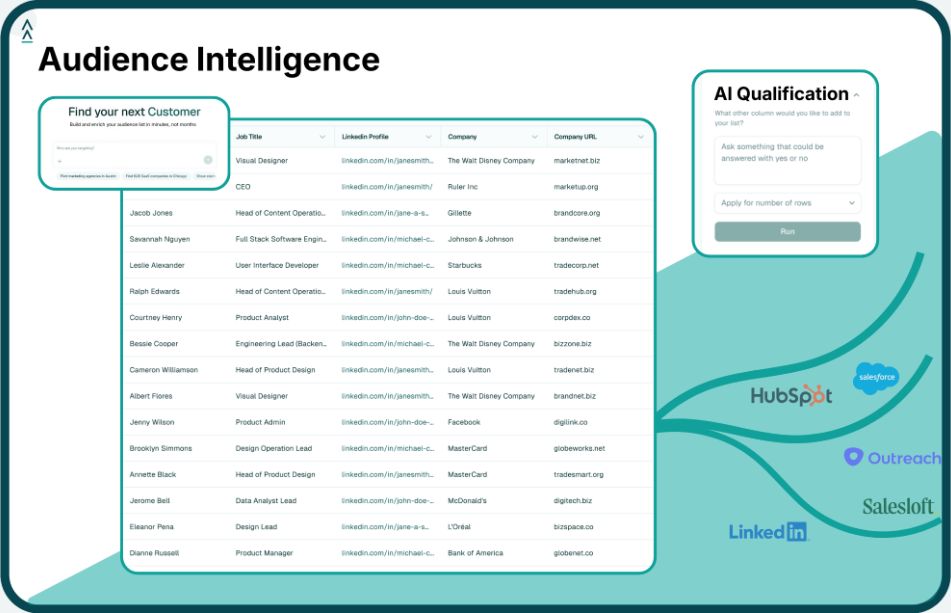
Thus far we’ve discussed principles and industry-wide trends; now let’s bring it together with a concrete example. Many companies struggle to connect the signals they observe – website visits, content downloads, product trial usage – to the actual humans behind those actions. Without that connection, lead scoring can feel like educated guesswork. This is exactly the problem Landbase set out to solve. Landbase is a B2B GTM platform that uses data and AI to instantly find and qualify prospective customers. In practice, that means Landbase focuses heavily on verifying identity and enriching every signal with context, so that sales teams know who is showing intent and how to reach them.
It’s common to see marketing teams drowning in “leads” that aren’t really leads – think info@ emails, spam form fills, or random webinar attendees who will never buy. In fact, nearly half of B2B companies (44%) admit they do not verify or validate leads before passing them to sales(7). That means a lot of sales reps are wasting time on unvetted contacts that go nowhere. Landbase attacks this inefficiency by ensuring the leads you get are both real and qualified. How? By combining a massive identity knowledge base with intelligent signal analysis. The Landbase platform boasts 300M+ verified contacts and 1,500+ unique signals in its database(8). Whenever a new lead or account enters your funnel (say someone from a target company visits your pricing page or a trial user hits a usage milestone), Landbase’s system can cross-reference those signals against its database to pinpoint who the buyer likely is and what their context is.
Landbase’s approach to identity and lead scoring can be summed up in two words: quality and context. To illustrate, let’s break down a few of Landbase’s capabilities:
The impact of Landbase’s identity-centric approach is evident in performance metrics. Because Landbase delivers highly qualified, validated leads (and often does so instantly, without any manual research), sales teams can achieve far better outcomes. For example, one outbound sales team using Landbase’s AI-qualified contact lists saw 40% higher reply rates in their cold outreach campaigns. That’s a huge jump in engagement, attributable to the fact that Landbase provided them with truly targeted contacts who had real intent signals – essentially, leads that were pre-scored to be receptive(8). Landbase also emphasizes “speed to lead.” Its users can go from a natural-language query (“find me CFOs at fintech startups hiring this quarter”) to a ready-to-use lead list in minutes. This speed, combined with accuracy, means marketing and sales can respond to intent signals in near-real-time. If Landbase flags that a certain account is “surging” in intent today, you can engage that same day, while interest is hot – an agility that traditional lead gen and scoring processes struggle to match.
In essence, Landbase operationalizes everything we’ve discussed about modern identity and lead scoring. It verifies every lead’s identity and enriches them with deep context (so your scoring is based on truth, not assumptions). It removes friction in finding and activating leads (no login needed to get started, free instant data, etc.), aligning with product-led principles. And it leverages AI to connect the dots between disparate signals and actual people, ensuring you’re always focusing on real potential buyers, not ghosts or noise. For companies looking to modernize their go-to-market, Landbase offers a blueprint of how verifying and scoring identity at scale can drive better outcomes.
Modern B2B growth is as much about experience as it is about data. If you want better conversions and higher-quality leads, you need to look hard at your onboarding and authentication process – it’s often the first interaction a prospect has with your product, and it sets the tone (and data) for everything that follows. The evidence we’ve explored is compelling: removing friction in sign-ups and logins boosts conversion rates by double-digit percentages, while verifying user identity yields dramatically higher lead quality and sales efficiency. Companies that excel at continuously qualifying and nurturing leads – effectively separating real prospects from the junk – generate 50% more sales-ready leads at 33% lower costthan those that don’t(7). This is a direct result of focusing on the right people and giving them a smooth journey.
To modernize your onboarding and user identity is to acknowledge that the old ways of doing things (forcing every user through account creation hell, relying on static form-fills, ignoring security until there’s a breach) just don’t cut it anymore. Users have more choices – if your product is too hard to access, they’ll find one that isn’t. And businesses have more data – if you’re not leveraging identity and behavioral signals in tandem, your competitors will. The path forward is clear: embrace passwordless, friction-free sign-up flows, and ensure every lead is verified and enriched from the start. Do that, and you create a positive feedback loop: more sign-ups -> more data -> better lead scoring -> higher conversions -> more customers and advocates (who bring in more sign-ups). Equally, you reduce waste and risk: fewer bogus leads and breaches -> less time lost on dead ends -> more focus on real opportunities.
The transition to passwordless, identity-first onboarding doesn’t have to happen overnight. Many organizations start small – for instance, introducing a “magic link” login option and gradually phasing out passwords as users grow comfortable. Or piloting an identity enrichment tool on one segment of leads before rolling it out globally. The key is to start. As one cybersecurity report noted, 100% of businesses that moved to modern FIDO-based authentication reported improved user experience and security(6). And with big names from Microsoft to Mastercard going passwordless, the question is no longer if passwordless identity will become standard, but when. For B2B companies, getting ahead of this curve can translate into a significant competitive advantage in lead generation and conversion efficiency.
In the end, improving lead conversion and scoring isn’t just about algorithms and analytics – it’s about removing the barriers between a willing buyer and your product’s value. By modernizing how users identify themselves and get access, you’re greasing the skids for that value exchange to happen quickly and repeatedly. You’re saying to prospects: “We respect your time and will prove our worth to you immediately,” and to your sales team: “Here’s a lead who’s truly engaged and verified, go build a relationship.” Those are powerful messages that drive business outcomes. As Landbase’s success demonstrates, uniting a frictionless user experience with rigorous identity insight enables you to find your next customer in seconds rather than months.
Tool and strategies modern teams need to help their companies grow.