.png)
.png)

Daniel Saks
Chief Executive Officer


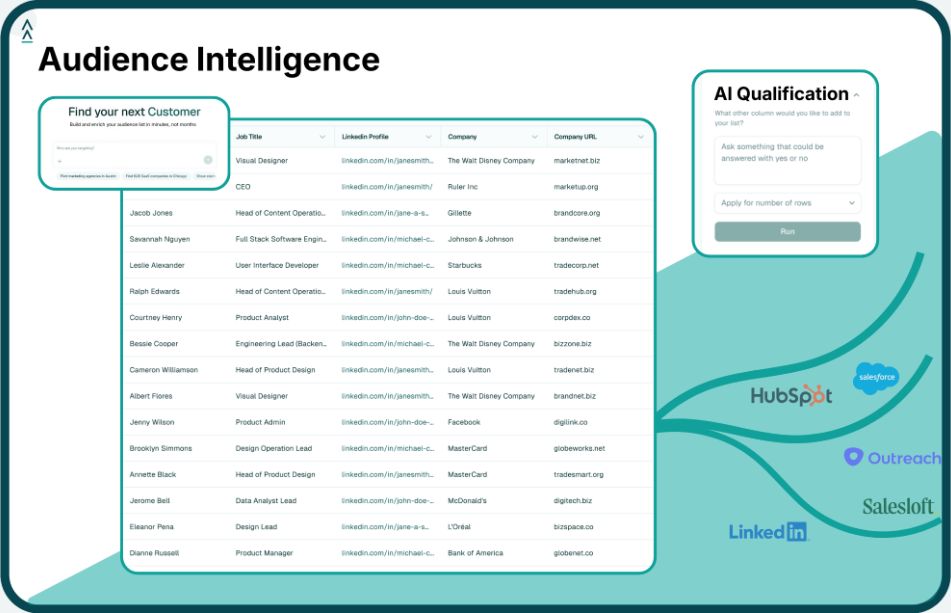
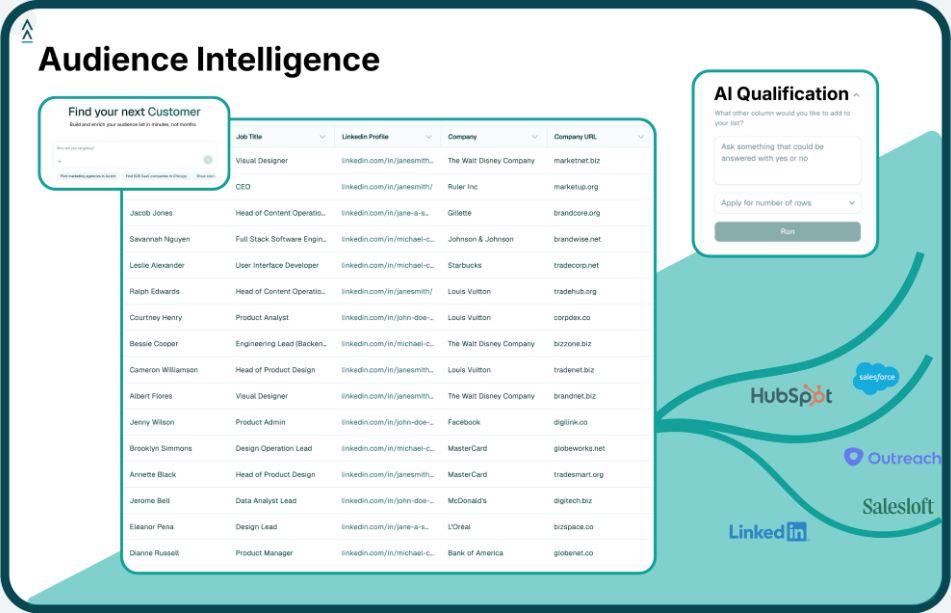
The retail technology sector is experiencing unprecedented growth, with companies raising billions in funding to transform how consumers shop and how businesses operate. From AI-powered checkout systems to conversational commerce platforms, these innovations are reshaping retail's future. For B2B companies selling into the retail tech space, understanding these trends and identifying the right prospects is critical. Platforms like Landbase enable go-to-market teams to find and qualify their ideal retail tech customers using natural-language targeting and AI qualification, making it easier to connect with these high-growth companies.
Whatnot operates a live shopping platform that enables real-time commerce through video streaming, combining social interaction with instant purchasing. The platform creates an interactive marketplace for collectibles, fashion, and consumer goods, allowing sellers to showcase products in real-time while buyers can purchase instantly.
Whatnot validates the "retailtainment" model in Western markets, proving that live shopping—dominant in Asia—can succeed globally. Their platform bridges the gap between social media engagement and e-commerce conversion, creating a more authentic and interactive shopping experience that drives higher retention and GMV than traditional e-commerce platforms.
Valuation: $11.5B | Founded: 2019
Recent Funding: $225M Series F (October 2025)
Standard AI provides autonomous checkout technology that can be installed into retailers' existing stores, enabling customers to shop and pay without traditional checkout lines. Their computer vision and AI system automatically detects products as customers shop, eliminating the need for scanning or cashier assistance.
Standard AI is democratizing Amazon Go-style checkout for mainstream retailers. By making autonomous retail accessible without massive infrastructure overhaul, they're enabling mid-market retailers to compete with tech giants on customer experience while reducing labor costs and improving throughput—a critical capability as labor shortages persist in retail.
Valuation: $1B | Founded: 2017
Recent Funding: $150M Series C (February 2021)
Talon.One offers an enterprise platform enabling personalized, scalable promotions and loyalty programs that drive customer engagement while protecting margins through AI-driven optimization. Their solution helps retailers create sophisticated campaigns that balance customer acquisition with profitability.
Talon.One solves the critical retail challenge of rising customer acquisition costs versus lifetime value. By enabling sophisticated, AI-driven loyalty and promotion programs, they help retailers compete with Amazon's personalization capabilities while maintaining profitability—essential as acquisition costs continue to climb in competitive retail markets.
Recent Funding: $135M Series B (July 2025)
Hightouch provides an AI-powered customer data platform and decisioning infrastructure enabling retail marketers to deliver 1:1 personalized experiences at scale through automated, real-time customer data activation. Their composable architecture allows flexible data activation across marketing channels.
Hightouch addresses retail's shift from mass marketing to micro-personalization. As retailers drown in customer data but struggle to activate it in real-time, Hightouch's infrastructure enables the "mass to micro" transformation that's critical for 2025 retail success, helping brands deliver relevant experiences that drive conversion and loyalty.
Valuation: $1.2B | Founded: 2019
Recent Funding: $80M Series C (February 2025)
Boulevard offers an AI-driven platform for salons, spas, and medspas that streamlines scheduling, messaging, marketing, and payments. Their Precision Scheduling feature leverages AI to optimize appointment booking based on availability and client patterns, maximizing revenue per time slot.
Boulevard addresses the appointment-based retail sector (salons, spas, medspas) which has historically been underserved by technology. By bringing enterprise-grade AI and automation to small service businesses, they're enabling local retailers to deliver Amazon-level customer experience and operational efficiency, transforming how service retail operates.
Recent Funding: $80M Series D (July 2025)
ShopMy operates a curated commerce platform connecting premium brands with trusted curators (influencers/tastemakers) and consumers. The platform functions as an integrated marketing system emphasizing authenticity over algorithmic recommendations, creating a more trustworthy shopping experience.
ShopMy represents the evolution beyond traditional influencer marketing to authentic, curated commerce. As consumers increasingly distrust ads and algorithms, curator-driven discovery offers brands a path to customer acquisition that feels organic while remaining measurable—solving the trust crisis in digital retail and providing sustainable alternatives to performance marketing.
Valuation: $1.5B | Founded: 2020
Recent Funding: $70M (October 2025)
Ripplr provides an integrated full-stack distribution platform combining logistics, field operations, inventory intelligence, retailer relationship management, and order processing for consumer brands. Their solution consolidates the entire distribution value chain into a single platform.
Ripplr tackles the fragmented distribution challenge in emerging markets where consumer brands struggle with last-mile delivery, inventory visibility, and retailer relationships. Their platform consolidates the entire distribution value chain, critical for brands scaling in markets with complex, multi-tier distribution networks where traditional logistics solutions fall short.
Valuation: ~$225M (₹1,900 crore) | Founded: 2019
Recent Funding: $45M Series C (November 2025)
Swap offers an e-commerce operations platform consolidating inventory, logistics, returns, and cross-border management under a single platform. Their newly launched Swap Inventory provides AI-powered demand forecasting and smart restocking recommendations to optimize inventory levels.
Swap addresses the operational complexity choking DTC brands as they scale. Most e-commerce companies juggle 10-15 different tools for inventory, shipping, returns, and cross-border. Swap's unified platform with AI inventory optimization enables brands to scale globally without operational chaos—critical as international expansion becomes a growth imperative for retail brands.
Recent Funding: $40M Series B (March 2025)
Relay is rebuilding e-commerce logistics with an AI-driven, hyperlocal delivery model that dynamically assigns parcels and optimizes routes, reducing reliance on traditional hub-and-spoke networks. Their platform serves major players including TikTok, Temu, and Vinted.
Last-mile delivery costs represent 53% of total shipping costs for retailers. Relay's AI-driven hyperlocal model fundamentally restructures logistics economics, making same-day and next-day delivery profitable. This is critical as consumer expectations for speed increase while margins compress, enabling retailers to meet delivery promises without sacrificing profitability.
Valuation: £31.4M | Founded: 2022
Recent Funding: $35M Series A (February 2025)
Phia operates an AI-powered shopping search engine that streamlines online shopping by helping users find products, compare prices, and uncover deals across retailers through intelligent aggregation and recommendations. Available as both an app and browser extension, it addresses online shopping inefficiency.
Phia tackles the paradox of online shopping: infinite choice but poor discoverability. As retailers spend billions on SEO and ads, Phia positions itself as the AI layer between consumer intent and product discovery—potentially disrupting Google Shopping and Amazon's dominance in product search by providing a more efficient, user-centric shopping experience.
Valuation: $180M | Founded: 2024
Recent Funding: $30M (December 2025)
These 10 fastest-growing retail tech companies demonstrate how AI and automation are transforming every aspect of retail—from customer discovery and checkout to logistics and returns. For B2B companies selling solutions to this sector, understanding these trends is just the first step. The real challenge lies in identifying and qualifying the right prospects within these high-growth companies.
This is where AI-powered audience discovery platforms become essential. Retail tech companies like Hightouch and Talon.One are solving complex data and personalization challenges that require sophisticated targeting capabilities. B2B sellers need access to comprehensive signals spanning firmographic, technographic, intent, hiring, and funding data to identify the right decision-makers at the right time.
Landbase's VibeGTM feature enables go-to-market teams to use natural-language targeting to find prospects like "Product leaders at AI/ML startups hiring their first RevOps leader" or "Marketing Directors at healthcare technology firms scaling digital teams." This approach eliminates the complexity of traditional database queries and delivers AI-qualified audiences ready for immediate activation.
The retail tech companies featured in this list share common characteristics that make them attractive prospects for B2B solutions:
For B2B companies targeting this sector, the ability to identify prospects based on specific criteria—such as recent funding rounds, hiring patterns, technology stack changes, or growth signals—is critical. Landbase's company data intelligence provides the growth signals, Trust Score, and total addressable market insights needed to prioritize outreach and maximize conversion rates.
This list highlights the fastest-growing retail tech companies based on a rigorous evaluation process that considered:
A fastest-growing retail tech company is defined by significant funding rounds in 2024-2025 (ranging from $30M to $225M) and strong market traction metrics like $6 billion GMV or 750,000 downloads in eight months. These companies demonstrate innovation that solves critical retail challenges through AI and automation, attracting tier-1 investors like Sequoia Capital, ICONIQ Growth, and SoftBank Vision Fund. The combination of substantial funding velocity, proven customer adoption, and transformative technology validates their rapid growth trajectory in the competitive retail technology landscape.
AI is the foundation of retail tech innovation, with 100% of the companies in this list leveraging AI/ML in some capacity. AI enables autonomous checkout systems that reduce labor costs, personalization engines that drive customer engagement, and logistics optimization that cuts travel distances by 95%. Workflow automation powered by AI reduces manual work by up to 40%, while AI decisioning platforms enable real-time personalization at scale. This widespread AI adoption allows retail tech companies to solve previously intractable problems around customer experience, operational efficiency, and profitability—driving both investor confidence and customer adoption.
Funding validates market demand and enables rapid scaling in competitive retail markets. The massive rounds secured by these companies—such as Whatnot's $225M Series F and Hightouch's $80M Series C—demonstrate strong investor confidence in their business models and market opportunities. This capital provides the resources needed for product development, geographic expansion, customer acquisition, and talent recruitment. For retail tech startups facing entrenched competitors, substantial funding enables them to achieve critical mass quickly, build defensible moats through technology investments, and capture market share before competitors can respond.
Customer data and personalization solutions are attracting the most investment. This includes CDP platforms like Hightouch, loyalty solutions like Talon.One, and curated commerce platforms like ShopMy that address first-party data collection and activation challenges. AI-driven automation for retail operations and logistics is the second most funded category, with a company like Swap addressing critical efficiency challenges. The investment concentration reflects retail's urgent need to compete on personalization while improving operational efficiency as margins compress and customer acquisition costs rise.
B2B companies can effectively target these retail tech innovators by leveraging AI-powered audience discovery platforms that provide access to comprehensive signals including funding rounds, hiring patterns, technology stack changes, and growth indicators. Natural-language targeting through platforms like Landbase enables precise audience building without complex database queries, while AI qualification ensures prospects are ready for engagement based on real-time signals. Understanding each company's specific challenges—whether data activation, logistics optimization, or customer engagement—allows B2B sellers to tailor their outreach and demonstrate clear value aligned with the prospect's growth priorities and technology roadmap.
Tool and strategies modern teams need to help their companies grow.