.png)
.png)

Daniel Saks
Chief Executive Officer


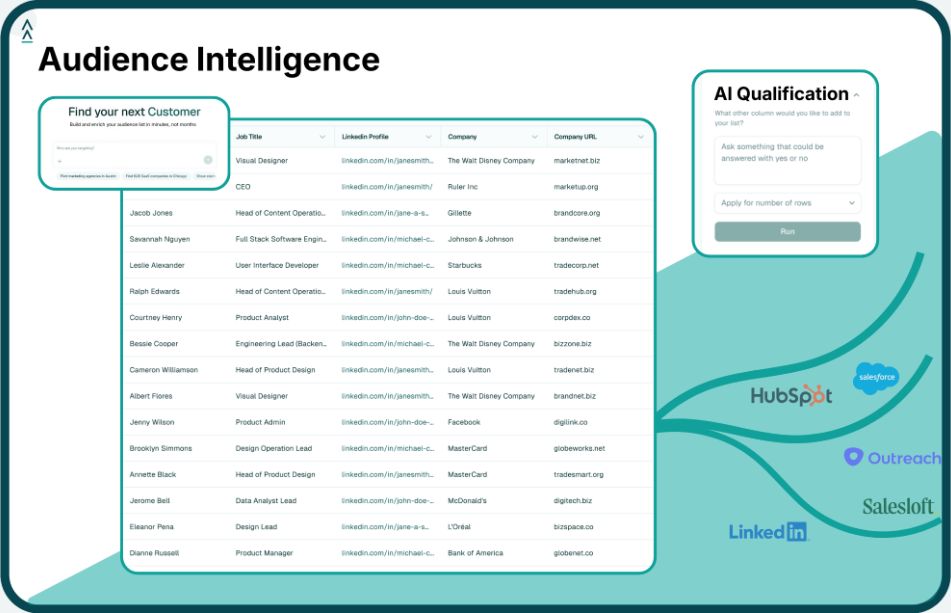
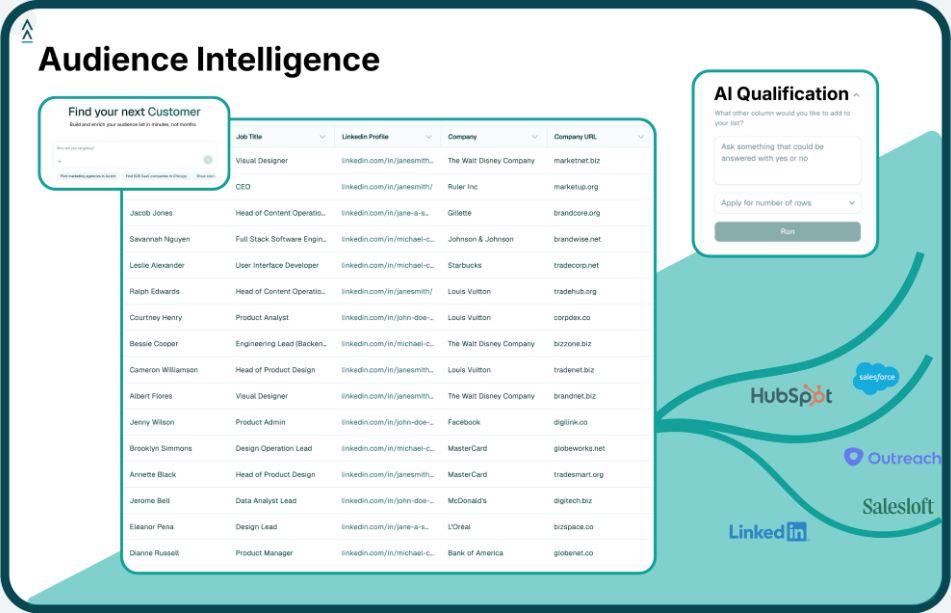
The restaurant industry faces a perfect storm of labor shortages, razor-thin margins, and evolving customer expectations. Yet, a new wave of technology companies is thriving amid this chaos, raising hundreds of millions in funding to reimagine how restaurants operate. The global restaurant POS market is projected to grow from $25.1 billion in 2025 to $49.3 billion by 2035, with 83% of US restaurants now using cloud-based systems. This digital transformation is being powered by AI-native platforms that go beyond transaction processing to deliver predictive insights, automate workflows, and drive revenue growth. For go-to-market teams targeting this dynamic sector, identifying these high-growth players and their leadership requires sophisticated audience intelligence. Platforms like Landbase enable you to find your next customer by using natural-language targeting to identify companies with specific growth signals, such as recent funding rounds or leadership changes, making it easier to engage with the decision-makers at these fastest-growing restaurant tech companies.
Orders.co POS is a cloud-based, all-in-one point-of-sale system built for any restaurant model, from full-service dining rooms to food trucks, pizzerias, catering operations, and virtual concepts, across a single location or multiple sites. It consolidates orders from all platforms, including Uber Eats, Grubhub, DoorDash, and ezCater, as well as direct website orders, into a single dashboard, with menus synced across all channels in real time.
Orders.co helps restaurants stop managing their business across disconnected tools. Built-in tools include a commission-free ordering website, customer loyalty program, automated marketing, catering management, and dispute management to recover revenue lost to third-party delivery app chargebacks. Delivery runs through a hybrid dispatch model; restaurants can use in-house or third-party drivers, and when no in-house driver is available, the AI Dispatch automatically assigns a third-party driver based on cost and availability.
Toast provides an all-in-one restaurant technology platform combining POS, online ordering, digital ordering, delivery management, team management, and financial solutions specifically built for the food service industry. Unlike systems adapted from retail, Toast was built from the ground up specifically for restaurants.
Toast pioneered the restaurant-native platform concept, built specifically for restaurants from day one rather than adapted from retail systems, ensuring features align with actual restaurant workflows. The platform achieved massive scale dominance, dominating the U.S. market with proven reliability at scale. Market recognition includes offering 200+ partner integrations including xtraCHEF (acquired March 2025 for AP automation) to create a complete restaurant tech stack.
Owner.com is building "Shopify for local business owners," starting with restaurants. The platform provides high-conversion websites, loyalty programs, SEO, digital marketing, and AI-powered tools to help independent restaurants compete with national chains like Domino's and Sweetgreen in the digital arena.
Owner.com pioneered proven conversion advantages with Owner websites converting 100% more visitors into customers compared to competitors, directly addressing the digital divide that threatens independent restaurants. The platform achieved rapid growth impact with restaurants growing traffic by 30% within 30 days and documented cases of $300K+ annual online sales increases. Market differentiation includes launching an AI executives platform with AI CMO, CTO, and CFO agents to automate marketing decisions, tech optimization, and financial planning for restaurant owners.
Nory builds the first AI-native restaurant management system that combines workforce management, payroll, inventory, and business intelligence into a single platform. Unlike legacy systems that merely digitize existing processes, Nory delivers real-time AI recommendations that proactively cut costs and streamline operations before problems occur.
Nory pioneered exceptional proven ROI with restaurants using Nory slashing operating costs, addressing the existential crisis facing hospitality businesses. The platform achieved significant time savings by saving restaurateurs 100+ hours of admin per month, freeing them to focus on customer experience and growth. Market differentiation includes high predictive accuracy with AI engine forecasting daily demand with up to 95% accuracy, reducing waste and optimizing staffing.
Sunday provides a QR code-based payment platform that allows restaurant guests to scan, split bills, tip, and pay in under 10 seconds without waiting for servers. The system integrates with existing POS platforms (including Toast) rather than replacing them, focusing specifically on transforming the checkout experience.
Sunday pioneered guest-first design philosophy, built by restaurateurs for diners rather than operators, flipping the traditional restaurant tech approach and prioritizing customer experience. The platform achieved proven operational impact by saving 12 minutes per table, increasing average tips by 11%, and generating 5× more Google reviews. Market differentiation includes a path to profitability with tripled revenue in 12 months demonstrating 3× year-over-year growth and strong unit economics.
Petpooja provides cloud-based restaurant SaaS platform with POS, payroll, GST billing, inventory management, and task automation. Originally focused on restaurants, they've recently expanded beyond to serve the broader SME market with Invoice, Purchase, and Tasks products, demonstrating platform scalability.
Petpooja pioneered market leadership in India, ranked #1 Restaurant POS company globally by Tracxn Score, proving restaurant tech success extends beyond Western markets. The platform achieved regional customization expertise built specifically for Indian restaurant operations with GST compliance, regional billing requirements, and local payment methods. Market differentiation includes AI automation focus with recent Series C funding specifically allocated to enhance AI automation capabilities and expand their product suite.
Hyphen develops automated kitchen platforms with robotic systems that assemble meals like bowls and salads underneath the makeline, out of public view. The technology uses robotic hands to prep orders while employees manage toppings above, creating "elegant" and efficient service that addresses labor shortages.
Hyphen pioneered strategic investor validation, backed by direct competitors Chipotle and Cava, proving the technology's value transcends competitive dynamics. Market differentiation includes fast return on investment with equipment delivering ROI in under one year, making automation financially viable for restaurant operators.
Loman AI provides a 24/7 Voice AI phone agent that answers restaurant calls, takes pickup and delivery orders, books reservations, answers FAQs, and processes payments—all while integrating directly with major POS systems like Toast, Square, SpotOn, and Clover. This addresses the critical pain point of missed calls during peak hours.
Loman AI pioneered revenue recapture solutions with customers seeing up to 22% higher revenue from previously missed calls and smart upsells, directly impacting the bottom line. The platform achieved labor cost reduction by cutting labor costs by as much as 17% by offloading phone traffic from human staff during busy periods. Market differentiation includes rapid deployment capabilities with operational capability in under 24 hours, providing immediate relief to understaffed restaurants.
TABsense creates AI agentic PoS systems for multi-branch and franchise restaurants and cafés in the Middle East. Their platform uses autonomous AI agents that act like digital employees—managing operational tasks, optimizing menus, automating workflows, and delivering real-time insights to operators, going beyond traditional transaction logging.
TABsense pioneered an agentic AI approach that goes beyond passive insights to autonomous task management where AI takes action rather than just providing recommendations, representing the next evolution of restaurant management software. The platform achieved strategic regional partnerships integrated with major Middle Eastern telecom providers STC and Zain Group, plus major financial institutions, ensuring market penetration. Market differentiation includes rapid regional market leadership with fast growth in Saudi Arabia and Jordan markets demonstrating strong product-market fit in emerging economies.
Magic developed Loyalist, an agentic CRM platform that integrates a restaurant's entire tech stack—reservations, POS, event platforms, and social media—into one unified, intelligent system. The platform helps restaurant operators understand and delight every guest through data-driven insights, solving the data fragmentation problem.
Magic pioneered unified tech stack solutions that integrate POS, reservations, events, and social media in a single platform, eliminating data silos that plague high-end restaurants. The platform achieved strategic investor validation backed by Major Food Group (one of their own clients) and Gary Vaynerchuk, proving product-market fit with discerning operators. Market differentiation includes Michelin-star clientele used by top-tier restaurants including Major Food Group, Momofuku, Le Bernardin, COTE, and The Dinex Group, demonstrating quality and reliability.
The restaurant industry is undergoing a fundamental transformation driven by technology. While two venues close every day in the UK alone, these innovative companies are not just surviving—they're thriving by addressing critical pain points: labor shortages, rising costs, operational inefficiency, and the digital divide between independents and chains. The success of these companies demonstrates that restaurants need integrated solutions rather than point tools, and that AI must be core to the architecture, not just an add-on feature.
For go-to-market teams targeting this dynamic sector, identifying these high-growth companies requires more than basic company databases. You need real-time signals like funding rounds, leadership changes, and technology adoption to build targeted prospect lists. This is where agentic AI platforms like Landbase provide a strategic advantage, enabling you to find your next customer in seconds rather than days.
This list highlights companies that demonstrate exceptional growth velocity and market impact based on:
These fastest-growing restaurant POS companies represent a dynamic and valuable target market for B2B vendors, investors, and partners. However, reaching decision-makers in this fast-moving sector requires sophisticated audience intelligence. Traditional data providers often lack the real-time signals needed to identify companies at the optimal moment for engagement—such as immediately after a funding round or leadership change.
This is where natural-language targeting powered by agentic AI becomes essential. Instead of manually querying complex databases with technical filters, go-to-market teams can use plain English prompts like "CEOs of restaurant POS startups that raised Series B funding in 2025" or "Founders of AI-native restaurant management platforms in the Middle East." Landbase's GTM-2 Omni model interprets these queries, evaluates prospects using 1,500+ unique signals, and delivers AI-qualified audiences ready for immediate activation.
By combining comprehensive company data with intuitive natural-language interfaces, platforms like Landbase enable sales and marketing teams to:
For B2B organizations targeting the restaurant technology sector, AI-powered audience discovery is no longer optional—it's a strategic necessity for efficient go-to-market execution.
Essential features include integrated payment processing, inventory management, employee management, and customer relationship management capabilities. Modern systems should also offer mobile ordering, contactless payments, and kitchen display systems, with actionable data analytics to drive business decisions. Cloud-based platforms are now standard, with 83% of US restaurants using cloud-based systems. The best systems also integrate seamlessly with other tools in your tech stack rather than operating in isolation.
Traditional POS systems were on-premise hardware and software that required significant upfront investment and technical expertise to maintain, while cloud-based POS systems are hosted online and accessible from any internet-connected device on a subscription basis. Key advantages include lower upfront costs, automatic updates, remote access to data, better integration capabilities, and enhanced security. Cloud systems also enable real-time data access and analytics, allowing restaurant owners to make informed decisions from anywhere. The shift to cloud has been rapid, with the majority of new restaurant POS implementations now being cloud-based.
Based on funding velocity, customer growth, and market impact, the fastest-growing companies include SpotOn ($923M raised, tripled footprint), Toast (156,000+ locations, 8,000 added in Q2 2024), Owner.com ($1B valuation, unicorn status), Nory ($37M Series B, 20% cost reduction), and Sunday ($21M Series B, tripled revenue in 12 months). These companies demonstrate exceptional growth across different segments—from comprehensive platforms to specialized solutions—and represent the innovation driving the restaurant tech revolution.
AI is transforming restaurant POS systems from passive transaction recorders to proactive operational assistants that use predictive analytics, autonomous task management, voice-enabled interfaces, and personalized customer experiences. Future systems will drive automation in kitchen operations and optimize pricing, inventory, and staffing in real-time. The companies leading this transformation are those built with AI as core architecture from inception, not those adding AI as an afterthought.
Restaurant owners can leverage smart POS technology by implementing systems that integrate multiple functions into a single platform, eliminating data silos and manual processes. Key efficiency gains come from automated inventory management that reduces waste, AI-powered demand forecasting that optimizes staffing, integrated payment processing that speeds checkout, and unified customer data that enables personalized marketing. Systems like Nory demonstrate that smart POS can reduce operating costs by nearly 20%, with the most impactful implementations focusing on solving specific operational pain points rather than just digitizing existing processes.
Restaurant tech startups are attracting significant venture capital investment, with funding rounds ranging from seed rounds of $3-10 million (Loman AI, Magic, TABsense) to Series C rounds of $25-120 million (Owner.com, Hyphen, Petpooja). Strategic investors are increasingly important, with restaurant operators like Major Food Group and chains like Chipotle and Cava investing directly in technology that addresses their operational challenges. This combination of traditional VC and strategic investment validates both the market opportunity and the practical utility of these solutions.
Tool and strategies modern teams need to help their companies grow.