.png)
.png)

Daniel Saks
Chief Executive Officer


Manufacturing is experiencing a technological renaissance, with Industry 4.0 driving unprecedented innovation in automation, AI, and robotics. The sector has seen significant funding activity, with companies solving critical challenges—from labor shortages to quality control—while transforming how products are designed, built, and delivered. For these manufacturing technology providers, finding and engaging ideal customers requires sophisticated go-to-market strategies. Platforms like Landbase help them identify manufacturers investing in automation, robotics, and predictive maintenance by leveraging 1,500+ unique signals to build AI-qualified audience lists in seconds.
Apptronik builds AI-powered humanoid robots designed for commercial deployment across multiple industries. Their general-purpose humanoid robots aim to address critical labor shortages while performing complex tasks in manufacturing, logistics, and service environments. The company focuses on creating robots that can adapt to various workplace scenarios through advanced AI learning capabilities.
Neural Concept provides an engineering intelligence platform that uses AI to optimize product design processes. Their software serves aerospace, automotive, and industrial equipment manufacturers by dramatically reducing design iteration time from weeks to hours. The platform leverages machine learning to predict optimal designs based on performance requirements and constraints.
Dexterity develops AI-powered robotic manipulation systems for warehouse and logistics environments. Their intelligent robots learn and adapt to various warehouse tasks, handling complex manipulation challenges that have traditionally required human dexterity. The company's solutions automate material handling in distribution centers and manufacturing facilities.
Bedrock Robotics develops autonomous construction technology to address severe labor shortages in the construction industry. Their robotics solutions automate repetitive and dangerous construction tasks, bringing manufacturing-level automation to construction sites. The company's technology enables faster, safer, and more efficient construction processes.
Cellular Origins provides robotics and automation solutions specifically designed for biomanufacturing. Their technology addresses critical bottlenecks in cell therapy production, enabling scalable manufacturing of personalized medicines. The company's automation platforms help biotech companies overcome production challenges in the rapidly growing cell therapy market.
Deep Robotics produces advanced robotics systems for industrial applications, based in China's manufacturing hub of Hangzhou. The company develops robotic solutions that address various industrial automation needs, from material handling to complex assembly tasks. Their robotics platforms serve manufacturers looking to increase automation in their operations.
Litmus Automation provides an Industrial IoT and edge computing platform that connects manufacturing equipment and enables data-driven operations. Their Litmus Edge platform connects with 52 named brands of machines and all common machine types, providing real-time operational intelligence. The platform offers low-code customization capabilities for manufacturers.
Tulip provides a Manufacturing Execution System (MES) platform with integrated AI and Generative AI capabilities. Their software helps manufacturers digitize and optimize production processes with best-in-class user experience and no-code capabilities. The platform serves as a digital layer between enterprise systems and shop floor operations.
Apriori provides an AI-powered Design & Sourcing Insights platform that helps manufacturers reduce product cost and carbon footprint. Their software optimizes manufacturing and supply chain risk while improving design engineering and sourcing team productivity. The platform identifies new opportunities for cost reduction and sustainability improvements.
CynLr is an Indian deep tech robotics startup developing advanced robotic solutions for global manufacturing needs. The company focuses on creating innovative robotics technology from an emerging market perspective, addressing manufacturing challenges with novel approaches. Their solutions aim to bring cutting-edge robotics capabilities to manufacturers worldwide.
The manufacturing technology sector is experiencing unprecedented growth, driven by the convergence of AI, robotics, and IoT technologies. Companies are raising significant funding amounts, with the sector benefiting from both strategic corporate investments and traditional venture capital. This growth reflects the critical need for automation solutions as manufacturers face labor shortages, supply chain challenges, and increasing demands for quality and efficiency.
For these manufacturing technology providers, go-to-market success depends on identifying the right manufacturing companies actively investing in new technologies. This requires sophisticated audience discovery capabilities that can track signals like funding rounds, hiring activity, technology stack changes, and conference attendance. Landbase Intelligence provides the growth signals and market insights needed to identify these high-intent manufacturing prospects.
This list highlights the fastest-growing manufacturing technology companies based on several key criteria:
Manufacturing technology companies face unique go-to-market challenges. They need to identify manufacturers who are both technically ready and financially positioned to invest in new automation solutions. This requires tracking multiple signals simultaneously:
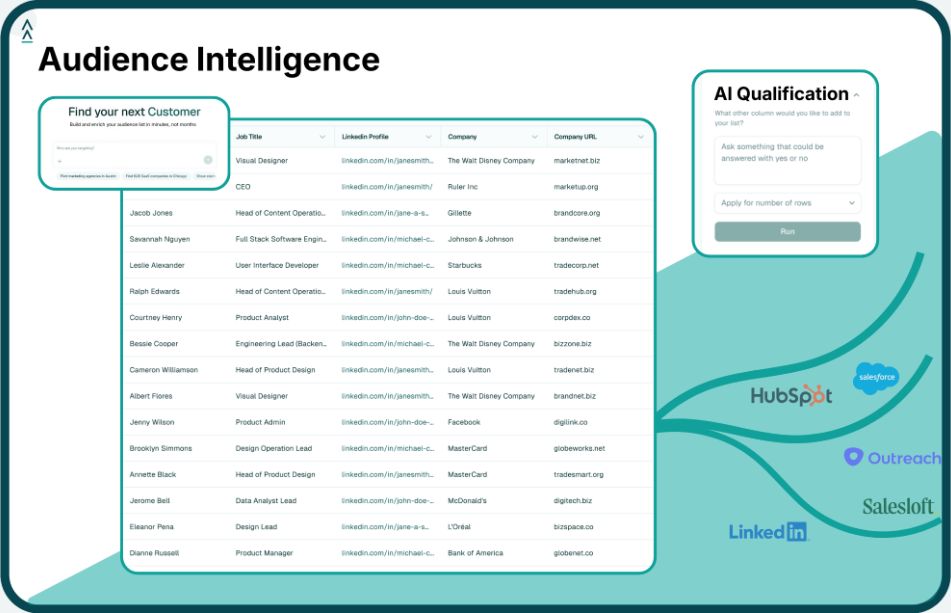
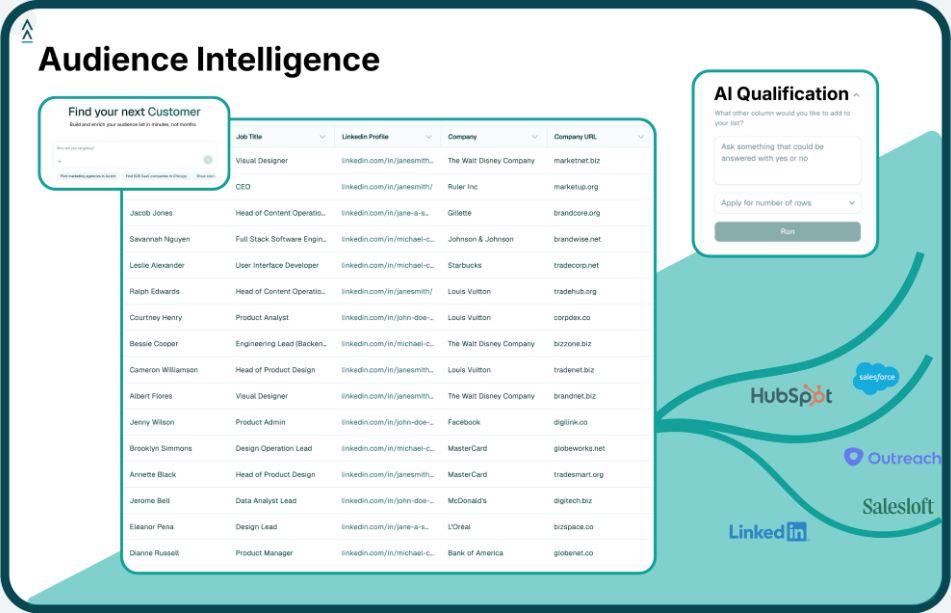
Platforms like Landbase address these challenges by providing AI-qualified audiences based on 1,500+ unique signals. Instead of manually researching individual manufacturers, sales and marketing teams can use natural-language prompts like "Manufacturers with 500+ employees that hired automation engineers in the last 6 months and attended IMTS 2025" to instantly generate targeted prospect lists.
The VibeGTM interface makes this sophisticated targeting accessible to non-technical users, while company data ensures accuracy through continuous enrichment from multiple sources. For manufacturing technology companies competing in a rapidly evolving market, AI-powered audience discovery isn't just convenient—it's essential for efficient growth.
Fastest growing manufacturing tech companies are defined by significant recent funding rounds, rapid team expansion, and strong market validation through customer adoption or industry recognition. These companies typically demonstrate 50%+ year-over-year growth in key metrics like revenue, customer count, or employee headcount. They address critical industry challenges like labor shortages, quality control, or operational efficiency through innovative applications of AI, robotics, or automation technologies. Industry analyst recognition and strategic investor backing further validate their growth trajectory and market potential.
AI is transforming manufacturing through applications like AI-powered design optimization, quality intelligence, and vision systems. These technologies reduce design iteration time from weeks to hours, improve quality control through automated defect detection, and enable predictive maintenance through machine learning. AI also powers robotic systems that can learn and adapt to complex manufacturing tasks, addressing labor shortages while improving operational efficiency. The convergence of AI with IoT and edge computing enables real-time decision-making on the factory floor.
Manufacturing tech startups follow traditional venture funding stages but often require larger capital amounts due to hardware development costs. Seed rounds typically range from $2-10 million for initial product development, while Series A rounds often exceed $20-50 million to support manufacturing scale-up and customer acquisition. Later-stage rounds like Series B and C can reach $50-100+ million as companies expand operations and market reach. The sector also sees significant strategic corporate investment from industrial and technology companies seeking to advance their automation capabilities.
Manufacturing technologies primarily address critical labor shortages rather than replacing existing workers, handling dangerous, repetitive, or physically demanding tasks that are increasingly difficult to staff. These technologies also create new job categories in robotics programming, AI system management, and digital manufacturing operations. Workers are upskilled to oversee automated systems, analyze data insights, and optimize production processes. The focus is on augmenting human capabilities and solving staffing challenges in an industry facing severe labor constraints.
Manufacturing technology companies can improve go-to-market efficiency by leveraging AI-powered audience discovery platforms like Landbase to identify high-intent prospects based on real-time signals. Instead of broad outreach, they should target manufacturers showing specific readiness indicators like recent funding, technology stack changes, or hiring activity in relevant roles. Natural-language targeting enables non-technical team members to build sophisticated prospect lists without complex query builders or database expertise. This approach reduces customer acquisition costs while improving conversion rates by focusing on manufacturers actively investing in automation and digital transformation.
Tool and strategies modern teams need to help their companies grow.