.png)
.png)

Daniel Saks
Chief Executive Officer


The hospitality technology sector raised a record-breaking $13.1 billion in 2024 alone, with investors betting big on AI-powered platforms, property management systems, and guest experience tools that are transforming how hotels operate. From cloud-native property management systems to AI-driven revenue optimization, these companies are solving critical industry challenges: labor shortages, rising operational costs, and evolving guest expectations for contactless, personalized experiences. For go-to-market teams in the hospitality space, knowing which platforms lead in AI-powered audience discovery and qualification is just as important as choosing the right PMS or distribution system. Agentic AI platforms like Landbase now sit alongside these hospitality tech leaders, transforming how teams find and engage their ideal customers in this rapidly evolving sector.
The hospitality industry is undergoing unprecedented digital transformation, driven by several converging factors. Post-pandemic travel recovery has created both opportunity and pressure, as properties seek to maximize revenue while grappling with persistent labor shortages. Meanwhile, guest expectations have permanently shifted toward mobile-first, contactless experiences with personalized service.
This perfect storm has created fertile ground for technology adoption. As Jordan Hollander, Founder & CEO of Hotel Tech Report, notes, "Hotel executives believe technology and automation investments are the best drivers of ROI over the next five years, beating out other priorities such as facility and infrastructure updates, staffing, and talent development."
The companies featured in this listicle represent the vanguard of this transformation, each addressing critical pain points with innovative solutions that are reshaping how hospitality businesses operate and compete.
Mews develops a cloud-native property management system that serves as an "operating system for hospitality." The platform automates the entire guest journey from booking to checkout, offering PMS, POS, revenue management, housekeeping, and embedded payments in one unified system. Hotels use Mews to centralize operations while delivering personalized guest experiences.
Lighthouse provides a commercial intelligence platform for travel and hospitality. The software delivers real-time market data, competitive pricing intelligence, and analytics to help hotels and rental businesses optimize pricing strategies and performance. The platform processes over 400 terabytes of travel data daily to power revenue management decisions.
GetYourGuide operates a global online marketplace for booking tours, activities, and attractions. The platform connects travelers with local experiences, from guided city tours to tickets for popular attractions, across 180+ countries. The company helps experience providers reach a global audience while offering travelers a seamless booking experience.
OYO operates a global travel technology platform providing travelers access to affordable hotels and vacation homes. The company gives independent hotel owners technology, branding, and operational support to standardize properties and increase revenue. It's essentially a hotel chain built on a franchise technology model, bringing standardization to the budget hotel segment.
Klook built a travel booking platform for discovering and booking attractions, tours, activities, transportation, and hotel stays worldwide. The platform simplifies travel planning by offering everything from local experiences to accommodations in one unified marketplace, with strong focus on Asia-Pacific markets.
Engine (formerly Hotel Engine) created a modern platform for booking and managing corporate travel. The centralized system simplifies how companies handle business trips. Following 2024 funding, Engine announced plans to expand beyond hotel bookings into flights and car rentals, positioning as a full-service corporate travel platform.
Hostaway provides a comprehensive short-term rental management platform enabling property managers to operate at scale across multiple channels. Features include multi-channel distribution (Airbnb, Vrbo, Booking.com), automation for messaging and pricing, and comprehensive property management tools.
Guesty provides an AI-powered property management platform for short-term rentals, vacation rentals, and serviced apartments. The platform offers channel management (60+ booking platforms), unified inbox, multi-calendar, CRM, revenue management, payment solutions, and automation tools.
Canary Technologies provides an all-in-one guest management platform featuring contactless check-in, AI-powered guest messaging, dynamic upsells, digital tipping, mobile keys, and secure payment processing. The system integrates with major hotel PMS platforms to streamline operations and enhance guest experiences.
Blueground operates a global network of designer-furnished apartments available for stays of one month or longer. The platform provides a seamless, digital experience for finding, booking, and managing fully-equipped, move-in-ready homes, targeting business travelers and relocating professionals.
The record-breaking $13.1 billion raised by hospitality startups in 2024 demonstrates unprecedented investor confidence in the sector's long-term potential. This funding surge is particularly notable given the challenging macroeconomic environment, indicating that hospitality technology has proven its resilience and value proposition.
Investors are increasingly focused on companies that can demonstrate clear ROI through labor cost reduction, revenue optimization, or direct booking improvement. The largest rounds have gone to platforms like Mews ($300M Series D), Lighthouse ($370M Series C), and Hostaway ($365M Series B), all of which offer comprehensive solutions that address multiple pain points simultaneously.
This funding environment mirrors the success that Landbase has achieved in the go-to-market automation space, having raised $30 million Series A co-led by Picus Capital and Ashton Kutcher's Sound Ventures. Just as hospitality tech companies are leveraging AI to transform hotel operations, Landbase's GTM-2 Omni model—trained on billions of data points from 50M+ B2B campaigns—enables companies to find and qualify their next customers in seconds using natural language.
AI and data analytics have become central to hospitality technology innovation, with property managers already using AI in their operations. The shift from reactive to predictive operations is enabling hotels to optimize pricing, personalize guest experiences, and automate routine tasks.
Mews exemplifies this trend with its AI-first approach to building an operating system that can autonomously manage hotel operations. Lighthouse processes 1.7 billion rates daily to provide real-time competitive intelligence that powers dynamic pricing decisions. Canary Technologies uses AI for guest messaging and voice interactions, while Bookboost leverages AI to automate personalized communication across multiple channels.
This AI-driven transformation requires sophisticated data infrastructure and real-time signal processing—capabilities that mirror Landbase's approach to go-to-market intelligence. Landbase's platform combines 300M+ contacts and 24M+ companies with 1,500+ unique signals across firmographic, technographic, intent, hiring, and funding data. Just as Lighthouse helps hotels identify optimal pricing moments, Landbase helps B2B companies identify high-intent prospects ready to buy.
As hospitality technology platforms handle increasingly sensitive guest data—including payment information, personal details, and behavioral patterns—cybersecurity has become paramount. The sector faces unique challenges given the high volume of transactions, distributed systems, and varying security postures across independent properties.
Regulatory compliance is non-negotiable, with platforms needing to meet standards like GDPR, PCI DSS, and various regional data protection requirements. This is where Landbase's commitment to security becomes particularly relevant for hospitality tech companies looking to accelerate their own go-to-market efforts. Landbase is SOCII & GDPR compliant, demonstrating the same level of security and data privacy commitment that hospitality tech companies must maintain when handling sensitive guest information.
For hospitality tech companies scaling rapidly, ensuring data security while maintaining operational efficiency is a critical balancing act. Platforms that can demonstrate robust security practices while delivering innovative features will continue to attract both customers and investors in this increasingly regulated environment.
As these hospitality tech companies scale, they face their own go-to-market challenges: identifying high-value properties, prioritizing accounts showing buying signals, and efficiently converting prospects into customers. This is where AI-powered audience discovery platforms like Landbase become essential.
Landbase's approach to go-to-market intelligence shares many similarities with the hospitality tech platforms featured in this listicle. Both leverage real-time signals, AI-driven insights, and automation to improve targeting and conversion. For example, just as RoomPriceGenie uses AI to identify optimal pricing moments for hotels, Landbase uses its GTM-2 Omni model to identify companies showing buying intent signals like recent funding rounds, hiring activity, or technology stack changes.
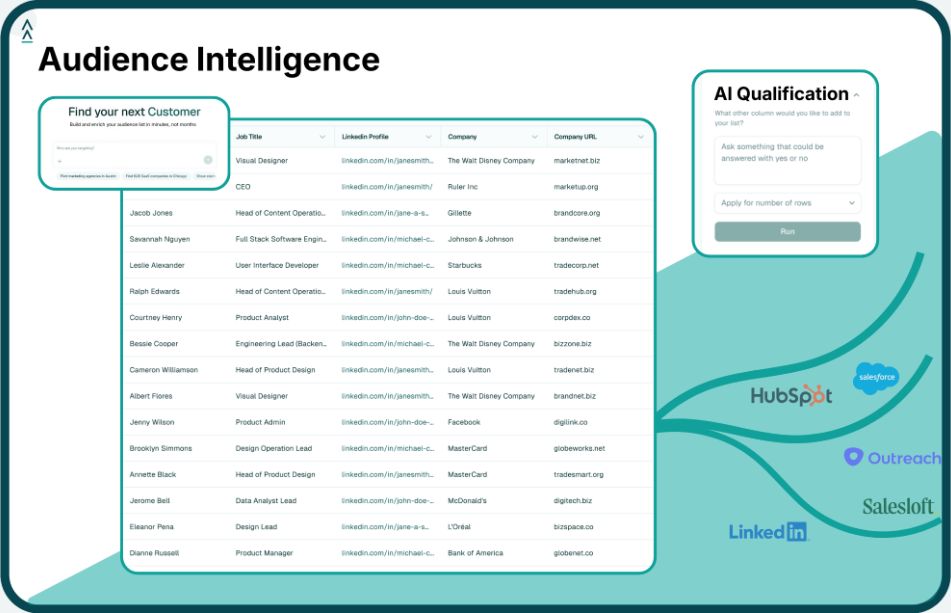
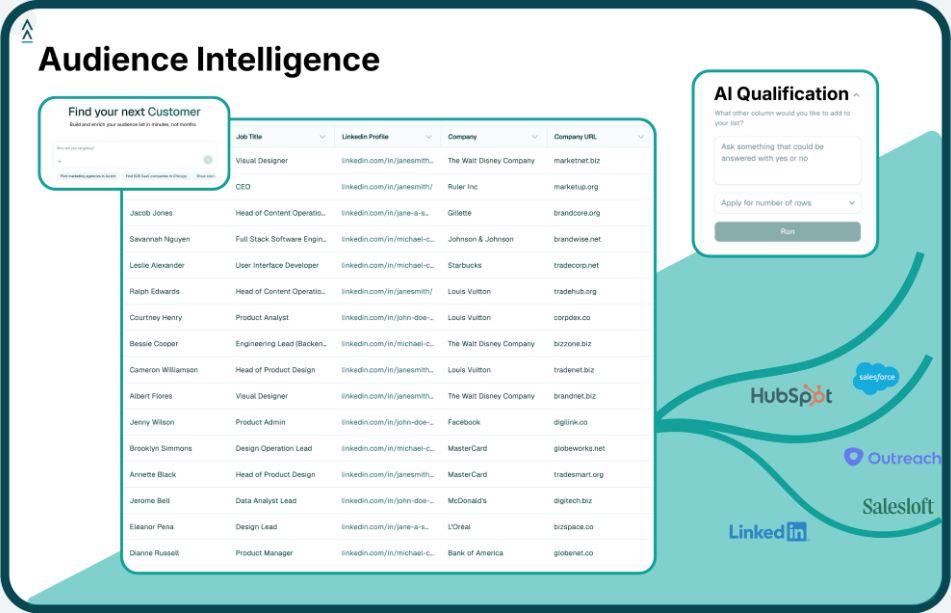
Hospitality tech companies can use Landbase's natural-language interface to build targeted prospect lists instantly. Instead of manually filtering through databases, they can simply type prompts like "Hotel properties with 100+ rooms in major US cities that recently implemented a new PMS" or "Restaurant groups with 5+ locations currently using OpenTable." Landbase then returns AI-qualified audiences ready for immediate activation, helping these fast-growing companies accelerate their own sales cycles.
Fastest growing hospitality tech companies are defined by significant recent funding activity (typically $50M+ in 2024-2025), proven customer adoption metrics, and transformative impact on industry operations. These companies demonstrate strong unit economics, address critical industry pain points like labor shortages or revenue optimization, and leverage AI/automation to deliver measurable ROI. The sector raised $13.1 billion in 2024, with investors prioritizing platforms that can scale efficiently while solving multiple operational challenges simultaneously.
AI is transforming hospitality by automating routine operations, optimizing pricing decisions, and personalizing guest experiences at scale. Platforms like Mews are building AI-first operating systems that can autonomously manage hotel operations, while Lighthouse processes 1.7 billion rates daily to provide real-time competitive intelligence. Guest messaging automation through platforms like Canary Technologies and Bookboost reduces front-desk workload while maintaining personalized communication. According to industry data, property managers are already using AI in their operations, demonstrating rapid adoption of these transformative technologies.
Hospitality startups face several key challenges when scaling their technology, including integration complexity with existing legacy systems, varying technical capabilities across independent properties, and the need to demonstrate clear ROI in a cost-conscious environment. Additionally, data security and regulatory compliance (GDPR, PCI DSS) are critical requirements that can slow implementation. Successful platforms like Mews and Apaleo address these challenges through API-first architectures that enable flexible integration while maintaining robust security practices similar to Landbase's compliance.
Funding rounds like Series A and B are critically significant for hospitality tech companies as they provide capital needed to scale operations, expand product capabilities, and accelerate market penetration. The $13.1 billion raised in 2024 demonstrates unprecedented investor confidence in the sector's long-term potential, particularly given the challenging macroeconomic environment. Large rounds like Mews' $300M Series D, Lighthouse's $370M Series C, and Hostaway's $365M Series B enable companies to invest in AI capabilities, pursue strategic acquisitions, and expand globally while maintaining competitive advantages through technological innovation.
Companies like Landbase help hospitality tech companies accelerate their go-to-market by providing AI-powered audience discovery and qualification capabilities. Using natural-language prompts, hospitality tech companies can instantly identify high-value prospects showing buying intent signals like recent funding rounds, hiring activity, or technology stack changes. Landbase's platform combines 300M+ contacts and 24M+ companies with 1,500+ unique signals to deliver AI-qualified audiences ready for immediate activation, eliminating manual prospecting work that would otherwise slow down sales cycles and allowing fast-growing companies to focus on high-value conversations.
Tool and strategies modern teams need to help their companies grow.