.png)
.png)

Daniel Saks
Chief Executive Officer


Every GTM leader in 2026 wants AI agents running their pipeline. AI SDRs, AI qualification, AI-powered targeting. The vision is clear and the models are capable. So why are most teams still running manual workflows?
The answer is the data, not the AI.
According to a Gartner survey, 63% of organizations either do not have or are unsure if they have the right data management practices for AI. The same research predicts that organizations will abandon 60% of AI projects unsupported by AI-ready data through 2026.
The models are ready, but the context layer has not caught up. And every RevOps team that ignores this will watch their AI investments fail.
Here is what most AI adoption looks like in practice:
This pattern repeats across thousands of B2B companies every quarter. The AI is not the problem. The data feeding it is.
According to ZoomInfo's analysis of data quality, sales reps waste 27% of their time dealing with bad data, which equals 550 hours or $32,000 per rep annually. When you layer AI on top of that same bad data, the problem gets worse because the AI scales the bad decisions faster.
AI-ready GTM data has four properties that most CRM data lacks:
Every record has the fields that matter: company name, industry, employee count, revenue, technology stack, funding stage, key contacts with titles and verified contact information. According to research on CRM data hygiene, 76% of CRM entries are less than half complete. AI cannot qualify an account if it does not know the company's industry or size.
Fields follow standardized formats. "United States" and "US" and "USA" and "U.S.A." are the same country, but your CRM has all four variations. Industry codes are standardized. Job titles follow a taxonomy. Revenue is in the same currency. Without consistency, AI cannot segment, score, or route reliably.
Data from different sources is linked together. The contact in your CRM is connected to their company record, their engagement history, their intent signals, and their technology stack. Disconnected data means the AI sees fragments instead of full pictures.
Data is updated in real-time or near-real-time. According to CRM data quality benchmarks, B2B contact data decays between 22.5% and 70.3% annually. An AI agent working with 6-month-old data is calling people who changed jobs, emailing addresses that bounced, and targeting companies that pivoted. The output looks bad because the input is stale.
Most RevOps teams try to fix data quality with periodic cleanup projects. Quarterly audits. Deduplication sprints. Enrichment imports. The problem is that this approach treats symptoms, not causes.
You clean the data in January. By March, 30% of it has decayed again. Reps have entered new records with inconsistent formats. Marketing has imported lists without validation. The CRM is dirty again and the next cleanup project is scheduled for Q3.
This is the hamster wheel that RevOps teams have been running on for a decade. It does not work for human workflows. It definitely does not work for AI workflows, which need consistently clean data every single day.
The teams that are actually succeeding with AI in GTM have stopped cleaning data after the fact. They have switched to a prevention-first approach: start with clean, enriched data from the beginning.
This means:
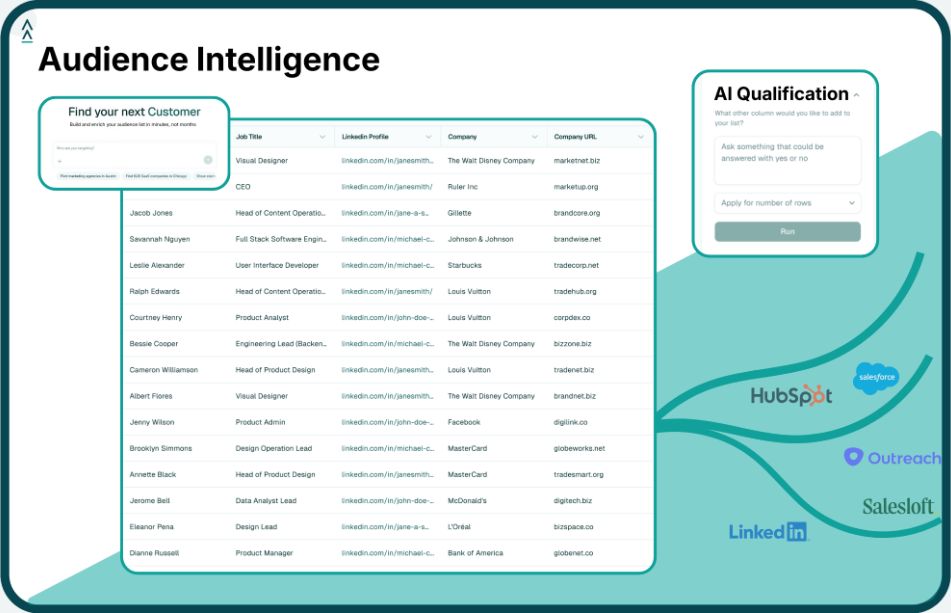
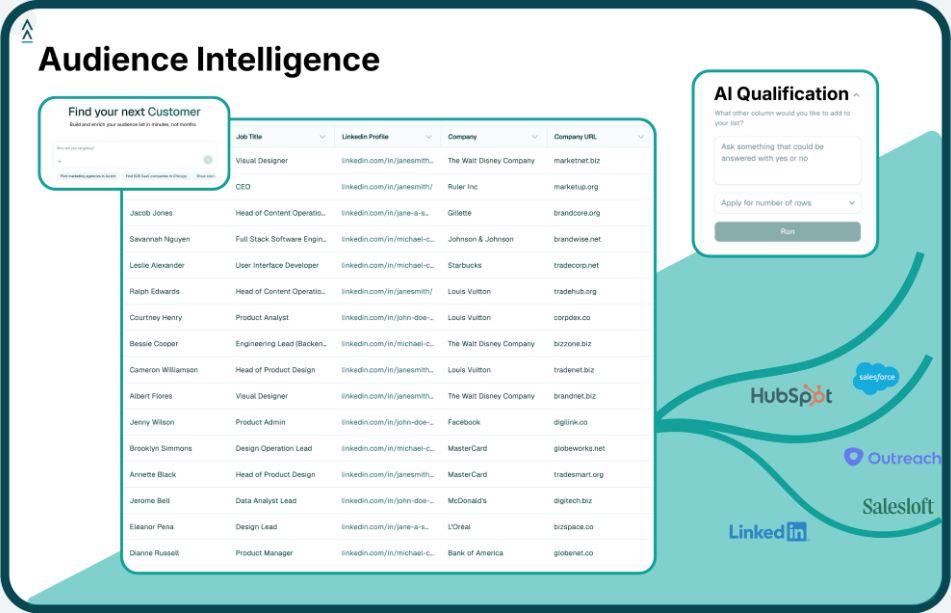
This is what Landbase does. Instead of selling you AI that runs on your dirty data, Landbase delivers the clean, enriched, AI-ready data that makes every downstream AI tool actually work. The platform combines your internal data with third-party data on companies and individuals, plus real-time signals, then structures and enriches it so AI can understand your market, identify the right accounts, and execute.
Gartner's predictions for 2026 reinforce this point from multiple angles:
The pattern is clear: AI adoption is accelerating, but data readiness is not keeping up. The companies that bridge this gap will capture the value. The ones that do not will abandon their AI investments and fall behind.
In 2024, the competitive advantage was having AI. Everyone had access to GPT-4, Claude, Gemini. The models commoditized fast.
In 2026, the competitive advantage is having the data that makes AI useful. The model does not matter if it is reading garbage data. The team with clean, enriched, connected, current data will out-execute the team with a better model running on dirty data. Every time.
This is why the conversation at conferences like HumanX keeps coming back to data. Leaders from OpenAI, AWS, Databricks, and others all agree: the biggest blocker to AI adoption is whether your data can actually provide the right context to those models, not the models.
For GTM teams specifically, that means solving the data hygiene problem before buying another AI tool. The order matters. Data first. AI second. The companies that get this right will define the next phase of AI-powered go-to-market.
If you want to know whether your GTM data is ready for AI, ask these five questions:
If you scored poorly on three or more of these, your AI projects are at risk. Fix the data layer first.
Data hygiene refers to the ongoing process of ensuring your go-to-market data (accounts, contacts, deals) is complete, accurate, consistent, and current. It includes deduplication, field standardization, contact verification, and enrichment. Poor data hygiene is the primary reason AI tools underperform in sales and marketing workflows.
Poor data quality costs U.S. businesses $3.1 trillion annually according to IBM research. At the company level, organizations lose an average of $12.9 to $15 million per year through wasted marketing spend, lost sales opportunities, and operational inefficiencies. For individual sales reps, bad data wastes 550 hours per year, roughly $32,000 in lost productivity.
Partially. AI can help identify duplicates, flag inconsistencies, and suggest corrections. But AI cannot fix missing data it has never seen. The core problem is incomplete and disconnected data at the input layer. You need a reliable external data source to fill the gaps before AI can work with the results.
Data hygiene is about fixing what is already in your system: removing duplicates, correcting errors, standardizing formats. Data enrichment is about adding what is missing: appending industry, technology stack, funding data, contact information, and signals from external sources. Both are necessary for AI-ready data. Landbase handles enrichment at the point of entry, which prevents the hygiene problems that come from incomplete records entering your CRM.
Tool and strategies modern teams need to help their companies grow.