.png)
.png)

Daniel Saks
Chief Executive Officer


B2B contact data decays at 22.5% to 70.3% per year, with email-specific decay accelerating to 3.6% per month. This means a CRM database starting the year at 100% accuracy ends the year somewhere between 30% and 78% accurate. Decay is continuous, not seasonal, which is why scheduled quarterly cleanups always run behind the curve.
According to CRM data quality benchmarks, the four categories of B2B contact decay are role changes (40% of decay), email address changes (most damaging to deliverability), phone number changes, and complete contact departures (the most expensive in lost pipeline). Each piece of stale data costs an estimated $100 in wasted rep time, failed outreach, and downstream deliverability damage.
Email addresses decay the fastest. People leave companies, companies change email domains, providers shut down. After 12 months, you can expect 30-40% of your email addresses to be invalid or reaching the wrong person.
The impact is direct: bounced emails damage your sender reputation, which reduces deliverability for all future sends. A 30% bounce rate can get your domain blacklisted.
People get promoted, move laterally, or leave for new companies. The VP of Sales you contacted in January may be a CRO somewhere else by July. The data looks the same in your CRM but the person behind the title has changed.
Direct dials change when people switch roles or companies. Mobile numbers are more stable but still decay at 10-15% per year.
Companies get acquired, merge, rebrand, pivot their business model, move headquarters, and change employee count. A company that was 200 employees when you added it may be 50 or 500 a year later.
Companies adopt and abandon tools constantly. The technographic data you captured last year may not reflect current usage. A company that used Salesforce in 2025 may have switched to HubSpot in 2026.
Data decay is not linear. It compounds. Here is what happens to a 50,000-record CRM over 12 months without any enrichment or verification:
At 45% accuracy, your CRM is less reliable than a coin flip. More than half the records are wrong in at least one critical field. Your sales team is working with data that is actively misleading them.
According to RocketReach data accuracy research, the average B2B data provider delivers only around 50% accuracy. If you bought a list six months ago from an average provider, the accuracy today is closer to 35-40%.
Most RevOps teams run data cleanup on a quarterly cycle. The problem is math. If 15-20% of your data decays every quarter, and you clean it once per quarter, you are always behind. You clean in January, and by March the data is dirty again. The next cleanup is in April. You are perpetually maintaining data that was accurate for about 2 weeks per quarter.
This is the hamster wheel that RevOps teams have been running on for a decade. It is expensive, exhausting, and it does not work for AI workflows that need clean data every day.
The teams that have solved data decay do not clean quarterly. They enrich continuously.
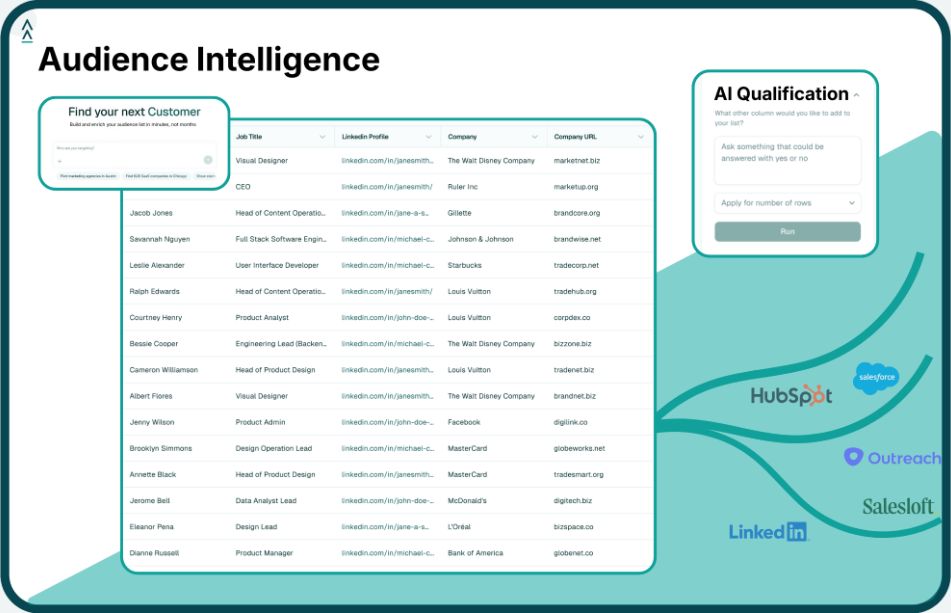
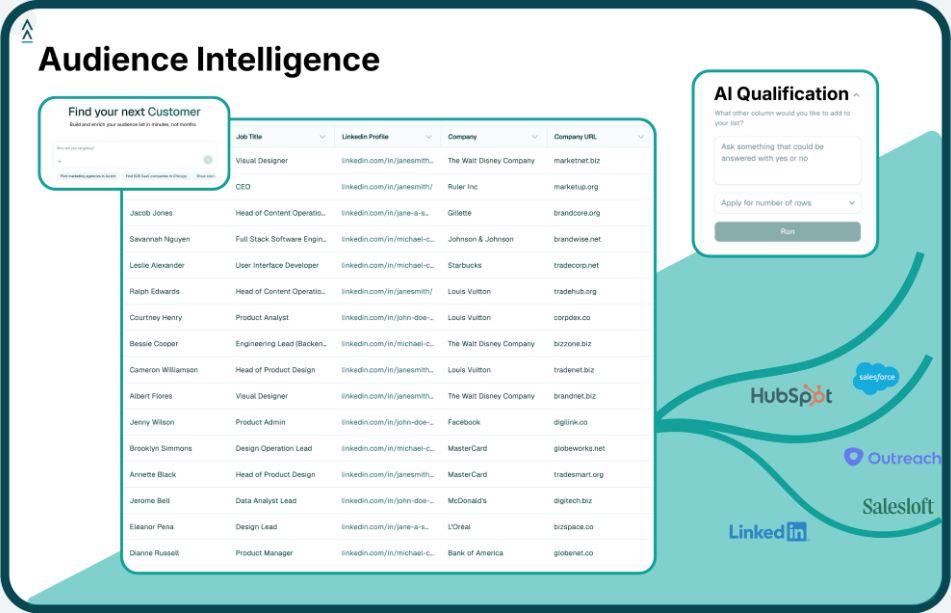
Landbase delivers this approach. The platform provides accounts enriched with 1,500+ data fields that you can export and import into your CRM. The data is current at the time of delivery, and you can re-export anytime to capture changes.
Most teams that run this exercise are shocked by the results. The data looks fine in the CRM because nobody is checking. But the world has moved and the data has not.
Yes, for certain data types and industries. High-growth tech companies have faster turnover, meaning contact data decays faster. Email data at any company decays at 3.6% monthly, which compounds to 35%+ annually. The 70% figure represents the upper end for fast-moving industries with high employee turnover.
Every 90 days for critical fields (email, phone, job title). Every 6 months for company-level data (size, funding, tech stack). Continuously for signal data (hiring, funding events, tech adoption). The right cadence depends on your sales cycle length. If your cycle is 90 days, your data needs to be current within that window.
No. Enrichment resets accuracy at a point in time. Data continues to decay after enrichment. The solution is continuous or periodic re-enrichment, not a one-time fix. Think of it like painting a house: the paint looks great on day one but needs recoating eventually.
At minimum: enrich all new records at point of entry, re-verify emails quarterly, and re-enrich your top 20% of accounts (by revenue potential) every 90 days. This covers the highest-impact records without requiring a full database refresh.
Tool and strategies modern teams need to help their companies grow.