.png)
.png)

Daniel Saks
Chief Executive Officer


No single B2B data provider covers your entire market. According to waterfall enrichment research, individual data providers typically find verified contacts for 35-50% of a given list. Waterfall enrichment platforms consistently achieve 80%+ by drawing from multiple sources in sequence.
The concept is straightforward: instead of relying on one vendor and accepting the gaps, you stack multiple vendors in a defined order and stop only when valid data is returned. This guide explains how to build and optimize a waterfall for your team.
The process follows a simple sequence:
The key word is verified. A waterfall that returns unverified data from multiple sources is worse than useless because it creates false confidence in bad records. Each result must pass verification before it counts.
Every data provider has strengths and blind spots. One provider might excel at US-based SaaS companies with 100-1,000 employees but have poor coverage in EMEA manufacturing. Another might have great executive-level contacts but weak coverage for director-level and below.
When you rely on a single provider, you accept their blind spots as your blind spots. For a 10,000-record target list, a 45% match rate means 5,500 accounts with no verified contacts. Those are accounts you cannot reach through outbound, period.
Stacking a second provider that covers different strengths can push your match rate from 45% to 70%. A third provider might push it to 80%. Each additional provider fills gaps the previous ones could not cover.
Take a list of 1,000 records from your actual ICP. Run them through your current provider. Measure the match rate (contacts found with verified email), the accuracy rate (emails that do not bounce), and the coverage gaps (which segments are weakest).
Look at where your current provider falls short. Is it geographic coverage? Specific industries? Company size tiers? Seniority levels? The gaps tell you what to look for in a second provider.
Take the records your first provider could not match and run them through a second provider. Measure the incremental match rate. If Provider B finds verified contacts for 40% of what Provider A missed, your combined match rate jumps from 45% to 67%.
Put your most accurate provider first in the waterfall. Accuracy should always take priority over coverage. A less accurate provider filling gaps is acceptable because you are only using it for records the primary provider could not match.
Regardless of which provider returns the data, run every result through independent verification. Email verification (SMTP check), phone validation (carrier check), and identity matching (does this person actually work at this company) should happen after the waterfall, not during it.
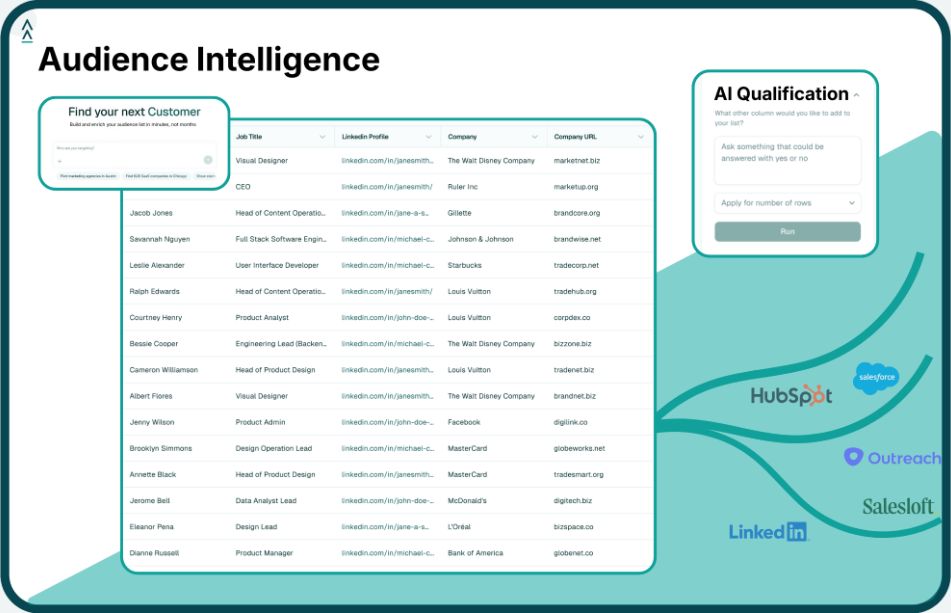
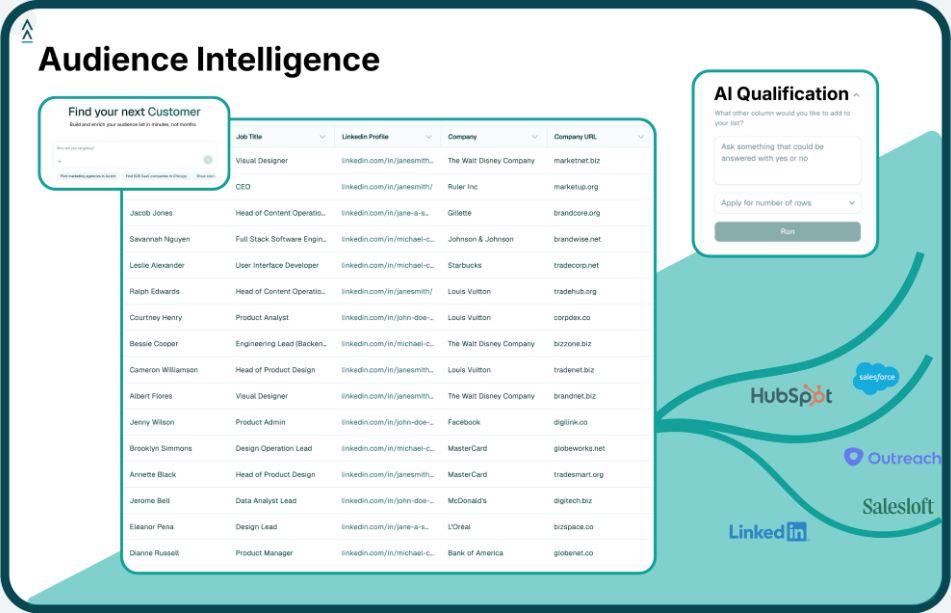
Landbase handles this with 4-layer verification: email deliverability checks via SMTP and inbox verification, phone validation through carrier and active line checks, and identity matching to confirm contact accuracy. The platform runs enrichment across 20+ data providers and delivers results with 92% coverage in tested examples.
Adding 5+ providers before measuring per-provider contribution wastes money. Start with 2-3, measure incremental match rates, and add a new source only when the data proves it fills a real gap.
Putting a cheaper but less accurate provider first in the waterfall means your best records come from the worst source. Always lead with accuracy, even if the first provider costs more per record.
B2B data decays at 2-3% per month. A waterfall run today is 10-15% stale in 6 months. Schedule periodic re-enrichment passes, especially for your top-tier target accounts.
A waterfall without verification is just aggregating unverified data from multiple sources. This creates more records but no guarantee of quality. Always verify after the waterfall completes.
Single source works when your ICP is narrow and well-covered by one provider. If you sell to US-based SaaS companies with 50-500 employees, one strong provider might deliver 70%+ match rates. Adding a waterfall gains you 10-15 points but adds complexity.
Waterfall works when your ICP is broad, spans multiple geographies, or includes segments where no single provider excels. International markets, manufacturing, healthcare, and other non-tech verticals typically require waterfall enrichment because no single provider covers them well.
It depends on volume and the number of providers. Most teams spend $20K-$100K per year on data across 2-3 providers. Dedicated waterfall platforms like BetterContact, FullEnrich, or the enrichment layer in Landbase simplify this by managing multiple sources through a single interface.
Slightly. Each additional provider in the sequence adds latency (typically 1-5 seconds per provider). For batch enrichment of thousands of records, the total time might be minutes to hours. For real-time enrichment of individual leads, the latency is usually acceptable (under 10 seconds total).
Yes, if you have engineering resources. You connect to each provider's API, build the sequencing logic, handle rate limits, manage credits across providers, and build the verification layer. Most teams find it easier to use a platform that handles this, but Claude Code can also help GTM engineers build custom waterfalls quickly.
80%+ on verified contacts is a strong target for waterfall enrichment. Above 90% is excellent and usually requires 4+ providers. Below 70% means your provider mix has significant coverage gaps that need to be addressed by adding or replacing a source.
Tool and strategies modern teams need to help their companies grow.