.png)
.png)

Daniel Saks
Chief Executive Officer


Finding high-intent prospects who are already using your competitors' solutions is one of the most effective ways to build a qualified sales pipeline. Competitor tech signals help you identify companies actively using specific technologies, enabling you to target educated buyers who understand the problem space and are ready to evaluate alternatives. By leveraging real-time technographic data, you can reach prospects at the optimal moment—when they're most receptive to your solution.
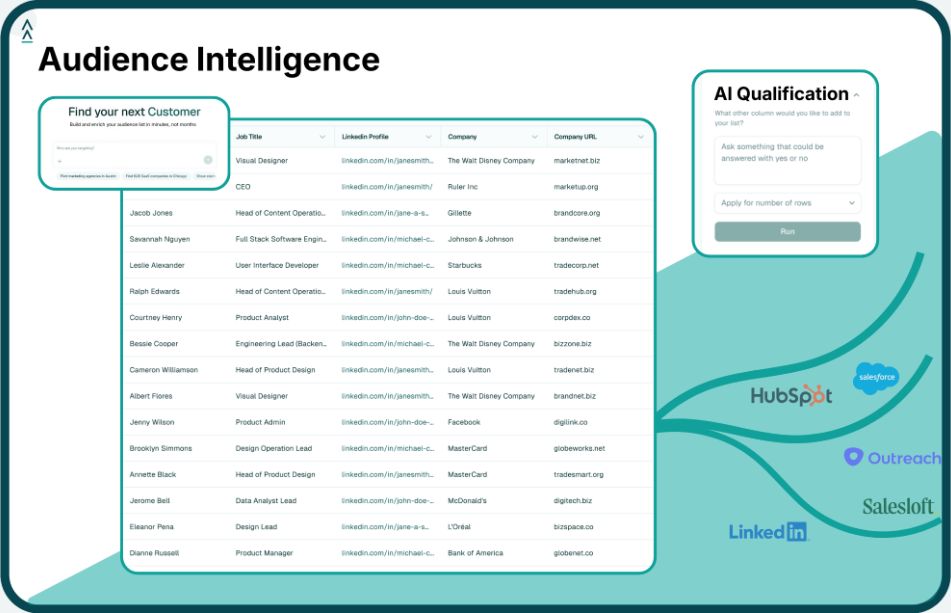
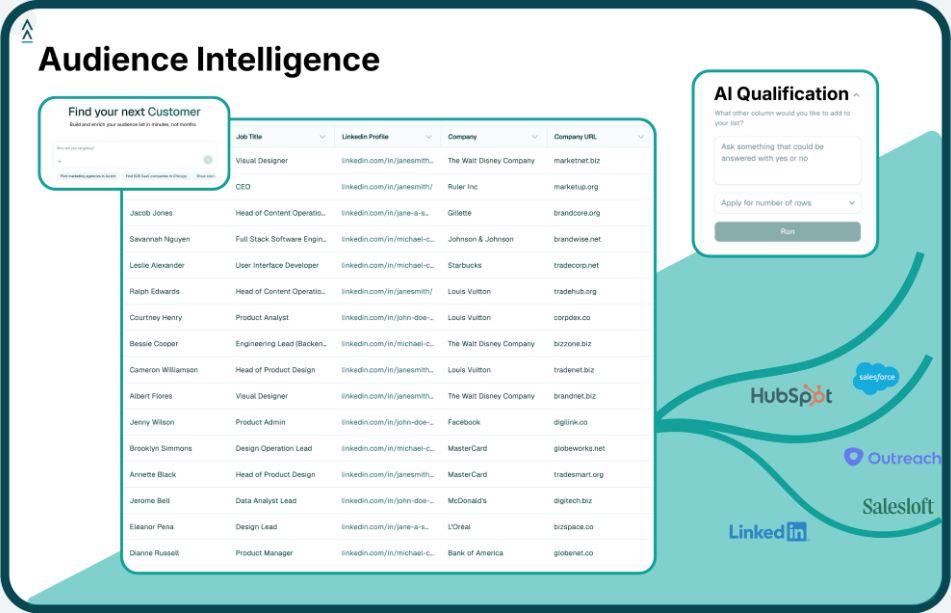
Traditional list building relies on static firmographic data that quickly becomes outdated, but competitor tech signal platforms monitor thousands of dynamic buying indicators across the entire customer journey. These signals include technology adoptions, job changes, funding rounds, and even competitor research activity. The Landbase audience discovery platform makes it simple to harness these signals through natural-language prompts, delivering AI-qualified exports ready for immediate activation.
When prospects are already using a competitor's solution, they've moved beyond the awareness stage and are actively managing a specific business challenge. This makes them significantly more likely to convert compared to cold leads, with research showing significantly higher conversion rates with intent-driven outreach versus traditional cold outreach.
Competitor tech signals represent a fundamental shift from traditional list building approaches. Instead of relying on basic company demographics or manual research, these signals track real-time technology adoption and usage patterns across millions of companies worldwide.
Technographic data reveals the specific software, hardware, and technology stacks that companies use to run their businesses. This includes everything from CRM platforms like Salesforce and HubSpot to marketing automation tools like Marketo, and even specialized industry solutions.
Unlike static firmographic data that might tell you a company has 500 employees in the healthcare sector, technographic signals show you that they're currently using a specific competitor's solution for patient management or that they've recently added new marketing automation tools. This level of specificity allows you to craft highly relevant messaging that speaks directly to their current technology environment and potential pain points.
The power of technographic data lies in its ability to identify not just who your prospects are, but what challenges they're actively working to solve through technology investments.
Companies that have already invested in a competitor's solution represent a unique opportunity segment. They understand the problem space, have a budget allocated for solutions in your category, and are actively managing the implementation and outcomes of their current technology choice.
Research shows that companies using intent data see significantly higher conversion rates compared to cold outreach, and 99% of intent-driven leads create more pipeline than non-intent leads. When you layer competitor-specific technographic signals on top of general intent data, you create an even more powerful targeting approach.
These prospects are educated buyers who can make faster decisions because they don't need education about the problem—only about why your solution is better than their current option. This significantly shortens sales cycles and increases win rates compared to completely cold prospects who may not even recognize they have a problem worth solving.
Effective competitor tech signal tracking involves monitoring several key data points:
By tracking these signals, you can identify the precise moment when prospects are most likely to be receptive to alternative solutions, giving you a significant competitive advantage in timing and relevance.
Before you can effectively target users of competitor technologies, you need a clear understanding of your competitive landscape and the specific technology fingerprints to look for.
Start by creating a comprehensive list of your direct and indirect competitors. For each competitor, document their key product features, pricing models, and most importantly, their technology signatures. This includes:
Platforms like Wappalyzer, BuiltWith, and specialized B2B data providers can help identify these technology signatures at scale across millions of websites and companies.
Beyond technical detection methods, there's a wealth of publicly available information that can help you map competitor usage:
Combining these public signals with technical detection methods creates a comprehensive view of competitor usage across your target market.
Several specialized tools can help automate competitor identification and tech stack mapping:
The key is to integrate these tools into a cohesive intelligence system that continuously updates your understanding of the competitive landscape and identifies new targeting opportunities.
The advent of agentic AI has revolutionized how sales and marketing teams can access and leverage competitor tech signals. Instead of complex Boolean searches or technical query languages, you can now use plain English to describe your ideal prospect.
When crafting natural language prompts for competitor tech targeting, focus on specificity and clarity:
The goal is to create prompts that are specific enough to generate highly qualified results while remaining flexible enough to capture the full range of potential prospects.
Here are some examples of effective natural language prompts for competitor tech targeting:
These prompts combine competitor technology signals with firmographic and behavioral context to create highly targeted prospect lists that are ready for personalized outreach.
Modern AI platforms like GTM-2 Omni provide feedback mechanisms that help you refine your prompts over time. If your initial prompt returns too few results, the AI might suggest broader parameters or alternative competitor technologies to consider. If you get too many results, it might recommend adding additional filtering criteria.
This iterative process allows you to continuously improve your targeting accuracy while learning more about your market and competitive landscape. Each prompt execution builds on previous queries, creating a learning system that becomes more effective over time.
AI has transformed competitor tech list building from a manual, time-intensive process into an automated, precision targeting system that delivers qualified prospects in seconds.
Traditional list building often results in large volumes of unqualified contacts that require significant manual filtering. AI-powered platforms like Landbase's GTM-2 Omni use 1,500+ unique signals and filters to automatically qualify prospects based on multiple criteria simultaneously.
This AI qualification process evaluates not just whether a company uses a competitor's technology, but also their fit with your ideal customer profile, their current buying intent, and the optimal timing for outreach. The result is a highly qualified list that's ready for immediate activation, eliminating the need for manual scrubbing and verification.
Advanced AI systems go beyond simple technology detection to provide deeper insights into prospect readiness:
These capabilities allow you to identify not just who is using competitor technology, but who is most likely to switch to your solution based on their specific circumstances and needs.
The most advanced AI platforms automate the entire list building and enrichment process:
This automation eliminates the traditional bottlenecks in list building, allowing sales and marketing teams to focus on high-value activities like personalized outreach and relationship building rather than manual data collection and verification.
While competitor tech signals provide a powerful foundation for list building, combining them with additional data points creates even more qualified and actionable prospect lists.
Firmographic signals provide essential context that helps refine your competitor tech targeting:
By layering firmographic criteria on top of competitor tech signals, you ensure that your outreach is not only relevant to their technology environment but also appropriate for their business context and scale.
Intent signals indicate when prospects are actively researching solutions and are most receptive to outreach:
Companies that combine competitor tech usage with high-intent signals represent your hottest prospects—educated buyers who are actively in the market for solutions like yours.
Contact-level enrichment transforms your prospect lists from company-level targets to individual-level opportunities:
This level of personalization allows you to craft highly relevant messaging that speaks directly to each prospect's specific role, responsibilities, and potential pain points with their current competitor solution.
Once you've built a highly qualified list using competitor tech signals, the next step is to activate it through strategic multi-channel outreach.
Your messaging should acknowledge the prospect's current technology environment while highlighting your unique value proposition:
This approach demonstrates that you've done your homework and understand their specific situation, making your outreach feel personalized and relevant rather than generic.
Your qualified lists should integrate seamlessly with your existing sales and marketing stack:
The goal is to make the transition from list building to outreach as frictionless as possible, ensuring that your qualified prospects move quickly through your sales funnel.
Track key metrics to measure the effectiveness of your competitor tech targeting campaigns:
These metrics will help you refine your targeting criteria and messaging over time, continuously improving the ROI of your competitor tech signal campaigns.
Effective competitor tech signal list building requires continuous measurement and optimization to maximize ROI and improve targeting accuracy over time.
Track these essential metrics to evaluate your competitor tech targeting effectiveness:
Use performance data to continuously refine your natural language prompts:
This iterative approach ensures that your list building becomes more effective over time, with each campaign building on the learnings from previous efforts.
Create a systematic process for capturing and applying learnings from your competitor tech targeting campaigns:
This continuous improvement cycle ensures that your competitor tech signal list building remains effective and adapts to changing market conditions and competitive dynamics.
Real-world examples demonstrate the significant impact that competitor tech signal targeting can have on sales performance and revenue growth.
A B2B SaaS company specializing in sales enablement tools targeted companies using legacy CRM systems that lacked modern sales engagement capabilities. By focusing on organizations with 500+ employees using CRM platforms older than 2018, they identified prospects who were likely experiencing limitations with their current technology.
The campaign generated 2,200 leads and resulted in a significant increase in qualified pipeline. The key to success was combining technographic signals (legacy CRM usage) with firmographic criteria (company size) and timing signals (companies that hadn't upgraded in 5+ years).
An IT services provider targeting companies with outdated infrastructure used competitor tech signals to identify organizations still running on-premises servers and legacy applications. By focusing on companies in the financial services sector with specific technology stacks indicating outdated infrastructure, they were able to position their cloud migration services as a strategic necessity.
This approach led to 7,800+ contacts available for outreach and significantly higher engagement rates compared to general market prospecting. The specificity of the technographic targeting allowed them to craft messaging that addressed the specific security, compliance, and operational challenges faced by financial services companies with legacy systems.
A digital marketing agency used competitor tech signals to identify companies using basic marketing automation platforms that lacked advanced personalization and analytics capabilities. By targeting mid-size agencies (750–1,500 employees) in specific geographic markets currently using HubSpot, they positioned their more sophisticated marketing services as the next logical step in their clients' marketing maturity journey.
The campaign resulted in 3,100 companies matched and led to a significant increase in qualified opportunities. The agency's success came from understanding the specific limitations of HubSpot for larger agencies and positioning their services as the solution to those precise challenges.
Landbase transforms the complex process of competitor tech signal list building into a simple, frictionless experience that delivers qualified prospects in seconds. Type a plain-English prompt and receive an AI-qualified export you can activate in your existing tools—no technical expertise or complex setup required.
Landbase's GTM-2 Omni represents the first agentic AI model specifically built for go-to-market automation. Trained on billions of data points from 50M+ B2B campaigns and sales conversations, it understands the nuanced language of sales and marketing professionals and can interpret complex targeting requirements expressed in natural language.
When you input a prompt like "Marketing Directors at SaaS companies using Marketo," GTM-2 Omni doesn't just perform a simple keyword search. It leverages its understanding of business context, technographic signals, and market dynamics to identify the most relevant prospects and qualify them using 1,500+ unique signals and filters.
The Vibe interface provides a free, no-login experience that eliminates the traditional barriers to accessing high-quality prospect data. There's no need to navigate complex filtering interfaces, write Boolean searches, or wait for data exports. Simply describe your ideal prospect in plain English, and Landbase delivers an AI-qualified export ready for immediate activation.
This frictionless approach is particularly valuable for competitor tech signal targeting, where the ability to quickly test and refine targeting criteria can make the difference between capturing a hot opportunity and missing it entirely. The platform's ability to export up to 10,000 contacts per session ensures you have enough qualified prospects to fuel your outreach campaigns without hitting arbitrary usage limits.
Unlike static databases that quickly become outdated, Landbase's dynamic signal layer continuously monitors real-time buying indicators across millions of companies. This includes not just technographic data about current technology usage, but also intent signals, hiring activity, funding rounds, and other market events that indicate optimal timing for outreach.
For competitor tech signal targeting, this means you're not just identifying companies that use a competitor's solution—you're identifying those that are most likely to be actively evaluating alternatives based on their current business context and recent activities. This real-time intelligence significantly increases the relevance and effectiveness of your outreach.
The combination of natural-language targeting, AI qualification, and dynamic signal intelligence makes Landbase uniquely positioned to help sales and marketing teams build highly qualified prospect lists based on competitor tech signals without the complexity and friction of traditional approaches.
Competitor tech signal analysis involves tracking real-time data about which technologies companies are using, including specific competitor solutions. This is important for list building because it identifies educated buyers who already understand the problem space and have a budget allocated for solutions in your category. These prospects are significantly more likely to convert than cold leads, with research showing significantly higher conversion rates with intent-driven outreach. By targeting companies already using competitor technology, you can focus on prospects who need less education and can make faster purchasing decisions.
AI systems like GTM-2 Omni interpret natural language prompts to identify companies using specific competitor technologies while simultaneously evaluating multiple other signals for qualification. The AI leverages 1,500+ unique signals and filters to ensure that prospects not only use the competitor technology but also match your ideal customer profile and show other indicators of buying readiness. This eliminates the need for manual filtering and verification while delivering more qualified results. Advanced AI also provides pattern recognition, look-alike modeling, and predictive analytics to score prospects based on conversion likelihood.
Yes, modern AI-powered platforms can identify companies using specific software solutions like HubSpot, Salesforce, Marketo, and thousands of other technologies. You can create targeted prompts such as "CMOs at technology firms currently using HubSpot" or "Sales Leaders at professional services firms using Salesforce" to generate highly relevant prospect lists. The platforms use sophisticated technology detection methods to accurately identify software usage across millions of companies. This specificity allows you to craft highly relevant messaging that speaks directly to their current technology environment and potential pain points.
Contacts discovered through competitor tech signals can be enriched with comprehensive information including verified email addresses, phone numbers, social profiles, job titles, and firmographic data. Advanced platforms also provide context about the contact's role in technology purchasing decisions, recent job movements, and other relevant signals that indicate their influence and authority within the organization. This enrichment transforms your prospect lists from company-level targets to individual-level opportunities, enabling highly personalized outreach. The complete prospect profiles are ready for immediate activation in your existing sales and marketing tools.
Qualified lists can be exported in standard formats compatible with your existing sales and marketing stack. Most platforms support direct integration with major CRMs like Salesforce and HubSpot, email sequencing tools like Outreach and Salesloft, and marketing automation platforms. The export process is typically seamless, allowing you to move from list building to outreach activation in minutes without manual data manipulation. You can import qualified contacts directly into your preferred CRM, load them into sequencing tools for automated follow-up, or add them to targeted nurture campaigns based on their competitor usage and intent signals.
Yes, using competitor tech signals for lead generation is ethical when done through legitimate data providers that comply with privacy regulations like GDPR and CCPA. These platforms use publicly available information and legitimate technology detection methods to identify software usage, similar to how you might observe a company's website or public job postings. The resulting intelligence helps sales teams provide more relevant and timely solutions to prospects who are already in the market for solutions like yours. This approach benefits both sellers and buyers by ensuring outreach is highly relevant and timely rather than generic and intrusive.
Tool and strategies modern teams need to help their companies grow.